Dendritic Opal
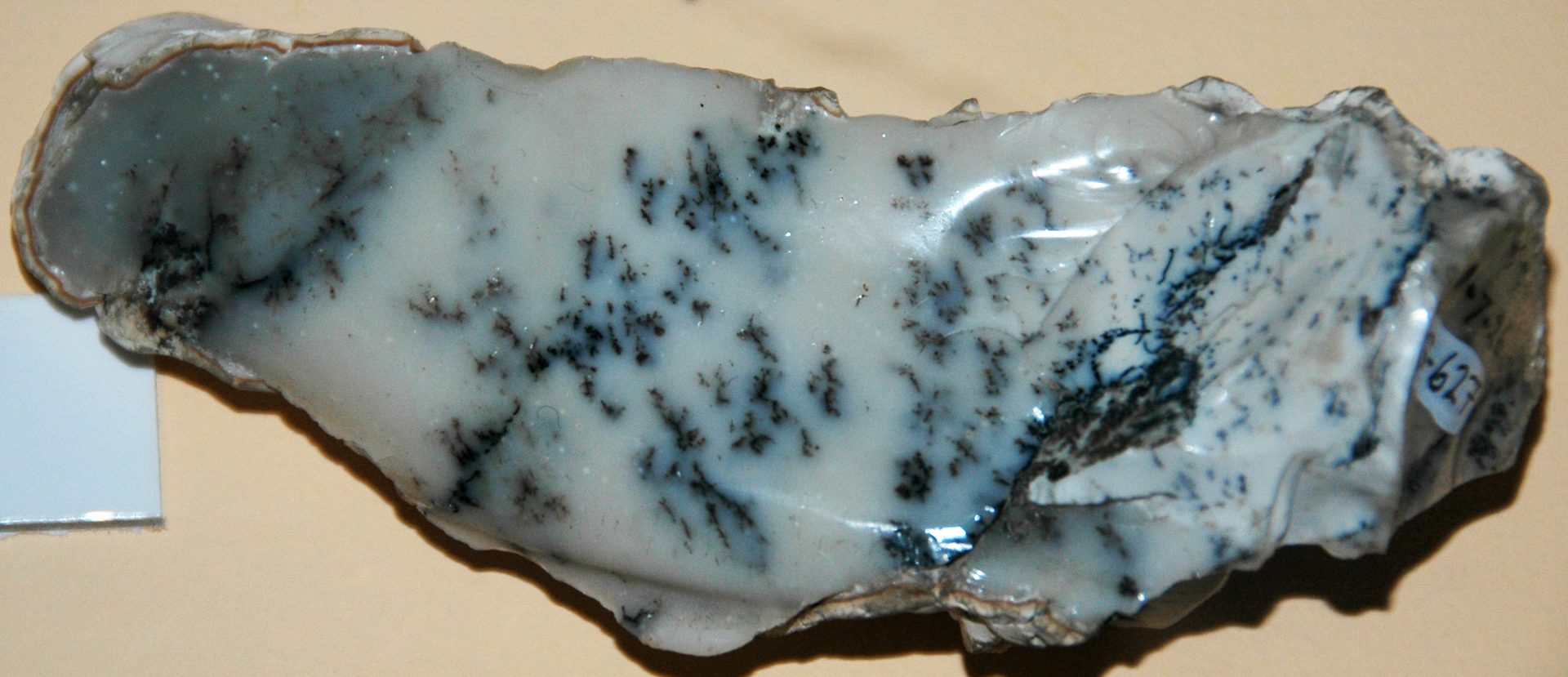
Creamy white opal painted with natural fern-like manganese dendrites - nature's botanical art captured in chalcedony and prized by collectors worldwide
- The manganese dendrites in dendritic opal are not fossils - they are entirely mineral formations that happen to mimic plant shapes, a property called a pseudofossil.
- Opal contains up to 21% water by weight. Ancient Romans believed opal held all other gemstone colors within it - the first recorded gemological union of color symbolism.
- Turkey produces an estimated 70-80% of the world's dendritic opal used in the lapidary market, primarily from Anatolian plateau deposits.
- No 2 dendritic opal pieces are identical. The branching patterns follow fractal geometry - the same mathematical principles governing real tree branching, river deltas, and lightning paths.
What Is Dendritic Opal?
The word dendrite comes from the Greek dendron meaning tree, and the patterns do resemble ferns, moss, or bare winter branches. They form when manganese-rich groundwater seeps into opal during its silica gel formation phase, and the manganese oxidizes into branching crystal fractal patterns. It rates 5.5-6.5 on the Mohs hardness scale.
Turkey is the among the largest known source of dendritic opal, producing white-bodied material with sharp, dark dendrites prized in the lapidary market. Mexican and American material tends toward cream or gray body tones with softer, more diffuse patterns, with broader opal mineralogy explored in Geology.com.
Metaphysically, dendritic opal is traditionally associated with growth, connection to nature, and the wisdom found in organic patterns. Practitioners call it a stone of deep roots and branching awareness, linking inner stillness to outer vitality.
How Dendritic Opal Compares
| Dendritic Opal | 5.5-6.5 | White/cream body with black fern-like manganese dendrites | Budget-Mid |
| Dendritic Agate | 6.5-7 | Chalcedony base with similar dendrites - harder than opal | Budget |
| Merlinite | 6-7 | Trade name for psilomelane in quartz - black-white swirling | Budget-Mid |
| Precious Opal | 5.5-6.5 | Displays rainbow play-of-color; no dendritic patterns | Mid-Ultra |
Meaning and Symbolism
Dendritic opal is traditionally associated with ancestral memory, connection to the natural world, and the concept of unseen networks - the way tree roots and fungal mycelium link beneath the surface. Practitioners describe it as a stone that reveals hidden connections.
The branching patterns are seen in metaphysical traditions as a visual representation of growth without force - expansion that follows the path of least resistance, like water finding its way through stone. It is traditionally associated with patience and organic timing.
Crystal healers use dendritic opal in work around family lineage, past-life exploration, and deepening connection to ancestral wisdom. The miniature landscapes inside each stone are said to hold the energy of ancient forest and deep earth.
Historical Timeline
Healing Tradition
Emotional
Practitioners associate dendritic opal with emotional stability rooted in a deep sense of personal history and belonging. The stone is traditionally used in healing work around grief, family estrangement, or feeling disconnected from one's roots.
Crystal healers describe its energy as slow, patient, and persistent - matching the gradual growth it visually represents.
Spiritual
In metaphysical traditions, dendritic opal is said to support shamanic journeying, ancestral communication, and work with plant and nature spirits. The branching patterns are traditionally associated with the World Tree concept - a spiritual axis connecting earthly and cosmic realms.
Practitioners use it to deepen meditation on life cycles, seasonal rhythms, and the wisdom embedded in natural patterns.
Physical
Crystal healers traditionally associate dendritic opal with the nervous system, using it in layouts near the spine and brain stem. No scientific studies support gemstone healing. All physical associations are part of traditional crystal healing practice only.
The stone is sometimes held during nature-based therapies and forest bathing practices to support embodied awareness.
Care and Cleansing
- Never soak dendritic opal in water - the stone can absorb water, then crack as it dries unevenly.
- Avoid salt cleansing methods entirely. Salt draws moisture from the stone and accelerates dehydration cracking.
- Keep away from direct sunlight and heat sources, which cause hydration loss and surface crazing over time.
- Store separately from harder stones - at Mohs 5.5-6.5, dendritic opal scratches easily from quartz-family minerals.
- Opal is about 5-10% water by weight in most specimens. Prolonged dry storage in air-conditioned environments may cause dehydration; occasional brief re-moistening is acceptable.
Where to Buy Dendritic Opal
Affiliate disclosure: Some links below earn us a small commission at no extra cost to you. See our affiliate disclosure page.
Handmade, raw, and tumbled pieces from independent sellers worldwide.
Shop Dendritic Opal on Etsy →Accessories, tools, and specimen sets with fast Prime delivery.
Shop Dendritic Opal on Amazon →Certified loose gemstones graded and photographed for online buyers.
Shop Dendritic Opal on GemSelect →Pairs Well With