Ethiopian Opal
Born in Welo highlands and flashing every rainbow color, Ethiopian opal is the modern heart-stone of playful emotional renewal.
- Ethiopian opal is hydrophane and absorbs water, temporarily changing appearance until dry.
- The Welo deposit opened commercially in 2008 and transformed the global opal market.
- Ethiopian opal can show more vivid play of color at lower prices than most Australian material.
- Opal is approximately 3 to 21% water by weight, depending on origin.
- The name opal traces from the Sanskrit upala, meaning precious stone.
- October birthstone seekers wanting affordable vivid rainbow opal
- Heart chakra practitioners drawn to playful multicolor fire
- Engagement shoppers seeking distinctive opal alternatives
- Collectors interested in hydrophane opal mineralogy
- Readers wanting rainbow opal without Australian pricing
- Buyers seeking the most durable engagement stones (try sapphire or diamond)
- Those needing water-safe daily-wear gems (try moissanite or sapphire)
- Traditionalists preferring classic Australian opal character
What Is Ethiopian Opal?
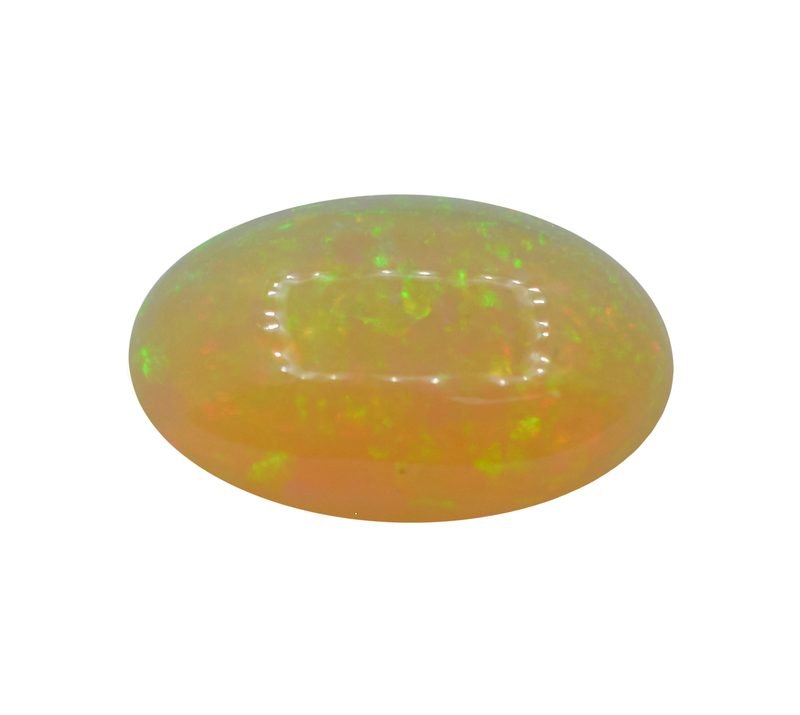
Ethiopian opal is a variety of opal mined primarily in the Welo (Wollo) and Shewa regions of northern Ethiopia. The stone displays vivid play of color - the characteristic flash of rainbow hues that distinguishes precious opal - across a transparent to translucent hydrophane base.
Modern commercial production began around 2008 when the Welo deposit opened.
The hydrophane nature is a key distinction. Ethiopian opal absorbs water rapidly, which temporarily changes its appearance (color and transparency) until the water evaporates. This behavior sets it apart from classical Australian opal, which does not absorb water significantly. Hydrophane character requires specific care considerations that are slightly different from Australian opal.
The Welo deposit has dramatically expanded the global opal market since 2008, providing high-quality play-of-color opal at significantly lower prices than Australian material. Shewa material produced earlier (1994 discovery) includes some smoky or darker-base opals with distinctive character.
Ethiopian opal scores Mohs 5.5 to 6.5 and requires careful handling because of the hydrophane tendency. The stone typically shows intensely vivid red, orange, yellow, green, and blue flashes on a crystal-clear, white, or amber base.
Larger sizes and strong color are more abundant and affordable in Ethiopian material than in most Australian grades.
How Ethiopian Opal Compares
| Property | Ethiopian Opal | Australian Opal | Mexican Fire Opal |
|---|---|---|---|
| Hardness | 5.5 - 6.5 | 5.5 - 6.5 | 5.5 - 6.5 |
| Water behavior | Hydrophane (absorbs) | Non-hydrophane | Usually non-hydrophane |
| Price / carat | $$ Mid-range | $$ Mid-range | $$ Mid-range |
| Best For | Vivid affordable rainbow | Heirloom investment | Warm red-orange fire |
Meaning and Symbolism
Opal has been prized across cultures for at least 2,000 years. Roman scholar Pliny described opal as containing the fires of carbuncle, the glowing purple of amethyst, and the sea green of emerald, recognizing the rainbow play of color even in ancient times.
The Welo region of Ethiopia has produced opal since ancient times on a small local scale. Commercial mining and international export began seriously in 2008.
In crystal healing tradition, opal is associated with emotional clarity and the full spectrum of feeling. Ethiopian opal specifically has been adopted by practitioners as a newer stone of playful emotional renewal, with the vivid rainbow flash interpreted as a symbol of multi-dimensional heart expression.
The stone is traditionally linked to the heart chakra and the crown chakra.
Many readers choose Ethiopian opal over Australian material because of the vivid color at accessible prices. Crystal workers often pair Ethiopian opal with moonstone for lunar-rhythm work or with rose quartz for tender heart-chakra practice.
The hydrophane character is sometimes interpreted symbolically as the stone's responsiveness to emotional environment, making it a favored meditation companion for readers working on emotional attunement. October birthstone seekers have embraced Ethiopian opal as an affordable option within the traditional October association.
Historical Timeline
Healing Tradition
Emotional
Practitioners believe Ethiopian opal supports playful emotional renewal and multi-dimensional feeling expression. Crystal healing tradition associates the rainbow play of color with the full spectrum of human emotion, and the stone is often recommended for readers recovering from emotional flattening or long periods of suppressed feeling.
Many readers wear Ethiopian opal during creative emotional-expression phases such as journaling renaissances, therapy breakthroughs, or post-grief rebuilding. Crystal workers sometimes recommend it as a reminder stone of emotional variety and the legitimacy of shifting moods.
Crystal workers often pair Ethiopian opal with rose quartz for tender heart work or with moonstone for lunar-rhythm support. The hydrophane character is traditionally interpreted as symbolic responsiveness to emotional environment.
Spiritual
In crystal healing tradition, Ethiopian opal is linked with all chakras because of its rainbow spectrum, with particular emphasis on the heart and crown chakras. Practitioners describe the play of color as a symbol of integrated awareness and the sacredness of every feeling.
Many readers use Ethiopian opal during meditation focused on emotional integration, creative spiritual practice, and the bridging of heart awareness with higher consciousness. The stone has an active modern folkloric tradition shaped by contemporary crystal workers since 2008.
Crystal workers often place Ethiopian opal as a centerpiece in heart-chakra grids with clear quartz points radiating outward and rose quartz at the edges. The hydrophane character makes it responsive to environment, and some practitioners attune to the stone's current appearance as a symbolic reading.
Physical
Practitioners believe Ethiopian opal supports what they describe as emotional heart ease and gentle integrative balance. Crystal healing tradition associates opal generally with overall wellbeing rather than specific conditions, and the stone is not a substitute for medical care.
Many readers wear Ethiopian opal as pendant jewelry at heart level for daily emotional support. Crystal workers sometimes recommend it during recovery from burnout and emotional exhaustion, treating it as a playful companion for the slow return of varied feeling.
The stone is considered appropriate for heart-chakra practices focused on emotional integration and the acceptance of feeling variety. Traditional lore associates opal's rainbow fire with joy and creative vitality, making Ethiopian opal popular for birthday gifts and creative-milestone celebrations.
Zodiac, Birthstone and Gifts
Ethiopian opal is a modern US birthstone for October, shared by Libra and early Scorpio. Astrologers traditionally associate opal with Venus and Neptune, planets linked with relational beauty and emotional sensitivity.
For Libra, Ethiopian opal is considered especially apt because of the relational harmony the sign emphasizes. Scorpio connects through deep emotional intensity. Cancer links through tender nurturing associations. Many readers choose Ethiopian opal for Venus transit cycles and birthday phases focused on emotional integration.
Care and Cleansing
Ethiopian opal requires unusual care because of its hydrophane nature. Avoid prolonged water exposure, which can temporarily cloud the stone and sometimes cause permanent changes if dissolved minerals are drawn inside. Use a dry soft cloth for routine cleaning, or very brief and careful lukewarm rinses when necessary.
Do not submerge Ethiopian opal in cleansing solutions of any kind.
Moonlight charging is widely recommended and safe. Direct sunlight should be limited because prolonged UV exposure and heat can cause the stone to crack along micro-fractures, a process called crazing that is sometimes irreversible. Smoke cleansing with palo santo or sage is the preferred energetic method.
Salt and saltwater should be avoided entirely. Many practitioners cleanse Ethiopian opal by placing it on a bed of clear quartz or selenite planks overnight, a method considered especially safe for this water-sensitive stone. Keep cleansing sessions brief.
- DO clean Ethiopian opal with a soft dry cloth for routine maintenance.
- DO NOT submerge Ethiopian opal in water or cleansing solutions; hydrophane nature absorbs liquid.
- DO NOT expose Ethiopian opal to prolonged direct sunlight or high heat; can cause crazing.
- DO NOT use ultrasonic or steam cleaners on Ethiopian opal.
- DO store Ethiopian opal in a sealed container with a damp piece of cloth or cotton for stable humidity.
- DO remove Ethiopian opal jewelry before washing hands, showering, or swimming.
- Note: hydrophane opals can temporarily change appearance with moisture absorption.
Real vs Fake
Genuine Ethiopian opal shows characteristic hydrophane behavior (absorbs water visibly), play of color across the body, and specific gravity of 1.95 to 2.20. The lower density is a diagnostic feature that distinguishes opal from most imitations. Refractive index ranges from 1.37 to 1.47.
Under 10x magnification, natural Ethiopian opal shows the characteristic structure of silica spheres producing color play.
Common imitations include synthetic opal (Gilson opal), opal triplets and doublets (thin opal layer on darker backing), and plastic or glass imitations. Synthetic opal often shows distinctive column or lizard-skin patterns visible under magnification. Doublets and triplets reveal their layered construction at the stone's edge.
Glass and plastic imitations show much lower specific gravity and no play of color under magnification.
Practical at-home checks include testing temperature behavior (opal feels warm compared to most gems), observing the play of color from multiple angles, and examining the stone's edge for layered construction. A cautious water test can confirm hydrophane behavior (small amount of water temporarily darkens the stone).
For purchases above $200, request laboratory confirmation from an independent gemological lab, IGI, or equivalent. Ask specifically about hydrophane nature to confirm Ethiopian rather than Australian origin.
Ethiopian Opal Jewelry & Gifts
Ethiopian opal offers exceptional value for vivid play-of-color material. Commercial stones under 1 carat typically run $50 to $150 per carat, mid-grade stones from 1 to 5 carats price at $100 to $400 per carat, and exceptional pieces above 5 carats with strong full-spectrum fire can reach $300 to $1,000+ per carat.
Color intensity and pattern are the primary price drivers, with red and multi-color fire commanding the highest premiums.
When buying, look for strong play of color visible from multiple angles, eye-clean transparency, and protected jewelry settings that minimize water exposure. Welo provenance is the most common for current Ethiopian opal; Shewa material is rarer and often shows smoky tones.
Most Ethiopian opal reaches the international market through Ethiopian gem dealers, Bangkok and Jaipur cutting centers, and online gem retailers. Protect purchases with care instructions about the stone's hydrophane nature.
Where to Buy Ethiopian Opal
Affiliate disclosure: Some links below earn us a small commission at no extra cost to you. See our affiliate disclosure page.
Handmade, raw, and tumbled pieces from independent sellers worldwide.
Shop Ethiopian Opal on Etsy →Accessories, tools, and specimen sets with fast Prime delivery.
Shop Ethiopian Opal on Amazon →Certified loose gemstones graded and photographed for online buyers.
Shop Ethiopian Opal on GemSelect →Pairs Well With



Where Ethiopian Opal Is Found
