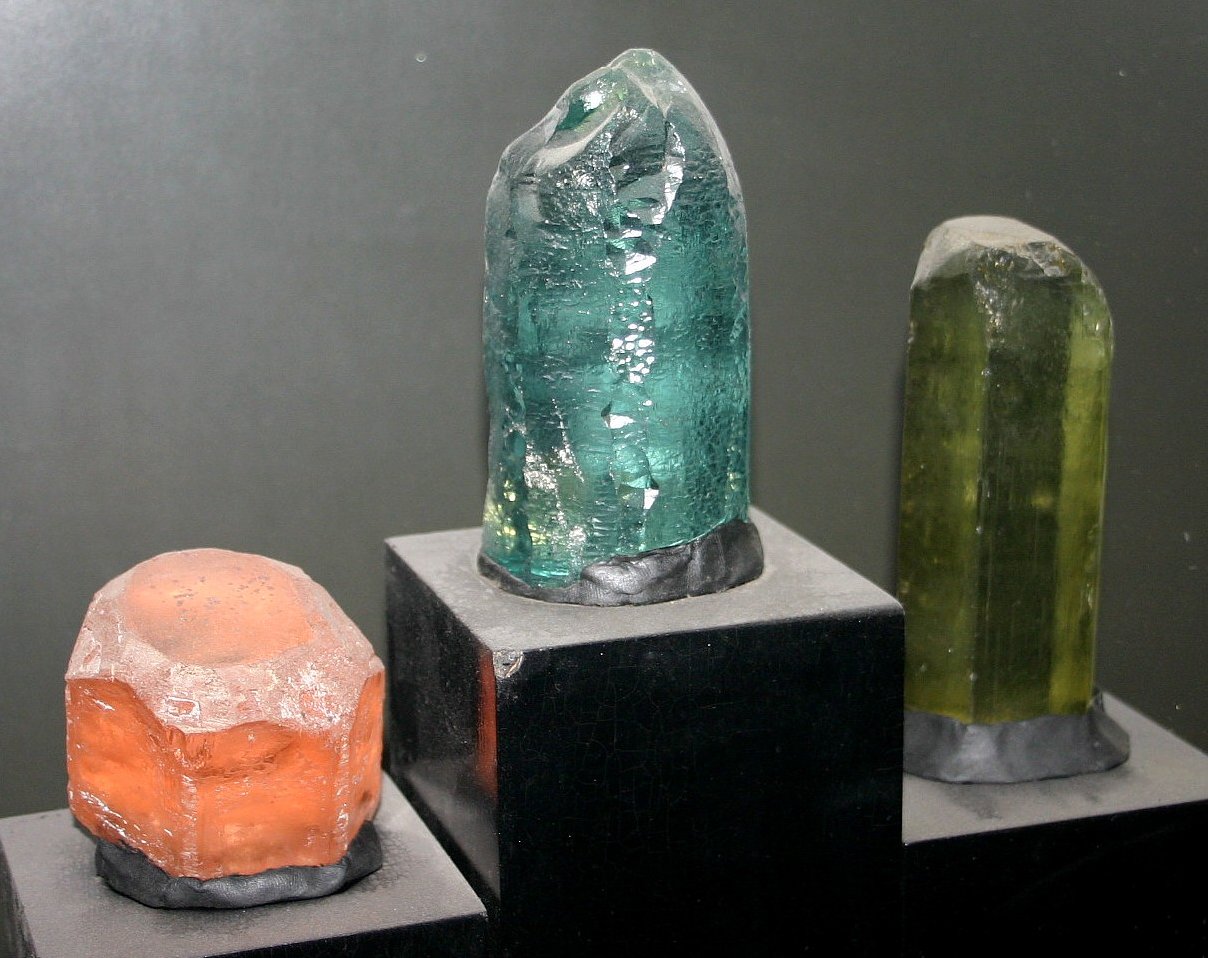
Golden Beryl
The sun-yellow variety of beryl carries the solar plexus's full vitality in a transparent.
- Golden beryl from Namibia's Erongo Mountains can show the world's most saturated pure yellow in the beryl family - a deep chrome-yellow that gemologists describe as distinctly different from Brazilian material's cooler lemon tones.
- Beryl as a mineral family is the source of the chemical element beryllium, which was isolated from beryl and named for it - giving golden beryl a direct chemical-naming legacy.
- The largest known faceted golden beryl gem is a museum specimen exceeding 2,000 carats - though such large specimens sacrifice color saturation for size.
- Heliodor forms in granite pegmatites under specific conditions where iron (Fe3+) substitutes for aluminum in the crystal lattice, a process that takes millions of years in the right geological environment.
- Golden beryl and aquamarine sometimes occur in the same pegmatite body and can intergrade through pale blue-green intermediate colors called green beryl.
- Solar plexus chakra practitioners who want a transparent, vibrant yellow gem for personal power work
- Leo and Gemini placements seeking a sun-associated gem with genuine hardness for jewelry
- Buyers who want yellow gem jewelry without the much higher price of yellow sapphire
- Crystal collectors building a complete beryl suite alongside emerald, aquamarine, and morganite
- Those drawn to sun energy and vitality who want a gem that literally looks like captured sunlight
- Those who want an extremely common or very affordable stone - quality heliodor is moderately priced
- Buyers who prefer warm orange-yellow tones (consider citrine or yellow sapphire for different yellow ranges)
- Those seeking the beryl family's most prestigious variety (choose emerald, aquamarine, or alexandrite)
What Is Golden Beryl?
Golden beryl, also called heliodor, is the yellow to golden-yellow variety of beryl (beryllium aluminum cyclosilicate), the same mineral family that includes emerald (green), aquamarine (blue-green), morganite (pink), and alexandrite-like red beryl. The yellow color results from trace iron (Fe3+) incorporated in the crystal structure during formation in granite pegmatites.
The name heliodor comes from the Greek helios (sun) and doron (gift) - the gift of the sun - reflecting the stone's warm, radiant color.
The name was coined by the Hamburg gem house of Gildemeister and Wessel when Namibian (then German Southwest Africa) heliodor specimens entered the European market in the early 20th century.
At Mohs 7.5 to 8, golden beryl is genuinely hard and suitable for all jewelry types including rings with appropriate protective settings. Its hexagonal crystal structure produces distinct prismatic crystals that cut into beautiful faceted gems with bright, vitreous luster. The color ranges from pale champagne-yellow to rich, deep golden amber.
Golden beryl is distinguished from citrine (quartz, Mohs 7) by its superior hardness and from yellow sapphire (corundum, Mohs 9) by its lower price point. It is less widely known than its beryl family siblings but offers comparable clarity and durability at more accessible prices for quality yellow stone.
How Golden Beryl Compares
| Property | Golden Beryl | Yellow Sapphire | Citrine |
|---|---|---|---|
| Hardness | 7.5 - 8 | 9 | 7 |
| Price / carat | $$ Mid-range | $$ Mid-range | $ Budget |
| Beryl family? | Yes | No (corundum) | No (quartz) |
| Best For | Jewelry, collection | Investment, jewelry | Affordable jewelry |
Meaning and Symbolism
Golden beryl carries the solar symbolism of its name across multiple cultural traditions. Ancient Egyptian amuletic texts mention yellow beryl in the context of solar protection and vitality.
In medieval European lapidary tradition, yellow beryl was associated with cheerfulness, mental clarity, and the kind of practical intelligence that solves real problems - qualities aligned with its solar color.
In crystal healing tradition, golden beryl is one of the primary stones for solar plexus work - the chakra governing personal power, confidence, will, and the capacity to take effective action in the world.
Unlike citrine (which is warmer and more associated with abundance) or yellow jasper (more earthy), golden beryl's transparency and gem quality are said to bring a refined, focused solar energy rather than a diffuse warmth.
The heliodor name's gift-of-the-sun etymology connects the stone to the sun's most life-giving qualities: clarity of vision, the energy to act, and the light that makes growth possible. Practitioners working with personal empowerment, leadership, and finding the courage of one's authentic self often gravitate toward golden beryl.
In Vedic gem therapy, yellow beryl or golden topaz is sometimes used in Saturn or Sun-strengthening prescriptions, and heliodor appears in some traditions as a supportive stone for practitioners seeking to balance their solar and Saturnine energies.
Historical Timeline
Healing Tradition
Emotional
Practitioners believe golden beryl works primarily with personal empowerment and the courage to act from a place of genuine self-knowledge. In crystal healing tradition, it is associated with dissolving self-doubt, procrastination, and the paralysis that comes from not trusting one's own judgment.
Many readers recommend heliodor for practitioners working on confidence issues - not the aggressive self-assertion of red stones, but the clear, warm confidence of someone who knows their own light and is comfortable sharing it.
The solar plexus association places this work at the seat of personal will rather than at the level of ego performance.
Golden beryl is also traditionally associated with mental clarity and practical intelligence - the ability to see clearly what needs to be done and then do it with focused energy. Practitioners describe it as an antidote to confusion and circular thinking.
Spiritual
Golden beryl is associated with the solar plexus as the spiritual center of personal sovereignty - the capacity to be genuinely oneself rather than a construct created for others' approval.
In crystal healing tradition, working with heliodor at the solar plexus is said to help practitioners identify and release the energetic patterns of self-diminishment that obscure their authentic light.
The stone's crown chakra secondary association connects solar vitality to spiritual awareness - the idea that genuine spiritual growth requires embodied, grounded personal power as its foundation.
Practitioners describe this as the difference between spiritual escape (leaving the body and personal will behind) and genuine awakening (bringing full presence and power into awareness).
For practitioners working in leadership, teaching, or public-facing spiritual roles, golden beryl is sometimes recommended as a support for sharing one's light without the anxiety of visibility.
Physical
Crystal healing tradition associates golden beryl with the digestive system, liver, and the body's processes of converting food into energy - a direct metaphor for the solar plexus's role as the body's fire center. Practitioners working with digestive concerns, energy conversion, and metabolic vitality sometimes incorporate heliodor as a complementary support stone.
The stone's energizing, solar quality is contrasted with its clear, transparent nature in practice: where fiery red stones can over-activate, heliodor is described as a clarifying solar energy - warm and vitalizing without being aggressive or disruptive.
Practitioners use golden beryl in crystal layouts by placing it on the solar plexus during bodywork sessions, combining its warm color resonance with the physical sensation of the stone's weight and temperature on the body.
Zodiac, Birthstone and Gifts
Golden beryl's Sun rulership connects it naturally to Leo, the sun-ruled sign of creative self-expression, leadership, and generous warmth. Practitioners recommend heliodor to Leo placements as a stone that supports the sign's authentic solar gifts - creative confidence, magnanimous generosity.
The courage to be genuinely seen - while gently moderating the sign's tendency toward performance.
For Gemini, heliodor's Mercury-friendly clarity and mental vitality offer a solar anchor for the sign's quicksilver intelligence. Gemini placements often find golden beryl helps them commit to a direction without the anxiety of missing another possibility, because the stone's solar clarity makes the right choice feel obvious.
Both signs are associated with visibility and expression; golden beryl supports both by clarifying the practitioner's authentic center from which genuine expression flows.
Care and Cleansing
Golden beryl is durable and tolerates most cleansing methods. Running water for 60 seconds is safe and effective.
Sunlight cleansing is particularly resonant for this solar-associated stone. Brief sunlight exposure (30-60 minutes) both cleanses energetically and is safe for the stone's color. Moonlight, smoke, and sound cleansing are all appropriate and safe for heliodor.
Saltwater soaking is safe for beryl; avoid only if the stone is set in metal that could be affected by salt. Avoid very high-temperature steam cleaning for set stones as thermal shock can affect the metal setting.
- DO store golden beryl away from harder minerals (topaz, sapphire, diamond) that could scratch the surface.
- DO remove heliodor rings before heavy manual work, gardening, or activities involving impact.
- DO clean periodically with a soft brush and mild soapy water to remove oils and product buildup from jewelry settings.
- DO NOT use ultrasonic cleaners for heavily included specimens - vibration can propagate fractures along inclusion planes.
- Note: some commercial golden beryl may be irradiated to enhance color; ask sellers about treatment status for significant purchases.
Real vs Fake
Golden beryl is most often confused with yellow citrine (Mohs 7, significantly softer) and yellow sapphire (Mohs 9, significantly harder). A simple hardness test scratching against glass (beryl and sapphire both scratch glass.
Citrine also scratches glass, so hardness alone does not distinguish them) is useful only when the scratch-ability helps rule out softer fakes.
Under 10x magnification, genuine beryl typically shows characteristic two-phase inclusions (liquid plus gas bubble), growth tubes, and sometimes needle-like inclusions. Faceted yellow glass is much more prone to curved gas bubbles and swirl patterns characteristic of manufactured glass.
Refractive index measurement with a refractometer is the most reliable non-destructive test: beryl reads approximately 1.577-1.583, distinctly different from citrine (1.544-1.553) and yellow sapphire (1.762-1.770). A gemologist can quickly distinguish the three minerals with this test.
Laboratory certification is worth requesting for stones above $200 per carat. Gemological laboratories and other labs issue reports for golden beryl that confirm species and treatment status.
Golden Beryl Jewelry & Gifts
Quality golden beryl of 1-3 carats costs $50-$200 per carat for standard commercial material, rising to $200-$500 per carat for vivid, deeply saturated gems with excellent clarity. Exceptional Namibian deep-yellow material can reach higher at collector prices.
When evaluating color, the most prized golden beryl shows a rich, pure yellow to golden yellow without greenish or brownish modifiers. Eye-clean clarity is readily available in beryl and should be the standard.
Brazil (Minas Gerais, Bahia) supplies most commercial golden beryl. Namibia's Erongo Mountains produce some of the most saturated and aesthetically distinctive specimens. Madagascar provides additional commercial supply.
Ask about treatment: irradiation is sometimes used to enhance color and should be disclosed. Untreated golden beryl is more valuable; request lab certification for stones above $300 per carat.
Where to Buy Golden Beryl
Affiliate disclosure: Some links below earn us a small commission at no extra cost to you. See our affiliate disclosure page.
Handmade, raw, and tumbled pieces from independent sellers worldwide.
Shop Golden Beryl on Etsy →Accessories, tools, and specimen sets with fast Prime delivery.
Shop Golden Beryl on Amazon →Certified loose gemstones graded and photographed for online buyers.
Shop Golden Beryl on GemSelect →Pairs Well With


Where Golden Beryl Is Found


