Goldstone
A seventeenth-century glassmaker's accident, goldstone is man-made copper glass that still glitters with an alchemical charm.
- Goldstone is not a natural gemstone but a man-made copper-glass composite invented in seventeenth-century Venice.
- The Italian name avventurina means accident or chance, echoing the material's traditional discovery story.
- Blue goldstone gets its color from cobalt combined with copper sparkle rather than from natural minerals.
- Goldstone will scratch more easily than quartz because its hardness is closer to ordinary glass.
- Reputable crystal sellers always label goldstone as man-made glass rather than as a natural gemstone.
- Budget crystal kit buyers who want a glittering low-cost stone
- Jewelry lovers drawn to warm reddish-brown sparkle or deep blue shimmer
- Beginners in crystal practice who value clear disclosure of material origin
- Readers interested in man-made gem history and Venetian glassmaking
- Gift buyers for sparkly pendants and beads with a strong visual appeal
- Collectors seeking natural gemstones (goldstone is glass, not a mineral)
- Buyers expecting traditional metaphysical lineage (tradition is modern only)
- Readers looking for durable heirloom pieces (goldstone scratches easily)
What Is Goldstone?
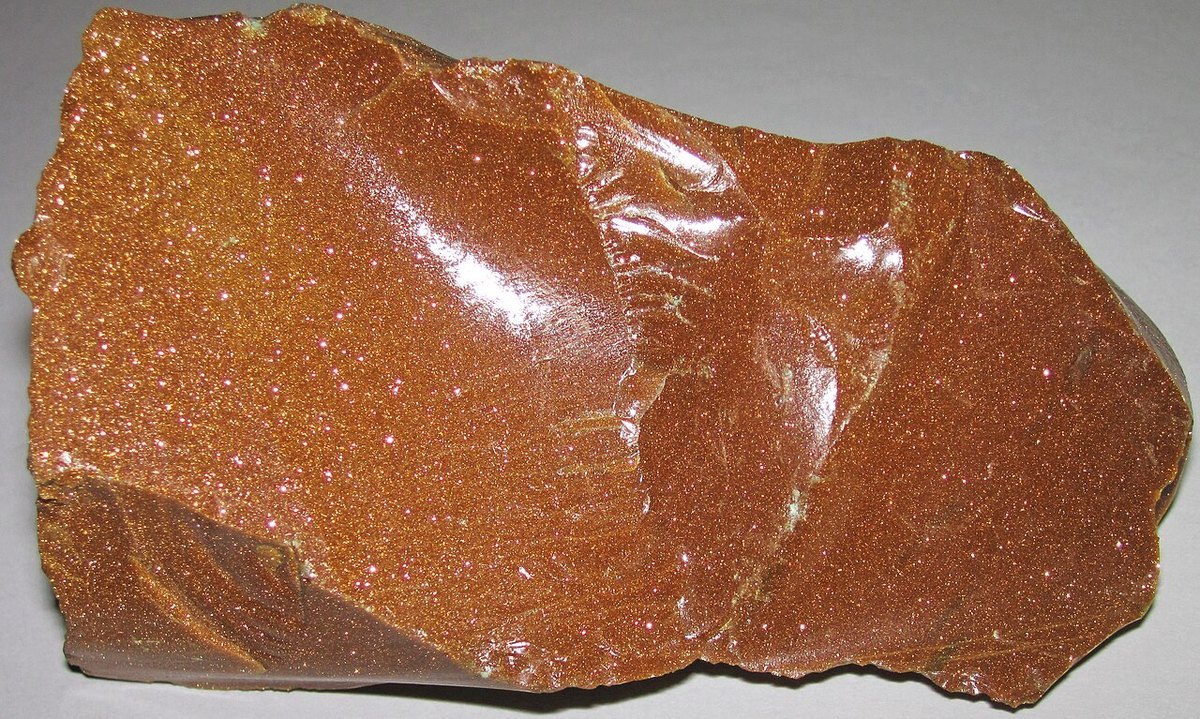
Goldstone is a man-made glass embedded with microscopic crystals of copper (or, in the blue and green varieties, with cobalt or chromium). The reddish-brown original version was developed in seventeenth-century Venice by monastic glassmakers, and trade lore traditionally credits the Miotti family, who held a glassmaking privilege from the Venetian Senate.
The technique involves melting silica with copper oxide in a reducing atmosphere, then cooling very slowly so that tiny copper crystals precipitate throughout the glass.
Modern goldstone includes the classic reddish-brown copper-sparkle variety, a dark-blue cobalt-and-copper version often marketed as blue goldstone, and a green chromium-and-copper version sometimes called green goldstone. All are glass rather than mineral, and none are produced by geological processes.
Hardness is approximately 5.5 to 6 on the Mohs scale, similar to ordinary glass, and the refractive index sits in the normal glass range of about 1.52 to 1.53.
Because goldstone is a manufactured material, its quality is judged by workmanship rather than by rarity. Good goldstone shows evenly distributed sparkle, no bubbles or flow lines, and a rich body color when polished. Low-grade pieces can appear cloudy, with uneven copper distribution or visible manufacturing defects.
Most commercial goldstone reaches the market from Italian, Chinese, and Indian glassworks, and it is widely cut into tumbled stones, cabochons, beads, and small carvings.
How Goldstone Compares
| Property | Goldstone | Sunstone | Aventurine |
|---|---|---|---|
| Hardness | 5.5 - 6 | 6 - 7 | 6.5 - 7 |
| Price / carat | — | $ Budget | — |
| Rarity | Man-made (abundant) | Natural (moderate) | Abundant |
| Best For | Budget sparkle, gifts | Natural feldspar glow | Heart-chakra work |
Meaning and Symbolism
Goldstone's meaning is closely tied to its origin story. Venetian tradition calls the material avventurina, the same root as English aventurine, and legend traditionally credits a monastic order in the seventeenth century with its accidental discovery, with copper shavings said to have fallen into a batch of molten glass.
The Italian name carries the word for chance, and contemporary crystal writers often describe goldstone as a stone of happy accident, lucky timing, and beauty emerging from unlikely places.
In modern crystal tradition, goldstone is traditionally associated with the sacral and solar plexus chakras. Practitioners believe the copper embedded in the glass supports steady warmth, confidence, and creative drive, framing goldstone as a gentle companion for daily self-esteem rather than a powerful single-purpose stone.
Because the material is man-made, some crystal writers emphasize that its energy is a story as much as a property: goldstone reminds practitioners that meaning can be built through craft rather than inherited from the earth alone.
Blue goldstone, the dark-blue version with copper sparkle against a deep cobalt body, has developed its own modern meaning in contemporary crystal practice. Practitioners often associate it with the third eye and crown chakras by color. With themes of wishes and night-sky imagery because of the visual resemblance to a star field.
Green goldstone, less common, is traditionally associated with the heart chakra in contemporary literature. Across all three colors, goldstone is treated as a teaching stone about clarity of disclosure: reputable sellers always label it as glass rather than natural gemstone.
Historical Timeline
Healing Tradition
Emotional
Practitioners believe goldstone is a stone of everyday encouragement and gentle confidence. In crystal healing tradition, it is said to remind a wearer that beauty can emerge from imperfect or accidental beginnings.
Has given the material a reputation as a supportive stone during mid-life transitions, creative relaunches, or any season of rebuilding after setback.
Many find goldstone a useful daily carry precisely because it is inexpensive and easy to replace; the low stakes make it welcome in pockets, bags, and shared spaces.
Goldstone is often paired with citrine for abundance intentions, with smoky quartz when old discouragement needs grounding before new confidence can land, and with rose quartz when the emotional work involves softening alongside self-belief. Practitioners tend to describe goldstone as modest and steady rather than dramatic.
Spiritual
In crystal healing tradition, goldstone (reddish-brown) is said to warm the sacral and solar plexus chakras with copper-linked qualities of steady personal power. Practitioners believe the material's man-made origin makes it especially suitable for readers whose path emphasizes craft, intention.
The building of meaning through attention, rather than the channeling of ancient energies.
Blue goldstone, with its night-sky appearance, is traditionally associated in contemporary tradition with wishes, third-eye openings, and quiet inner sky; green goldstone is linked to heart-chakra steadiness. Because goldstone is relatively new in crystal tradition, many practitioners treat it as a reminder that spiritual meaning can be crafted rather than only inherited.
Holding goldstone during intention-setting or keeping a piece on a desk altar during creative work are common practices.
Physical
Practitioners believe goldstone supports what they describe as steady warmth and general vitality, with the copper content borrowing metaphor from copper's traditional association with circulation. Because goldstone is glass rather than a natural mineral, its folklore is modern and aesthetic rather than grounded in older medical tradition.
Many find wearing a goldstone pendant or keeping a small cabochon on a bedside altar comforting during long work weeks, tiring travel, or quiet periods of recovery. Goldstone is not a substitute for medical care, and practitioners frame its role as gently supportive rather than curative.
Readers with copper allergies or specific sensitivities should note that goldstone's copper content is typically sealed in glass, but any direct skin contact with broken edges should be avoided.
Zodiac, Birthstone and Gifts
Goldstone has no traditional birthstone role and is adopted in modern astrology based on color, material, and temperament rather than ancient assignment. Many astrologers suggest reddish-brown goldstone for Sagittarians drawn to warm, energetic, lively stones with a strong visual presence, since the sign is often described as attracted to sparkle and enthusiasm.
Blue goldstone is occasionally suggested for Capricorns and Aquarians for its night-sky imagery. Because goldstone is man-made, Vedic astrology (Jyotish) does not include it among traditional gem prescriptions, and contemporary Western astrologers generally treat goldstone as an intention-based rather than chart-based choice.
Care and Cleansing
Goldstone requires gentle cleansing because it is glass. Dry cloth wiping handles most daily maintenance, and short lukewarm rinses with a soft brush are acceptable for loose stones if dried immediately. Avoid ultrasonic and steam cleaners, which can stress the glass and reveal internal bubbles or flow lines.
Avoid saltwater soaks completely, as salt can pit the surface and tarnish any exposed copper along edges or fractures.
Smoke cleansing with palo santo or sage is the most commonly recommended method for goldstone. Moonlight and short sunlight exposure are safe since the color is stable. Sound cleansing with a singing bowl placed near rather than under the stone is appropriate.
Many practitioners recharge goldstone by resting it on a clear quartz cluster or selenite slab overnight, which is passive and safe. Dry salt placement can be used briefly but should not be prolonged.
- DO store goldstone in a soft-lined box away from harder stones.
- DO NOT expose goldstone to saltwater, bleach, or household cleaning solutions.
- DO use a soft cloth for daily cleaning rather than chemical polishes.
- DO NOT use ultrasonic or steam cleaners on goldstone.
- DO remove goldstone jewelry before showering, swimming, or vigorous exercise.
- DO ask for clear disclosure of man-made origin at the point of sale.
- Note: goldstone is glass; any chip or crack exposes internal copper, which can tarnish.
Real vs Fake
Goldstone is itself a man-made material, so the identification question is usually whether a piece labeled goldstone is well-made glass or something else entirely. Reputable sellers always disclose goldstone as glass.
Common mislabeling happens in the other direction: tumbled goldstone is sometimes sold as natural gemstone to uninformed buyers, particularly under names like star stone, monks' gold, or sparkling aventurine glass.
Under 10x magnification, goldstone shows an unmistakable pattern: evenly distributed microscopic metallic copper crystals against a deep red-brown glass body. The crystals appear as bright pinpoints, and sometimes larger flake-like platelets when the copper settled unevenly.
Natural sunstone, which goldstone is occasionally confused with, shows broader metallic schiller patches rather than fine uniform sparkle, and natural aventurine quartz has a fibrous, layered appearance rather than a glass-smooth body.
Practical at-home clues include weight (goldstone is lighter than comparable natural stones because glass is less dense), the scratch test (goldstone scratches more easily than most natural quartz-family stones), and the absence of natural inclusions such as growth lines or mineral matrix.
Curved bubbles visible under magnification are a dead giveaway for glass, as are mold seams on inexpensive tumbled pieces. Always buy from dealers who clearly label goldstone as man-made; honesty about the material is part of its modern crystal ethic.
Goldstone Jewelry & Gifts
Goldstone is one of the least expensive decorative stones on the market. Tumbled pieces sell for $0.50 to $3 each, palm stones for $3 to $15, cabochons for $2 to $20, and complete bracelets or bead strands for $5 to $40.
Carved pieces such as small animals, spheres, and eggs run $10 to $80 depending on size. Because the material is manufactured, pricing reflects workmanship, uniformity of sparkle, and finish quality rather than scarcity.
Italian and Venetian-made goldstone is considered the traditional benchmark for quality, and Murano glass with goldstone accents carries a modest premium. Chinese and Indian glassworks supply most of the mass-market tumbling, cabochon, and bead material at the lower price tier.
Blue goldstone typically costs the same as or slightly more than reddish-brown goldstone; green goldstone is less common and often priced modestly higher. Reputable sellers always label goldstone as man-made glass; any listing that suggests it is a natural stone should be avoided or treated with skepticism.
Where to Buy Goldstone
Affiliate disclosure: Some links below earn us a small commission at no extra cost to you. See our affiliate disclosure page.
Handmade, raw, and tumbled pieces from independent sellers worldwide.
Shop Goldstone on Etsy →Accessories, tools, and specimen sets with fast Prime delivery.
Shop Goldstone on Amazon →Certified loose gemstones graded and photographed for online buyers.
Shop Goldstone on GemSelect →Pairs Well With




Where Goldstone Is Found


