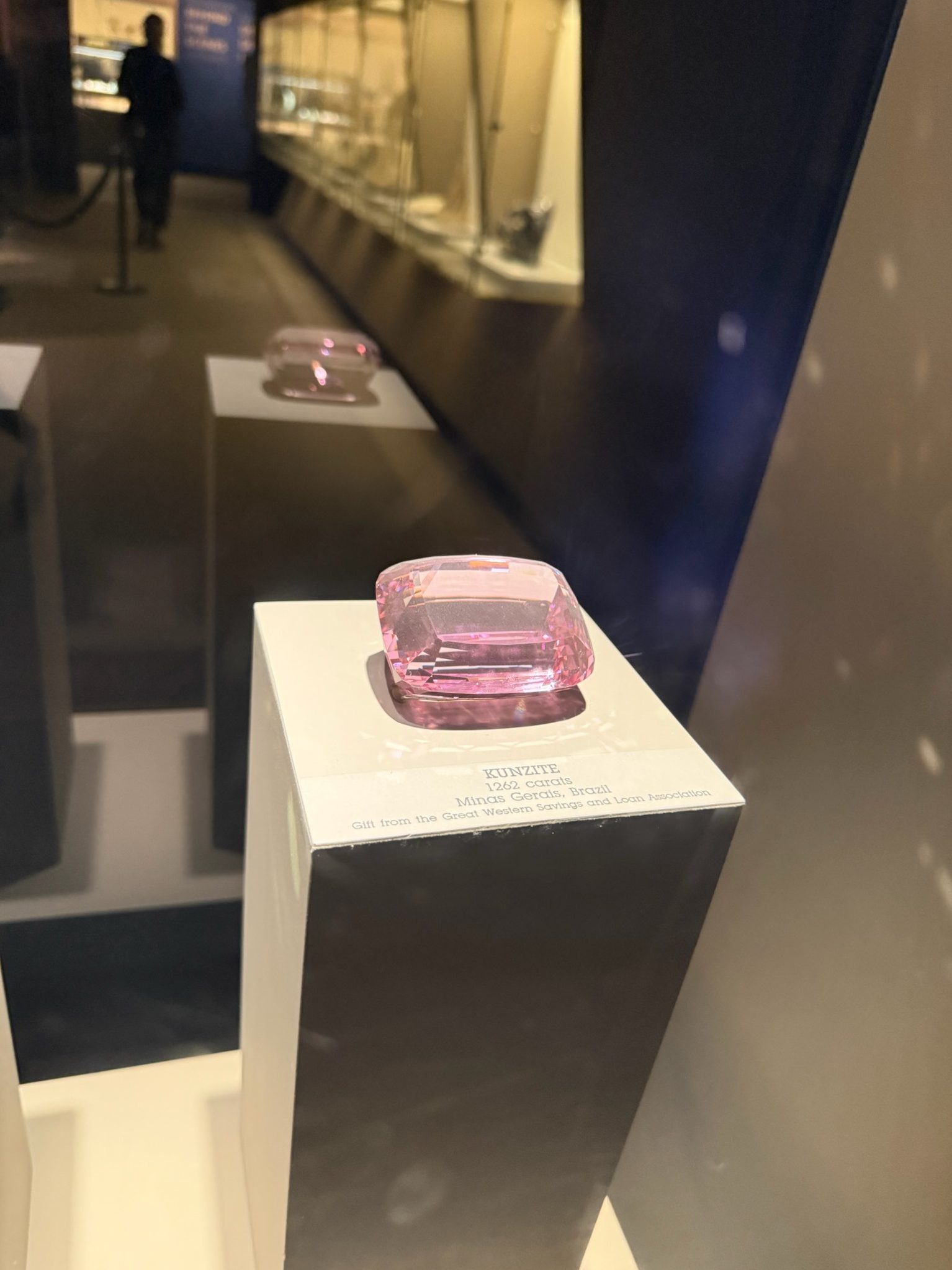
Kunzite
Named after GIA's founding gemologist George Frederick Kunz, pink kunzite is a delicate lilac-to-rose spodumene beloved for its gentle feminine radiance
- Romantic gift-givers seeking a meaningful alternative to pink sapphire or tourmaline
- Crystal practitioners focused on heart healing and love work
- Collectors building a pastel and pleochroic gemstone suite
- Buyers who want large, impressive stones at accessible prices
- Daily-wear ring users without protective bezel settings
- Buyers who display stones in direct sunlight (color fades)
- Those who want low-maintenance gemstones that need no special care
What Is Kunzite?
Kunzite is the pink to violet-pink gem variety of spodumene (LiAlSi2O6), a lithium aluminum silicate mineral. Its distinctive color comes from trace amounts of manganese in the crystal structure. Kunzite is named after the gemologist George Frederick Kunz, who first described it from specimens found in California in 1902. It is strongly pleochroic, showing different shades of pink, violet, and colorless from different viewing angles.
The finest kunzite today comes from Afghanistan, particularly Nuristan province, where large, well-formed crystals grow in pegmatites alongside tourmaline and aquamarine. Brazil, Madagascar, and the original California locality also produce gem-quality material. Kunzite crystals can reach exceptional sizes; stones over 100 carats are not unusual from the best localities, and faceted kunzite over 50 carats is more accessible than most gems of that size.
Two important characteristics affect kunzite ownership: perfect cleavage in two directions makes it prone to splitting along those planes under impact, requiring protective jewelry settings. And kunzite is sensitive to prolonged strong light exposure, particularly UV, which can cause the pink-violet color to fade over time. Store out of direct sunlight and avoid prolonged UV display lighting.
Meaning and Symbolism
Kunzite is strongly associated in crystal healing traditions with love, compassion, and the heart chakra. It is said to open the heart to receiving as well as giving love, and to help heal emotional wounds left by difficult relationships. Practitioners describe it as gentle and high-frequency, carrying what some traditions call divine feminine energy.
The stone is popular in crystal wellness communities for working through heartbreak, releasing emotional armor, and cultivating self-compassion. Some traditions link it to connecting with the energy of the Divine Mother or angelic compassion. These associations are rooted in sincere belief within the crystal community; the pink-violet color and translucent quality of fine kunzite do create a visual language well-suited to the symbolism of love and tenderness.
Kunzite also has a history as a gift stone associated with romantic love and commitment. Its color range overlaps with pink sapphire, pink tourmaline, and rose quartz, placing it in the larger symbolic tradition of pink-colored stones as expressions of affection.
Healing Tradition
Emotional
Practitioners associate kunzite with healing heartbreak, releasing emotional defenses, and building capacity for both giving and receiving love. Described as gentle and affirming rather than intense.
Spiritual
Linked in crystal traditions to the Divine Feminine, angelic compassion, and unconditional love energy. Used in heart-opening meditations and relationship healing rituals.
Physical
No physical healing properties have scientific support. Kunzite is non-toxic and safe for normal wearing and handling.
Where to Buy Kunzite
Affiliate disclosure: Some links below earn us a small commission at no extra cost to you. See our affiliate disclosure page.
Handmade, raw, and tumbled pieces from independent sellers worldwide.
Shop Kunzite on Etsy →Accessories, tools, and specimen sets with fast Prime delivery.
Shop Kunzite on Amazon →Certified loose gemstones graded and photographed for online buyers.
Shop Kunzite on GemSelect →Pairs Well With

Where Kunzite Is Found


