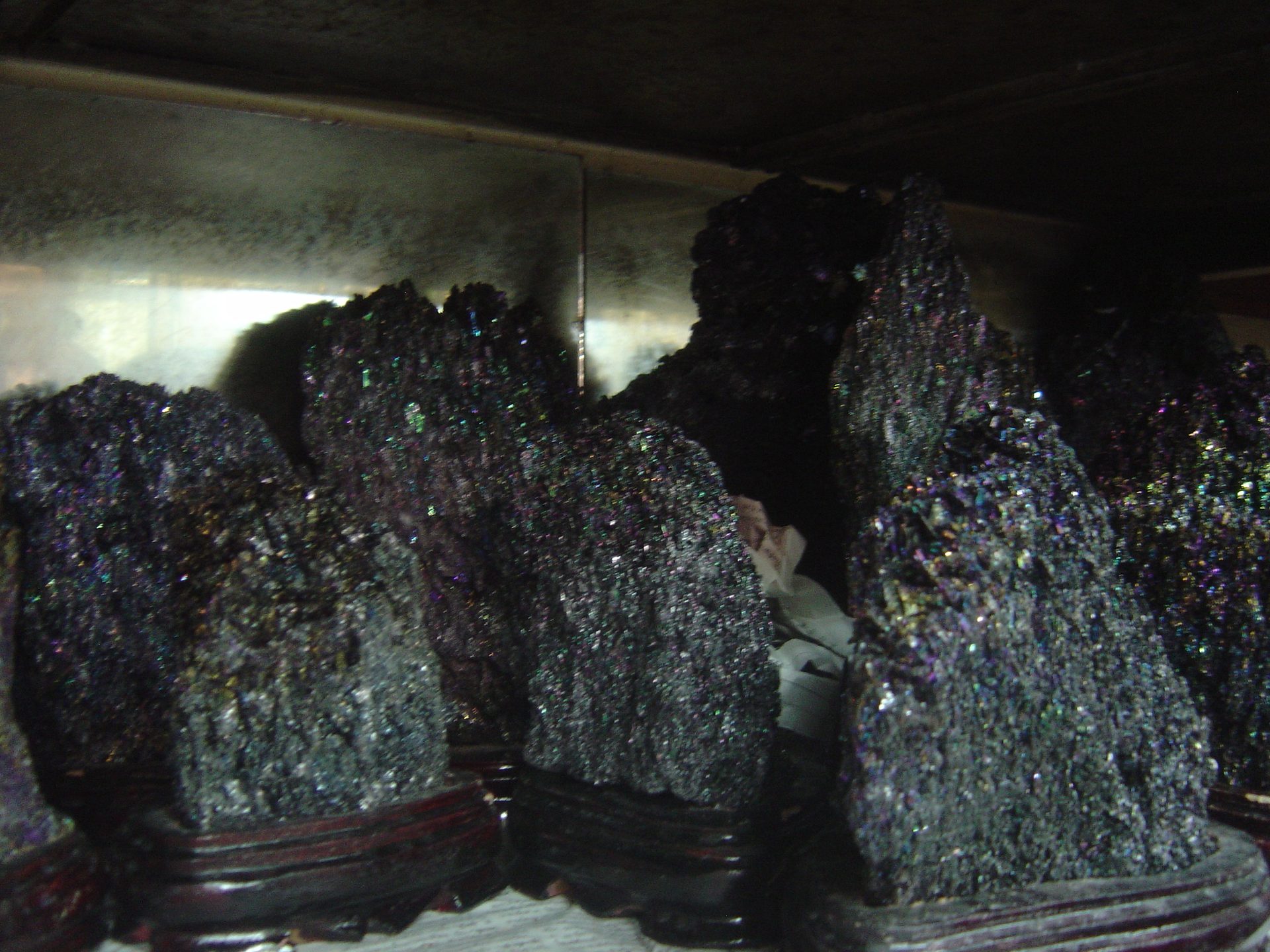
Lab Created Moissanite
Born from a meteorite crater and now grown in labs, moissanite delivers fire and brilliance that outperforms diamonds at a fraction of the.
- Moissanite was discovered inside a meteorite - meaning every moissanite gem traces its lineage to a space rock that struck Earth over 50,000 years ago.
- It has the highest thermal conductivity of any gemstone, which is why thermal probe testers used to detect fake diamonds will also flag moissanite as diamond.
- Moissanite's fire (0.104) is 2.4 times greater than diamond (0.044), producing rainbow dispersion visible at distance in a way diamond cannot match.
- Silicon carbide - moissanite's formula - is used in body armor, racing car brake discs, and semiconductor electronics, making it literally bulletproof material.
- Natural moissanite is so rare that a gem-quality natural specimen would be worth more than the equivalent diamond; every gem sold commercially is lab grown.
- Engagement ring buyers seeking maximum sparkle on a budget
- Ethical shoppers avoiding mined diamonds
- Collectors who want near-diamond hardness in a stone
- Fashion jewelry designers needing durable colorless stones
- Anyone who prefers more fire and rainbow dispersion than diamond
- Traditional buyers valuing natural diamond prestige and rarity (consider mined diamond)
- Investment buyers seeking gemstone value appreciation (consider diamonds or rubies)
- Purists who find moissanite's double refraction slightly blurry (consider diamond)
What Is Lab Created Moissanite?
Moissanite is silicon carbide (SiC) - a mineral so rare in nature that all commercial gems are lab created. Discovered in 1893 by Henri Moissan inside a meteorite crater in Arizona, natural moissanite exists only as microscopic crystals; every gem-quality stone sold today is grown in a lab.
With a refractive index of 2.65-2.69, moissanite has greater brilliance than diamond (2.42) and nearly twice the fire (color dispersion) at 0.104 vs diamond's 0.044. This means moissanite produces more rainbow sparkle, which some buyers love and others find too flashy compared to diamond.
At 9.25 on the Mohs scale, moissanite is harder than any natural gemstone except diamond, making it an exceptionally durable choice for daily-wear jewelry. Charles and Colvard pioneered lab production in the 1990s and hold the foundational patents.
How Lab Moissanite Compares
| Property | Moissanite | Diamond | White Sapphire |
|---|---|---|---|
| Hardness | 9.25 | 10 | 9 |
| Price/ct | $$ Mid-range | $$$$ Luxury | $$ Mid-range |
| Brilliance (RI) | 2.65-2.69 | 2.42 | 1.77 |
| Best For | Engagement rings | Tradition, investment | Subtle sparkle |
Meaning and Symbolism
Moissanite is said to carry the energy of stardust and cosmic transformation - practitioners believe its meteoritic origin connects it to universal abundance, resilience, and the expansive fire of creation.
Crystal healing traditions associate moissanite with the crown chakra and solar plexus, said to balance spiritual aspiration with confident personal power. It is traditionally linked to clarity of purpose and the courage to shine authentically.
Some practitioners work with moissanite as a stone of amplification, believing its extraordinary light-bending properties mirror its energetic ability to magnify intentions, illuminate hidden truths, and accelerate personal evolution.
Historical Timeline
Healing Tradition
Emotional
Practitioners believe moissanite carries a high-frequency energy said to dissolve fear, self-doubt, and limiting beliefs. It is traditionally associated with clarity of mind and the confidence to pursue one's authentic path without compromise.
Those who work with moissanite in crystal healing contexts often describe a sense of mental sharpness and decisive awareness following meditation sessions with the stone. Its cosmic origin story resonates with practitioners who see it as a reminder of universal abundance - the idea that brilliance is not scarce but endlessly renewable.
While these experiences are personal and not medically verified, moissanite has earned a devoted following among crystal enthusiasts seeking clarity and confidence.
Spiritual
Moissanite is said to be a powerful amplifier of intention and spiritual light, with practitioners believing its extraordinary refractive index has a metaphysical equivalent: amplifying whatever energy it encounters.
Crown chakra activation is the most commonly cited spiritual use, with crystal workers describing a sense of expanded consciousness and connection to higher realms during meditation. Its solar plexus resonance is said to help translate spiritual insights into grounded, real-world action.
Some practitioners use moissanite as a centerpiece stone in crystal grids, believing its light-bending properties energetically magnify surrounding stones and intentions.
Physical
In crystal healing traditions, moissanite is said to support vitality and overall physical resilience - though none of these claims have medical support and the stone should never substitute for professional health care.
Its association with fire and the solar plexus chakra leads some practitioners to work with it for what they describe as energizing and warming effects, particularly useful during periods of fatigue or recovery.
Practitioners who use crystal water sometimes note that moissanite is safe for water since it is chemically inert, making it one of the few gem-quality stones suitable for that practice without leaching concerns. As with all crystal practices, individual results vary and these are complementary rituals, not medical treatments.
Zodiac, Birthstone and Gifts
Aries, the bold initiator of the zodiac, finds a perfect energetic match in moissanite's fiery brilliance and cosmic resilience. Practitioners believe moissanite amplifies the Ram's natural leadership qualities and ability to forge new paths with courage and clarity.
Leo, whose solar nature craves authentic radiance, is said to resonate deeply with a stone whose light output surpasses every other gem. Crystal healing traditions suggest that wearing moissanite helps Leo channel their natural magnetism purposefully, ensuring their brilliance illuminates rather than overwhelms those around them.
Care and Cleansing
Moissanite is one of the easiest gemstones to clean - warm soapy water with a soft brush restores its fire brilliantly, and unlike most gems it is safe in ultrasonic cleaners since silicon carbide is exceptionally stable.
For energetic cleansing, moissanite responds well to sound (singing bowls, tuning forks), moonlight, and sunlight. As a cosmic material, practitioners often feel that recharging under starlight or full moonlight is particularly resonant.
Smudging with sage or palo santo is a traditional energetic cleansing method that works safely for moissanite. Hold the stone in the smoke briefly while setting a clear intention for renewed purpose and clarity.
- DO clean moissanite regularly with warm soapy water - oil and lotion buildup significantly reduces its fire.
- DO NOT expose moissanite to strong chemicals like chlorine bleach which can damage the metal settings even though the stone itself is chemically resistant.
- DO inspect prong settings periodically - moissanite's durability means the stone outlasts its settings, so check clasps and prongs every 1-2 years.
- NOTE moissanite's double refraction can make inclusions appear doubled under magnification - this is a property of the crystal, not a defect.
- DO NOT store loose moissanite against diamonds or corundum without padding - despite its hardness, point contact against equally hard materials can cause chipping.
Real vs Fake
The main confusion with moissanite is buyers confusing it with diamond, either intentionally (fraud) or innocently. A thermal conductivity tester will identify both moissanite and diamond as diamond - use an electrical conductivity tester to distinguish them since moissanite conducts electricity and diamond does not.
Genuine moissanite displays double refraction: look through the stone at a straight edge or needle point and you will see it doubled. Diamonds are singly refractive and show a single sharp edge. This test is reliable with a loupe and works for loose stones.
Moissanite has a distinctive rainbow fire visible even in dim lighting - far more colorful dispersion than diamond. If you expect a diamond but see extraordinary rainbow sparkle, you likely have moissanite. This is a feature, not a flaw, but worth knowing.
Reputable moissanite sellers always disclose it as moissanite, not diamond. If a seller is claiming to sell diamonds at prices consistent with moissanite ($200-600 per carat), that should trigger investigation.
Lab quality for moissanite is graded similarly to diamond: cut (Ideal, Very Good), color (D-E-F colorless; G-H-I near colorless), and clarity. Always ask for the grade; top-tier moissanite is DEF colorless with Very Good or Ideal cut.
Lab Created Moissanite Jewelry & Gifts
Lab created moissanite retails between $200-600 per carat for quality stones, compared to $2,000-20,000+ per carat for equivalent diamonds. A 1-carat DEF colorless moissanite in an ideal cut typically costs $300-500 total - a fraction of diamond equivalent pricing.
Color grade matters significantly: DEF colorless moissanite is the premium tier with no detectable warmth. G-H-I near colorless stones are 20-30% less expensive and virtually indistinguishable to the naked eye in most lighting conditions.
Charles and Colvard (Forever One brand) and Moissanite Co. are the most established US brands with consistent grading. Chinese producers offer lower prices but quality control varies - look for certificates and return policies.
Shape affects pricing: round brilliant moissanites are the most expensive per carat due to cutting waste. Oval, cushion, and elongated shapes offer more visual size per dollar since they appear larger face-up than rounds of equivalent carat weight.
For engagement rings, consider that a 6.5mm round moissanite weighs approximately 1 carat and appears identical in size to a 1-carat diamond at roughly 90% less cost. The primary trade-off is provenance and resale value, not beauty or durability.
Where to Buy Lab Created Moissanite
Affiliate disclosure: Some links below earn us a small commission at no extra cost to you. See our affiliate disclosure page.
Handmade, raw, and tumbled pieces from independent sellers worldwide.
Shop Lab Created Moissanite on Etsy →Accessories, tools, and specimen sets with fast Prime delivery.
Shop Lab Created Moissanite on Amazon →Certified loose gemstones graded and photographed for online buyers.
Shop Lab Created Moissanite on GemSelect →Pairs Well With


Where Lab Created Moissanite Is Found

