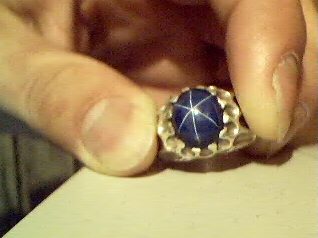
Lab Created Sapphire
Lab Created Sapphire is corundum with iron and titanium - chemically identical to natural sapphire, Mohs 9 hard.
- All sapphires are corundum - including red corundum, which is called ruby. Lab sapphire is the same corundum family as lab ruby; only the trace elements differ.
- Lab sapphire in colorless form (white sapphire) is sometimes used as a diamond alternative in jewelry - its Mohs 9 hardness makes it among the most durable diamond substitutes available.
- The word 'sapphire' derives from the Greek 'sappheiros,' which may originally have referred to lapis lazuli rather than corundum - the stones were confused in ancient trade.
- Lab sapphire is used extensively in industrial applications beyond jewelry: watch crystals, optical windows, semiconductor substrates, and phone camera lenses all use synthetic sapphire for its hardness and optical clarity.
- Color-change lab sapphire - which appears blue in natural light and purple in incandescent light - can be produced reliably in the laboratory by controlling vanadium content, mimicking the rarest natural color-change sapphires.
- Engagement ring shoppers who want a durable, ethical alternative to diamond in a vivid blue or any color
- September birthday buyers seeking a birthstone gift with real gemstone quality at an accessible price point
- Ethically conscious shoppers who want a gemstone with no mining footprint or conflict-region associations
- Jewelry designers who want large, perfectly matched sapphires in any color without the premium of natural stones
- Anyone who wants the practical durability of Mohs 9 corundum for daily-wear jewelry at reasonable cost
- Gem investors who want stones with appreciating market value - lab sapphires have minimal resale value
- Buyers specifically seeking the character, inclusions, and provenance story of a Kashmir or Ceylon natural sapphire
- Those presenting lab sapphire as natural without disclosure - unethical and illegal in commercial contexts
What Is Lab Created Sapphire?
Lab Created Sapphire is aluminum oxide (Al₂O₃) - corundum - with iron and titanium trace elements that produce the classic blue color, grown in a laboratory using the same chemistry that creates natural sapphire in the Earth. It rates 9 on the Mohs hardness scale.
It has identical hardness (Mohs 9), identical refractive index (1.762-1.778), and identical specific gravity (4.0) to natural sapphire. The distinction between lab and natural requires gemological testing, not visual inspection.
Lab sapphire is available in the full color range of natural sapphire: blue in every shade from pale cornflower to deep midnight, pink, yellow, orange, green, white (colorless), and padparadscha (pink-orange). The color is controlled by adjusting the trace element composition during growth.
This color control actually gives lab sapphire an advantage for some jewelry applications - perfectly matched pairs and suites of a specific color shade are straightforward to produce in the laboratory but difficult to find in nature.
Production methods include Verneuil flame fusion (the most common and least expensive), Czochralski pulling (used for optical-grade material), hydrothermal synthesis (mimics natural growth conditions), and flux growth. Each method produces stones with different internal characteristics; gemologists identify lab origin partly by recognizing these method-specific features.
Hydrothermal lab sapphires are the most natural-looking and command the highest prices within the lab category.
Lab Created vs Natural Blue Sapphire
| Property | Lab Sapphire | Natural Sapphire | Blue Topaz |
|---|---|---|---|
| Hardness | 9 | 9 | 8 |
| Price / carat | $ Budget | $$ Mid-range | $ Budget |
| Color control | Precise, consistent | Variable, natural | Irradiated treatment |
| Inclusions | Few or none | Natural inclusions typical | Usually clean |
| Resale value | Minimal | Significant for fine quality | Low |
Meaning and Symbolism
Sapphire's meaning crosses virtually every major culture with a consistent thread: wisdom, truth, divine favor, and the clarity of mind that comes from seeing reality as it actually is. Ancient Persians believed the Earth rested on a giant sapphire whose reflection colored the sky blue.
Medieval Europeans considered sapphire the stone of heaven and truth - bishops wore them as symbols of celestial wisdom, and sapphires were set in royal regalia across the continent. The association between sapphire's cool blue and the quality of clear, undistorted perception is remarkably consistent across traditions.
Lab Created Sapphire carries this meaning fully. The identical chemical structure that produces the blue color in natural sapphire - iron and titanium in an aluminum oxide lattice - is present in lab sapphire as well.
Crystal healing practitioners who work with sapphire for Throat chakra communication, Third Eye clarity, and the cultivation of truth-telling find lab sapphire an equally valid working stone. Its ethical production adds a contemporary layer of meaning for practitioners who value the alignment between their spiritual values and their material choices.
The September birthstone association is typically considered to apply to lab sapphire in the same way as natural - the sign of Virgo and the Libra cusp both have associations with sapphire regardless of origin. For birthday gifts, the birthstone meaning is fully intact.
Historical Timeline
Healing Tradition
Emotional
Sapphire has long been associated in crystal healing tradition with emotional clarity - the capacity to see one's own emotional landscape with honesty rather than through the fog of wishful thinking or fearful projection. Lab sapphire is said to carry this quality fully.
Practitioners use it for clients and practitioners who are prone to emotional confusion or who have difficulty distinguishing their own feelings from absorbed emotional material from others. The cool blue is associated with bringing down emotional temperature - calming reactive states without suppressing genuine feeling.
It is a stone of emotional intelligence rather than emotional suppression.
Spiritual
In spiritual tradition, sapphire is associated with truth, divine wisdom, and the kind of clarity that comes from sustained spiritual practice. Lab sapphire is said to strengthen the Throat chakra's capacity for authentic self-expression and the Third Eye's capacity for clear perception beyond personal bias.
Practitioners use it in meditation focused on discernment - the ability to distinguish truth from illusion, authentic guidance from wishful thinking, or genuine intuition from projection. The blue color's association with the sky - unlimited, unclouded - makes it a natural symbol for the state of mind that meditators aspire to develop.
Physical
Crystal healing tradition associates sapphire with the throat, vocal cords, thyroid, and the nervous system. Practitioners sometimes place lab sapphire at the base of the throat during layouts focused on communication, thyroid health support, or stress-related neurological symptoms.
Blue stones in the color-healing system are generally associated with cooling, calming, and reducing inflammation - associations that have made sapphire a traditional recommendation for headaches, eye strain, and the physical symptoms of anxiety. These associations are traditional and not medical claims.
Zodiac, Birthstone and Gifts
Sapphire as September birthstone naturally associates it with Virgo and Libra (the signs spanning September). Virgo, the sign of discernment, service, and the careful analysis of truth, resonates with sapphire's clarifying qualities - both value precision of perception and the honest naming of what is.
Libra, the sign of balance, justice, and the search for truth in relationships and society, finds in sapphire a stone that embodies its core aspiration: clarity without distortion, judgment without bias.
Sagittarius, the philosophical archer who seeks truth at the grandest scale, benefits from sapphire's capacity to maintain clarity of vision even when the truths encountered are uncomfortable or vast.
Care and Cleansing
Lab sapphire is corundum - extremely hard and chemically stable - and accepts all standard cleansing methods. Ultrasonic cleaners are safe for unfilled lab sapphires (unlike some natural sapphires that may have fracture filling). Steam cleaning is effective.
Running water, salt water, moonlight, sunlight, sound, and smoke all work for energetic cleansing without any precautions needed.
For energetic purposes, moonlight has a natural resonance with sapphire's cool, reflective, truth-oriented energy - a full moon cleanse is traditional. Sound cleansing with a crystal or Tibetan bowl is effective and particularly resonant for a throat chakra stone.
Regular cleansing is recommended if the stone is worn in jewelry and used actively for communication and clarity work.
- DO wear daily - lab sapphire's Mohs 9 makes it one of the most durable gemstones for everyday jewelry.
- DO clean with warm water, mild soap, and a soft brush for regular maintenance - or ultrasonic cleaner.
- DO disclose lab-created status when selling, gifting for appraisal, or insuring - required by FTC regulations.
- DO NOT assume lab sapphire has significant resale value - it does not. If resale value matters, choose natural.
- Note: Color-change lab sapphires should be described accurately to buyers as color-change and lab-created.
- DO check settings periodically - the metal prongs are more vulnerable than the stone itself at Mohs 9.
- Note: Lab sapphire may show slightly different fluorescence characteristics than natural under UV - a minor gemological marker, not a quality issue.
Real vs Fake
Lab sapphire is genuine corundum - the distinction is lab vs natural, not fake vs real. Distinguishing lab from natural sapphire requires gemological analysis.
Key lab indicators: lack of natural mineral inclusions typical of sapphire (rutile silk, fingerprints), curved growth lines visible under high magnification in Verneuil material, and gas bubbles in some flame-fusion specimens.
Hydrothermal lab sapphires are harder to distinguish and may show flux-type inclusions. Spectroscopic analysis (photoluminescence spectroscopy) can identify lab origin in the vast majority of cases by detecting transition metal signatures specific to growth method. Gemological laboratories and other major labs routinely identify lab sapphires submitted for certificate.
Glass imitations are easier to identify: glass is Mohs 5.5, scratches with a steel file, and shows single refraction under polariscope (sapphire shows double refraction). Blue topaz (Mohs 8) and aquamarine (Mohs 7.5-8) are natural alternatives to lab sapphire, not imitations. Buy from transparent sellers who explicitly state the stone's lab-created status.
Lab Created Sapphire Jewelry & Gifts
Lab Created Sapphire is available at multiple price points. Melee size (under 0.1 carat) runs $1 to $5 per stone. Small faceted stones (0.5 to 1 carat) typically $5 to $30. Good quality 1 to 3 carat lab sapphires run $20 to $100.
High-quality hydrothermal lab sapphires in larger sizes can reach $50 to $200+ per carat. Pink and padparadscha colors typically command slight premiums.
Blue is by far the most popular, with cornflower blue (medium blue, not too dark, not pale) commanding the most attention. For rings, round, oval, and cushion cuts are most popular.
In fine jewelry contexts, ask specifically whether the stone is Verneuil or hydrothermal - hydrothermal material has more natural-looking characteristics for high-end settings.
Responsible sellers will clearly state 'lab created sapphire' on all descriptions and receipts. For significant jewelry purchases, a laboratory gemological report confirming lab origin and confirming quality parameters is worth obtaining. Always ask before purchase if origin disclosure is not already clearly stated.
Where to Buy Lab Created Sapphire
Affiliate disclosure: Some links below earn us a small commission at no extra cost to you. See our affiliate disclosure page.
Handmade, raw, and tumbled pieces from independent sellers worldwide.
Shop Lab Created Sapphire on Etsy →Accessories, tools, and specimen sets with fast Prime delivery.
Shop Lab Created Sapphire on Amazon →Certified loose gemstones graded and photographed for online buyers.
Shop Lab Created Sapphire on GemSelect →Pairs Well With



Where Lab Created Sapphire Is Found


