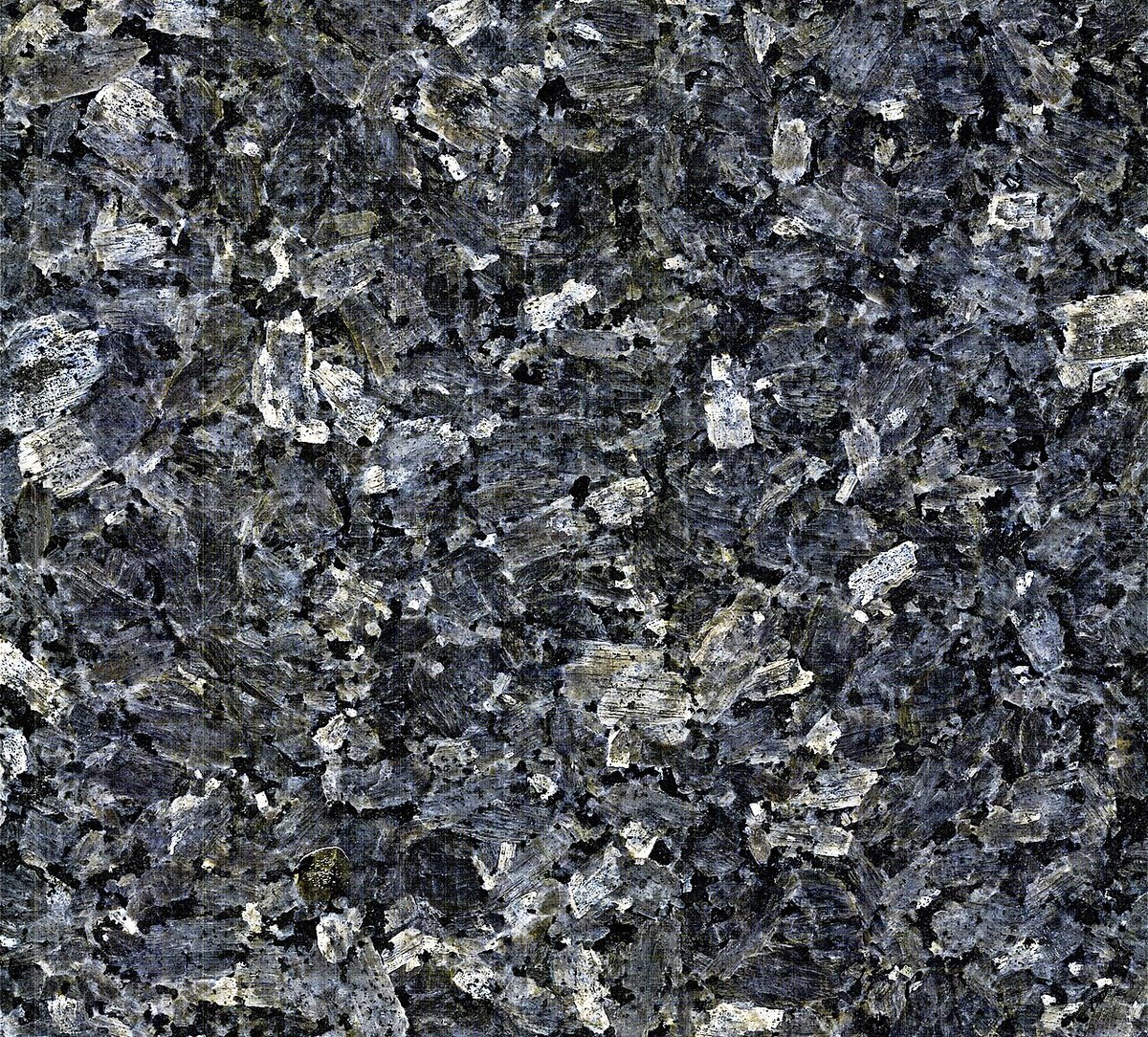
Larvikite
A Norwegian monzonite of shimmering silver flash on deep stone gray, larvikite is the grounded protective companion often called black.
- Larvikite was designated Norway's national stone in 2008.
- The stone is sometimes mismarketed as black moonstone; it is actually a monzonite rock.
- Larvikite formed approximately 300 million years ago during the Oslo Rift event.
- Norwegian geologist Waldemar Christofer Brogger formally described larvikite in 1890.
- Larvikite is widely used in Scandinavian architecture, including the Oslo Opera House facade.
- Root chakra practitioners drawn to grounded silver-flash stones
- Readers interested in Nordic origin and Norwegian mineralogy
- Beginners wanting an affordable alternative to black moonstone
- Altar-makers seeking dark cabochons with subtle movement
- Architecture enthusiasts familiar with larvikite's building-stone heritage
- Buyers wanting transparent faceted gems (try smoky quartz or black spinel)
- Daily-wear engagement shoppers (try black diamond or onyx)
- Those wanting bold moonstone flash (true moonstone shows stronger adularescence)
What Is Larvikite?
Larvikite is a coarse-grained igneous rock - technically a ternary-feldspar monzonite - mined primarily in the Larvik area of southeastern Norway. The rock is composed chiefly of alkali feldspars that exhibit distinctive blue-silver schiller flash when light strikes at specific angles. It rates 6 - 6.5 on the Mohs hardness scale.
The material is sometimes marketed as Norwegian pearl granite, blue pearl granite, or black moonstone, though it is properly a monzonite rather than a granite or moonstone.
Larvikite formed approximately 300 million years ago during the Oslo Rift volcanic event, when deep-seated magma slowly cooled to produce the characteristic coarse feldspar crystals. The stone is Norway's national stone and is widely used in architecture and decorative lapidary. Larvikite scores Mohs 6 to 6.5, limited by its feldspar component.
The silvery schiller effect comes from light interference within the feldspar crystals, a phenomenon related to but distinct from the labradorescence seen in labradorite. Both minerals are feldspars, but larvikite is a rock containing multiple minerals, while labradorite refers to one specific feldspar species.
Most larvikite reaches the crystal market as polished cabochons, tumbled pieces, beads, and carved spheres. The material is durable enough for most jewelry applications, and its affordability makes it popular for larger decorative pieces, countertops, and ornamental architecture.
How Larvikite Compares
| Property | Larvikite | Labradorite | Moonstone |
|---|---|---|---|
| Hardness | 6 - 6.5 | 6 - 6.5 | 6 - 6.5 |
| Flash type | Silver schiller | Multi-color labradorescence | Blue adularescence |
| Price / stone | $ Budget | $ Budget | $ Budget |
| Best For | Affordable grounding | Transformation work | New beginnings |
Meaning and Symbolism
Larvikite has been Norway's signature stone for over a century, designated the country's national stone in 2008.
The material has been quarried in the Larvik area since the late 1800s and has become ubiquitous in Nordic architecture, appearing in everything from the Oslo Opera House facade to countless Norwegian homes and public buildings. The stone's cultural resonance in Scandinavia runs deep.
In crystal healing tradition, larvikite is associated with the root chakra and the third-eye chakra. Practitioners describe the silvery schiller as a symbol of illuminated grounding, said to support clear thinking rooted in earth presence. Crystal workers often use it during practical decision-making and focused study sessions.
Many readers choose larvikite as a budget-friendly alternative to labradorite or black moonstone. The stone is sometimes marketed under the trade name black moonstone, which technically misuses the term (true moonstone is orthoclase feldspar; larvikite is a monzonite rock).
Crystal workers often pair larvikite with clear quartz for amplification or with black tourmaline for layered root-chakra protection. The stone is considered especially suited to northern-European practitioners drawn to local-origin crystals.
Historical Timeline
Healing Tradition
Emotional
Practitioners believe larvikite supports steady clear-headed grounding and patient practical presence. Crystal healing tradition associates the silvery schiller with moments of quiet clarity, and the stone is often recommended for readers working through practical decisions that require both intuition and grounded analysis.
Many readers carry larvikite as a pocket stone during study, office work, and practical planning sessions. Crystal workers sometimes recommend it during life-transition decision-making, treating it as a patient companion rather than an active energetic tool.
Crystal workers often pair larvikite with rose quartz for tender emotional balance or with black tourmaline for layered protective grounding. The stone is considered a daily-use support rather than a meditation intensifier.
Spiritual
In crystal healing tradition, larvikite is linked with the root chakra and the third-eye chakra. Practitioners describe the silvery schiller as a symbol of inner light grounded in deep earth, said to support meditation practices that combine analysis with intuition.
Many readers use larvikite during practical intuition work such as dream interpretation, journaling, and reflective writing. The stone has a short modern folkloric tradition in English-language crystal healing but strong regional cultural resonance in Scandinavia.
Crystal workers often place larvikite near books, writing desks, and study spaces as a daily grounding-and-clarity companion. The Nordic origin gives the stone strong seasonal associations with winter introspection and long dark-season reflection, making it popular for autumn-and-winter meditation practices.
Physical
Practitioners believe larvikite supports what they describe as grounded physical presence and steady circadian rhythm. Crystal healing tradition associates the stone with general root-chakra wellbeing rather than specific conditions, and it is not a substitute for medical care.
Many readers carry larvikite as a pocket stone during travel and seasonal transitions, with the stone framed as a small reminder of rooted presence. Crystal workers sometimes recommend it during sleep-difficulty phases, treating it as a patient bedside companion.
The stone is considered appropriate for root-chakra practices involving embodied awareness and grounded decision-making. Traditional Nordic lore associates the stone's silvery schiller with moonlight on snow, giving it strong seasonal symbolic connections to winter introspection and reflective practice.
Zodiac, Birthstone and Gifts
Larvikite is not a traditional birthstone, but astrologers often recommend it for Capricorn (for patient practicality), Scorpio (for protective depth), and Aquarius (for grounded visionary work).
The stone is often recommended during Saturn return cycles and winter astrological transits when quiet practical focus feels important. Nordic cultural associations make larvikite particularly resonant for readers with Scandinavian heritage or winter-season affinity.
Care and Cleansing
Larvikite tolerates most common cleaning methods. Warm soapy water with a soft brush is safe for physical cleaning, and brief rinses in running water are safe for energetic cleansing. Ultrasonic and steam cleaners should be used with caution because feldspar cleavage planes are sensitive to thermal shock.
Moonlight charging is widely recommended. Morning sunlight is safe in moderation. Smoke cleansing with palo santo or sage is an excellent method. Dry salt cleansing is fine briefly; saltwater soaks should be avoided because of setting corrosion concerns.
Earth burial is traditionally considered especially suited to larvikite because of its Norwegian quarry origin. Many practitioners cleanse larvikite by placing it briefly in a bowl of soil overnight or leaving it on garden ground. Clear quartz bed cleansing is also effective.
- DO clean larvikite with warm soapy water and a soft brush for routine maintenance.
- DO NOT use ultrasonic or steam cleaners; feldspar cleavage can crack.
- DO use bezel settings for rings and bracelets to protect from impact.
- DO NOT expose larvikite to sudden temperature changes or harsh chemicals.
- DO store larvikite separately from harder gems to protect the polished surface.
- DO ask sellers whether the stone is marketed as black moonstone; verify it is larvikite.
- Note: true moonstone is orthoclase feldspar; larvikite is a monzonite rock.
Real vs Fake
Genuine larvikite shows a coarse-grained rock texture with visible feldspar crystals producing characteristic silver-blue schiller flash at specific angles. The rock shows multiple mineral components visible under magnification, distinguishing it from single-crystal feldspar stones like moonstone or labradorite. Under 10x magnification, genuine larvikite shows intergrown feldspar crystals with crisp grain boundaries.
Common misrepresentations include selling larvikite as black moonstone (a misleading marketing term) or mislabeling darker labradorite as larvikite. The two stones share feldspar chemistry but differ in overall composition: larvikite is a rock with multiple minerals; labradorite is a single-crystal feldspar variety.
Larvikite also shows less dramatic color flash than labradorite, favoring silvery tones over multi-color rainbow.
Practical at-home checks include examining the stone for visible intergrown crystal structure (rock texture rather than single-crystal smoothness), rotating to observe silvery schiller pattern, and checking hardness (larvikite scratches a steel file but is scratched by quartz).
For premium-priced cabochons or jewelry-grade pieces, verify Norwegian Larvik provenance with reputable dealers. Most commercial larvikite comes from the Larvik region, though some northern European sources produce similar material that does not legally carry the larvikite name.
Larvikite Jewelry & Gifts
Larvikite is affordable and widely available. Small tumbled pieces run $2 to $8, medium polished cabochons $5 to $25, and larger decorative pieces $20 to $80. Jewelry pendants with silver settings typically price at $15 to $60. Decorative spheres and bowls can reach $50 to $300 depending on size and craftsmanship.
Look for strong silver-blue schiller visible at multiple angles, clean polish, and good grain structure.
When buying, verify Norwegian provenance for premium pieces and avoid confusion with darker labradorite or mislabeled black moonstone. Most commercial larvikite comes through Norwegian quarry operators and international lapidary distributors.
The stone is particularly popular in Scandinavian markets because of its national-stone status, with cultural resonance adding value beyond the material itself. American and Asian markets see larvikite mostly as an affordable alternative to labradorite and black moonstone.
Where to Buy Larvikite
Affiliate disclosure: Some links below earn us a small commission at no extra cost to you. See our affiliate disclosure page.
Handmade, raw, and tumbled pieces from independent sellers worldwide.
Shop Larvikite on Etsy →Accessories, tools, and specimen sets with fast Prime delivery.
Shop Larvikite on Amazon →Certified loose gemstones graded and photographed for online buyers.
Shop Larvikite on GemSelect →Pairs Well With




Where Larvikite Is Found
