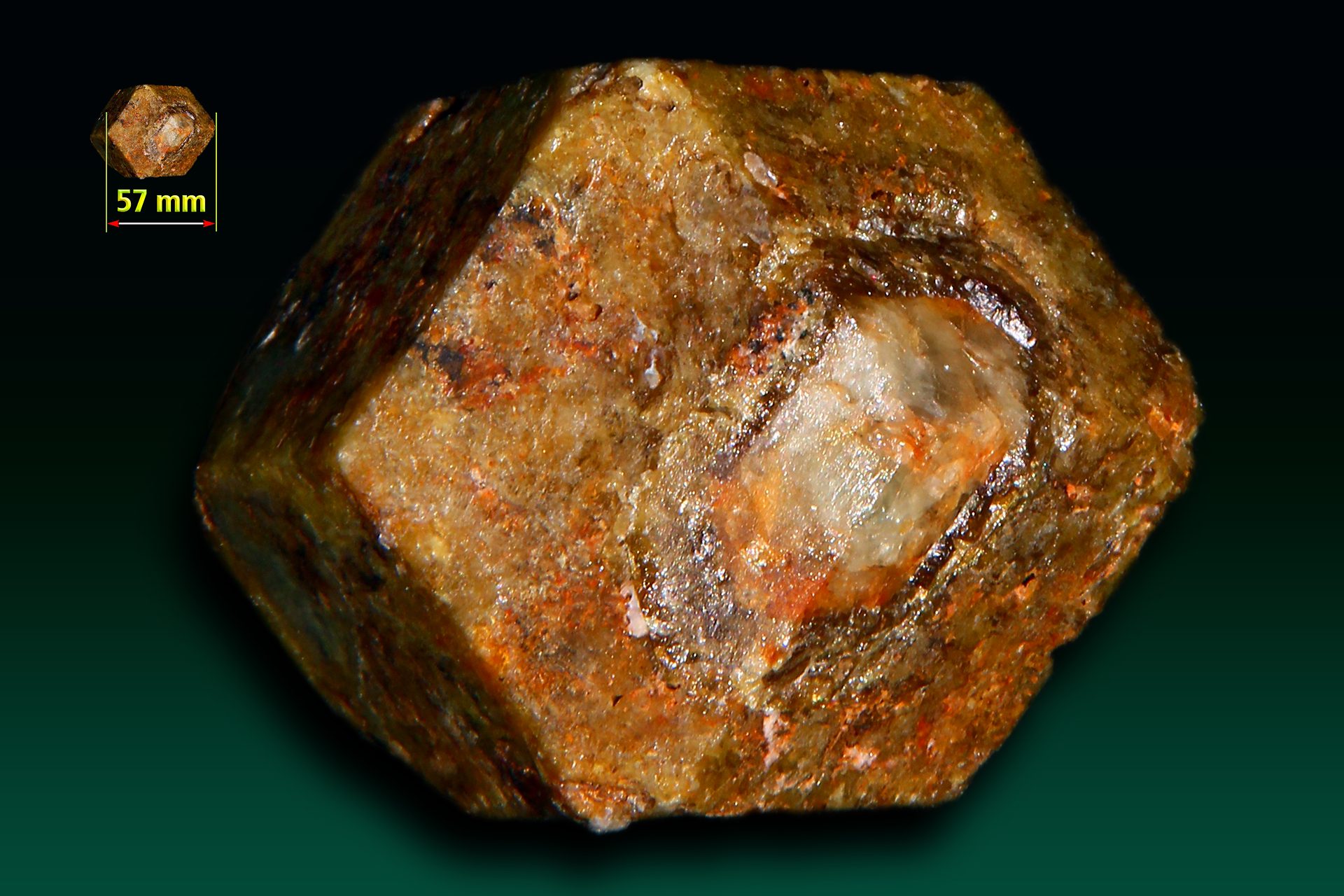
Mali Garnet
A rare grandite garnet from West Africa that combines unusual yellow-green to gold color with fire approaching demantoid’s intensity
- Mali garnet’s dispersion (0.057) exceeds diamond’s (0.044), meaning it throws more rainbow fire per carat.
- The stone is a natural hybrid - no two crystals have identical grossular-to-andradite ratios.
- Some mali garnets show a daylight-to-incandescent color shift from yellow-green to brownish-orange.
- Mali garnet is essentially a single-country material - nearly all confirmed deposits are in the Kayes region of western Mali.
- The gem was discovered by gem traders before it was formally described by mineralogists - commerce led science in this case.
- Garnet collectors building a species-complete set who need the grandite hybrid variety
- Jewelry designers seeking a yellow-green stone with more fire than peridot and more rarity than demantoid
- Investors targeting sub-$500/ct entry-level rare garnets with limited supply and single-source provenance
- Fans of unusual color-change or color-shift stones - some mali garnet shifts from yellow-green in daylight to orange-brown under incandescent
- Buyers who want a gem as rare as alexandrite but at a fraction of the price
- Shoppers wanting a classic green gemstone for under $50/ct - peridot or green tourmaline is a better fit
- Buyers who need a Mohs 8+ stone for hard-wearing everyday rings - mali garnet is softer than topaz
- Those seeking a widely recognized gem with strong resale recognition - mali garnet is niche
What Is Mali Garnet?
Mali garnet is a natural grossular-andradite solid solution, sometimes called grandite in mineralogical shorthand. Both end-member garnets are calcium silicates - grossular is calcium aluminum silicate and andradite is calcium iron silicate - and the ratio between them in any given crystal determines the final color, refractive index, and dispersion of the stone.
The gem was first described from deposits in Mali, West Africa in the 1990s and remains essentially a single-source material. Colors range from pale yellow through gold, yellow-green, and brownish-green depending on the iron-to-aluminum ratio. Higher andradite content pushes the stone toward green and increases dispersion, sometimes approaching the rainbow fire for which demantoid garnet is celebrated.
Hardness varies with composition from 6.5 (andradite-rich) to 7.5 (grossular-rich), making consistent durability harder to guarantee than with a fixed-species gem. The wide RI range of 1.740 to 1.890 reflects this compositional variability. Each crystal is effectively a unique mixture, which is part of what makes the variety fascinating to mineralogists and collectors.
How Mali Garnet Compares
| Property | Mali Garnet | Demantoid | Peridot |
|---|---|---|---|
| Hardness | 6.5 - 7.5 | 6.5 | 6.5 - 7 |
| Price / carat | $$ Mid-range | $$$ Premium | $ Budget |
| Rarity | Rare | Very Rare | Common |
| Best For | Collecting, pendants | Investment, heirloom | Everyday jewelry |
Meaning and Symbolism
Mali garnet entered the gem world only in the 1990s, so it lacks the centuries of cultural symbolism carried by ruby or emerald. Its rarity and unusual color have quickly earned it a reputation among collectors as a “discovery gem” - something that rewards research and patience rather than name recognition.
In contemporary crystal healing tradition, its yellow-green color links it energetically to both the solar plexus and heart chakras. Practitioners believe it may bridge personal confidence with compassion, helping those who struggle to act decisively while remaining emotionally open. The golden specimens are sometimes associated with abundance and clarity of vision in manifestation work.
West African mineral traditions did not historically single out mali garnet specifically, as the stone was unknown to trade until recently. Its modern meaning is being constructed in real time by the global crystal community, making it a stone whose symbolic associations are still evolving.
Historical Timeline
Healing Tradition
Emotional
Practitioners describe mali garnet as a bridge stone - energetically connecting the analytical drive of the solar plexus with the warmth and receptivity of the heart chakra. Many find it useful during periods of decision fatigue, when the pressure of choices makes emotional clarity hard to reach. It is said to help people act from both logic and feeling simultaneously, a quality some traditions associate with the stone’s hybrid mineral nature.
Spiritual
In crystal healing tradition, mali garnet’s unusual composition is mirrored in its spiritual associations - it is said to help individuals who feel caught between two paths or identities. Practitioners use it in meditation to support the integration of seeming opposites: career and creativity, duty and desire, logic and intuition. Some grids pair it with labradorite and rhodonite for this integrative intention.
Physical
Crystal healing practitioners sometimes associate mali garnet with digestive and metabolic support, drawing on the general garnet tradition of stimulating physical vitality. The solar plexus linkage leads some traditions to use it in layouts focused on core energy and stamina. These associations reflect historical crystal use and are not supported by clinical research - mali garnet does not treat or cure any condition.
Zodiac, Birthstone and Gifts
Mali garnet’s earthy yellow-green resonates with Virgo’s analytical, service-oriented character. Virgos drawn to unusual gems often favor mali garnet for its mineralogical complexity - a stone that rewards research rather than impulse. Capricorn benefits from the stone’s reputation for bridging ambition and emotional openness, a combination that some astrologers see as the key growth edge for this sign. Both earth signs may find mali garnet a grounding influence during periods of overwork or excessive self-criticism.
Care and Cleansing
Mali garnet is safe to cleanse under cool running water - brief rinsing removes surface dust and energetic residue without harming the stone. Avoid prolonged soaking, particularly for softer andradite-rich specimens. Pat dry gently and store away from harder stones that could scratch the surface.
Sound cleansing is gentle and effective - a singing bowl tuned to F or G works well for heart and solar plexus stones. Moonlight overnight on a windowsill is a low-risk method that many practitioners prefer for collector-grade stones they are reluctant to expose to water at all. Sunlight is generally safe for the yellow-green and gold varieties.
- DO NOT use ultrasonic cleaners - vibrations can worsen existing fractures in included specimens.
- DO store separately from harder gems like sapphire or topaz that can scratch mali garnet’s surface.
- DO rinse only briefly in water - prolonged soaking is unnecessary and risks adhesive in set pieces.
- DO NOT expose to household chemicals or cleaning solutions - remove jewelry before cleaning.
- DO handle with care during setting - the compositional variation means hardness is not uniform across all specimens.
- DO check prong settings annually if worn as a pendant - mali garnet’s density can stress thinner prong work.
Real vs Fake
Genuine mali garnet is singly refractive - it shows no doubling under a loupe, unlike peridot (doubly refractive) which it resembles in color. A refractometer reading somewhere between 1.74 and 1.89 confirms the grandite composition; readings outside this range indicate a different material. The wide RI range itself is a fingerprint of the solid-solution nature.
Green glass and synthetic CZ in yellow-green are the most common substitutes. Glass feels lighter than garnet and lacks the mineral density. CZ shows a much higher RI (above 2.1) and strong dispersion that looks too perfect and too uniform compared to mali garnet’s natural variability. Green tourmaline is sometimes confused with mali garnet in commercial settings but is doubly refractive.
Ask for origin documentation from reputable dealers - all confirmed mali garnet is from Mali, so a dealer who cannot name a West African source should be questioned. Gem lab reports from recognized laboratories can confirm species and origin if provenance matters for investment purposes.
Mali Garnet Jewelry & Gifts
Color and transparency are the two primary value drivers. The most sought-after mali garnet shows clear, bright yellow-green in daylight with strong fire visible under direct lighting. Brownish or muddy color significantly reduces value. Eye-clean stones above 1 carat in vivid color trade between $200 and $800 per carat; included or brownish material runs $50 to $150.
Color-change specimens - shifting from yellow-green in daylight to orange-brown under incandescent - command strong premiums and are worth verifying with a proper light-source comparison before purchase. Mali garnet receives no standard treatments; ask sellers to confirm the stone is untreated and uncoated. Always buy from dealers who provide provenance documentation given the single-source nature of the material.
Where to Buy Mali Garnet
Affiliate disclosure: Some links below earn us a small commission at no extra cost to you. See our affiliate disclosure page.
Handmade, raw, and tumbled pieces from independent sellers worldwide.
Shop Mali Garnet on Etsy →Accessories, tools, and specimen sets with fast Prime delivery.
Shop Mali Garnet on Amazon →Certified loose gemstones graded and photographed for online buyers.
Shop Mali Garnet on GemSelect →Pairs Well With


Where Mali Garnet Is Found
