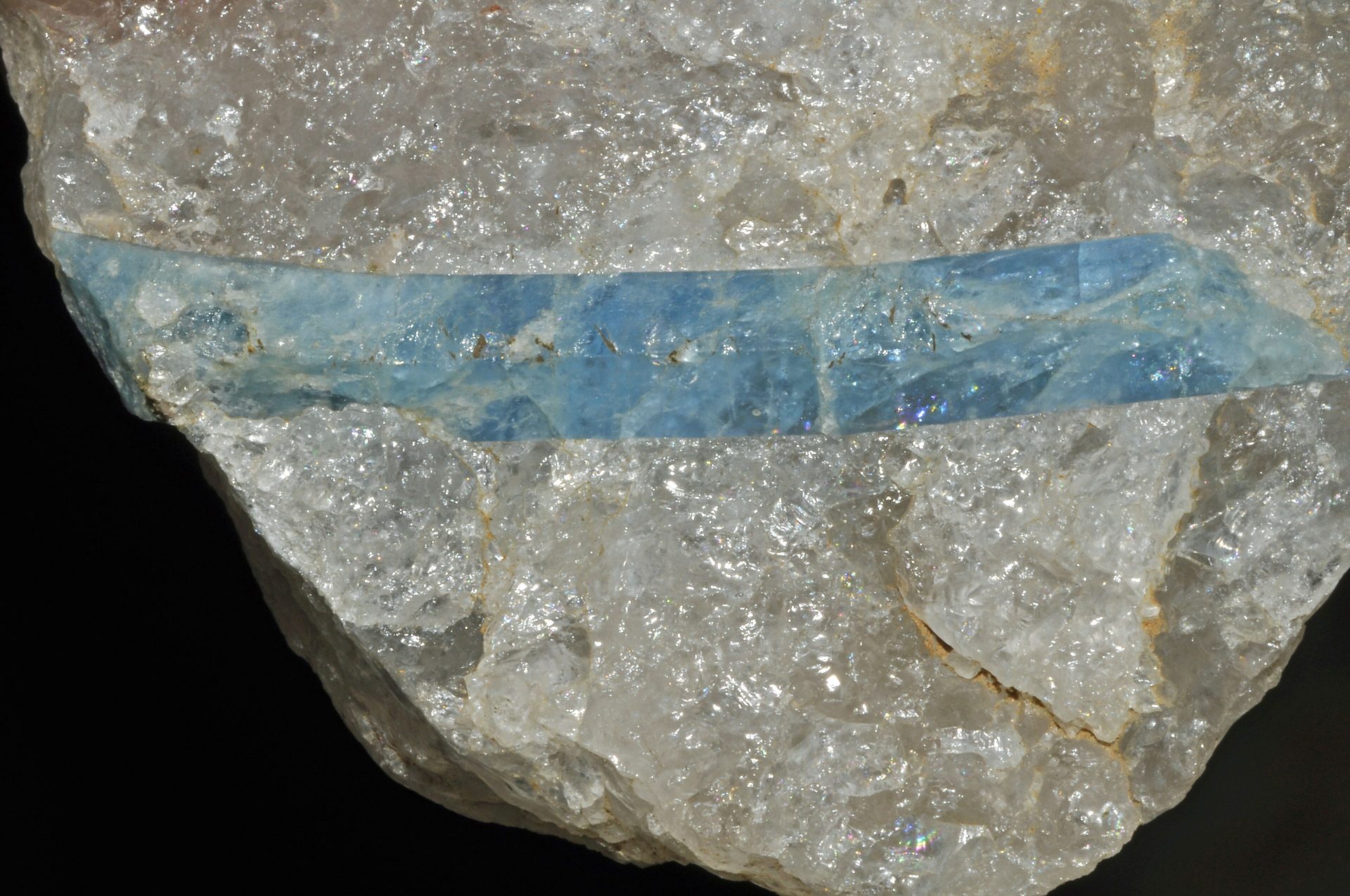
Maxixe Beryl
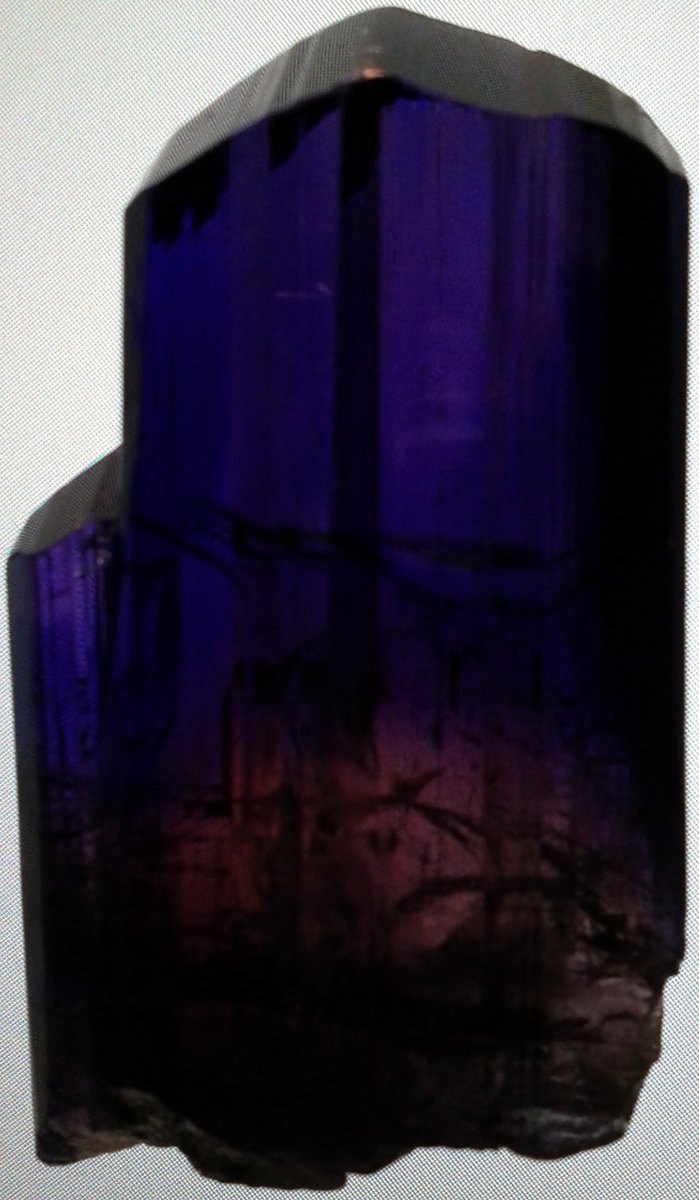
Maxixe beryl blazes with an indigo-to-cobalt blue exceptional in the beryl family - but this color is famously impermanent under light.
- Maxixe beryl can fade from deep indigo to colorless within months if stored in a sunny window - one of the most dramatic light-sensitivity behaviors in the gem world.
- Heating faded maxixe beryl to high temperatures has been shown to restore some of the color temporarily, though the restored color is equally unstable.
- The color centers in maxixe beryl are created by natural radioactive decay in the surrounding rock over geologic time - the same process that colors smoky quartz and purple fluorite.
- Gem labs distinguish natural maxixe beryl from irradiated maxixe-type beryl by analyzing which specific color center frequencies are present in the crystal.
- Despite its instability, maxixe beryl was used in some mid-20th century jewelry before the fading problem was fully understood - antique pieces with faded blue beryls may originally have been vivid maxixe material.
- Mineralogy collectors who prize unusual optical phenomena and want a conversation piece
- Blue stone lovers willing to accept impermanence in exchange for extraordinary color depth
- Aquarius or Pisces practitioners drawn to deep indigo in their crystal practice
- Those who display rather than wear their gemstones, protecting them from light exposure
- Researchers or educators wanting a real-world example of color center chemistry in minerals
- Buyers wanting a durable blue stone for daily wear - color fading under light is unavoidable; choose aquamarine instead
- Engagement ring shoppers - the impermanent color makes maxixe beryl unsuitable for heirloom jewelry
- Anyone expecting the color to remain - maxixe beryl sold without fading disclosure is misrepresented merchandise
What Is Maxixe Beryl?
Maxixe beryl is a deep blue to indigo variety of the mineral *beryl* (Be3Al2Si6O18), named after the Maxixe mine in the Minas Gerais state of Brazil where it was first described in 1917. It rates 7.5 - 8 on the Mohs hardness scale.
Unlike aquamarine, whose blue comes from trace iron in stable oxidation states, maxixe beryl's intense blue results from unstable color centers - structural defects in the crystal lattice created by natural or artificial irradiation. This produces one of the most saturated blues found in any beryl, but at a significant cost.
The color centers responsible for maxixe beryl's extraordinary indigo hue are inherently unstable. Exposure to light, particularly ultraviolet wavelengths in sunlight, breaks down the color centers over time and causes the stone to fade - eventually to pale yellowish or colorless.
Some specimens fade within weeks of exposure; others hold their color for months under diffuse indoor light. This irreversible fading is the defining characteristic that separates maxixe beryl from all other blue beryls.
**Natural maxixe beryl is rare** and found almost exclusively in Minas Gerais, Brazil. Commercial suppliers also produce 'maxixe-type beryl' by artificially irradiating pale beryl to create identical color centers - these stones are even more prone to rapid fading and should be clearly disclosed as irradiated material.
Both natural and treated forms are collected primarily as mineralogical curiosities and display specimens rather than jewelry stones.
How Maxixe Beryl Compares
| Property | Maxixe Beryl | Aquamarine | Blue Sapphire |
|---|---|---|---|
| Hardness | 7.5 - 8 | 7.5 - 8 | 9 |
| Color Stability | Fades in light | Stable | Stable |
| Price / carat | $ Budget | $ Budget | $$ Mid-range |
| Best For | Display, collecting | Daily wear jewelry | Jewelry, investment |
Meaning and Symbolism
Maxixe beryl occupies an unusual position in gem history - it was celebrated for its extraordinary color when first described in 1917, then quickly recognized as unstable when museum specimens began fading within years of acquisition.
This arc from excitement to caution mirrors broader lessons about the difference between surface brilliance and lasting depth, a theme that resonates in metaphysical interpretation.
In crystal healing traditions, the deep blue-indigo of maxixe beryl aligns with third eye and throat chakra associations - qualities of inner vision, authentic expression, and access to deeper truth.
Practitioners who work with this stone often do so with an awareness of its impermanence, using it as a teaching object about attachment and the nature of beauty that does not last. This contemplative quality gives maxixe beryl a philosophical dimension unusual among gemstones.
**The Aquarius and Pisces connections** reflect maxixe beryl's association with depth, mystery, and the unseen dimensions of experience. Both signs are drawn to things that operate below the surface of ordinary perception.
Aligns with the stone's striking color-center chemistry - beauty that exists at a sub-visible structural level and cannot be held indefinitely.
Historical Timeline
Healing Tradition
Emotional
Practitioners working with maxixe beryl often approach it as a stone of impermanence and present-moment awareness, reflecting on the beauty of the deep blue as something to appreciate fully in the moment rather than possess permanently.
This quality is said to support emotional non-attachment and the ability to find value in transient experiences. Many find the stone's color - so vivid when freshly exposed - a powerful reminder that profound states, both joyful and painful, are temporary.
Crystal healing tradition does not typically feature maxixe beryl prominently due to its rarity, but those who work with it often develop a contemplative relationship with its nature.
Spiritual
The deep indigo of maxixe beryl resonates with practices focused on inner vision, third eye activation, and access to non-ordinary states of perception. Practitioners associate its color with the quality of penetrating insight that sees beyond surface appearances - an ironic parallel to the stone's own hidden chemistry.
Some traditions use it in meditations on impermanence, drawing on Buddhist and Stoic themes of appreciating what is present without clinging. Its Neptunian and Uranian planetary associations link it to spiritual awakening, dissolving of illusion, and the expansion of consciousness beyond ordinary boundaries.
Physical
Crystal healing texts rarely address maxixe beryl specifically, but blue stones in general are associated with the throat, thyroid, and communication pathways in many traditions. The third eye chakra connection links it to practices supporting mental clarity, dream work, and intuitive perception.
As with all crystal healing applications, these associations reflect metaphysical tradition rather than scientifically verified physical effects, and maxixe beryl should not be used as a substitute for medical care.
Zodiac, Birthstone and Gifts
Aquarius finds resonance with maxixe beryl through both signs' relationship with unusual phenomena, unconventional beauty, and the idea that the most interesting things operate below the visible surface. The stone's color-center chemistry - invisible structural physics producing visible indigo - appeals to Aquarius's fascination with the mechanics behind appearances.
Pisces connects to maxixe beryl through Neptune's deep, oceanic blue and the sign's relationship with impermanence, dreams, and things that cannot be fixed in place. The stone's fading quality may feel metaphorically appropriate for a sign that lives in the fluid boundary between states.
Both signs benefit from maxixe beryl's association with depth, vision, and the courage to fully inhabit transient beauty.
Care and Cleansing
Maxixe beryl tolerates brief water cleansing without chemical damage, as the stone itself is not water-soluble. However, **avoid sunlight entirely** during and after cleansing - even a few minutes in bright light begins breaking down the color centers. Use moonlight from a north-facing or shaded window rather than direct moonlight exposure.
Sound cleansing with a singing bowl, bells, or tuning fork is the safest option for maxixe beryl because it requires no light exposure and no physical contact that could scratch the surface. Selenite charging plates work well for energy maintenance when the stone is stored in dark conditions.
Smudging with sage or palo santo in a dimly lit room is an appropriate alternative for those who prefer aromatic cleansing rituals.
- DO NOT expose to sunlight, fluorescent lights, or any UV source - color fading is irreversible.
- DO store in a lightproof container such as a dark velvet pouch or closed display box when not in active use.
- DO NOT set in open prong jewelry intended for regular wear - the color will fade within months.
- NOTE: Both natural maxixe beryl and artificially irradiated maxixe-type beryl share this fading behavior.
- DO clean briefly with cool water and mild soap if needed, immediately returning to dark storage.
- DO NOT use ultrasonic cleaners - vibration may aggravate any existing fractures in the crystal.
- NOTE: Any dealer selling maxixe beryl without disclosing the fading property is not providing full material information - insist on written disclosure.
Real vs Fake
The primary authenticity issue with maxixe beryl is not fake stones but misrepresented treatments. Natural maxixe beryl is rare; far more common is artificially irradiated beryl (often called 'maxixe-type') that achieves identical blue color through controlled radiation treatment. Both fade, but irradiated material typically fades faster.
A gemological laboratory can distinguish natural from treated by analyzing the specific color center frequencies using spectroscopic analysis.
Maxixe beryl is sometimes offered as aquamarine - either through ignorance or deliberate misrepresentation. The key visual difference is color saturation: maxixe beryl reaches a deep indigo-cobalt blue that aquamarine almost never achieves naturally.
If a blue beryl is dramatically darker than typical aquamarine, inquire specifically about maxixe status and request a fading test - deliberate light exposure for a few days reveals the difference quickly.
**Glass and synthetic blue stones** can mimic maxixe beryl's color but lack the characteristic beryl optical properties. A gemologist measuring refractive index (1.564 to 1.596) and birefringence, plus checking for characteristic beryl inclusions under magnification, will separate genuine beryl from impostors.
For any stone sold at a significant price, a gemological laboratories or AGL laboratory report is the most reliable authentication.
Maxixe Beryl Jewelry & Gifts
Maxixe beryl is purchased primarily by knowledgeable collectors who understand its fading behavior and value it as a mineralogical curiosity rather than a jewelry stone. Prices for natural specimens in vivid color range from $30 to $200 per carat depending on saturation and clarity.
Artificially irradiated maxixe-type beryl is cheaper but must be disclosed as treated.
**Always request written disclosure** that the stone is maxixe beryl and that color fading under light is an inherent property. Reputable dealers provide this proactively; lack of disclosure is a significant red flag. Fine, documented specimens from the Maxixe mine locality carry modest collector premiums.
For display and collection purposes, focus on saturation and crystal form rather than clarity perfection - maxixe beryl's value is primarily in its extraordinary color while it lasts. Natural specimens should come with laboratory documentation distinguishing them from irradiated material if the price reflects natural origin.
Where to Buy Maxixe Beryl
Affiliate disclosure: Some links below earn us a small commission at no extra cost to you. See our affiliate disclosure page.
Handmade, raw, and tumbled pieces from independent sellers worldwide.
Shop Maxixe Beryl on Etsy →Accessories, tools, and specimen sets with fast Prime delivery.
Shop Maxixe Beryl on Amazon →Certified loose gemstones graded and photographed for online buyers.
Shop Maxixe Beryl on GemSelect →Pairs Well With



Where Maxixe Beryl Is Found
