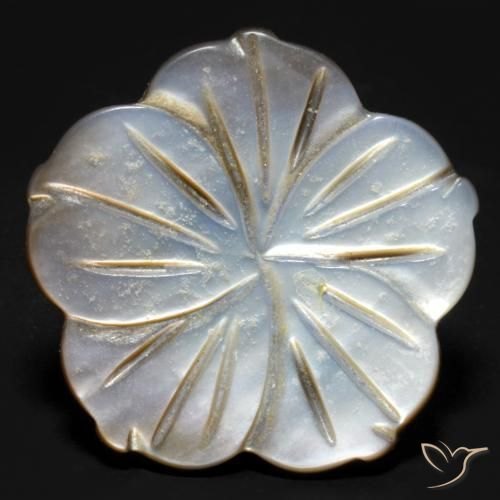
Mother of Pearl
Born inside the shell of mollusks, mother of pearl is the shimmering nacre that lines oyster and abalone homes with iridescent calm.
- A single mother of pearl shell is the same material that forms a pearl, just in flat layers.
- The iridescence of nacre comes from light interference between stacked aragonite platelets 400 nm thick.
- Mother of pearl is used in luxury watch dials because it catches light at every angle.
- Abalone nacre shows the strongest rainbow iridescence of any commercially available shell material.
- Jerusalem mother of pearl carving is a craft tradition continuously practiced for over 400 years.
- June birthstone seekers wanting an affordable alternative to pearl
- Practitioners working with feminine intuition, motherhood, and lunar rhythms
- Readers drawn to iridescent white-pink-green sheen for wedding or bridal jewelry
- Crystal workers using sacral chakra support with gentle nurturing energy
- Gift seekers for Mother's Day or a new parent with meaningful lore
What Is Mother of Pearl?
Mother of pearl is the iridescent inner lining of mollusk shells, formed by layers of microscopic aragonite platelets bound together by an organic protein called conchiolin. This layered structure is called nacre, and the same material forms the outer coating of pearls. It rates 2.5 - 4.5 on the Mohs hardness scale.
The name comes from the sense that pearl's mother, the shell, carries the same lustrous surface without the bead.
At Mohs 2.5 to 4.5, mother of pearl is relatively soft and works best in pendants, earrings, beads, and inlay rather than high-wear rings. The material is sustainably available as a byproduct of oyster and mussel farming, and from fisheries that harvest mollusks for food.
Major commercial species include Pinctada maxima (South Sea oyster), Pinctada margaritifera (black-lip oyster), and Haliotis abalone, each with distinctive color and pattern.
White mother of pearl from South Sea oysters shows a soft cream-to-pink iridescence and is the classic form used in luxury watch dials, inlaid furniture, and buttons. Black-lip oyster nacre ranges from silver-gray through peacock green, and abalone from California and New Zealand produces the strongest rainbow iridescence.
Mexican Pteria sterna gives the famous rainbow Concha Nacar. These varieties share a common origin but present distinct color personalities for buyers to choose from.
How Mother of Pearl Compares
| Property | Mother of Pearl | Pearl | Moonstone |
|---|---|---|---|
| Hardness | 2.5 - 4.5 | 2.5 - 4.5 | 6 - 6.5 |
| Price / carat | $ Budget | $$ Mid-range | $ Budget |
| Rarity | Common | Moderate | Common |
| Best For | Inlay, pendants, carving | Bridal jewelry | Daily wear jewelry |
Meaning and Symbolism
Mother of pearl has been worked into jewelry, buttons, inlay, and religious objects for thousands of years. Ancient Egyptian craftsmen set mother of pearl into gold sarcophagi, Chinese inlaid lacquerware from several dynasties features it prominently, and Jerusalem's historic olive-wood carvings were often accented with mother of pearl.
The material's affordability and iridescence gave it a global trade footprint that few other gem materials match.
In modern crystal healing tradition, mother of pearl is associated with the mother archetype, protection, and lunar intuition. Its shell origin gives it connections to water, tidal rhythms, and feminine cycles, and practitioners often use it for rituals around motherhood, nurturing, and family care.
The stone is closely paired with moonstone and pearl in rituals honoring maternal lines and new parenthood.
Because mother of pearl comes from a living creature, some traditions consider it a deeply feminine stone with protective energy specifically for children and pregnant women. Many cultures have folk practices of gifting mother of pearl buttons or small carvings to newborns.
Crystal workers often describe the material as a gentle mirror for the soul, reflecting intuition back to the wearer through its layered iridescent surface.
Historical Timeline
Healing Tradition
Emotional
Practitioners believe mother of pearl is a nurturing stone, traditionally associated with emotional safety, maternal protection, and gentle healing. In crystal healing tradition, it is said to soothe readers through grief, new-parent anxiety, and moments when they need to feel cared for.
Many readers wear mother of pearl as a pendant over the heart during significant family transitions, or keep a small carving in a baby's nursery as a traditional protective gesture.
Practitioners often pair mother of pearl with rose quartz for tenderness and with moonstone for lunar intuition. Crystal workers typically describe the stone as a quiet companion rather than a stimulating one, which suits readers navigating postpartum periods, loss, or caretaking burnout.
Its organic origin gives it a place in crystal practice alongside pearl, amber, and coral as nature's softer gem materials, rather than alongside the harder mineral crystals.
Spiritual
In crystal healing tradition, mother of pearl is linked with the sacral and crown chakras, zones practitioners associate with creativity, maternal flow, and spiritual connection. The stone's lunar associations and shell origin make it a favorite for rituals around water, tides, and feminine cycles.
Many readers incorporate mother of pearl into moon bowls, bathing rituals, and new-moon intentions.
Practitioners often use mother of pearl to invoke what they describe as the mother archetype, setting pieces on altars during grief or creative blocks. Crystal workers typically recommend the stone for anyone seeking a sense of being held, including writers and artists at transitional points.
Mother of pearl pairs with selenite in feminine-line ancestry grids and with labradorite for intuitive work. Some traditions place mother of pearl in childbirth kits as a protective presence, a practice that emphasizes its role as a witness rather than a medical tool.
Physical
Practitioners believe mother of pearl is traditionally associated with the digestive system, reproductive health, and what they describe as gentle cellular renewal. Folklore links the stone with postpartum recovery, regulated menstrual rhythms, and general feminine physical balance, framed as tradition-rooted support rather than medical care.
Many readers wear mother of pearl as a necklace or on a bracelet during recovery periods, especially after childbirth, surgery, or long illness. The stone is not a substitute for healthcare and practitioners are consistent in describing its role as accompanying rather than treating.
Some crystal workers also pair mother of pearl with moonstone for women experiencing cycle irregularities. Because mother of pearl contains calcium carbonate, readers occasionally work with it in calcium-symbolism rituals.
Zodiac, Birthstone and Gifts
Mother of pearl is not a traditional birthstone but is sometimes offered as a June alternative alongside pearl and moonstone. Astrologers often associate it with Cancer, the zodiac sign most closely tied to nurturing and family, and with Gemini for its dual iridescent nature.
For Cancer readers, mother of pearl is often recommended as a personal altar piece during moon rituals or maternal anniversaries. For Gemini readers, the stone's shimmer of multiple colors echoes the sign's versatile temperament. Practitioners sometimes pair mother of pearl with June birthstones in gift sets.
Care and Cleansing
Mother of pearl requires very gentle cleansing because nacre is soft and slightly porous. Wipe with a dry or barely damp soft cloth, and avoid saltwater, ultrasonic cleaners, steam cleaners, and any acidic cleansers. Mild soapy water on a soft cloth is acceptable for occasional deeper cleaning followed by immediate drying.
Prolonged water exposure should be avoided because it can dull the iridescence and damage the organic binder.
Moonlight is the traditional cleansing method, fitting given the stone's lunar associations. Sound cleansing with a singing bowl is also safe and effective. Smoke cleansing with palo santo or sage is acceptable if the smoke is gentle and not prolonged.
Many practitioners rest mother of pearl on selenite overnight as a preferred method that avoids water entirely.
Dry salt cleansing should be avoided because salt crystals can abrade the nacre surface, and saltwater soaks can damage the conchiolin binder. Direct sunlight should be limited because prolonged UV exposure can slowly dull the iridescent sheen.
A few minutes of morning sun is acceptable, but long storage in a sunny window is not recommended.
- DO store mother of pearl in a soft pouch separately from harder stones.
- DO NOT soak mother of pearl in water, saltwater, or any acidic cleaner.
- DO wipe mother of pearl with a dry or barely damp cloth and dry promptly.
- DO NOT use ultrasonic or steam cleaners on mother of pearl under any circumstances.
- DO remove mother of pearl jewelry before showering, swimming, or applying perfume.
- DO apply perfume and hairspray before putting on mother of pearl jewelry.
- Note: abalone mother of pearl is stronger iridescent; white South Sea is softer-toned.
Real vs Fake
Genuine mother of pearl shows a characteristic layered iridescence that shifts color as the piece is tilted in light. The underside of a shell cabochon or bead typically shows natural growth lines, and edges reveal stacked layers of nacre when viewed under a 10x loupe.
Real nacre feels cool to the touch and has a slightly soft, organic texture compared to synthetic lookalikes.
Common imitations include coated plastic, glass with dichroic film, and imitation pearl essence sprayed on resin. Plastic feels warm and lightweight, and synthetic iridescence often has a uniform, mechanical pattern rather than the organic flow of natural nacre.
A drop of mild acid on an inconspicuous spot will cause genuine mother of pearl (calcium carbonate) to fizz, while plastic and glass will not react.
Reconstituted or reconstructed mother of pearl uses crushed real nacre bonded with resin. These materials are sold legitimately if disclosed and typically show more uniform appearance than solid nacre pieces.
For watch dials, jewelry, and luxury inlay, a reputable seller will state whether the material is solid South Sea shell, abalone, black-lip oyster, or a reconstituted composite, and price should reflect the distinction.
Mother of Pearl Jewelry & Gifts
Mother of pearl is one of the most affordable organic gem materials. Beads typically cost $2 to $10 each, cabochons run $5 to $50, and larger inlay pieces for watch dials or jewelry sit at $20 to $200 depending on quality and species.
Abalone nacre with the strongest rainbow iridescence tends to command a premium, while South Sea white nacre is the most common luxury material seen in watches and high-end pendants.
Treatment is generally limited to surface polishing and very occasional sealing with protective coatings, both of which should be disclosed if present. Dyed mother of pearl exists, particularly in cheap beaded jewelry, and should be identified by uniform rather than natural color variation.
For jewelry, favor protected settings, and ask sellers about the species origin and whether the material is solid nacre or reconstituted composite.
Where to Buy Mother of Pearl
Affiliate disclosure: Some links below earn us a small commission at no extra cost to you. See our affiliate disclosure page.
Handmade, raw, and tumbled pieces from independent sellers worldwide.
Shop Mother of Pearl on Etsy →Accessories, tools, and specimen sets with fast Prime delivery.
Shop Mother of Pearl on Amazon →Certified loose gemstones graded and photographed for online buyers.
Shop Mother of Pearl on GemSelect →Pairs Well With


Where Mother of Pearl Is Found


