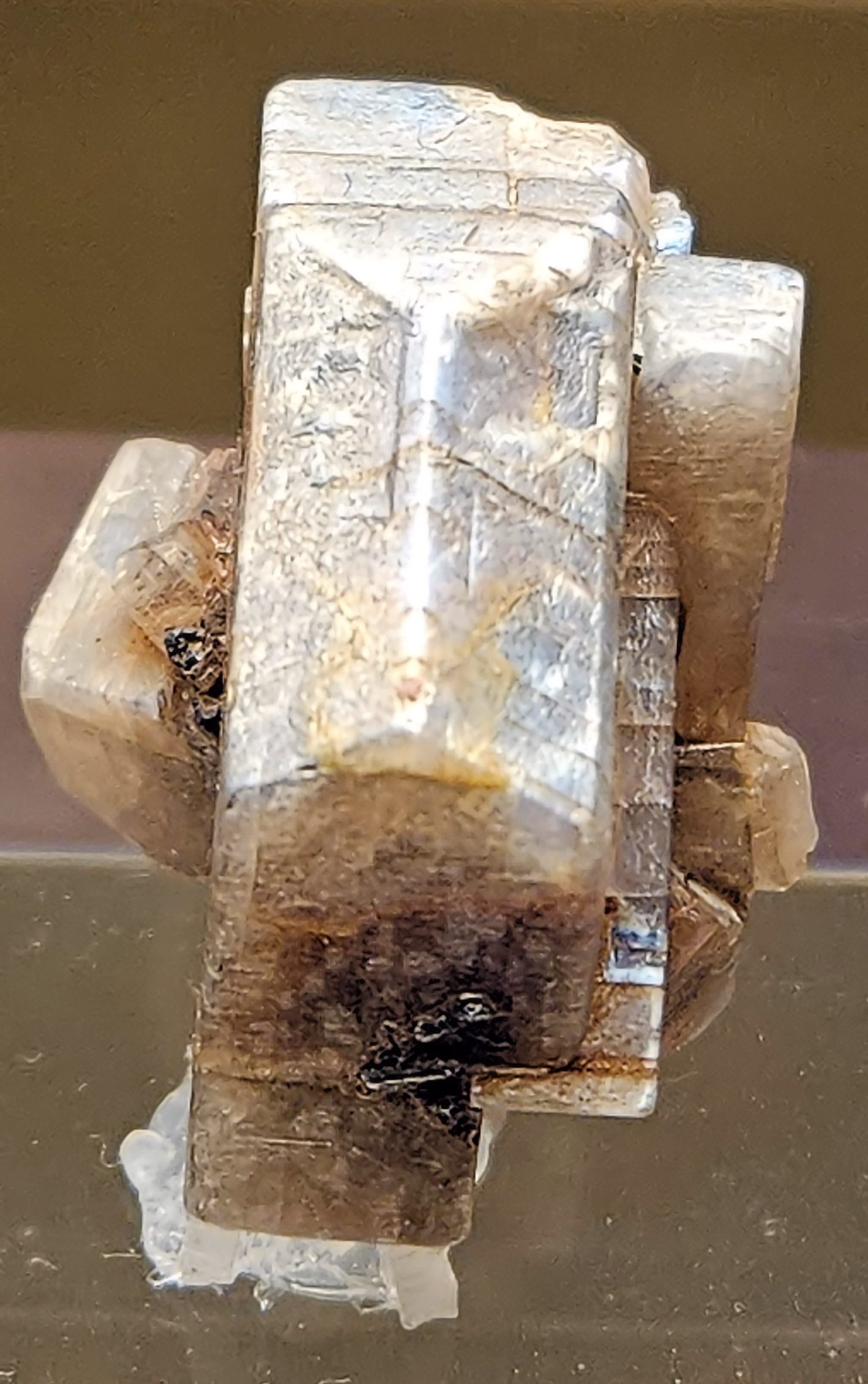
Orthoclase Moonstone
Orthoclase Moonstone is the mineralogically true moonstone - potassium feldspar with internal lamellar structure that scatters blue-white.
- The adularescence in moonstone was named after the Adula mountain range in Switzerland, where a particularly fine variety (called adularia) was found in the 18th century.
- True blue adularescence in orthoclase moonstone comes from Rayleigh scattering - the same optical process that makes Earth's sky appear blue.
- What is sold as 'rainbow moonstone' is actually labradorite, not orthoclase feldspar - a common and accepted trade name distinction.
- Sri Lanka's finest moonstones are found in gem gravels in the Meetiyagoda area, which has been mined for moonstone for at least a century.
- Moonstone is one of 3 June birthstones alongside pearl and alexandrite - the only month with 3 official birthstones in the modern list.
- June birthday gift seekers wanting the traditional birthstone with documented mineralogy
- Lunar and feminine-energy practitioners who want the archetypal moonstone
- Intuition and dream work practitioners drawn to the stone's moon and water associations
- Jewelry lovers who appreciate the floating blue adularescent glow as a wearable phenomenon
- Those wanting the most mineralogically accurate moonstone rather than a labradorite substitute
- Buyers needing a durable everyday ring stone - Mohs 6-6.5 and two cleavage directions require protective settings
- Those wanting strong color saturation - orthoclase moonstone is white to colorless with adularescent sheen
- Anyone wanting a cheaper alternative - true orthoclase moonstone with fine blue adularescence is priced above common feldspar
What Is Orthoclase Moonstone?
Orthoclase Moonstone is the mineralogically correct 'moonstone' - the potassium feldspar (KAlSi3O8) with a monoclinic crystal structure that produces adularescence, the floating blue-white glow that has made moonstone one of the world's most beloved gems for centuries. It rates 6 - 6.5 on the Mohs hardness scale.
The adularescent effect is caused by the alternating thin layers of orthoclase and albite feldspar within the stone, which scatter incident light in a phenomenon called Rayleigh scattering, producing a soft rolling blue or white light that moves when the stone is rotated.
The term 'moonstone' in commerce is applied to several feldspar varieties including labradorite and oligoclase, but orthoclase is the original and most valued type. Gem-quality orthoclase moonstone with strong blue adularescence and colorless-to-white body color primarily comes from Sri Lanka.
Indian sources (particularly Rajasthan) produce a common brown to orange variety sometimes sold as 'peach moonstone.' Myanmar (Burma) produces fine milky-white specimens with strong blue glow. Crystal system is monoclinic, Mohs hardness 6 to 6.5, and the stone has 2 cleavage directions at 90 degrees.
The name 'moonstone' derives from the mineral's ancient association with the moon's reflected light. The Romans believed moonstone was formed from solidified moonbeams. In India, moonstone has been sacred for thousands of years - it is considered a gift of the moon goddess and is still placed in the mouths of sacred animals as an auspicious gem in some traditions.
Sri Lanka's blue adularescence moonstone remains the gemological benchmark for the species.
How Orthoclase Moonstone Compares
| Property | Orthoclase Moonstone | Rainbow Moonstone (Labradorite) | Opal |
|---|---|---|---|
| Phenomenon | Blue adularescence | Blue flash (labradorescence) | Play-of-color |
| Hardness | 6 - 6.5 | 6 - 6.5 | 5.5 - 6.5 |
| Price / carat | $ Budget | $ Budget | $ Budget |
| Best For | June birthstone, intuition | Budget moonstone look | Investment, display |
Meaning and Symbolism
Moonstone has been treasured across cultures for at least 2,000 years. Roman natural historians believed it was formed from condensed moonlight. In ancient India, moonstone was considered sacred to the moon deity and was given as a gift at weddings as a symbol of fertility, protection, and the eternal cycles of nature.
In Sri Lanka, where the finest orthoclase moonstones originate, the stone is still called 'chandrakanta' in Sanskrit - meaning 'beloved by the moon.'
Medieval European lapidaries described moonstone as a stone that changed with the lunar cycle - growing brighter and more luminous under a full moon and dimmer during the new moon phase.
While this is metaphorical rather than physical, it reflects the deep psychological resonance the stone has always had with human awareness of lunar rhythms, the tides, and the cycling nature of time and emotion.
In contemporary crystal healing tradition, moonstone is one of the most comprehensively documented and widely used stones in the healing community. Practitioners associate it with feminine energy (not exclusively for women), with emotional cycles and their wisdom, with intuition and inner knowing.
With fertility in the broadest sense - the fertility of creativity, growth, and new beginnings that align with the moon's perpetual cycle of renewal.
Historical Timeline
Healing Tradition
Emotional
In crystal healing tradition, orthoclase moonstone is said to be one of the most powerful tools for developing emotional intelligence and comfort with the natural cycles of feeling.
Practitioners believe it helps those who struggle with emotional flow - either too rigid and controlled, or too overwhelmed by emotion - to find a middle path of fluid awareness. The stone is traditionally associated with the acceptance of change as natural rather than threatening, mirroring the moon's perpetual cycle.
Many find it supportive during significant life transitions and times of uncertainty.
Spiritual
Moonstone is described in crystal healing practice as the quintessential stone of intuition - the inner knowing that arrives before rational analysis, the dream that reveals what waking mind cannot see.
Practitioners believe it activates the Third Eye and Crown chakras simultaneously, creating a receptive state for psychic impression, prophetic dreaming, and the kind of deep listening that spiritual growth requires. Many practitioners also associate it with the divine feminine principle in all beings - the receptive, nurturing, cyclically renewing aspect of consciousness.
Physical
From a crystal healing perspective, moonstone is traditionally associated with hormonal balance, the menstrual cycle, fertility, and the fluid systems of the body - correspondences drawn from the moon's well-documented influence on tides and lunar cycle parallels in human biology.
Practitioners believe it supports smooth hormonal transitions and the body's attunement to natural cycles. These are energetic traditions rather than medical claims. Moonstone should not replace qualified medical care for any hormonal or reproductive health concern.
Zodiac, Birthstone and Gifts
Moonstone's primary zodiac affiliation is Cancer - the sign ruled by the Moon. As a June birthstone, it also serves Gemini (May 21-June 20). Cancer's water-element nature, emotional depth, and lunar rhythms make moonstone a natural companion stone.
Libra benefits from moonstone's balancing and reflective qualities, helping this sign find the inner equilibrium that complements its outward social intelligence. Scorpio resonates with moonstone's depth, its hidden inner light, and its association with psychic perception and the mysteries of the feminine principle.
Practitioners generally recommend moonstone to anyone attuned to lunar cycles or working with water-element emotional intelligence.
Care and Cleansing
Moonlight cleansing is the most symbolically appropriate and mineralogically safest method for orthoclase moonstone. Place the stone on a windowsill or outdoors during the full moon overnight. This is non-contact, perfectly safe for the stone's cleavage structure, and deeply appropriate given the stone's moon symbolism.
The practice of charging moonstone under the full moon is one of the most widely practiced crystal rituals in the healing community.
Sound cleansing with a singing bowl or crystal bell is effective and non-contact. Brief rinsing under cool running water is acceptable but avoid extended submersion and never use salt water - salt can infiltrate the stone's cleavage planes and be impossible to remove.
Smudging with sage or palo santo is safe for the stone and its settings. Avoid exposing set moonstone to harsh chemical cleaners.
- DO NOT use salt water - can infiltrate cleavage planes and damage the stone internally.
- DO NOT use ultrasonic cleaners - vibration can cause cleavage fractures.
- DO store separately in soft cloth or padded box - two cleavage planes at 90 degrees make it prone to chipping.
- DO choose bezel settings over prong settings for rings - protects the stone from side impacts.
- DO NOT expose to sudden temperature changes - hot to cold or reverse can stress the stone.
- NOTE: Orthoclase moonstone scratches at Mohs 6-6.5; avoid wearing alongside harder gems in bracelets or pouches.
Real vs Fake
True orthoclase moonstone with blue adularescence can be distinguished from labradorite ('rainbow moonstone'), glass, and opalite by its optical character. Orthoclase moonstone adularescence is a soft, rolling blue-white glow that appears to move within the stone as it is tilted - different from labradorite's sharper, more directional flash.
The glow appears to emanate from within the body of the stone, not from a surface film.
Glass opalite and synthetic imitations lack the subtle internal layering visible under magnification. Under loupe examination, genuine orthoclase moonstone often shows 'centipede' inclusions - curved stress fractures that follow the alternating lamellae boundaries. These are diagnostic of the natural lamellar structure responsible for adularescence and are not seen in glass.
Refractive index (1.518-1.526) distinguishes orthoclase moonstone from labradorite (RI 1.554-1.572) and from opalite/glass (RI ~1.50). Specific gravity measurement also separates them. For high-value pieces, a gemological laboratory report is definitive. When buying online, ask for video under a single directional light source to assess adularescence quality before purchasing.
Orthoclase Moonstone Jewelry & Gifts
Commercial-grade orthoclase moonstone with moderate adularescence starts around $20-$50 per carat. Mid-grade pieces with strong blue adularescence and good transparency run $50-$200/ct. Fine Sri Lankan moonstone with intense blue 'electric' adularescence, colorless body, and good transparency can reach $300-$500+ per carat from specialist dealers.
Adularescence quality is the decisive value factor. Strong, centered, vivid blue glow in a colorless-to-white stone is the premium. White or gray body color with weak or patchy adularescence is commercial grade.
Brown or peach body color (Indian origin) is a different product entirely, usually sold as 'peach moonstone.' Always view in video under a moving single light source before online purchase.
Where to Buy Orthoclase Moonstone
Affiliate disclosure: Some links below earn us a small commission at no extra cost to you. See our affiliate disclosure page.
Handmade, raw, and tumbled pieces from independent sellers worldwide.
Shop Orthoclase Moonstone on Etsy →Accessories, tools, and specimen sets with fast Prime delivery.
Shop Orthoclase Moonstone on Amazon →Certified loose gemstones graded and photographed for online buyers.
Shop Orthoclase Moonstone on GemSelect →Pairs Well With


Where Orthoclase Moonstone Is Found


