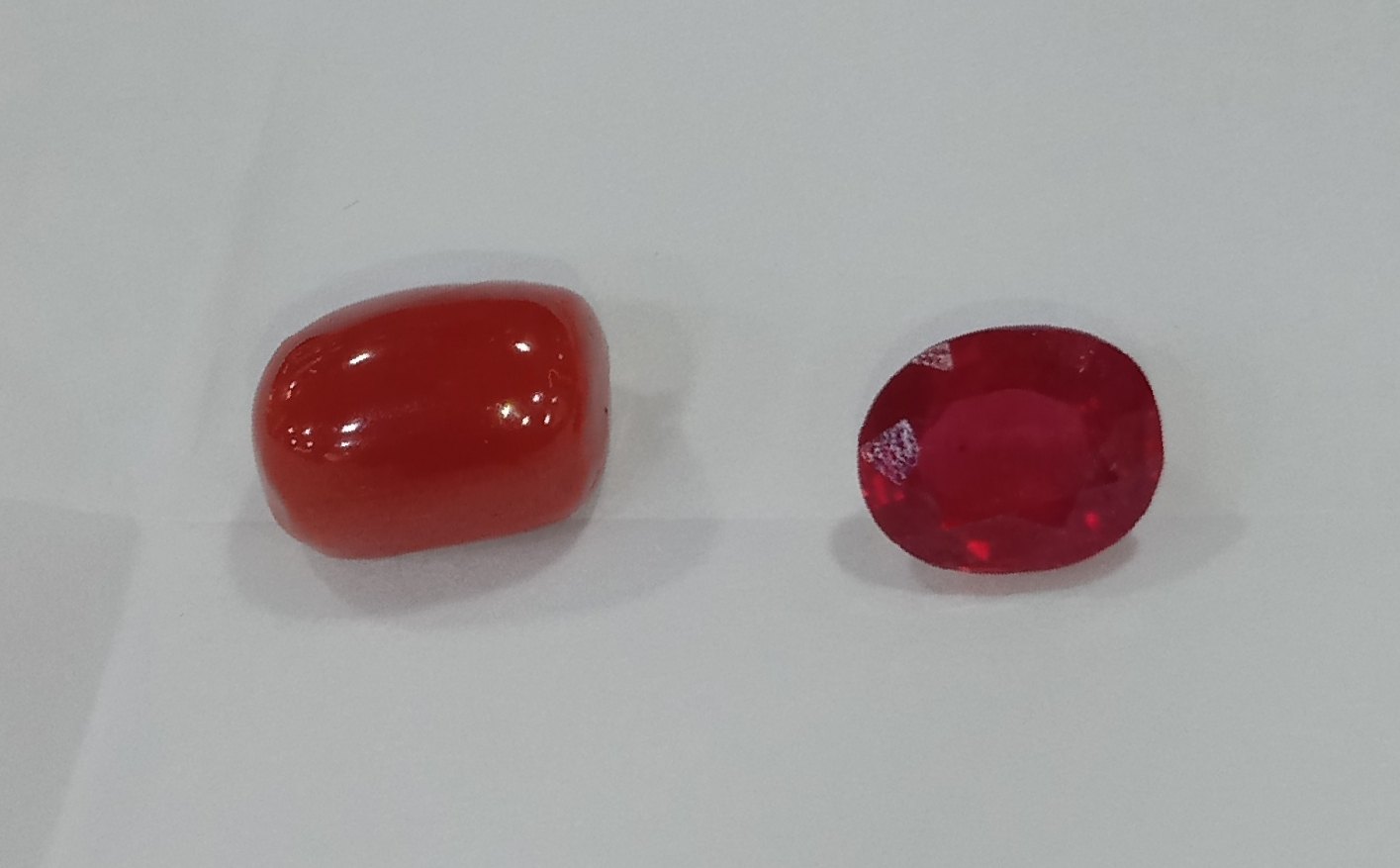
Red Coral
A Mediterranean organic gem harvested from the stony skeletons of coral polyps, red coral is the Vedic Mars stone of protection and vital.
- Red coral is made of calcium carbonate crystallized around an organic protein skeleton, not a mineral in the strict sense.
- The Neapolitan cornicello (little coral horn) is one of the most continuously worn amulets in Mediterranean culture.
- In Vedic astrology, red coral is worn as moonga to strengthen Mars-related qualities like courage and vitality.
- Deep-water Mediterranean coral grows extremely slowly, roughly 1 millimeter per year.
- Torre del Greco near Naples has been the world's principal coral cutting center since the Middle Ages.
- Vedic astrology followers wearing moonga as a Mars planetary gemstone
- Readers drawn to Mediterranean and Italian jewelry heritage
- Practitioners working with root and sacral chakra courage
- Collectors of organic gems (alongside amber, pearl, jet)
- Gift givers shopping for childbirth-protection jewelry in Mediterranean tradition
What Is Red Coral?
Red coral is an organic gem formed from the calcium carbonate skeletons of deep-water coral polyps, primarily Corallium rubrum in the Mediterranean and several Pacific Corallium species. It rates 3 - 4 on the Mohs hardness scale.
Unlike tropical reef-building corals, the species used for gem work live at depths of 30 to 300 meters and build dense, slow-growing skeletons suitable for carving and polishing.
At Mohs 3 to 4, coral is soft and sensitive to acids, heat, and ultrasonic vibration. It is traditionally cut as cabochons, beads, and carved shapes rather than faceted stones.
The color ranges from deep oxblood through classic red to pale pink (the angel skin grade) and white. Each color tier has its own price range and collector following.
Red coral has been harvested in the Mediterranean since at least 5000 BCE, with major traditional fisheries along the coasts of Italy, France, Spain, Tunisia, and Algeria.
Italian Torre del Greco near Naples has been the world's principal coral cutting and jewelry center since the Middle Ages. Modern commercial production also comes from Pacific deep-water Corallium species fished primarily off Japan, Taiwan, and Hawaii.
Sustainability is a significant modern concern. Mediterranean Corallium rubrum populations are now heavily regulated, and buyers seeking ethical material should ask about harvest location, species, and whether the coral was wild-harvested or cultivated in deep-water farming operations.
How Red Coral Compares
| Property | Red Coral | Carnelian | Ruby |
|---|---|---|---|
| Hardness | 3 - 4 | 6.5 - 7 | 9 |
| Price / carat | $ Budget | $ Budget | $$$ Premium |
| Origin | Organic (coral) | Chalcedony quartz | Corundum mineral |
| Best For | Beads, cameos, Vedic rings | Daily-wear jewelry | Heirloom rings |
Meaning and Symbolism
Red coral has been valued as a protective and fertility gem across many Mediterranean, Indian, and East Asian cultures for over six thousand years.
Egyptian tombs contained coral amulets, Roman children wore coral pendants to protect against the evil eye and to soothe teething, and the Neapolitan tradition of the cornicello (a horn-shaped coral amulet) remains a living folk practice today.
In Tibetan and Himalayan Buddhism, red coral is one of the sacred jewels alongside turquoise, lapis lazuli, and pearl. It appears in temple decoration, sacred statuary, and the ceremonial regalia of high lamas.
In Vedic astrology, red coral (moonga) is the primary gemstone of the planet Mangala (Mars) and is prescribed for people whose birth charts indicate difficulty with Mars-related qualities such as courage, vitality, and assertive action.
In crystal healing tradition, red coral is associated with the root and sacral chakras and with what practitioners call vital blood-red energy. Traditional uses include protection during childbirth (the Mediterranean rosario rosso birthing necklace), general protection for children, and as an anchor during periods of low energy or recovery from illness.
It pairs naturally with pearl as its organic-gem cousin and with amber for combined protective heritage work.
Historical Timeline
Healing Tradition
Emotional
Practitioners believe red coral supports emotional courage, vitality, and protective strength. In crystal healing tradition, it is often recommended for people recovering from illness, navigating pregnancy, or working through periods of emotional exhaustion.
Many readers wear red coral jewelry during physical recovery periods and describe a sense of restored warm energy in the body. The stone's long history as a childbirth-protection amulet persists in modern Italian Catholic tradition, and practitioners often gift coral pendants to new mothers.
Practitioners pair red coral with rose quartz when the emotional work involves tender courage, or with black tourmaline when strong protective boundaries are needed.
Because red coral's reputation is warming and strengthening rather than soothing, it is often described as a stone for active recovery periods rather than restful meditation. Vedic astrologers sometimes prescribe it specifically for people whose charts indicate weakness in Mars qualities.
Spiritual
Red coral is traditionally associated with the root and sacral chakras and with what crystal workers call life-blood vitality. Practitioners describe it as a stone of protective courage and grounded spiritual strength.
In Tibetan Buddhist practice, red coral represents the blood of awakened consciousness and appears in prayer beads, temple decor, and sacred statuary. Many readers keep a tumbled red coral on a meditation altar or wear coral prayer beads during protective or courage-focused practice.
In Vedic astrology, red coral is worn as a planetary remedy stone for Mars, typically set in gold or copper on the ring finger of the dominant hand, and charged on a Tuesday before being worn.
It pairs readily with pearl (Moon) and ruby (Sun) in Vedic planetary-gem sets. Practitioners working with protection or courage grids sometimes place red coral at an outer corner with clear quartz at the center.
Physical
Practitioners believe red coral supports what they describe as blood-building vitality, reproductive health, and general recovery from physical illness. Folk tradition across Mediterranean, Indian, and Tibetan cultures links red coral with relief from anemia, menstrual discomfort, and post-surgical recovery.
In modern crystal healing practice, red coral is most often worn as a pendant near the throat or solar plexus, or set in a Vedic-tradition ring for specific planetary-remedy work.
Many readers and Vedic practitioners wear red coral continuously during fertility-focused life phases, and Italian Catholic tradition uses coral birthing necklaces (rosario rosso) as talismans during pregnancy and labor. It is not a substitute for medical care, and practitioners frame its role as supportive alongside proper treatment.
Because coral is soft and sensitive to acids, it should be removed during showers, exercise, and any contact with chemical cleaning products.
Zodiac, Birthstone and Gifts
Red coral is strongly associated with Aries in both Western and Vedic astrology because of the sign's Mars rulership and its focus on courage and pioneering action. For Scorpio (traditionally ruled by Mars before Pluto), red coral is recommended as a supporting stone for the sign's transformational work.
In Vedic astrology, moonga is the primary planetary gemstone for Mars and is prescribed based on birth-chart analysis rather than birth month alone. It is typically set in gold or copper and worn on a Tuesday during the bright half of the lunar month.
Although red coral is not on the formal US birthstone list, it is often given as a sentimental Italian or Tibetan gift regardless of birth month.
Care and Cleansing
Red coral is sensitive to acids, heat, salt, and prolonged water contact. Dry cleansing methods are strongly preferred.
Smoke cleansing with sage, palo santo, or cedar is the traditional favorite and carries no risk of damage. Sound cleansing with a singing bowl is safe. A short session of moonlight on a windowsill is also effective.
Brief rinses under lukewarm water are acceptable for occasional refresh, but prolonged soaking should be avoided because water lifts the surface polish and can weaken cementation in older strung beads. Salt, saltwater soaks, lemon juice, vinegar, and any acidic cleaners will damage the calcium carbonate surface and should all be avoided.
Ultrasonic and steam cleaners are not recommended because coral is soft and the vibration can open hairline fractures.
Many readers refresh coral on a selenite plate overnight and use a dry cloth to polish the surface between wears. Vedic practitioners sometimes cleanse coral in milk briefly before first wearing, then rinse with clean water and dry thoroughly.
- DO NOT expose red coral to acids, perfumes, or chemical cleaners.
- DO NOT use ultrasonic or steam cleaners on coral jewelry.
- DO remove coral rings before showering, swimming, and exercise.
- DO wipe coral with a soft dry cloth after wearing to preserve polish.
- DO store coral separately from harder stones to prevent surface scratches.
- DO buy from sellers who disclose harvest location and sustainability status.
- Note: some dyed bamboo coral and reconstituted coral is sold as red coral; ask for species disclosure.
Real vs Fake
Genuine red coral shows fine parallel growth lines visible under a 10x loupe, a slightly waxy to vitreous luster, and sometimes tiny pits or natural imperfections on the surface. The color has subtle variation across a single piece rather than the uniform saturation of dyed imitations.
Common imitations include dyed bamboo coral (a different species with visible horizontal banding), plastic composites, reconstituted coral powder bonded with resin, and dyed bone or shell. Each has specific identification markers.
Dyed bamboo coral shows horizontal growth-ring banding that differentiates it from precious Mediterranean coral. Plastic imitations are lightweight, warm to the touch, and sometimes show mold seams. Reconstituted material has a granular texture under magnification.
A weak acid test (a drop of lemon juice on an inconspicuous area) produces faint effervescence on genuine coral because of the carbonate content; this is definitive but slightly damaging so should be used carefully. A hot-needle test distinguishes plastic (which melts and smells) from real coral.
Ethical sourcing is as important as authentication. Reputable sellers disclose species (Corallium rubrum, Corallium japonicum, etc.), harvest location, and certification status under international coral trade regulations. Buyers can also ask about sustainable farming versus wild harvesting to make informed choices about reef impact.
Red Coral Jewelry & Gifts
Red coral prices range from $5 per carat for small dyed bamboo coral (often sold as red coral but a different species) to over $150 per carat for top Mediterranean Corallium rubrum with deep oxblood color and smooth polish.
Standard Mediterranean coral cabochons and beads typically run $15 to $60 per carat. Pacific Corallium japonicum is similarly priced. Antique Neapolitan carved cameos and cornicelli can command significantly higher prices in heritage jewelry markets, with documented Victorian pieces reaching several thousand dollars.
Treatment and sourcing concerns are significant. Dyeing to deepen color, resin stabilization, and reconstituted powder-and-binder products are all common in cheap commercial material. Sustainability certification is also an important consideration because some Mediterranean coral populations are protected under international trade regulations.
When buying, ask for species disclosure (precious Mediterranean Corallium rubrum vs. bamboo Acropora vs. sponge), origin (Italy, Japan, Taiwan, Hawaii), and whether the piece is dyed, stabilized, or reconstituted. For Vedic astrology wear, consult a qualified Jyotishi and buy from dealers experienced with planetary-gem prescription.
Where to Buy Red Coral
Affiliate disclosure: Some links below earn us a small commission at no extra cost to you. See our affiliate disclosure page.
Handmade, raw, and tumbled pieces from independent sellers worldwide.
Shop Red Coral on Etsy →Accessories, tools, and specimen sets with fast Prime delivery.
Shop Red Coral on Amazon →Certified loose gemstones graded and photographed for online buyers.
Shop Red Coral on GemSelect →Pairs Well With


Where Red Coral Is Found


