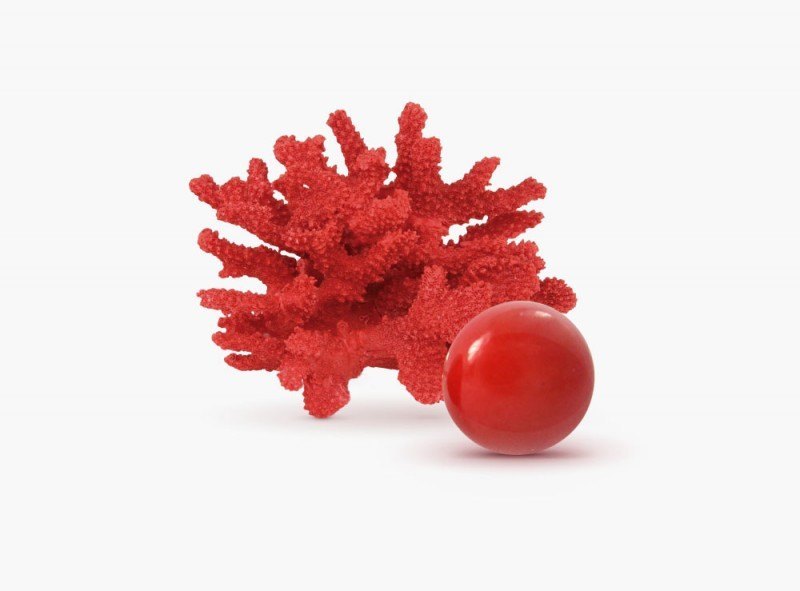
Coral
Grown in Mediterranean and Pacific reefs as living calcium architecture, coral is the organic gem of warmth, protection, and ocean memory.
- Precious coral is the only commercially important jewelry gem that is harvested from a living animal colony, not mined.
- The cornicello, a traditional Italian red coral horn pendant, is one of the oldest continuously worn amulet designs in Europe.
- Angel skin pink coral from Hawaii and Taiwan can reach premium prices per gram for top specimens.
- Black coral is chemically different from red coral; the former is protein (conchiolin) while the latter is calcium carbonate.
- Mediterranean Corallium rubrum takes roughly a century to grow to harvestable size, which is why sustainability matters so much.
- Practitioners working with root chakra vitality and ocean-element energy
- Buyers seeking Mediterranean heritage jewelry with documented sustainability
- Readers drawn to the traditional Italian coral amulet (cornicello) tradition
- Parents giving a traditional protective gift for a newborn
- Collectors interested in angel skin pink coral and deep oxblood varieties
- Environmental shoppers concerned about reef ecosystems (buy only sustainable certified sources)
- Those wanting durable daily-wear rings (coral is soft and scratches easily)
- Shoppers seeking transparent faceted gems (coral is opaque)
What Is Coral?
Precious coral is the calcium carbonate skeleton of colonial marine animals called coral polyps, specifically from the genus Corallium in the Mediterranean and several Pacific species including Corallium secundum and Corallium japonicum. It rates 3 - 4 on the Mohs hardness scale.
The polyps themselves are tiny animals that build a shared branching skeleton over decades or centuries; it is this skeleton, not the living polyps, that is harvested for jewelry. Coral is classified as an organic gem alongside pearl, amber, and jet.
The commercial precious coral trade centers on Mediterranean oxblood red (sometimes called Sardinian coral) and Pacific angel skin pink to orange-red varieties. Black coral from the Hawaiian and Caribbean reefs is a different material, made of conchiolin protein rather than calcium carbonate.
Soft pink coral from Hawaii and Taiwan, called angel skin, reaches premium prices for its delicate color.
Coral has been used for jewelry for more than five thousand years. At Mohs 3 to 4 it is soft and requires careful handling, which is why most coral is carved into beads, cabochons, or flat pendants rather than set in rings.
Sustainability is a significant modern concern because coral reefs are under environmental pressure, and reputable dealers now source only from managed fisheries with documented harvest limits. Readers buying coral today should ask for certification of sustainable harvest and avoid Caribbean pink coral unless documentation is clear.
How Coral Compares
| Property | Coral (red) | Dyed Bamboo Coral | Carnelian |
|---|---|---|---|
| Hardness | 3 - 4 | 3 - 4 | 7 |
| Price / gram | $ Budget | $ Budget | — |
| Rarity | Moderate (sustainable sources rare) | Common (imitation) | Common |
| Best For | Heritage jewelry, healing | Budget alternative | Durable red-orange substitute |
Meaning and Symbolism
Coral has been worn as jewelry and amulet since the Bronze Age. Egyptian, Sumerian, Greek, and Roman artifacts include carved coral beads and pendants, often worn as protection against the evil eye.
Pliny the Elder described coral as an amulet that sailors carried for safe passage, and Greek myth connected coral to the blood of Medusa, said to have drained into the sea and hardened into red branches.
In Italian tradition, coral remains one of the most important protective amulets. The cornicello, a horn-shaped red coral pendant, is traditionally given to newborns and worn throughout life as protection against harm. Neapolitan and Sardinian jewelry traditions have preserved elaborate coral carving and setting styles for centuries.
Coral is also significant in Japanese culture, where deep Pacific red coral (aka sango) has been harvested and carved since the 1800s for traditional ornaments and gifts.
In crystal healing tradition, red coral is associated with the root and sacral chakras, traditional protection from negative energy, and the vitality of blood and life-force. Pink coral is often associated with the heart chakra and gentler emotional nurturing.
Practitioners describe coral as a fire-and-water stone, with the mineral carrying both the warmth of its color and the fluid patience of its ocean origin. Many readers give coral as a gift to new mothers and new babies, with the stone framed as a traditional blessing for safe passage into life.
Historical Timeline
Healing Tradition
Emotional
Practitioners believe coral is a nurturing, protective stone traditionally associated with family, newborns, and safe life passages. In crystal healing tradition, it is said to support steady emotional warmth during major transitions such as pregnancy, new parenthood, and significant relationship changes.
Many readers keep a red coral cornicello-style amulet as a personal protection piece, a practice directly traceable to Mediterranean folk tradition. Crystal workers often pair coral with rose quartz for softer heart-centered family work or with black tourmaline when protection is the primary intention.
Pink coral is described in crystal healing tradition as especially gentle, suitable for children's jewelry and for practitioners new to crystal work. Coral pairs naturally with moonstone for feminine energy and with pearl for nurturing maternal support, and readers often choose coral as the classic blessing gift for friends becoming mothers.
Spiritual
In crystal healing tradition, coral is linked with the element of water and, through its warm color, with fire. Practitioners often describe it as a stone of embodied, flowing life-force, with the branching skeleton mirroring the branching patterns of blood vessels and family lineages.
Many readers use coral in meditation on ancestors and long family lines, or in blessing rituals for newborns and newlyweds. The cornicello amulet tradition is a living spiritual practice in southern Italy and among Italian diaspora communities, and crystal workers often approach coral with respect for this established tradition.
Coral pairs readily with pearl and mother of pearl in ocean-element grids, and with amber for organic-gem grounding. Crystal workers sometimes describe coral as a daytime-facing stone that grounds spiritual intention into practical embodied action.
Physical
Practitioners believe coral supports what they describe as blood vitality, bone and joint comfort, and steady circulation, associations drawn loosely from the calcium content of the skeleton and the red color of Mediterranean material.
Crystal healing tradition links red coral with overall vigor after illness and with supporting pregnancy and nursing energy, with folklore framing the stone as a nurturing companion. Pink coral is said to soothe nervous tension and is traditionally recommended for sensitive children.
Coral is not a substitute for medical care, and practitioners frame its role as accompanying rather than curing. Because coral is porous and reactive to acid and salt, it should not be worn during exposure to harsh chemicals, pool water, or hot sweaty activity.
Zodiac, Birthstone and Gifts
Coral is not an official modern US birthstone, but it has long been associated with Aries in Vedic and Mediterranean traditions because of its red color and Mars planetary link.
Astrologers traditionally link red coral with Mars, which makes it the preferred Vedic birthstone (moonga) for those working with Mars placements or seeking courage and vitality. For Scorpio, practitioners sometimes suggest coral as a stone of protective depth work, especially during intense periods.
For Pisces, the ocean origin resonates with the sign's water element. In Vedic tradition, red coral is typically set in gold or copper and worn on the ring finger, with careful attention to gem quality and astrological timing.
Care and Cleansing
Coral requires exceptionally gentle cleaning. Wipe with a soft dry cloth to remove surface dust and skin oils. If deeper cleaning is needed, use a barely damp cloth with plain water, followed by immediate drying. Avoid soap, detergent, acid, alcohol, perfume, vinegar, and all household chemicals.
Ultrasonic and steam cleaners are strictly forbidden because they can crack the soft coral or damage the polish. Saltwater and salt cleansing should be avoided entirely because salt reacts with the calcium carbonate surface. Dry salt on a small cushion above the stone is tolerable for brief energetic cleansing only.
Moonlight cleansing is the preferred energetic method and poses no risk. Smoke cleansing with sage, palo santo, or cedar is safe at a distance. Sound cleansing with a singing bowl is also appropriate. Direct sunlight should be limited because prolonged UV can fade pink coral over years.
Brief morning sun charging is considered safe and is traditional for red coral because the mineral is stable under moderate heat.
- DO NOT expose coral to salt water, chlorine, perfume, hairspray, or household cleaners.
- DO wipe coral jewelry with a soft dry cloth after every wear.
- DO NOT use ultrasonic or steam cleaners on coral.
- DO remove coral jewelry before swimming, showering, and strenuous activity.
- DO store coral in a lined pouch separate from harder gems to prevent scratches.
- DO ask your seller for documentation of sustainable harvest and species identification.
- Note: dyed bamboo coral and reconstituted coral are common imitations; disclosure is essential.
Real vs Fake
Genuine precious coral shows a fine striated branching pattern along the length of any piece, reflecting the growth rings of the original colony. Under a loupe, natural coral often reveals subtle color variation and small pores, while plastic imitations show uniform color without structural patterning.
A drop of lemon juice or vinegar on an inconspicuous spot fizzes on real coral because calcium carbonate reacts with acid, though this test is destructive and should only be used on a hidden surface.
Common imitations include dyed bamboo coral (real coral but a different, inexpensive species), dyed reconstituted calcite, plastic, and glass. Dyed bamboo coral is widely sold as an inexpensive alternative and is technically real coral, but should be disclosed as such and should not be priced at precious coral levels.
Plastic imitations are noticeably lighter and warmer to the touch than real coral.
Practical at-home checks include looking for the lengthwise striation, examining color depth and variation, testing weight (real coral feels denser than plastic), and checking hardness (real coral scratches with a fingernail only with effort).
For significant purchases, a gemological laboratory can confirm species (Corallium rubrum, Corallium secundum, Corallium japonicum, etc.) and any dye or reconstitution. CITES documentation should accompany any precious coral traded across international borders.
Coral Jewelry & Gifts
Coral is priced by gram rather than carat because of the lightweight nature and typical use in beads. Commercial bamboo coral runs $0.50 to $5 per gram. Lower-grade Mediterranean red coral starts at $5 to $20 per gram.
Fine Sardinian oxblood red coral sits at $30 to $80 per gram, and exceptional deep oxblood specimens can reach $150 per gram. Angel skin pink coral from Hawaii and Taiwan runs $50 to $200 per gram for premium color, with top stones exceeding $300 per gram.
Sustainability has become the central buying concern. Legal precious coral trade is regulated by CITES and by EU fishing quotas, and reputable dealers provide documentation of species, origin, and harvest date. Avoid Caribbean pink coral unless documentation is clear.
Ask for disclosure of any dyeing or reconstitution, and favor dealers with established Mediterranean or Japanese supply chains. Because the trade is under environmental scrutiny, responsible buyers should be willing to pay a premium for documented sustainable harvest and avoid very low-priced material of uncertain origin.
Where to Buy Coral
Affiliate disclosure: Some links below earn us a small commission at no extra cost to you. See our affiliate disclosure page.
Handmade, raw, and tumbled pieces from independent sellers worldwide.
Shop Coral on Etsy →Accessories, tools, and specimen sets with fast Prime delivery.
Shop Coral on Amazon →Certified loose gemstones graded and photographed for online buyers.
Shop Coral on GemSelect →Pairs Well With


Where Coral Is Found


