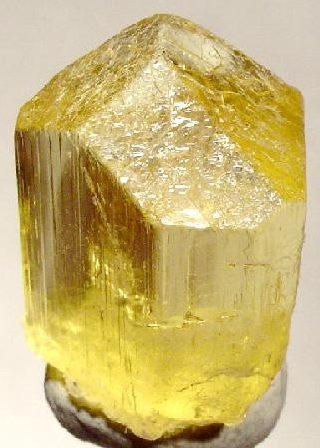
Scapolite Yellow
A rare metamorphic calcium-sodium aluminosilicate gem that most collectors have never seen - scapolite's warm golden clarity rivals the.
- Scapolite can fluoresce strongly yellow-orange under UV light, making some specimens attractive to both gem and UV mineral collectors.
- The square cross-section of scapolite prism crystals is diagnostic - no other common gem mineral forms such consistently square-looking rough.
- Some scapolite displays chatoyancy (cat's eye) when cut en cabochon, produced by parallel inclusions within the crystal.
- The full name for the sodium end-member of the scapolite series is marialite, named after Maria Rosa vom Rath, wife of a 19th-century German mineralogist.
- Yellow scapolite from Tanzania can be visually indistinguishable from fine yellow chrysoberyl without gemological testing.
- Collectors seeking rare gems most buyers have never encountered
- Those who want golden-yellow clarity at a much lower price than yellow sapphire
- Gift for a gemologist or gem enthusiast who values rarity over recognition
- Crystal practitioners drawn to solar plexus and clarity energies
- Jewelry designers seeking distinctive, uncommon stones for statement pieces
- Daily wear rings without protective settings - Mohs 5.5-6 is soft for a ring stone
- Buyers who prioritize name recognition - scapolite is unknown to most gift recipients
- Investment buyers - scapolite has no established secondary market infrastructure
What Is Scapolite Yellow?
Scapolite is a group name for a solid-solution mineral series ranging from marialite (sodium-rich) to meionite (calcium-rich), with the formula (Na,Ca)4[Al(Al,Si)Si2O8]3(Cl,CO3,SO4). The tetragonal crystal system produces prismatic crystals with characteristic square cross-sections - the name derives from the Greek *skapos* (rod) and *lithos* (stone), referring to the elongated prism habit.
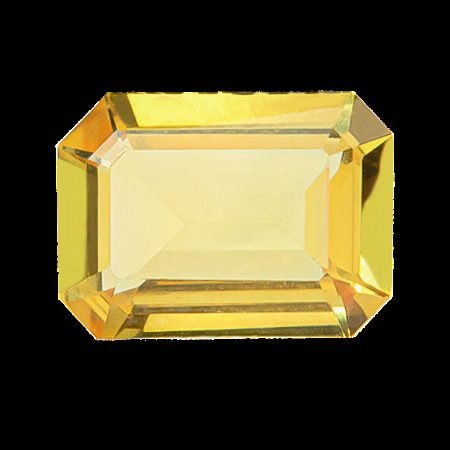
Gem-quality material is found in transparent to translucent yellow, orange, pink, violet, and colorless varieties.
Yellow scapolite derives its color from natural radiation effects on trace elements within the lattice. Tanzanian material from the Umba Valley produces the finest golden-yellow gems available, with clarity that rivals yellow sapphire at a significantly lower price per carat.
Myanmar (Burma) has produced scapolite for over a century, and Brazil's Minas Gerais yields both yellow and violet specimens.
Hardness ranges from 5.5 to 6, which is marginal for ring use but acceptable for pendants, earrings, and protected settings. **Birefringence of 0.020-0.037** is detectable to the eye in larger stones as slight doubling of inclusions when viewed through the pavilion. Refractive index of 1.540-1.579 gives good brilliance in faceted material.
How Yellow Scapolite Compares
| Property | Yellow Scapolite | Yellow Sapphire | Citrine |
|---|---|---|---|
| Hardness | 5.5 - 6 | 9 | 7 |
| Price / carat | $ Budget | $$$ Premium | $ Budget |
| Rarity | Rare | Rare-ish | Common |
| Name recognition | Low | High | High |
Meaning and Symbolism
Yellow scapolite carries the solar energy of golden light condensed into crystal form. Practitioners associate it with clarity of purpose, the courage to pursue independent goals, and the kind of focused personal power that comes from knowing one's own mind.
The solar plexus resonance makes it a choice for practitioners working on self-determination and cutting through confusion.
In crystal healing tradition, scapolite in general - and yellow scapolite specifically - is said to support achievement of personal goals by dissolving the habit of deferring to others' opinions.
The stone is described as encouraging the holder to trust their own perceptions and act from a place of internal authority rather than external validation.
The crown chakra association of scapolite connects the personal solar plexus power to a higher perspective, suggesting that true clarity of purpose requires both personal will and spiritual alignment. Many practitioners use yellow scapolite in meditation at the transition point between goal-setting intention and contemplative surrender.
Historical Timeline
Healing Tradition
Emotional
Practitioners believe yellow scapolite cuts through emotional confusion and helps the holder identify their true desires beneath layers of social conditioning. The stone is said to be particularly useful for people who habitually prioritize others' needs at the cost of their own clarity.
Many find it helpful during decision-making processes where multiple competing voices - internal and external - create paralysis. In crystal healing tradition, yellow scapolite is associated with emotional courage and the willingness to pursue authentic personal direction.
Spiritual
In crystal healing tradition, yellow scapolite bridges personal will (solar plexus) with higher wisdom (crown), creating a channel for inspired action. Practitioners use it in meditation on life purpose, particularly when seeking alignment between what they want to achieve and what they are genuinely here to do.
The stone is said to dissolve spiritual confusion and self-doubt, replacing them with a clear sense of direction. It is used in vision work and goal-setting rituals focused on authentic rather than conditioned aspiration.
Physical
Scapolite is traditionally associated with supporting eye health and clarity of vision in crystal healing tradition, partly from its association with transparency and optical clarity as a gem. Practitioners sometimes place it near the temples or forehead during meditation aimed at mental clarity and reduced cognitive fog.
The solar plexus association links it to digestive vitality and metabolic energy. Crystal practices are complementary to, not replacements for, professional medical care.
Zodiac, Birthstone and Gifts
Yellow scapolite resonates with Taurus and Sagittarius in crystal astrology. Taurus benefits from the stone's grounding personal clarity and its encouragement of authentic self-direction - qualities that help the sometimes stubborn Bull distinguish genuine preference from habit. Sagittarius's drive toward wisdom, truth, and higher purpose aligns with scapolite's solar-crown connection.
Practitioners working with Jupiter-ruled energies (Sagittarius's ruler) find yellow scapolite useful for expanding clarity around long-term vision and life direction.
Care and Cleansing
Yellow scapolite is water-safe, salt-safe, and sun-stable. All standard cleansing methods apply. Rinse briefly under cool running water, dry with a soft cloth, and recharge in sunlight for 1-2 hours to reinvigorate the solar energy associations.
Moonlight on a windowsill works equally well. Selenite plates provide continuous passive cleansing with no effort required. Full moon cleansing is particularly recommended by practitioners who work with scapolite's crown-solar bridge.
Smudging with sage or palo santo is safe and effective. Sound cleansing with a singing bowl is ideal for faceted gems in settings where you prefer not to risk scratching the metal mount on a hard surface.
- DO NOT use for rings without a protective bezel or deep prong setting - Mohs 5.5-6 will scratch with daily wear.
- DO store separately from harder stones (quartz, beryl, corundum) to prevent surface scratches.
- NOTE: Scapolite has imperfect cleavage in 2 directions - avoid sharp impacts on edges or corners.
- DO clean with a soft damp cloth - ultrasonic and steam cleaners are not recommended due to cleavage risk.
- NOTE: The birefringence causes doubling visible in larger stones - this is a natural optical property, not a flaw.
Real vs Fake
Yellow scapolite is most often confused with yellow chrysoberyl, yellow sapphire, or citrine. A gemological refractometer distinguishes them definitively: scapolite's RI of 1.540-1.579 is lower than chrysoberyl (1.745-1.754) and sapphire (1.762-1.770) and slightly overlaps citrine (1.544-1.553). The significant birefringence (0.020-0.037) is visible as facet-edge doubling through a loupe.
Synthetic scapolite is not commercially produced, so there is no significant synthetic substitution risk. Glass imitations are possible - glass is singly refractive and shows no birefringence doubling. Genuine scapolite also often shows characteristic fine needle or tube inclusions oriented parallel to the c-axis.
Provenance from known localities (Tanzania Umba Valley, Myanmar) combined with correct optical properties is the most reliable authentication. Buy from reputable gem dealers who can provide locality information.
Scapolite Yellow Jewelry & Gifts
Yellow scapolite represents exceptional value for a rare gem. Quality faceted stones in the 1-3 carat range typically cost $20-100 per carat, dramatically less than equivalent yellow sapphire. Top-color vivid golden-yellow material with good clarity from Tanzania can reach $150-200 per carat for fine specimens.
Look for clean golden-yellow color with high saturation, eye-clean clarity, and good cut proportions that maximize brilliance. The characteristic birefringence means poorly cut stones may show blurry doubling under magnification - a well-proportioned cut minimizes this. Cat's-eye scapolite commands a premium over faceted material.
Heat treatment may lighten or shift color in some specimens but is not universally applied or disclosed. Ask specifically about treatments. Untreated natural color is preferred by collectors. The ICA and AGTA recommend treatment disclosure for all gem materials.
Where to Buy Scapolite Yellow
Affiliate disclosure: Some links below earn us a small commission at no extra cost to you. See our affiliate disclosure page.
Handmade, raw, and tumbled pieces from independent sellers worldwide.
Shop Scapolite Yellow on Etsy →Accessories, tools, and specimen sets with fast Prime delivery.
Shop Scapolite Yellow on Amazon →Certified loose gemstones graded and photographed for online buyers.
Shop Scapolite Yellow on GemSelect →Pairs Well With


Where Scapolite Yellow Is Found


