Scolecite
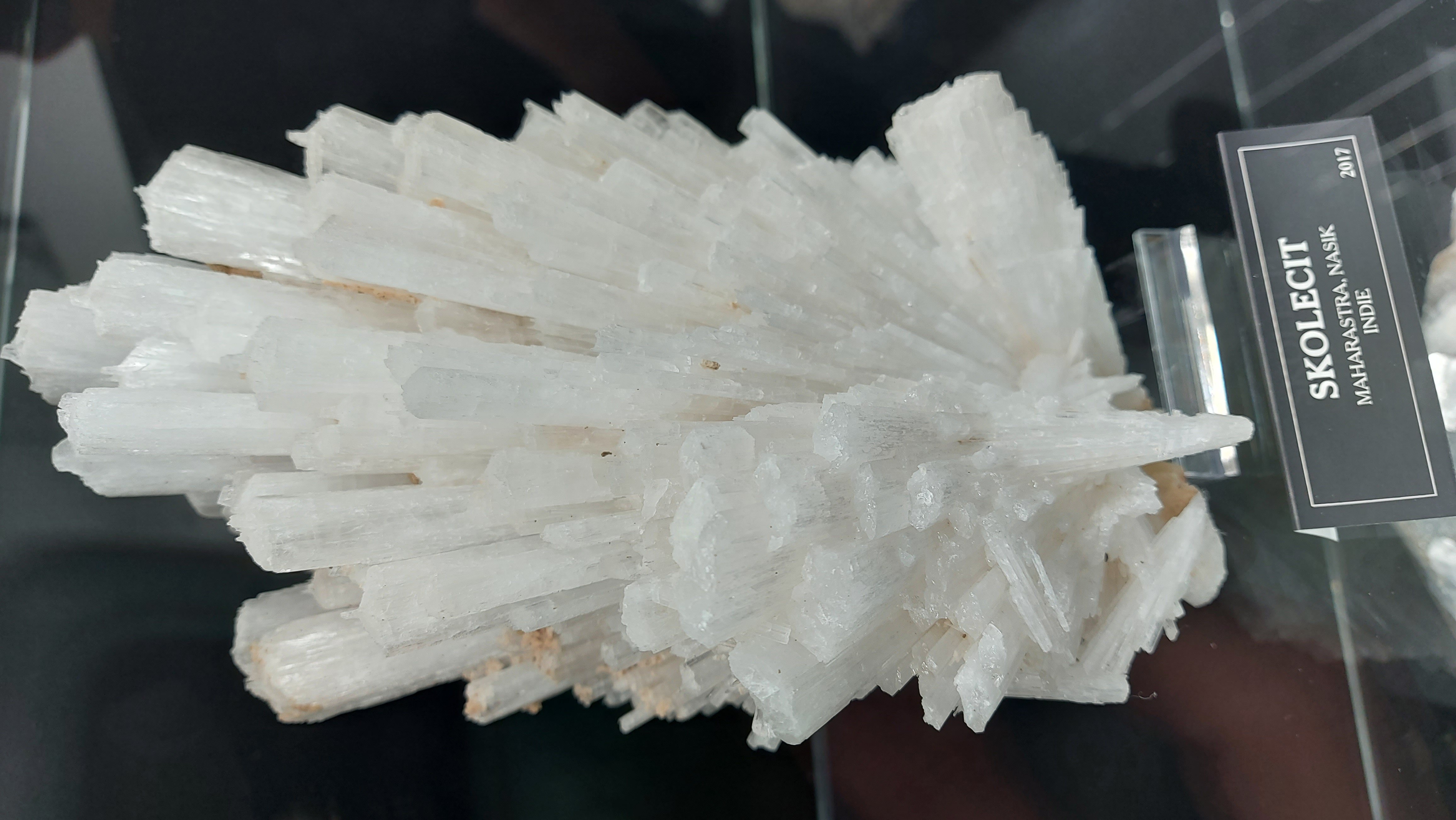
A radiating spray of pure white needle crystals from Indian basalts, scolecite is a peaceful zeolite practitioners associate with deep.
- Scolecite means worm in Greek, named for the way crystals curl up when heated and lose water.
- The radiating needle clusters can look like delicate snowy fireworks frozen on basalt matrix.
- Scolecite is a member of the zeolite group, sharing porous water-bearing structure with apophyllite and stilbite.
- Indian scolecite often forms with green apophyllite or peach stilbite in spectacular combo plate specimens.
- Pure scolecite needles can be flexible enough to bend slightly before snapping, unusual for a silicate mineral.
- Meditators wanting a high-vibration zeolite for cushion or altar
- Practitioners working with crown chakra peace and inner stillness
- Reiki and energy workers using crystals for treatment-room atmosphere
- Cluster collectors drawn to delicate radiating needle sprays
- Beginner crystal collectors wanting a calming specimen-grade piece
- Daily-wear jewelry buyers (too soft and brittle for ring use)
- Anyone needing a water-safe stone (try clear quartz)
- Travelers wanting a pocket carry (needle clusters chip easily)
What Is Scolecite?
Scolecite is a hydrous calcium aluminum silicate that belongs to the zeolite group of minerals. The name comes from the Greek skolex, meaning worm, because the crystals curl up when heated and lose their water content. It rates 5 - 5.5 on the Mohs hardness scale.
Like other zeolites, scolecite forms in the gas cavities of basalt as a late-stage mineral, often growing alongside stilbite, apophyllite, and other zeolite group members in spectacular crystal-lined geodes.
Crystallographically, scolecite forms as long thin prismatic crystals that often grow in radiating sprays, fan-shaped clusters, or porcupine-like aggregates. The crystals are typically white, occasionally colorless, with a vitreous to silky luster that catches light gently.
Pure scolecite is monoclinic, but the crystals are very nearly orthorhombic in their external shape and often interpenetrate to form complex twin sprays.
The most important source is the Deccan Traps basalts of India, particularly the Pune (Poona) and Nasik districts of Maharashtra. Scolecite specimens from this region are widely available in the global crystal market, often forming combination plates with apophyllite, stilbite, or heulandite on basalt matrix.
Iceland, the USA (especially Oregon and New Jersey), Brazil, and Germany produce smaller but mineralogically important specimens. Scolecite is too soft (Mohs 5 to 5.5) and too brittle for jewelry use; it is sold strictly as cluster specimens for display and meditation.
How Scolecite Compares
| Property | Scolecite | Stilbite | Apophyllite |
|---|---|---|---|
| Hardness | 5 - 5.5 | 3.5 - 4 | 4.5 - 5 |
| Price / specimen | $ Budget | $ Budget | $ Budget |
| Form | Radiating white needles | Sheaf bowtie clusters | Tetragonal pyramids |
| Best For | Peace meditation | Heart-centered work | Crown clarity |
Meaning and Symbolism
Scolecite carries meaning shaped almost entirely by modern crystal practice rather than ancient tradition. The mineral was formally identified in 1813 by German chemist Adolph Ferdinand Gehlen and named in 1816 by his collaborator Johann Friedrich Ludwig Hausmann.
Because scolecite was unknown to classical and medieval lapidary traditions, its symbolic meaning comes from 20th- and 21st-century crystal writers who built a reputation around the stone's pure white radiating form.
Modern crystal tradition frames scolecite as a stone of deep peace, inner stillness, and what practitioners describe as the quietest end of meditation practice.
The radiating needle structure is taken as a visual symbol of energy emanating outward from a single calm center, supporting the meditative experience of presence radiating from a still core. Practitioners often place scolecite on altars or beside meditation cushions to anchor the practice space.
Practitioners believe scolecite supports the crown, third eye, and heart chakras together, with a particular reputation for connecting these upper centers in a unified column. Many find the stone useful for advanced meditation practice, dream work, and what practitioners describe as deep inner-listening sessions.
Scolecite is commonly recommended for sensitive readers and energy workers seeking a calming presence in their practice space. Crystal writers sometimes call scolecite the peace zeolite because of its gentle reputation; it is not a stone of dramatic intervention but of patient quiet support.
Historical Timeline
Healing Tradition
Emotional
Practitioners believe scolecite supports profound emotional calm during periods of overwhelm or sustained stress. In crystal healing tradition, it is said to settle racing thoughts, ease anxious internal chatter, and create what practitioners describe as quiet receptive space for genuine rest.
Many find scolecite useful as a bedside or meditation-cushion companion during burnout recovery, grief processing, or extended periods of high responsibility. The stone is often paired with lepidolite for layered calming work and with rose quartz for soft heart practice.
Because scolecite is delicate and water-sensitive, practitioners use it as an environmental presence rather than a daily-carry stone. The visual presence of a radiating white spray on an altar or desk is said to provide its own anchor for the practice.
It is rarely described as a stone for catharsis or rapid mood shift; its reputation is calm, receptive, and supportive of quieter sustained inner work.
Spiritual
In crystal healing tradition, scolecite is considered one of the purest peace stones available, working at the crown, third eye, and heart chakras together.
Practitioners believe its radiating needle structure creates an energetic field that supports deep meditation, dream work, and what practitioners describe as connection between the heart and the higher centers. The stone is widely used in reiki and contemplative practices to create a calm atmosphere in treatment rooms or meditation spaces.
Many practitioners use scolecite during evening meditation focused on letting go of the day, dream-recall practice before sleep, or sustained morning sits emphasizing receptive presence. The stone pairs naturally with selenite for shared high-frequency calm, with clear quartz for amplification, and with amethyst for combined meditative practice.
Its traditional Moon and Mercury associations emphasize quiet receptivity, dream wisdom, and inner listening.
Physical
Practitioners believe scolecite supports what traditions describe as nervous system regulation, breath quality, and the kind of physical relaxation that follows mental quieting. Most physical correspondences are 20th-century in origin since scolecite has no ancient folklore tradition.
Scolecite is not a substitute for medical care, and crystal traditions frame it as supportive rather than curative.
Many readers keep scolecite specimens in bedrooms to support what they describe as restful sleep, on yoga mats during savasana, or in meditation rooms to anchor a calm atmosphere. Practitioners sometimes use scolecite during breath-focused work, holding gentle attention on the radiating crystal pattern while practicing slow rhythmic breathing.
Its water-sensitive nature means it is not suitable for direct-contact gem elixirs; the indirect method is required if any water-based use is desired.
Zodiac, Birthstone and Gifts
Scolecite is not a classical birthstone, but modern crystal writers often suggest it for Capricorn readers seeking disciplined meditation support and for Pisces readers wanting structured calm during high sensitivity. Astrologers traditionally associate scolecite with the Moon and Mercury for its receptive quiet character.
Cancer readers also respond well to scolecite for its bedroom and dream-practice associations. Earth signs broadly find the stone calming for evening practice. Fire signs sometimes use scolecite to balance their own intensity with structured stillness, particularly during cool-down periods after demanding cycles.
Care and Cleansing
Scolecite requires gentle cleansing methods because the stone is water-sensitive and structurally fragile. Avoid all water-based cleaning: water can dissolve the stone slowly over time, dull its luster, and weaken matrix attachments. Skip ultrasonic cleaners, steam, soapy water, and saltwater entirely. Dry methods are the only safe approach.
Smoke cleansing with sage, palo santo, cedar, or frankincense is the traditional choice for scolecite. Sound cleansing with a singing bowl or tuning fork held near the cluster is also safe and frequently used.
Moonlight is a popular gentle recharging method; practitioners often place scolecite clusters in moonlight overnight, especially around the new and full moon, treating the lunar exposure as both cleansing and recharging.
- DO NOT clean scolecite with water, soap, ultrasonic cleaners, or steam.
- DO use dry methods only: smoke, sound, moonlight, or a soft dry brush.
- DO store scolecite separately from harder crystals to prevent breaking the delicate needle terminations.
- DO NOT expose scolecite to direct heat sources; the stone can lose water and curl up.
- DO handle clusters by the matrix base rather than the fragile needle terminations.
- DO display scolecite in dry environments away from humid bathrooms or steam.
- Note: matrix bases can be glued to display stands but never use water-based adhesives.
Real vs Fake
Genuine scolecite shows long thin prismatic crystals that often grow in radiating fan-shaped sprays or porcupine-like clusters. Real specimens vary in needle thickness, length, and matrix association.
A stone sold as scolecite that lacks the needle habit and matrix association is something else, most often natrolite (a closely related zeolite with similar appearance but different chemistry) or quartz.
Color and form are key checks. Real scolecite is white to colorless with a vitreous to silky luster; bright pure white opaque material is suspicious. The crystals should show clean monoclinic terminations under 10x magnification, not the hexagonal points of quartz or the bowtie sheaves of stilbite.
At home, you can test hardness gently (scolecite scratches easily with a steel knife), check the slight flexibility of individual needles (real scolecite needles can bend slightly before snapping), and feel the slight cool weight of real silicate against the lighter tap of glass imitations.
Be cautious of repaired specimens; needle clusters are fragile and individual needles or whole sprays are sometimes glued back onto matrix without disclosure. For higher-priced specimens above $50, request photographic provenance and ask whether the cluster has been stabilized or repaired. Reputable dealers disclose any restoration.
Indian Deccan Traps provenance is the standard; specimens from Iceland or Oregon command modest premiums for collector interest.
Scolecite Jewelry & Gifts
Scolecite specimen pricing ranges by size, needle definition, and combination with other zeolites. Small clusters under 5cm run $10 to $40. Mid-size sprays of 5cm to 15cm with sharp radiating needles and good luster reach $40 to $200.
Larger statement specimens above 15cm with multiple terminated sprays can reach $200 to $800 for fine pieces.
Combination plates featuring scolecite alongside green apophyllite, peach stilbite, or other zeolites command higher prices, often $80 to $1,000 for well-balanced combo specimens. These multi-mineral combos are particularly sought by zeolite collectors building reference suites.
Scolecite is generally untreated. Color is natural, though the white body color is sometimes enhanced with bleach or coatings in budget markets; this is unusual but should be asked about. Repair status is the more common disclosure issue, since fragile needle clusters are often handled and partially reglued.
Buy from specialist mineral dealers rather than tumbled-stone bulk shops for any specimen above $50, and request locality information when possible.
Where to Buy Scolecite
Affiliate disclosure: Some links below earn us a small commission at no extra cost to you. See our affiliate disclosure page.
Handmade, raw, and tumbled pieces from independent sellers worldwide.
Shop Scolecite on Etsy →Accessories, tools, and specimen sets with fast Prime delivery.
Shop Scolecite on Amazon →Certified loose gemstones graded and photographed for online buyers.
Shop Scolecite on GemSelect →Pairs Well With



Where Scolecite Is Found


