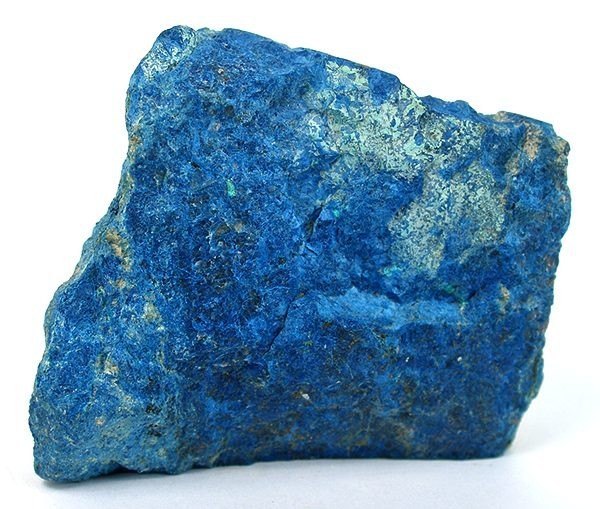
Shattuckite
Deep Namibian copper blue with quiet fibrous structure, shattuckite is the collector's throat-chakra stone of honest articulation
- Shattuckite was discovered in 1915 at the Shattuck Mine in Bisbee, Arizona.
- The mineral is a copper silicate hydroxide with distinctive fibrous crystal structure.
- Namibian Kaokoveld is the primary modern source of commercial shattuckite.
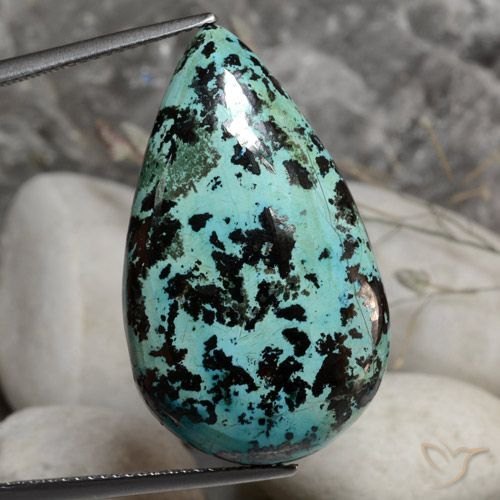
- Shattuckite often grows intergrown with chrysocolla, producing multicolor cabochons.
- The copper content makes shattuckite sensitive to water and saltwater exposure.
- Throat chakra practitioners drawn to deep blue copper minerals
- Collectors interested in Namibian Kaokoveld mining heritage
- Altar-makers wanting a rare collector stone with rich color
- Advanced crystal workers comfortable with soft copper-bearing specimens
- Readers seeking uncommon alternatives to azurite and chrysocolla
- Daily-wear jewelry shoppers (try lapis lazuli or blue sapphire)
- Beginners wanting widely available healing stones (try sodalite or blue lace agate)
- Buyers looking for waterproof stones (shattuckite requires dry care)
What Is Shattuckite?
Shattuckite is a rare copper silicate hydroxide mineral with formula Cu5(SiO3)4(OH)2. The mineral was first discovered in 1915 at the Shattuck Mine in Bisbee, Arizona, and was named after the mining operation. The mineral forms in oxidized zones of copper deposits, often in association with other copper minerals.
The primary modern source is Namibia's Kaokoveld region.
Shattuckite typically shows deep blue to azure color from its copper content, often in fibrous or radiating crystal aggregates. The mineral is frequently found intergrown with chrysocolla, azurite, and malachite, producing multicolored cabochons showing blue and green bands. Shattuckite scores Mohs 3.5 to 4, among the softer gem minerals.
Most shattuckite reaches the crystal market as polished cabochons and freeform pieces rather than faceted stones, because the mineral's softness and copper content limit jewelry applications. Namibian material commands premium prices in the collector market, with the deepest saturated blue color from Kaokoveld commanding the highest values.
The copper content gives shattuckite distinctive physical and energetic characteristics associated with the copper mineral family. Like other copper minerals, shattuckite should not be placed in direct water because of leach concerns. The mineral has a relatively short history in crystal healing, with meaning actively shaped by contemporary practitioners.
How Shattuckite Compares
| Property | Shattuckite | Chrysocolla | Azurite |
|---|---|---|---|
| Hardness | 3.5 - 4 | 2 - 4 | 3.5 - 4 |
| Color | Deep blue fibrous | Blue-green soft | Deep blue crystalline |
| Price / stone | $ Budget | $ Budget | $ Budget |
| Best For | Collector throat chakra | Accessible throat-heart | Third-eye classic |
Meaning and Symbolism
Shattuckite was discovered in 1915 during copper mining at the Shattuck Mine in Bisbee, Arizona, making it a relatively young mineral in geological description. The mineral was quickly recognized as a distinct copper silicate species and entered mineral collections internationally.
Namibia's Kaokoveld region emerged as the primary commercial source in the latter 20th century with the opening of Kandesei and related deposits.
In crystal healing tradition, shattuckite is associated with the throat chakra and the third-eye chakra. Practitioners describe the deep blue copper color as a symbol of honest articulation rooted in clear inner vision, and the stone is often used during communication-focused meditation. The copper lineage connects shattuckite to other Venus-associated stones.
Many readers acquire shattuckite as a collector piece rather than a daily-carry stone because of its softness and copper content. Crystal workers often pair shattuckite with chrysocolla for layered copper-family work, with lapis lazuli for classic throat-chakra pairing, or with malachite for heart-throat bridging.
The stone has a modest folkloric tradition because of its relatively recent mineralogical identification, with meaning actively developed by modern crystal healers rather than inherited from long tradition.
Historical Timeline
Healing Tradition
Emotional
Practitioners believe shattuckite supports honest articulation and courageous expression of difficult truths. Crystal healing tradition associates the deep blue copper color with articulate integrity, and the stone is often recommended for readers working through difficult conversations or conflict resolution.
Many readers keep shattuckite on study desks and meditation altars during periods requiring clear communication. Crystal workers sometimes recommend it for readers rebuilding trust in their own voice after silenced periods, treating it as a patient supporter of return to honest expression.
Crystal workers often pair shattuckite with rose quartz for tender heart-throat balance or with amethyst for crown-to-throat integration during reflective practice. The stone is considered an altar companion rather than daily carry because of its softness.
Spiritual
In crystal healing tradition, shattuckite is linked with the throat chakra and the third-eye chakra. Practitioners describe the copper-silicate mineralogy as a bridge between earth-grounded expression and higher inner knowing.
Many readers use shattuckite during meditation focused on channeling insight into clear articulation, particularly for writers, teachers, and those giving regular presentations. The stone has a relatively recent folkloric tradition and is especially popular among contemporary crystal workers in metaphysical circles.
Crystal workers often place shattuckite as a throat-chakra centerpiece with clear quartz points radiating outward for amplification and amethyst at the crown position. Some readers associate the stone with channeling practice and automatic writing because of its modern metaphysical reputation.
Physical
Practitioners believe shattuckite supports what they describe as calm vocal presence and steady articulation during demanding speaking or writing work. Crystal healing tradition associates blue throat-chakra stones generally with voice symbolism, though the stone is not a substitute for medical care.
Because shattuckite is soft and contains copper, direct skin wear is not recommended for extended periods. Most healing practice involves altar placement and meditation rather than jewelry use. Crystal workers sometimes recommend it during recovery from speaking-related exhaustion.
The stone is considered appropriate for gentle throat-chakra practices focused on thoughtful articulation and honest expression. Traditional associations with Mercury and Venus through copper give shattuckite particular resonance during communication-cycle astrological transits.
Zodiac, Birthstone and Gifts
Shattuckite is not a traditional birthstone, but astrologers often recommend it for Sagittarius (for truthful teaching), Gemini (for articulate communication), and Aquarius (for clear visionary speech).
The copper content connects shattuckite symbolically to Venus, and the stone is often recommended during Mercury retrograde phases for its associations with careful, honest communication. Many readers acquire shattuckite during significant astrological transitions involving communication themes.
Care and Cleansing
Shattuckite requires gentle cleaning because it is both soft (Mohs 3.5 to 4) and chemically sensitive. Do not use water-based cleaning because copper can leach and the surface can be damaged. Dry soft-cloth wiping is the safest method, with occasional light brushing with a dry soft brush for dust.
Smoke cleansing with palo santo or sage is the preferred energetic method. Moonlight charging is safe. Direct sunlight should be limited because prolonged UV can cause slight color changes in copper minerals over long periods.
Salt and saltwater should be avoided entirely because salt corrodes copper. Many practitioners cleanse shattuckite by placing it briefly on a bed of clear quartz or selenite overnight, a method especially safe for copper-bearing specimens. Wash hands after handling.
- DO NOT submerge shattuckite in water, ultrasonic cleaners, or any liquid solvent.
- DO NOT use salt or saltwater cleansing; corrodes copper.
- DO wash hands after handling shattuckite because of copper content.
- DO store shattuckite in individual padded compartments to protect the soft surface.
- DO NOT wear shattuckite as daily-wear jewelry because of softness and copper sensitivity.
- DO keep shattuckite out of reach of small children and pets.
- Note: Namibian Kaokoveld material commands premium collector prices.
Real vs Fake
Genuine shattuckite shows distinctive fibrous or radiating crystal structure with deep blue copper color. The refractive index of 1.752 to 1.815 and specific gravity of 3.8 to 4.1 (notably higher than most silicates) help distinguish the mineral from imitations. Under 10x magnification, the fibrous texture is clearly visible.
Shattuckite often occurs with chrysocolla, producing natural multicolor specimens.
Common misidentifications include chrysocolla (related copper silicate with softer structure), azurite (carbonate copper mineral with different crystal form), and blue dyed howlite or quartz. Laboratory analysis is the definitive identification method. Dyed material often shows color concentration in pits and fractures rather than integrated throughout the stone structure.
Practical at-home checks include examining for characteristic fibrous crystal texture under magnification, testing hardness carefully (shattuckite scratches with a steel knife), and checking the density (the stone feels heavy for its size because of high specific gravity).
For premium specimens or pieces from specific Namibian localities, request seller documentation of Kaokoveld provenance. Reputable mineral dealers typically provide origin information for shattuckite above $100.
Shattuckite Jewelry & Gifts
Shattuckite is a moderate-price collector crystal. Small tumbled pieces and polished chips run $10 to $40, medium cabochons $25 to $150, and larger display specimens or unique cabochons $150 to $500. Namibian Kaokoveld material commands the highest prices, with exceptional deep blue fibrous specimens reaching $300 to $1,000+.
When buying, look for deep saturated blue color, visible fibrous crystal structure, clean polish without visible cracks, and good provenance documentation. Multicolor cabochons combining shattuckite with chrysocolla and malachite are popular and often command premium pricing.
Most shattuckite reaches the international market through Namibian exporters and mineral specialist dealers. The stone is particularly popular among collectors building copper-mineral collections and among crystal workers seeking rare throat-chakra alternatives.
Where to Buy Shattuckite
Affiliate disclosure: Some links below earn us a small commission at no extra cost to you. See our affiliate disclosure page.
Handmade, raw, and tumbled pieces from independent sellers worldwide.
Shop Shattuckite on Etsy →Accessories, tools, and specimen sets with fast Prime delivery.
Shop Shattuckite on Amazon →Certified loose gemstones graded and photographed for online buyers.
Shop Shattuckite on GemSelect →Pairs Well With



Where Shattuckite Is Found


