Chrysocolla
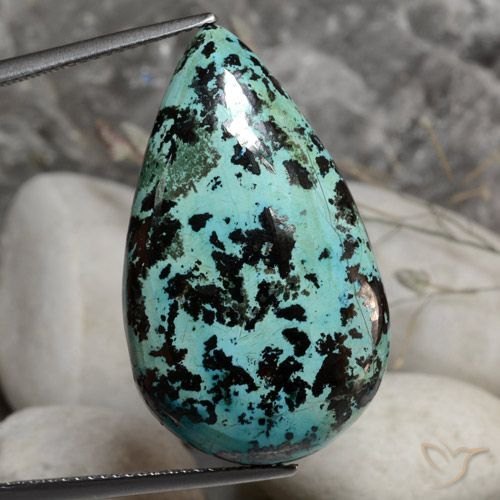
Born in weathered copper deposits, chrysocolla is the blue-green whisper of the earth's patient color.
- Chrysocolla's name means gold glue in Greek, from its ancient use as a solder flux.
- The silicified form called gem silica can exceed Mohs 7 and rival fine turquoise in durability.
- Peru's Lily Mine produces some of the world's most saturated blue gem silica chrysocolla.
- Eilat stone from Israel is an intergrowth of chrysocolla, malachite, and turquoise.
- Chrysocolla's color comes from copper, the same element that gives turquoise and malachite their greens and blues.
- Practitioners drawn to a stone of wise communication and peaceful expression
- Readers seeking a blue-green alternative to turquoise with similar aesthetic
- Crystal workers focused on throat and heart chakra bridging
- Collectors drawn to silicified chrysocolla (gem silica) as a rarer durable form
- Gift seekers wanting a feminine-energy stone with ancient goddess lore
- Buyers wanting daily-wear rings in unstabilized form (Mohs 2.5 to 3.5 is too soft)
- Readers expecting a single-color stone (chrysocolla typically blends blue and green)
- Shoppers wanting ring-hardness durability (consider turquoise or amazonite)
What Is Chrysocolla?
Chrysocolla is a hydrated copper silicate that forms in the weathered upper zones of copper ore deposits. Its color runs from turquoise-blue to deep teal and forest green, often within the same specimen, produced by the copper content. It rates 2.5 - 3.5 (7 if silicified) on the Mohs hardness scale.
The name comes from the Greek chrysos kolla, meaning gold glue, because ancient metalworkers used powdered chrysocolla as a flux when soldering gold.
Pure chrysocolla is soft, with Mohs hardness between 2.5 and 3.5, and is amorphous to cryptocrystalline in practice. It rarely forms visible crystals and is typically massive, botryoidal, or as crusts on host rock. For jewelry use, much commercial chrysocolla is silicified, meaning it has been naturally infused with quartz during formation.
This silicified form is called gem silica or chrysocolla chalcedony and reaches Mohs 7, making it durable enough for rings and bracelets.
Chrysocolla often occurs alongside malachite, azurite, and cuprite in copper ore environments, and these combinations are prized by both lapidaries and collectors. The term Eilat stone from Israel refers to an intergrowth of chrysocolla, malachite, and turquoise.
Arizona's copper country produces both pure chrysocolla and gem silica of exceptional color, and Peru's Lily Mine is the source of some of the finest silicified chrysocolla on the market.
How Chrysocolla Compares
| Property | Chrysocolla | Turquoise | Amazonite |
|---|---|---|---|
| Hardness | 2.5 - 3.5 (7 gem silica) | 5 - 6 | 6 - 6.5 |
| Price / carat | $ Budget | $ Budget | $ Budget |
| Rarity | Moderate | Moderate | Common |
| Best For | Cabochon jewelry, display | Rings, pendants | Daily wear jewelry |
Meaning and Symbolism
Chrysocolla has been worked by human hands for more than 5,000 years. Ancient Egyptian jewelers, Mesopotamian artisans, and South American goldsmiths all used it. Its name is recorded in the writings of Theophrastus and Pliny the Elder, who described its use in gold solder.
The stone was traditionally associated with the goddess in many cultures, and is often called a stone of feminine energy, wisdom, and peaceful communication.
In Native American traditions of the American Southwest, chrysocolla was carved into beads and fetishes alongside turquoise, and the two stones often occur in the same deposits. Pueblo and Navajo artisans continue to use chrysocolla in contemporary jewelry, often as an alternative to turquoise when a softer color palette is desired.
Its connection to copper mining makes chrysocolla distinctly American in modern trade terms.
In modern crystal healing tradition, chrysocolla is called the stone of wise women and is associated with calm teaching, peaceful communication, and goddess wisdom. Practitioners often recommend it for people navigating difficult conversations, particularly around emotions that are hard to put into words.
Its blue-green bridge of color is read as a link between the throat (communication) and heart (feeling) chakras in most modern traditions.
Historical Timeline
Healing Tradition
Emotional
Practitioners believe chrysocolla is a stone of peaceful expression, traditionally associated with wise communication, emotional release, and compassionate listening. In crystal healing tradition, it is said to soften defensive speech, reduce reactive anger, and help readers articulate feelings that are hard to name.
Many readers wear chrysocolla as a pendant during therapy, mediation, or difficult family seasons. Practitioners often pair chrysocolla with rose quartz for heart-throat bridging, and with blue lace agate for calm articulation.
Crystal workers typically describe chrysocolla as a gentle corrective presence rather than a forceful one, which suits teachers, counselors, and caretakers. The stone has long been called a stone of wise women, and many readers gift chrysocolla to mentors, mothers, and friends entering new chapters of creative or caregiving work.
Its feminine-energy lore is documented in crystal texts across the twentieth century.
Spiritual
In crystal healing tradition, chrysocolla is linked with the throat and heart chakras, zones practitioners associate with honest communication and compassionate feeling. The stone's blue-green gradient is read as a bridge between these two centers, supporting what crystal workers describe as speaking from the heart.
Many readers incorporate chrysocolla into journaling, poetry, and song practices.
Practitioners often describe chrysocolla as a goddess stone, drawing on its ancient association with divine feminine traditions. It is frequently used in altars dedicated to teachers, grandmothers, or ancestral wisdom lines, with practitioners suggesting chrysocolla for rituals of gratitude and guidance.
Chrysocolla pairs readily with clear quartz in grids focused on wise counsel, and with moonstone in practices honoring cyclical feminine rhythms. It is considered a stone of patience and receptivity rather than dramatic breakthrough energy.
Physical
Practitioners believe chrysocolla is traditionally associated with the throat, lungs, and what they describe as gentle hormonal balance. Folklore links the stone with menstrual support, throat stamina for singers and speakers, and general feminine physical rhythms, though crystal workers are careful to frame these as supportive accompaniment rather than medical care.
Many readers wear chrysocolla as a necklace near the throat or heart during stressful speaking engagements or recovery from respiratory illness. The stone is not a substitute for healthcare, and practitioners consistently describe its role as tradition-rooted companionship rather than clinical intervention.
Some crystal workers suggest chrysocolla for people navigating perimenopause and related life transitions, particularly alongside moonstone. Chrysocolla is generally considered a stone of soft bodily balance rather than corrective action.
Zodiac, Birthstone and Gifts
Chrysocolla is not a traditional birthstone, but astrologers often associate it with Taurus, Gemini, and Virgo, signs linked to Venus and Mercury and to communication, patience, and service. The stone's palette of blue and green echoes these earth-air combinations.
For Taurus readers, chrysocolla is often recommended as a calm-voice companion during stubborn disagreements. For Gemini readers, practitioners suggest the stone to soften rapid speech into more considered expression. Virgo readers drawn to service and caretaking often find chrysocolla paired with amazonite as a supportive kit for long workdays.
Care and Cleansing
Chrysocolla requires gentle cleansing, especially softer unsilicified material. Wipe with a dry or barely damp cloth and mild soap, and avoid prolonged soaking, saltwater, and ultrasonic or steam cleaners. Brief lukewarm rinses are tolerated but should be followed by immediate drying.
Gem silica chrysocolla is more robust and tolerates short cleaning baths without risk.
Moonlight, sound cleansing with a singing bowl, and smoke cleansing with palo santo or sage are traditional and safe. Many practitioners rest chrysocolla on selenite overnight as a preferred cleansing method that avoids water entirely. Dry salt cleansing is not recommended because chrysocolla's softness makes it vulnerable to scratching by salt crystals.
Prolonged direct sunlight should be limited because UV exposure can slowly lighten chrysocolla's blue-green color. A brief morning sun bath is considered safe and is sometimes described as recharging, but long-term storage in a sunny window is not advised, particularly for the brighter blue gem silica varieties often sold as premium cabochons.
- DO store chrysocolla separately in a soft pouch to protect it from harder stones.
- DO NOT soak chrysocolla in saltwater, ultrasonic cleaners, or steam cleaners.
- DO wipe chrysocolla with a dry cloth or barely damp mild soapy cloth only.
- DO NOT leave chrysocolla in direct sunlight for extended periods.
- DO set chrysocolla rings in protective bezels to guard against chips and abrasion.
- DO remove chrysocolla jewelry before hand washing, swimming, or gardening.
- Note: gem silica chrysocolla is harder (Mohs 7) and more durable than pure chrysocolla.
Real vs Fake
Genuine chrysocolla shows a characteristic blue-to-green gradient, often with patches, swirls, or veining within a single cabochon. The surface has a waxy to vitreous luster, and silicified gem silica material is distinctly glossier and harder than pure chrysocolla. Under a 10x loupe, natural stone shows irregular color zoning consistent with copper-rich weathering.
Many commercial cabochons sold as chrysocolla are in fact composite stones combining chrysocolla with host quartz, or are chrysocolla crushed and reconstituted with resin binders. These are legitimate products if disclosed, but their price should reflect the composite nature.
Dyed howlite and dyed magnesite are occasionally sold as chrysocolla, especially in inexpensive beaded jewelry.
Plastic imitations feel warm and lightweight and often show molded seam lines. Genuine chrysocolla feels cool and slightly heavier, with natural color variation that is difficult to replicate uniformly.
For collector-grade gem silica, a laboratory identification confirms the silicified quartz component and distinguishes top-tier Peruvian or Arizonan material from lookalike stones like chrysoprase or dyed chalcedony.
Chrysocolla Jewelry & Gifts
Chrysocolla spans a wide price range depending on silicification and saturation. Standard cabochons of pure chrysocolla typically cost $5 to $30 per carat, while silicified gem silica from Arizona or Peru reaches $50 to $200 per carat or more.
Collector-grade Lily Mine Peruvian gem silica can exceed $500 per carat for saturated stones. Beads and tumbled pieces are much more affordable, typically under $5 per stone.
Treatment is mostly limited to stabilization and resin bonding for softer material, both of which should be disclosed. Gem silica chrysocolla is essentially untreated because its natural durability does not require enhancement.
For jewelry, favor silicified material in protective bezels, and always ask sellers whether a stone is pure chrysocolla, gem silica, or a composite with other copper minerals.
Where to Buy Chrysocolla
Affiliate disclosure: Some links below earn us a small commission at no extra cost to you. See our affiliate disclosure page.
Handmade, raw, and tumbled pieces from independent sellers worldwide.
Shop Chrysocolla on Etsy →Accessories, tools, and specimen sets with fast Prime delivery.
Shop Chrysocolla on Amazon →Certified loose gemstones graded and photographed for online buyers.
Shop Chrysocolla on GemSelect →Pairs Well With




Where Chrysocolla Is Found


