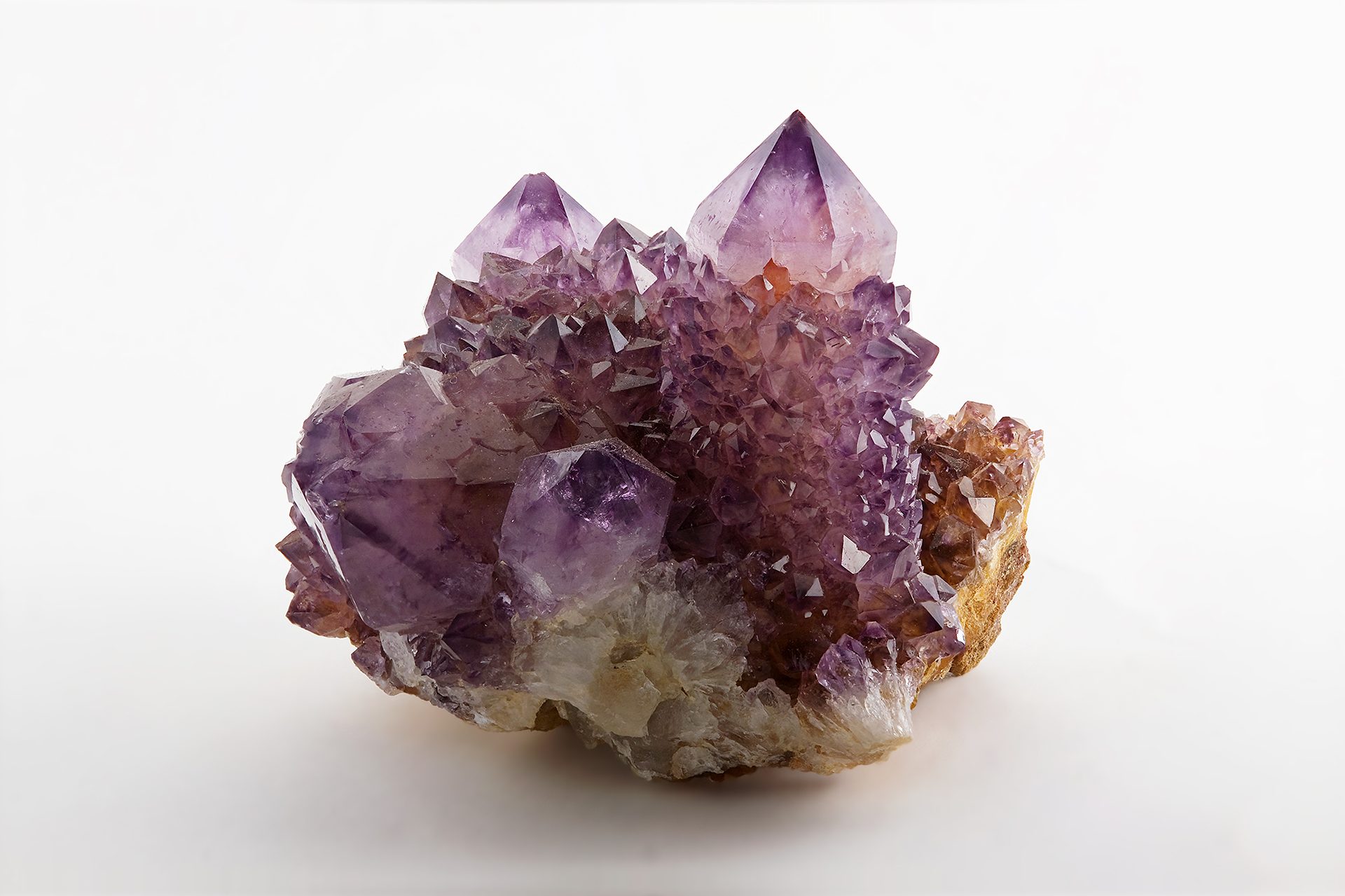
Siberian Amethyst
Named for the nearly exhausted Russian deposits that set the global standard, Siberian-grade amethyst defines deep royal violet in the.
- Before the great Brazilian amethyst discoveries of the 1800s, Siberian amethyst from the Ural Mountains was the world's most valued amethyst - as precious as fine ruby or sapphire in the European market.
- Catherine the Great of Russia is said to have possessed an extraordinary collection of Siberian amethysts and was particularly devoted to the stone above all other colored gems in the Russian imperial treasury.
- The term Siberian in the gem trade is an unprotected quality designation - any seller can apply it to any amethyst. This means buyers must evaluate the stone itself, not just the label, when Siberian quality is claimed.
- Genuine historic Siberian amethyst from the Ural Mountains is now so rare that museum-quality antique Russian specimens with documented provenance are more collector artifacts than gemstones.
- The specific double color flash - a vivid violet with simultaneous red and blue highlights visible under incandescent and daylight respectively - is the technical characteristic gemologists use to define true Siberian-grade color.
- Collectors seeking the deepest, richest amethyst color available
- February birthstone buyers who want the finest rather than the affordable
- Investors in colored gemstones seeking a scarcity-driven premium stone
- Crystal enthusiasts who want maximum metaphysical potency attributed to deep violet
- Jewelry designers making heirloom-quality violet pieces
- Budget buyers (consider Brazilian amethyst for excellent value at fraction of the price)
- Buyers who cannot verify grade (the Siberian designation is widely misused - caveat emptor)
- Those wanting large geodes (Siberian-grade material is faceted gems, not clusters)
What Is Siberian Amethyst?
Siberian amethyst is a quality designation rather than a strict geographic origin term. Historically, it referred to the deep, vivid royal purple amethyst mined in the Ural Mountains of Russia - stones so richly colored they rivaled fine sapphire. The original Ural deposits are nearly exhausted today.
The term now functions as a premium grade designation applied to any amethyst - typically from Uruguay, Zambia, or Brazil - that matches the deep, even, vivid violet color historically associated with the finest Russian material.
Reputable dealers apply the designation to stones with color grades in the AAA range: deep saturated purple with red and blue flashes, no brownish modifiers, and minimal color zoning.
A genuine Siberian-grade amethyst should show a deep, royal violet color visible in the stone face-up, strong saturation without the grayish or brownish modifiers that affect commercial grade material, and ideally red and blue secondary hues visible in different lighting conditions.
How Siberian Amethyst Compares
| Property | Siberian Grade Amethyst | Brazilian Amethyst | Zambian Amethyst |
|---|---|---|---|
| Color | Deep royal violet, red flash | Medium violet, often zoned | Deep blue-violet |
| Price/ct | $ Budget | $ Budget | $ Budget |
| Availability | Limited, graded material | Abundant | Moderate |
| Best For | Fine jewelry, investment | Fashion, décor, beginners | Premium fashion jewelry |
Meaning and Symbolism
The depth of color in Siberian-grade amethyst is said by practitioners to correspond to a depth and potency of metaphysical properties. Crystal healing traditions hold that deeper, more saturated amethyst carries more concentrated healing energy - making Siberian-grade stones among the most prized for serious spiritual work.
Amethyst's traditional associations with sobriety, spiritual clarity, and protection are said to be more powerful in the deepest specimens. The dual blue-red flashes visible in fine Siberian amethyst are associated by practitioners with the balance of spiritual (blue) and earthly (red) energies in the stone.
Historically, Siberian amethyst adorned the crown jewels of Russia, the British regalia, and the vestments of Catholic bishops and cardinals - consistent associations with spiritual authority and the ability to maintain clarity amid luxury and power. These connections resonate with modern practitioners who work with amethyst for spiritual protection.
Historical Timeline
Healing Tradition
Emotional
Deep-grade amethyst is said by practitioners to carry all the properties of amethyst in their most concentrated form - the calming, clarifying, and protective properties amplified by the density and purity of the violet color.
It is traditionally associated with the highest level of mental clarity and the ability to maintain serenity under the most demanding emotional circumstances. Crystal healers often work with deep-grade amethyst for what they describe as particularly deep third-eye activation and a profound quieting of anxious mental activity.
These are personal accounts from wellness traditions, not medical claims.
Spiritual
Practitioners believe that Siberian-grade amethyst represents the fullest expression of amethyst's spiritual gifts: third eye opening, crown chakra activation, and the building of a strong protective energy field.
The deep violet is said to vibrate at the highest frequency within the amethyst family, making it the choice for advanced spiritual practitioners who have worked with commercial-grade amethyst and want to deepen their practice.
Some traditions associate specific psychic gifts with the deepest amethyst specimens - particularly the development of prophetic dreaming and clear inner hearing.
Physical
As with all amethyst, the deeper grade stones carry the same traditional crystal healing associations with the nervous system, brain health, and sleep quality - none of which have medical support.
Practitioners who work with stones' color-frequency correspondences believe that the deeper violet of Siberian-grade amethyst produces a more potent effect in practices aimed at calming and centering the nervous system. Individual experiences vary and these are wellness practices, not medical interventions.
Zodiac, Birthstone and Gifts
The three signs most associated with amethyst find in Siberian-grade material the fullest expression of the stone's gifts. Pisces, whose deep spiritual sensitivity benefits from the most potent protective clarity available, is said by practitioners to particularly benefit from the depth of Siberian-grade amethyst.
Aquarius, the visionary seeker, benefits from the amplified third-eye activation associated with the deepest violet. Capricorn, whose bridge between material and spiritual realms is aided by the highest-grade amethyst available, is said to find in Siberian-grade stones the clarity needed to honor both the earthly and transcendent aspects of their nature.
Care and Cleansing
Siberian-grade amethyst requires the same gentle cleansing as all amethyst: brief running water, moonlight, sound, smudging, or earth burial. The main caution is the same as all amethyst: avoid prolonged direct sunlight which causes gradual color fading.
For investment-grade material, prefer gentler methods that minimize any risk of surface damage. Brief moonlight recharging and sound cleansing are the lowest-risk options for valuable specimens.
Store investment-grade amethyst away from direct light exposure when not wearing or displaying. A lined box that protects from both physical damage and sustained UV is ideal for high-value pieces.
- DO NOT leave Siberian-grade amethyst in direct sunlight - even short-term regular exposure can gradually fade the deep color that defines its value.
- DO clean with warm soapy water and a soft cloth only - the stone itself is safe in ultrasonic cleaners but settings with other stones should be checked first.
- DO NOT expose to bleach or strong chemicals - amethyst is resistant but settings may be affected.
- NOTE store in a light-proof container when not displayed - sustained ambient light (even indoor) over years can subtly affect color.
- DO insure high-value Siberian amethyst pieces - the color premium makes them worth protecting financially.
Real vs Fake
Since Siberian amethyst is a quality designation rather than a geographic origin, the main fraud is commercial-grade amethyst sold as Siberian quality at premium prices. Evaluate the stone visually: true Siberian grade shows deep, even violet with blue and red secondary hues.
Any pale, grayish, or unevenly colored stone fails the grade regardless of labeling.
Heat-treated amethyst that has been darkened through treatment may be sold as natural Siberian grade. Ask sellers specifically whether the color is natural. Reputable dealers disclose all treatments.
Color-change in different lighting (incandescent vs. daylight) is a characteristic of fine amethyst - strong red flash under incandescent and blue flash under daylight. This dual-flash behavior is a positive indicator of high-grade natural color.
Synthetic amethyst is genuine quartz with identical chemistry but must be disclosed. Under magnification, synthetic amethyst typically shows different inclusion patterns - no three-phase inclusions, different growth zoning.
For investment-grade purchases, obtain written documentation of color grade and treatment disclosure. Some sellers offer third-party grading certificates for fine amethyst; while not universal, these provide additional assurance of quality claims.
Siberian Amethyst Jewelry & Gifts
True Siberian-grade amethyst (meeting the color standard from any origin) retails from $20-200+ per carat for quality faceted stones. This represents a meaningful premium over commercial Brazilian material ($2-30/ct) justified by the rarity of consistent deep color.
Color evaluation is essential in person or from sellers with accurate photography. Ask for photos in both daylight and incandescent light to verify the dual-flash characteristic of genuine high-grade amethyst.
Current sources producing Siberian-grade color include: Uruguay (deep violet with reddish flashes), Zambia (deep blue-violet with exceptional saturation), and occasionally premium Brazilian material from Minas Gerais (deep violet, often with good transparency).
Buy from dealers who explain their grading criteria rather than simply using Siberian as a marketing term. Reputable dealers describe the specific color characteristics and origin of their premium amethyst.
For February birthstone fine jewelry, Siberian-grade amethyst set in white gold or platinum creates an heirloom-quality piece that stands apart from the pale lavender seen in mass-market birthstone jewelry.
Where to Buy Siberian Amethyst
Affiliate disclosure: Some links below earn us a small commission at no extra cost to you. See our affiliate disclosure page.
Handmade, raw, and tumbled pieces from independent sellers worldwide.
Shop Siberian Amethyst on Etsy →Accessories, tools, and specimen sets with fast Prime delivery.
Shop Siberian Amethyst on Amazon →Certified loose gemstones graded and photographed for online buyers.
Shop Siberian Amethyst on GemSelect →Pairs Well With



Where Siberian Amethyst Is Found


