Star Ruby
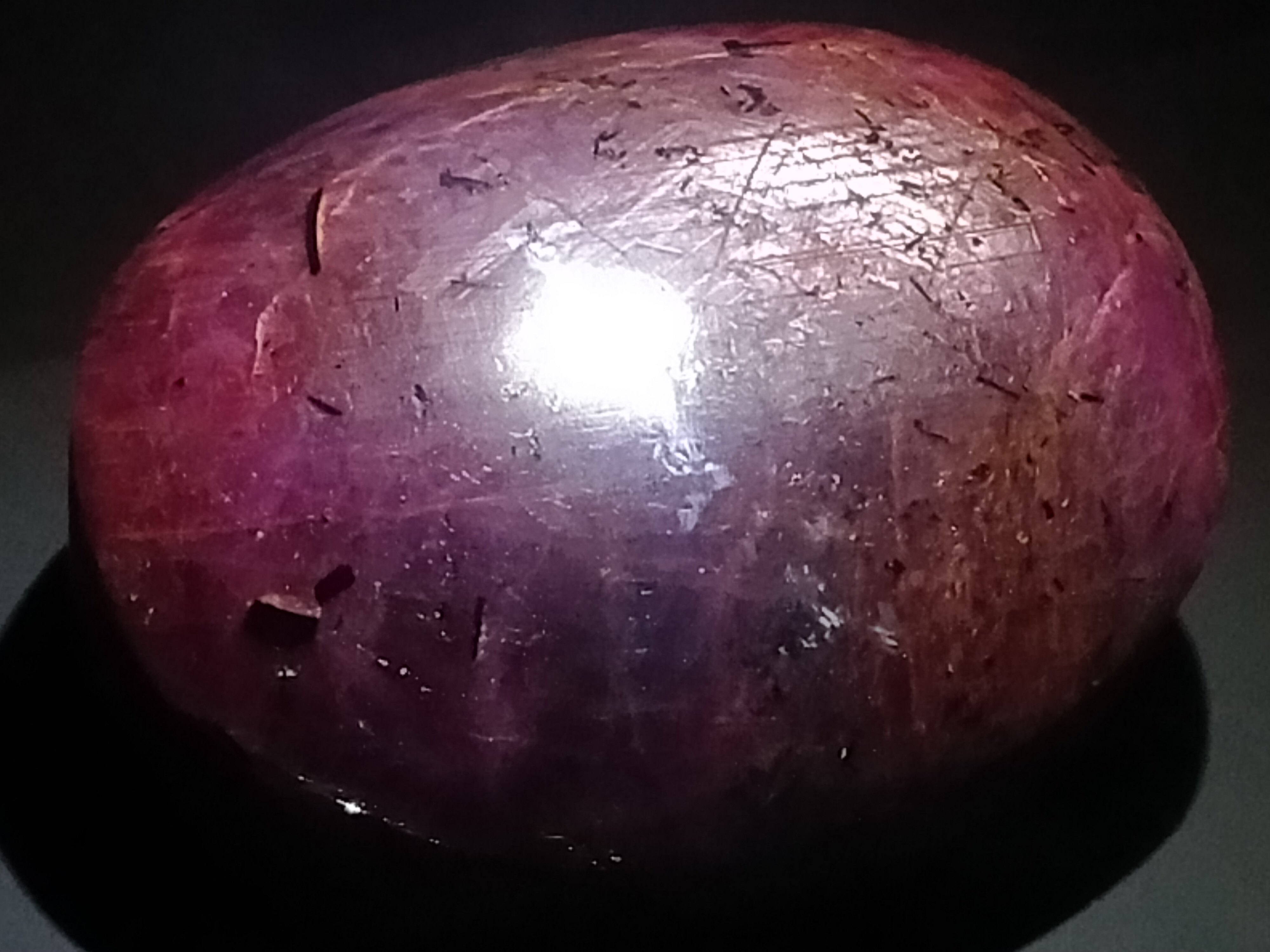
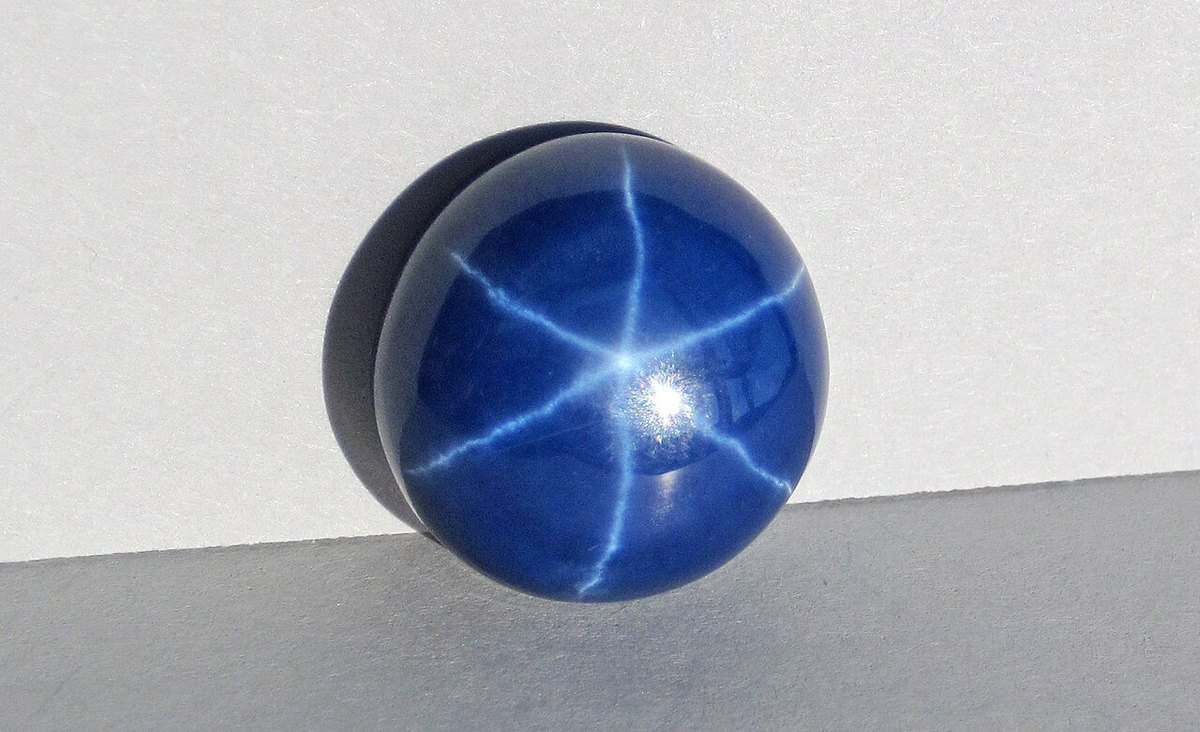
A cabochon of chromium corundum with a floating six-rayed star, star ruby is the asterism-bearing sister of ruby.
- The Rosser Reeves Star Ruby at major natural history museums weighs 138 carats and is named after an American advertising executive.
- Star rubies show asterism because of rutile silk inclusions aligned along three crystal axes.
- The De Long Star Ruby was stolen in 1964 and ransomed back to the American Museum of Natural History.
- A well-formed star ruby will show its rays moving across the surface as the cabochon is rotated under a point light.
- Indian Mysore star rubies often show a raspberry pink hue distinct from the deeper red of Burmese material.
- Collectors drawn to asterism phenomena and cabochon-cut heirloom stones
- July birthstone seekers wanting a unique alternative to faceted ruby
- Engagement ring shoppers seeking a meaningful, soft-glowing center stone
- Practitioners working with root and heart chakras for courage grounded in love
- Buyers interested in star stones that move the ray as the wearer moves
- Shoppers wanting faceted brilliance (consider standard ruby or spinel)
- Budget buyers under $200 per carat for natural material (try star garnet)
- Those who dislike translucent or milky body color (consider transparent ruby)
What Is Star Ruby?
Star ruby is the asterism-bearing variety of ruby, a chromium-colored member of the corundum family that shows a six-rayed star floating across the surface when cut as a cabochon. The star is produced by the reflection of light from thousands of oriented rutile needles known as silk inclusions.
The International Mineralogical Association symbol for corundum is Crn, and asterism requires a specific alignment of rutile along the three crystallographic directions.
With a Mohs hardness of 9, star ruby shares the extreme durability of its faceted sibling, making it suitable for rings, pendants, and heirloom wear across generations. The specific gravity of 3.97 to 4.05 gives the stone a reassuring weight in the hand.
Star rubies form in metamorphic marble deposits such as the legendary Mogok Valley of Myanmar, in basalt-hosted environments in Thailand and Cambodia, and in alluvial gravels throughout India and Sri Lanka. The quality of the silk determines whether the rough will produce a sharp, centered star or a weak, drifting one.
Color runs from purplish red through deep pigeon-blood red to brownish red, with Indian Mysore material showing a distinctive raspberry pink and Burmese stones running darker and more saturated. Because silk scatters light inside the stone, star rubies appear less transparent than faceted rubies.
Most commercial star rubies are untreated beyond cabochon polishing, since the silk that creates the star also makes heat treatment risky. Some lower-grade stones are diffusion-treated to enhance color, a separate category that must be disclosed.
How Star Ruby Compares
| Property | Star Ruby | Star Sapphire | Star Garnet |
|---|---|---|---|
| Hardness | 9 | 9 | 6.5 - 7.5 |
| Star Rays | 6 | 6 | 4 or 6 |
| Price / carat | $$ Mid-range | $$ Mid-range | $ Budget |
| Rarity | Rare | Uncommon | Uncommon |
Meaning and Symbolism
Star ruby has been revered across South Asia as a stone of divine protection for more than two thousand years. Sanskrit texts called it the guardian gem, and Indian warriors believed the star rode with them, arriving before their enemies to signal danger.
The three crossing rays were interpreted in various traditions as faith, hope, and destiny, or as past, present, and future.
In medieval Europe, star rubies were worn by generals and kings who believed the star would lead them to victory. Folklore held that the rays of a star ruby could be used to trace the path of fate, and pilgrims sometimes carried them as travel amulets.
The Rosser Reeves Star Ruby at major natural history museums, a 138 carat Burmese stone, remains one of the most photographed asterism gems in the world, named after the advertising executive who donated it.
In modern crystal practice, star ruby is traditionally associated with protected courage and anchored love. Practitioners believe the star stabilizes ruby's fiery energy, keeping the wearer brave without becoming reckless, and linking the root and heart chakras through its three intersecting rays.
Many find star ruby a useful stone during leadership transitions, creative blocks, or moments when love and duty seem to pull in different directions.
Historical Timeline
Healing Tradition
Emotional
Practitioners believe star ruby is a stone of protected courage. In crystal healing tradition, it is said to channel ruby's fire through the stabilizing star, helping the wearer take bold action without tipping into impulsiveness or burnout.
Many find star ruby supportive during leadership transitions, public roles, or moments when quiet self-assertion is needed, with the stone traditionally associated with steady presence rather than showy display.
Practitioners often pair it with black tourmaline when the courage work requires protective grounding, or with rose quartz when the action must be rooted in love.
Star ruby is also said to support people carrying family responsibility, giving them both strength and warmth for caregiving seasons. It is not considered a calming stone; readers seeking softness usually turn to pink opal or lepidolite, keeping star ruby for moments when fire is needed alongside steadiness.
Spiritual
In crystal healing tradition, star ruby is said to bridge the root and heart chakras, with the three crossing rays interpreted as the meeting of body, emotion, and spirit. Practitioners believe this configuration is what gives star ruby its reputation as a guardian gem.
Many find star ruby useful in meditations on purpose, lineage, or committed love, where the asterism serves as a visual anchor for breath and intention. The stone has a long ritual history in South and Southeast Asia, where star rubies have been carried in temple bundles and dedicated to deities of protection.
Star ruby is traditionally associated with the Sun and Mars in both Western and Vedic astrology, which practitioners interpret as radiance balanced by courage. Holding a star ruby during a vow ceremony, marriage blessing, or major threshold is a long-standing practice among readers who favor phenomenal stones for ritual use.
Physical
Practitioners believe star ruby supports what they describe as the body's fire element, and it has long been used in traditions that map gems to circulation, warmth, and sustained stamina.
Folklore associates star ruby with vitality during transitions, seasonal changes, and periods of convalescence. Many find wearing a star ruby pendant at the sternum comforting during long travel or physical effort, with practitioners framing its effect as warming rather than activating.
Star ruby is not a substitute for medical care, and practitioners are careful to describe its role as supportive rather than curative.
For readers who run naturally hot or experience high blood pressure, crystal healing tradition sometimes recommends limiting continuous star ruby wear and rotating with cooler stones such as moonstone or aquamarine to balance the energy across the day.
Zodiac, Birthstone and Gifts
Star ruby shares the July birthstone role with standard ruby and is traditionally associated with Cancer and Leo. The asterism variety is often preferred by readers who want ruby's energy in a softer, more contemplative form suitable for meditation and ritual.
For Cancer, star ruby is said to offer a bolder counterpart to the sign's lunar tenderness, encouraging protective action without losing empathy. For Leo, the stone is believed to stabilize the sign's solar radiance, giving the fire a gentler glow through the silk inclusions.
Practitioners suggest wearing star ruby in gold or silver, often in a pendant or ring with a bezel setting to protect the cabochon, and checking the ray alignment by tilting the stone under a single point light before purchase.
Care and Cleansing
Star ruby is among the easier stones to cleanse because it tolerates most common methods. Running tap water for under a minute is safe for a loose, unset cabochon, as is a brief rinse in lukewarm soapy water with a soft cloth to remove skin oils from jewelry.
Avoid prolonged soaking for set stones, since mounting adhesives in older bezels can weaken and lower-grade star rubies may carry surface-reaching silk that traps moisture.
Sunlight cleansing is traditional for star ruby because of the stone's solar associations, and a short morning sun bath is considered ideal. Moonlight, smoke cleansing with palo santo or sage, and sound cleansing with a singing bowl are all considered safe methods that protect the asterism.
Salt cleansing should be dry only, never a saltwater soak, since saltwater can corrode silver or gold settings and slowly alter the surface polish. Many practitioners rest star ruby on a clear quartz cluster between ceremonies to recharge its glow.
- DO rinse star ruby jewelry in lukewarm soapy water and dry with a soft cloth after long wear.
- DO NOT use ultrasonic or steam cleaners on diffusion-treated or fracture-filled star rubies.
- DO store star ruby separately from softer gems like pearls, opals, and turquoise to avoid scratching them.
- DO NOT expose lower-grade star rubies to thermal shock from hot to cold water or vice versa.
- DO remove star ruby rings before heavy housework or gardening to protect the cabochon setting.
- DO ask for disclosure of any diffusion, heat, or glass-fill treatment at the point of purchase.
- Note: inspect the ray under a single point light before buying; weak or off-center stars significantly reduce value.
Real vs Fake
A genuine star ruby shows a six-rayed asterism that remains sharp and centered across a significant portion of the dome when the cabochon is rotated under a single point light. The body color is typically a warm red to purplish red, and fine silk inclusions are visible under a 10x loupe.
A stone marketed as star ruby that shows a blurry or off-center star, or whose star remains stubbornly fixed in one position, deserves careful inspection.
Common imitations include synthetic star rubies made by the Linde process, star glass doublets, and diffusion-treated natural corundum with a thin layer of induced asterism. Linde synthetics show a sharper but often too-perfect star and usually display a dish-shaped pavilion invisible through the top of the stone.
Dyed or surface-treated star quartz is sometimes sold as star ruby at very low prices, which is a clear warning sign.
Practical at-home checks include a hardness test against known quartz (genuine star ruby will scratch quartz), a weight check (star ruby is notably dense), and a ray-movement test (real asterism moves with the cabochon and with the light source, not just one of them).
A magnet is not useful since star rubies are not magnetic.
For any significant purchase, a report from an independent gemological lab should confirm natural origin, species, and whether any diffusion or fracture treatment has been applied. Reputable dealers price diffused and composite material separately from natural star rubies.
Star Ruby Jewelry & Gifts
Star ruby pricing depends on body color, star sharpness, size, and origin. Commercial star rubies with weak or translucent bodies start around $50 to $200 per carat for Indian alluvial material, while well-formed red-body stones with sharp centered rays run roughly $500 to $2,000 per carat.
Top Burmese Mogok star rubies with deep red color and knife-sharp six-rayed asterism can exceed $5,000 per carat for fine pieces above three carats.
Diffusion-treated star rubies, which have an induced asterism in a shallow surface layer, are sold separately at much lower prices and must always be disclosed. Glass-filled star rubies, a cheaper category still, are best avoided for heirloom purchases.
For investment or heirloom pieces, request a report from an independent gemological lab confirming natural asterism, country of origin where determinable, and absence of diffusion or fracture filling. Bezel settings are strongly recommended to protect the polished dome from scratches and chips during wear.
Where to Buy Star Ruby
Affiliate disclosure: Some links below earn us a small commission at no extra cost to you. See our affiliate disclosure page.
Handmade, raw, and tumbled pieces from independent sellers worldwide.
Shop Star Ruby on Etsy →Accessories, tools, and specimen sets with fast Prime delivery.
Shop Star Ruby on Amazon →Certified loose gemstones graded and photographed for online buyers.
Shop Star Ruby on GemSelect →Pairs Well With




Where Star Ruby Is Found


