Tiger Iron
A naturally banded blend of tiger's eye, hematite, and red jasper, tiger iron carries layered grounded vitality.
- Tiger iron forms in 2.4-billion-year-old banded iron formations, among Earth's oldest sedimentary rocks.
- The three component minerals (tiger's eye, hematite, jasper) all formed during the same ancient depositional cycle.
- Western Australia's Pilbara region is the world's primary source of tiger iron and a UNESCO geological heritage area.
- The British folk name mugglestone predates the modern trade name tiger iron by over a century.
- Tiger iron records the great oxygenation event when free oxygen first accumulated in Earth's atmosphere.
- Practitioners working with combined root, sacral, and solar plexus chakras
- Athletes, physical workers, and high-effort professionals wanting endurance support
- Crystal carriers seeking layered grounding plus vitality plus confidence
- Cabochon collectors drawn to dramatic tri-mineral banding
- Ancient-Earth enthusiasts interested in 2.5-billion-year-old banded iron formations
- Buyers wanting a single-mineral specimen (tiger iron is a rock blend)
- Shoppers seeking transparent gem material (try citrine)
- Those wanting bright single colors (try red jasper alone)
What Is Tiger Iron?
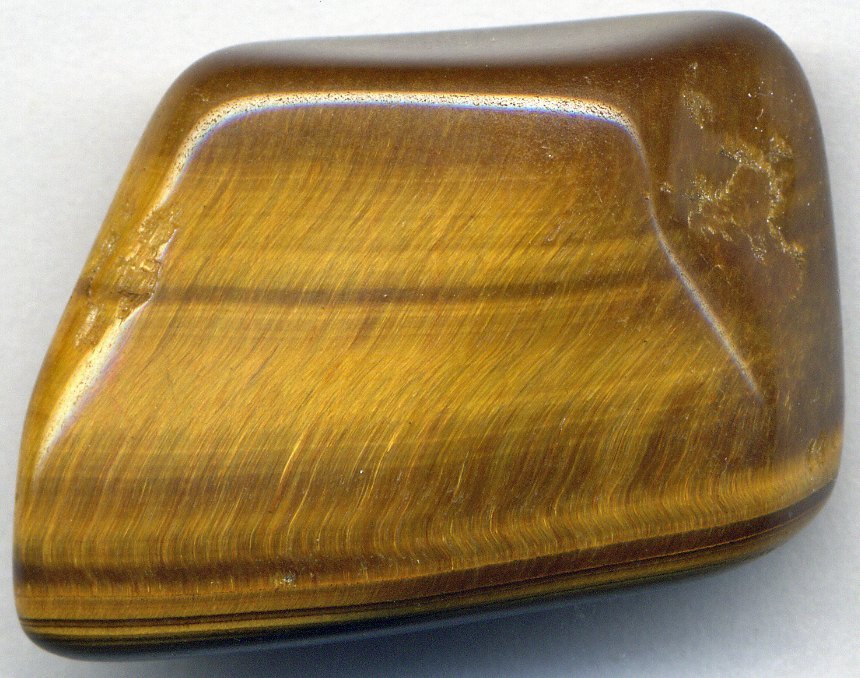
Tiger iron is a naturally occurring metamorphic rock that combines three distinct minerals in dramatic alternating bands: golden chatoyant tiger's eye (silicified crocidolite), silvery-gray hematite, and brick-red red jasper or jasperized chalcedony. The combination is sometimes called mugglestone in older British literature, though tiger iron is the standard modern trade name.
The world's primary source is the Pilbara region of Western Australia, where tiger iron formed in ancient banded iron formations (BIFs) approximately 2.2 to 2.5 billion years ago.
These formations are among the oldest sedimentary rocks on Earth, recording a period when oxygen first accumulated in the atmosphere and iron precipitated out of seawater in alternating cycles. Smaller occurrences in South Africa and the USA produce additional but less distinctive material.
Tiger iron is hard enough (Mohs 6 to 7) and tough enough for jewelry use, particularly as cabochons, beads, palm stones, and tumbled pieces. The rock takes a high polish that brings out the contrast between gold tiger's eye chatoyancy, silver hematite reflectivity, and matte red jasper.
Each piece shows unique banding patterns shaped by the original sedimentary layering and later metamorphic deformation. Carved figures and sculpture-grade material are available but less common than cabochon pieces.
How Tiger Iron Compares
| Property | Tiger Iron | Tiger's Eye | Red Jasper |
|---|---|---|---|
| Hardness | 6 - 7 | 6.5 - 7 | 6.5 - 7 |
| Price / piece | $ Budget | $ Budget | $ Budget |
| Composition | Tiger eye + hematite + jasper | Silicified crocidolite (single) | Jaspered silica (single) |
| Best For | Combined chakra work | Confidence, courage | Root vitality |
Meaning and Symbolism
Tiger iron carries meaning shaped both by its three component minerals and its extraordinary geological age. The Pilbara banded iron formations are among the oldest sedimentary rocks on Earth, recording the great oxygenation event when free oxygen first accumulated in the atmosphere roughly 2.4 billion years ago.
Holding tiger iron is, in a literal sense, holding ancient Earth history in compressed form, and modern crystal practice often draws on this geological depth.
Modern crystal tradition treats tiger iron as a triple-power stone combining the symbolic associations of its three components: tiger's eye for confidence and courage, hematite for grounding and protection, and red jasper for vitality and physical strength.
Practitioners describe the combined effect as layered support across the lower three chakras, with each mineral contributing to a different aspect of embodied presence. The banded structure itself is taken as visual confirmation of the layered work.
Practitioners believe tiger iron supports the root, sacral, and solar plexus chakras together, making it especially useful for athletes, physical workers, and anyone undertaking demanding multi-faceted projects. Many find tiger iron useful during periods that require sustained physical effort combined with mental confidence and grounded perseverance.
The stone is commonly recommended as a daily carry for entrepreneurs, performers, and emergency responders. Tiger iron is also valued by collectors and geology enthusiasts as a tangible piece of Earth's deep oxygenation history, often displayed alongside other ancient iron-formation specimens.
Historical Timeline
Healing Tradition
Emotional
Practitioners believe tiger iron supports layered emotional grounding by combining the steadying effects of its three component minerals. In crystal healing tradition, it is said to help readers find practical confidence during stressful periods, particularly when the stress involves both physical and mental demands.
Many find tiger iron useful during exam periods, athletic training cycles, intense work projects, or any season requiring sustained effort across multiple fronts. The stone is often recommended for caregivers, parents of young children, and emergency responders who need grounded presence under pressure.
Because tiger iron carries the warm earth tones of its three components, practitioners often pair it with cooling stones like blue lace agate or amethyst when emotional intensity needs balancing.
It is rarely described as a stone for catharsis or rapid mood shift; its reputation is steady, supportive, and oriented toward the long work of building resilience. Many readers describe tiger iron as a stone that helps them keep going.
Spiritual
In crystal healing tradition, tiger iron is one of the classical multi-chakra grounding stones, working at the root, sacral, and solar plexus together.
Practitioners believe each component mineral contributes to a different aspect of the lower chakra system: tiger's eye for solar plexus confidence, red jasper for sacral vitality, and hematite for root grounding. The combined energy is described as integrated rather than fragmented, supporting whole-body presence during demanding spiritual work.
Many practitioners use tiger iron during meditation focused on physical embodiment, gratitude for the body, or the willingness to do practical service in the world.
The stone is also valued for its connection to deep geological time; Pilbara material literally records 2.4 billion years of Earth history, making it a powerful focal object for meditation on long timelines.
Tiger iron pairs naturally with clear quartz for amplification, with black tourmaline for additional protection, and with petrified wood for shared geological-time work.
Physical
Practitioners believe tiger iron's combined iron-rich composition supports what traditions describe as physical stamina, circulation, and the kind of sustained vitality that demanding work requires. Folklore from medieval Europe linked iron-rich stones broadly to blood and body strength, and modern crystal writers extend these themes to tiger iron specifically.
Tiger iron is not a substitute for medical care, and crystal traditions frame it as supportive rather than curative.
Many readers wear tiger iron pendants or carry tumbled pieces during athletic training, physical workdays, or recovery cycles requiring sustained effort. Practitioners sometimes pair tiger iron with carnelian for fuller sacral warmth and with hematite for additional iron-energy grounding.
In contemporary gem therapy, tiger iron is sometimes recommended for postural support during long work or training sessions, particularly as a worn pendant or pocket carry.
Zodiac, Birthstone and Gifts
Tiger iron is not a classical birthstone, but modern crystal writers often suggest it for Leo and Aries readers seeking sustained vitality and confidence support, and for Capricorn readers working on demanding long-term projects. Astrologers traditionally associate the stone with Mars and the Sun for its combined fire-element character.
Earth signs broadly find tiger iron grounding without sacrificing energy; Taurus readers in particular respond to its physical-strength theme. Air and water signs sometimes pair tiger iron with cooling stones like blue lace agate to balance the stone's warm intensity.
Care and Cleansing
Tiger iron is generally durable and tolerates ordinary cleaning. Lukewarm soapy water with a soft brush removes grime and skin oils safely; rinse and dry promptly with a soft cloth.
Avoid prolonged soaking and saltwater because the iron content can develop surface oxidation over extended exposure. Skip ultrasonic cleaners for stones with visible fractures.
Smoke cleansing with sage, palo santo, cedar, or frankincense is the safest method for tiger iron. Sound cleansing with a singing bowl is also fine. Brief moonlight exposure is the traditional recharging approach.
Limit prolonged direct sunlight because the tiger's eye component can fade slightly over years of strong UV exposure. Recharging on a clear quartz cluster overnight is standard practice between major effort cycles.
- DO clean tiger iron with lukewarm soapy water and a soft brush; rinse and dry promptly.
- DO NOT soak tiger iron for extended periods; iron content can oxidize on the surface.
- DO store tiger iron separately from harder stones like sapphire and topaz.
- DO NOT use ultrasonic or steam cleaners on stones with visible fractures or fibrous regions.
- DO limit prolonged direct sunlight; the tiger's eye component fades slightly over years of UV exposure.
- DO use protective bezel settings for ring wear since the stone has only fair toughness.
- Note: cabochons should not be re-faceted; faceting destroys the chatoyant tiger's eye band.
Real vs Fake
Genuine tiger iron shows three distinct mineral bands: golden chatoyant tiger's eye, silvery-gray hematite, and brick-red jasper or chalcedony. The bands are slightly irregular in width and follow the natural sedimentary layering of ancient banded iron formations, which means they may be wavy, folded, or contorted from later metamorphic stress.
Imitations made from dyed agate or printed resin show suspiciously regular geometric patterns and lack the natural variation. Color and structure are key checks. Real tiger iron shows the characteristic gold-silver-red palette with subtle variation in saturation across each piece.
The tiger's eye band shows true chatoyancy (a moving silky line of light) when tilted, the hematite band has a silvery metallic sheen, and the jasper band is matte to slightly glossy.
At home, you can test hardness (tiger iron scratches glass easily but is scratched by quartz only with effort), check for chatoyancy in the gold band by tilting the stone in light, and feel the unusual density (specific gravity 3.10 to 3.50) compared to lighter rock substitutes.
Be cautious of stabilized tiger iron impregnated with resin to fill micro-fractures; this is not always disclosed but is detectable by acetone testing on inconspicuous areas. The iron content can also rust over time on lower-quality material.
For higher-priced larger pieces above 5cm, request locality information; Pilbara Western Australian provenance is the standard, and significant deviations should be documented. Some sellers market generic banded iron-bearing rocks from various sources as tiger iron; minor variation in band proportions is normal.
Tiger Iron Jewelry & Gifts
Tiger iron pricing varies by quality, source, and band definition. Small tumbled pieces run $3 to $15. Cabochons in 20mm to 40mm sizes with strong three-band patterns and good polish run $10 to $50.
Larger statement cabochons and palm stones above 50mm with dramatic banding can reach $50 to $200 for fine pieces, with named Pilbara provenance carrying small premiums.
Carved figures and small sculptures of tiger iron vary by craftsmanship and size, often falling between $30 and $200. Bead bracelets in standard sizes typically run $15 to $60. Specimen-grade slabs from Pilbara above 10cm with sharp banding can reach $100 to $500 for collector pieces.
Tiger iron is generally untreated. Some material is stabilized with resin to fill micro-fractures and improve polish, particularly for lower-grade stones. Always ask about treatment, especially for stones with unusually glossy surfaces or unnatural color depth.
Buy from established lapidary dealers for collector-grade material, and request provenance documentation for any stone marketed as Pilbara Western Australian material above $100.
Where to Buy Tiger Iron
Affiliate disclosure: Some links below earn us a small commission at no extra cost to you. See our affiliate disclosure page.
Handmade, raw, and tumbled pieces from independent sellers worldwide.
Shop Tiger Iron on Etsy →Accessories, tools, and specimen sets with fast Prime delivery.
Shop Tiger Iron on Amazon →Certified loose gemstones graded and photographed for online buyers.
Shop Tiger Iron on GemSelect →Pairs Well With



Where Tiger Iron Is Found


