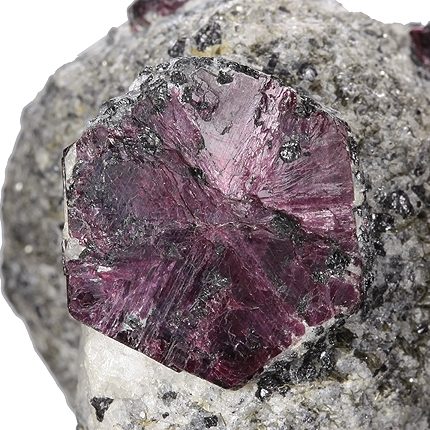
Trapiche Ruby
A ruby with a natural 6-pointed star etched by carbon inclusions - one of gemology's rarest optical phenomena
- The trapiche pattern in ruby is caused by carbonaceous inclusions, not the rutile needles that create ordinary asterism.
- A single well-formed trapiche ruby cross-section can sell for more than a faceted ruby of the same weight.
- Colombia produces trapiche emeralds and sapphires as well as rubies - an unusually diverse trapiche locality.
- The word 'trapiche' was first applied to Colombian emeralds in the 19th century before the same term reached rubies.
- Authentic trapiche patterns are perfectly 3-fold symmetric when viewed down the crystal's c-axis.
- Serious collectors seeking one-of-a-kind optical phenomena
- Geologists and mineralogists studying crystal growth patterns
- Investors wanting rare corundum with documented provenance
- Gift givers looking for a museum-quality statement piece
- Spiritual practitioners drawn to ruby's protective energy in a unique form
- Daily jewelry wearers - trapiche rubies are too rare and valuable for rings
- Budget shoppers - expect four to five figures for authenticated specimens
- Buyers wanting gem-quality transparency - most trapiche rubies are opaque
What Is Trapiche Ruby?
Trapiche ruby belongs to the corundum mineral family, shared with sapphire. Its trigonal crystal system creates a distinctive six-rayed star pattern. This geometric formation results from specific growth conditions and mineral inclusions. Corundum rates 9 on the Mohs hardness scale, making ruby extremely hard.
The deep red color of trapiche ruby comes from chromium impurities within the aluminum oxide crystal structure. Most specimens range from vivid crimson to darker burgundy hues. Trapiche rubies are opaque to translucent, with the characteristic six-pointed pattern forming in the stone's center. This unique asterism distinguishes them from standard ruby specimens.
Trapiche rubies form in metamorphic rocks subjected to intense heat and pressure deep within the earth. Major deposits occur in Burma, Colombia, and India. The six-rayed pattern develops during crystallization when mineral growth follows specific geometric pathways, requiring millions of years to reach gem quality.
How Trapiche Ruby Compares
| Property | Trapiche Ruby | Star Ruby | Faceted Ruby |
|---|---|---|---|
| Pattern Type | 6-spoke carbon star | Asterism (rutile) | None |
| Transparency | Opaque - translucent | Cabochon translucent | Transparent |
| Price / carat | $$$ Premium | $$ Mid-range | $$ Mid-range |
| Rarity | Extremely rare | Uncommon | Common to rare |
Meaning and Symbolism
Ruby has been revered for millennia as the king of gems, associated with life force, passion, and protection. In Sanskrit texts, ruby was called *ratnaraj* - king of precious stones - and was believed to bestow invincibility on warriors who wore it. Trapiche ruby carries this ancient symbolism amplified by its unmistakable geometric perfection.
The 6-fold symmetry of the trapiche pattern resonates with themes of harmony, balance, and divine order found across cultures. In crystal healing tradition, the spokes are said to represent six directions of energy flow, making practitioners believe this stone channels vitality with unusual focus. Collectors often describe a sense of awe when encountering a well-formed specimen, an experience that bridges science and reverence.
Historical Timeline
Healing Tradition
Emotional
Practitioners believe trapiche ruby carries the full emotional intensity of ruby - courage, passion, and drive - with an added layer of focused clarity from its geometric symmetry. Many in the crystal healing community find that working with this stone supports decision-making, helping one identify a clear path forward. It is said to dissolve hesitation and strengthen commitment to heartfelt goals.
Spiritual
In crystal healing tradition, trapiche ruby is said to align the six primary energy directions of the body, creating a balanced but powerful field of vitality. Practitioners associate the stone's 6-spoke pattern with integration of the self across multiple planes of awareness. Many find it supports deep meditation practices aimed at activating both the root and heart chakra simultaneously.
Physical
Practitioners traditionally associate ruby with circulation, vitality, and physical stamina. Trapiche ruby is said to carry these same qualities. Many crystal healers recommend placing it near the root chakra during bodywork sessions. These are traditional associations only and should never replace medical care or professional health advice.
Zodiac, Birthstone and Gifts
Ruby is the traditional birthstone for July and aligns closely with Leo's solar energy - bold, warm, and magnetic. Trapiche ruby, with its structured geometric pattern, is said to suit Cancer as well, offering the grounding clarity that this emotionally rich sign sometimes needs. Practitioners believe wearing ruby helps Leos channel their natural leadership with both fire and focus, while supporting Cancers in transforming emotional intensity into purposeful action.
Care and Cleansing
Trapiche ruby scores 9 on the Mohs scale, making it extremely durable. Brief rinsing under cool running water is safe. Avoid prolonged soaking if the specimen has fractures or open inclusions. Sunlight cleansing is safe for short periods - ruby's red color does not fade. Moonlight overnight is the gentlest and most popular option among practitioners. Sound cleansing with a singing bowl works well for display specimens you prefer not to handle frequently.
- DO store trapiche ruby specimens in individual padded pouches - despite hardness 9, inclusions can create internal stress points.
- DO NOT use ultrasonic cleaners on specimens with visible fractures or carbon inclusions.
- DO handle cross-section slabs by the edges to preserve the polished face.
- NOTE: most trapiche rubies are mounted in protective bezels or settings when worn as jewelry.
- DO document provenance papers (origin certificate, treatment disclosure) and store separately from the stone.
- DO NOT expose to harsh chemicals or jeweler's pickle if set in metal.
Real vs Fake
Authentic trapiche rubies are among the most scrutinized gems in the market. The key test is the pattern itself: a genuine trapiche shows 6 zones of ruby material separated by 6 darker inclusion-filled sectors, all radiating from a central core. The pattern is visible in reflected light and remains consistent when the stone is rotated - it does not shift or disappear like the cat's-eye effect does.
Synthetic rubies and glass impostors cannot replicate the natural trapiche pattern. However, some sellers market heavily included opaque rubies with rough internal banding as 'trapiche' - these lack the precise 6-fold symmetry. Always request a report from a reputable gemological laboratory. The lab report will confirm corundum composition, pattern authenticity, geographic origin (when determinable), and any heat treatment. No treatment disclosure is a red flag in the fine ruby market.
Trapiche Ruby Jewelry & Gifts
Trapiche ruby is sold primarily through specialist auction houses, gem shows, and mineral dealers rather than mainstream jewelry retail. Prices range from $500 to over $5,000 per carat for well-defined specimens with strong pattern symmetry and rich red body color. Colombian trapiche rubies with pink-red hues and Burmese specimens with deep pigeon-blood red command the highest premiums.
Look for specimens with clear 6-fold symmetry, minimal damage on the cross-section face, and a body color that reads as ruby rather than pink sapphire (chromium content determines the line). Always request a lab report from a reputable institution such as Gübelin or SSEF. Unheated Burmese specimens carry significant additional value. Budget collectors can find smaller rough trapiche pieces at mineral shows for $100-$500.
Where to Buy Trapiche Ruby
Affiliate disclosure: Some links below earn us a small commission at no extra cost to you. See our affiliate disclosure page.
Handmade, raw, and tumbled pieces from independent sellers worldwide.
Shop Trapiche Ruby on Etsy →Accessories, tools, and specimen sets with fast Prime delivery.
Shop Trapiche Ruby on Amazon →Certified loose gemstones graded and photographed for online buyers.
Shop Trapiche Ruby on GemSelect →Pairs Well With


Where Trapiche Ruby Is Found


