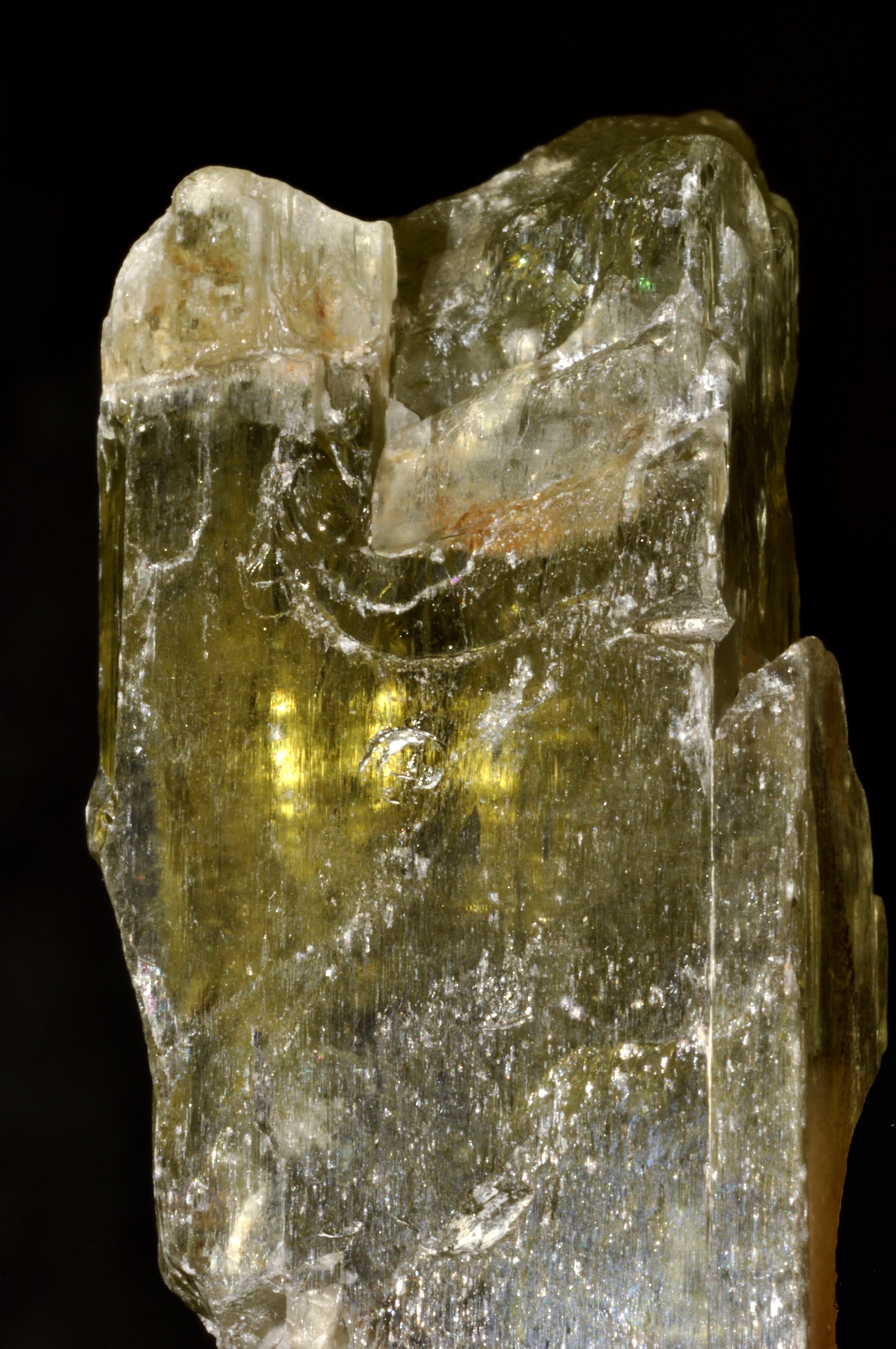
Triphane Spodumene
Triphane is the golden-yellow variety of spodumene - a lithium aluminum silicate gem family that includes pink kunzite and green hiddenite.
- The name 'triphane' comes from the Greek for 'appearing three ways,' a reference to spodumene's strong pleochroism - it shows different colors along three crystal axes.
- Spodumene crystals from South Dakota's Etta Mine have reached 14 meters in length - among the largest gem mineral crystals ever found.
- Lithium, a component of all spodumene minerals including triphane, is mined industrially from spodumene as a key material for electric vehicle batteries.
- Triphane fades in prolonged sunlight - the same color-light sensitivity that affects kunzite, making UV avoidance a care rule for all spodumene varieties.
- The three spodumene gem varieties - kunzite, hiddenite, and triphane - are collectively prized by mineral collectors as a color triad from a single mineral species.
- Collectors seeking the lesser-known gem variety in the spodumene family alongside kunzite and hiddenite
- Solar plexus practitioners who want a rare yellow gem with lithium-bearing mineral properties
- Jewelers seeking an unusual golden gem for bespoke earring and pendant commissions
- Mineral enthusiasts who appreciate the complete spodumene variety triad
- Gift givers looking for a highly unusual yellow stone that most recipients have never heard of
- Daily-wear ring buyers - triphane's perfect cleavage and moderate hardness make it fragile in ring settings; use yellow sapphire instead
- Those seeking a known, prestigious yellow gem - triphane is unfamiliar to most; consider yellow sapphire or golden beryl for instant recognition
- Budget buyers expecting large stones - faceted triphane is scarce; try citrine for affordable golden color at any size
What Is Triphane Spodumene?
Triphane is the historical and gemological trade name for the yellow to colorless variety of spodumene, a lithium aluminum silicate mineral with the formula LiAl(Si₂O₆). Spodumene crystallizes in the monoclinic system and forms large, striated prismatic crystals - sometimes among the largest gem-quality crystals found in nature.
Crystals from the Black Hills of South Dakota and the Nuristan region of Afghanistan have reached meter-scale lengths.
The spodumene family includes three gem varieties colored by different trace elements: *kunzite* (pink to violet, colored by manganese), *hiddenite* (green, colored by chromium), and triphane (yellow to golden, colored by iron or simply colorless through absence of chromium and manganese).
Triphane is the rarest and least familiar of the three varieties in the commercial gem market.
Spodumene forms exclusively in granitic pegmatites, particularly lithium-rich ones that also yield tourmaline, beryl, and topaz. Afghanistan's Nuristan Province, the Minas Gerais state of Brazil, and North Carolina's Hiddenite region are primary gem sources.
Perfect cleavage in two directions at nearly 90 degrees makes spodumene challenging to cut but produces gems of exceptional transparency and subtle brilliance when expertly faceted.
How Triphane Compares
| Property | Triphane Spodumene | Yellow Sapphire | Citrine |
|---|---|---|---|
| Hardness | 6.5 - 7 | 9 | 7 |
| Price / carat | $$ Mid-range | $$ Mid-range | $ Budget |
| Rarity | Rare (specialty) | Rare (fine quality) | Common |
| Best For | Collection, pendants | Fine jewelry, daily wear | Jewelry, healing |
Meaning and Symbolism
Triphane carries meaning rooted in clarity, personal confidence, and the illuminating power of the sun. Its golden color places it within a long tradition of yellow gems associated with intellectual vitality, optimism, and the capacity to see situations with unclouded judgment.
Historically, yellow stones were associated with the sun's power to dispel darkness and confusion.
In the spodumene family, triphane occupies a role distinct from its more famous siblings. Where kunzite is associated with love and hiddenite with prosperity and growth, triphane is traditionally associated with mental clarity, focused intention, and the confidence to act on one's convictions.
Practitioners believe it supports the mind's capacity to cut through complexity and arrive at essential truth.
The lithium content of spodumene minerals - including triphane - has drawn metaphysical commentary since practitioners became aware that lithium is used medicinally in the treatment of mood disorders. While no stone replaces medical care, many practitioners believe the lithium-bearing mineral field carries a gentle stabilizing quality that supports emotional equilibrium.
These claims are symbolic and energetic in nature and are not medical claims.
Historical Timeline
Healing Tradition
Emotional
Practitioners believe triphane supports emotional clarity, the dissolution of mental fog, and the confidence to make decisions from a place of inner certainty rather than anxiety. It is said to gently stabilize mood fluctuations, providing a consistent inner warmth that helps the practitioner maintain perspective during stressful or uncertain periods.
Many find regular work with triphane encourages an optimistic but grounded outlook - the capacity to acknowledge difficulty without being overwhelmed by it. Crystal healing tradition attributes to the spodumene family, including triphane, a mildly calming quality connected to its lithium mineral content, understood as symbolic rather than pharmacological.
That gentle stabilizing quality is considered one of triphane's most therapeutic gifts.
Spiritual
In solar plexus chakra work, triphane is said to amplify the quality of discernment - the ability to recognize what is aligned with one's authentic purpose and act on it with confident clarity.
Practitioners believe its crown chakra connection bridges personal will with higher guidance, helping the practitioner align individual intention with a broader sense of meaning.
The clear, transparent quality of fine triphane is considered metaphysically significant: it allows light to pass through without distortion, just as true clarity allows truth to pass through the mind without the distortions of fear or wishful thinking. Crown chakra meditation with triphane is recommended for those seeking to integrate intellectual understanding with spiritual knowing.
Physical
Practitioners believe triphane is said to support the nervous system, mental stamina during long periods of concentration, and the body's response to stress - though no clinical evidence supports these claims, and it does not replace medical care.
It is traditionally associated in crystal healing texts with relieving tension headaches and supporting restful sleep when placed near the bed or under a pillow.
The lithium mineral association leads some practitioners to recommend triphane symbolically for those experiencing mood instability, always with the explicit understanding that this is energetic support and never a substitute for professional mental health care. Always seek qualified medical advice for any health concern.
Zodiac, Birthstone and Gifts
Triphane is associated with Leo and Gemini in contemporary crystal astrology. Leo's solar nature - confident, creative, and generous - aligns directly with triphane's golden sun energy and solar plexus resonance. Leo practitioners may find triphane supports the positive expression of their natural leadership without tipping into ego.
Gemini's mental agility and love of clarity connect to triphane's association with discernment, clear thinking, and the confident processing of complex information. Both associations are contemporary and metaphorical, reflecting the stone's energetic profile rather than ancient astrological tradition.
Care and Cleansing
Triphane is safe to cleanse with water, smoke, moonlight, and salt - but avoid prolonged direct sunlight, which can fade its yellow color over time. Brief rinsing under cool water is effective and safe; dry immediately with a soft cloth.
Sunlight for more than 30 minutes should be avoided for ongoing color preservation.
Moonlight overnight on a soft cloth is an ideal cleansing and recharging method that avoids sun exposure risk entirely. Smoke cleansing with sage or palo santo is a non-contact alternative that many practitioners prefer for delicate or cleavage-sensitive stones. Sound cleansing with a singing bowl is fully safe and effective.
- DO NOT expose to prolonged direct sunlight - triphane's yellow color fades under extended UV exposure, the same sensitivity as kunzite.
- DO NOT use ultrasonic or steam cleaners - spodumene's perfect cleavage makes it vulnerable to vibration-induced fractures.
- DO NOT set in ring mounts for everyday wear - perfect cleavage in 2 directions means a sharp knock can split the stone.
- DO store in a padded pouch or compartment separate from harder gems to prevent surface scratching.
- DO clean with a soft, damp cloth or brief cool-water rinse - mild soap acceptable, rinse fully.
- NOTE: Triphane's cleavage planes are the primary durability concern; treat with the same care as moonstone or kunzite.
Real vs Fake
Triphane is rarely faked because it is not widely known in the commercial market. The primary concern is misidentification: yellow citrine, yellow beryl (heliodor), and yellow topaz can visually resemble triphane, but differ in refractive index and specific gravity.
Triphane reads 1.660 to 1.676 on a refractometer - lower than topaz (1.609 to 1.643 for yellow varieties) but close enough to require careful measurement.
Spodumene's strong pleochroism is a distinctive identification feature: the crystal shows different colors along different axes - typically pale yellow, nearly colorless, and a slightly warmer yellow - visible by rotating the stone under a dichroscope.
This property, combined with the characteristic striated prismatic crystal habit of rough specimens, makes reliable field identification straightforward for experienced collectors.
Purchase from reputable mineral dealers who specialize in pegmatite minerals and can supply locality documentation. Afghanistan's Nuristan Province and the Minas Gerais region of Brazil are the most credible commercial sources for faceted triphane. Laboratory verification is worthwhile for any gem above 2 carats when paying specialist collector prices.
Triphane Spodumene Jewelry & Gifts
Triphane is genuinely rare in the faceted gem market. Small faceted stones under 1 carat in pale to medium yellow typically run $50 to $150 per carat from specialist dealers. Larger, well-saturated stones above 2 carats with good clarity reach $200 to $300 per carat.
Rough crystal specimens with clear prismatic form are available from mineral dealers at $10 to $50 per gram.
Look for yellow color without brownish or greenish overtones, good transparency, and eye-clean clarity. The subtlety of triphane's yellow is part of its appeal - it is warmer and more complex than citrine, though less saturated than fine yellow sapphire.
Ask specifically for Afghanistan or Brazil provenance to ensure a credible commercial source.
No standard treatments are applied to triphane. The gem is sold in natural, untreated form. The primary care issue after purchase is UV light management - store away from windowsills and direct sunlight to preserve color long-term.
Where to Buy Triphane Spodumene
Affiliate disclosure: Some links below earn us a small commission at no extra cost to you. See our affiliate disclosure page.
Handmade, raw, and tumbled pieces from independent sellers worldwide.
Shop Triphane Spodumene on Etsy →Accessories, tools, and specimen sets with fast Prime delivery.
Shop Triphane Spodumene on Amazon →Certified loose gemstones graded and photographed for online buyers.
Shop Triphane Spodumene on GemSelect →Pairs Well With



Where Triphane Spodumene Is Found


