Angelite
Angelite carries the quiet blue of winter sky - a stone practitioners associate with angelic communication, inner peace.
- Angelite is essentially dehydrated gypsum - the same mineral family as alabaster and the calcium sulfate in plasterboard - transformed by the loss of water over geological time.
- Angelite literally reverses its own geological history when exposed to water, gradually converting back toward gypsum in a process called hydration.
- Peru's Naica region produces some of the among the largest known natural selenite crystals in the same geological zone that yields commercial angelite - the two minerals are chemically closely related.
- Many crystal healing shops sell angelite carved into angel shapes - a marketing choice that reinforces the stone's name and associations in a visually immediate way.
- Despite its softness, angelite holds polish well and has a characteristic slightly waxy sheen that contributes to its calm, opaque appearance.
- Those seeking gentle angelic and higher-dimensional connection in meditation
- Aquarius or Pisces practitioners drawn to pale blue Air and Water energy
- Anyone wanting a soft, calming stone for throat chakra communication practices
- Crystal beginners seeking an affordable, attractive entry-point for angelic work
- Those in emotional distress needing gentle, peaceful energy without intensity
- Buyers wanting daily-wear jewelry - at hardness 3-3.5, angelite chips and scratches easily
- Anyone who rinses their stones in water - angelite is calcium sulfate and will dissolve gradually
- Those needing a stone for grounding or root chakra work - angelite's energy is elevated and airy
What Is Angelite?
Angelite is the trade name for a blue-to-violet variety of *anhydrite* (CaSO4), a calcium sulfate mineral formed when gypsum loses its water of crystallization over geological time. The name anhydrite itself means 'without water' in Greek. It rates 3 - 3.5 on the Mohs hardness scale.
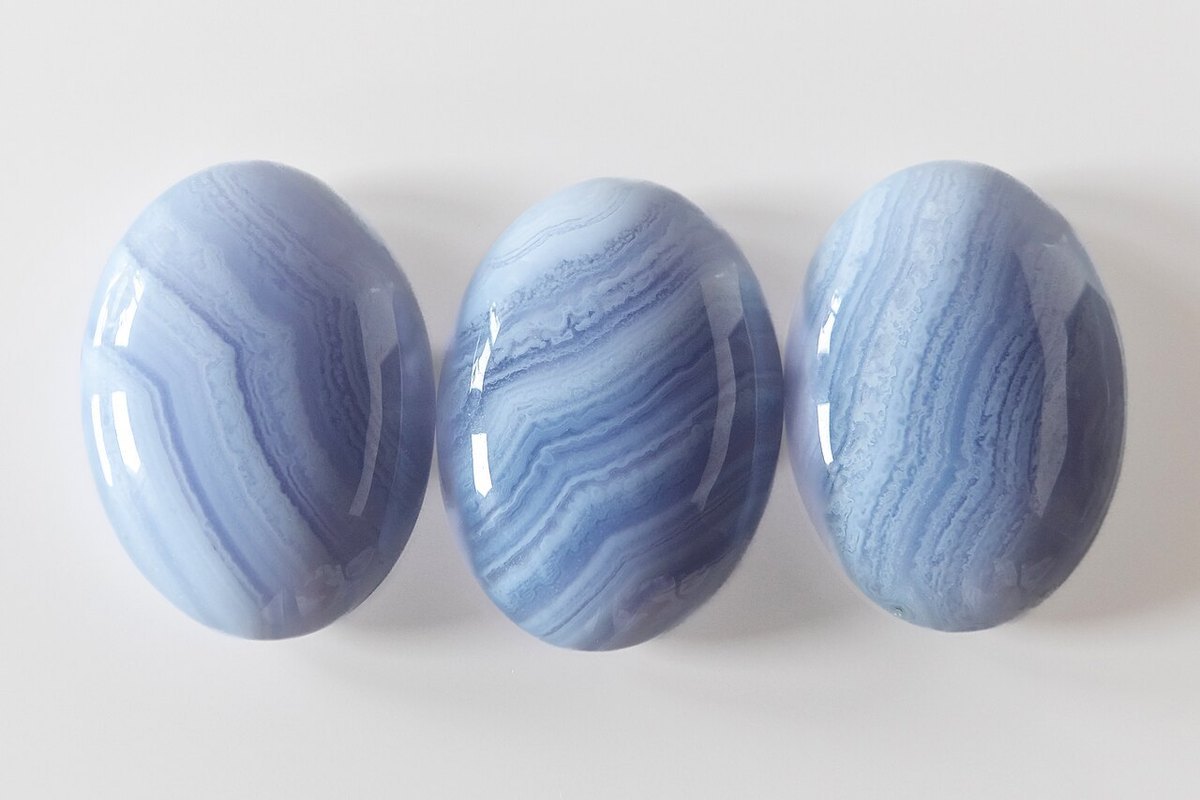
The pale blue color results from trace impurities and the specific optical properties of the orthorhombic crystal structure. Most commercial angelite is opaque to slightly translucent with a smooth, waxy luster and a color resembling pale winter sky.
Angelite forms in evaporite deposits - sedimentary formations where ancient seas or salt lakes evaporated and left behind mineral layers. Peru's Naica and nearby regions are the primary commercial source; the stone is also found in Germany, Britain, and various other salt-deposit regions worldwide.
The mineral is relatively soft at 3 to 3.5 on the Mohs scale, making it unsuitable for conventional jewelry but entirely appropriate for carved objects, tumbled stones, and display specimens.
**Critical care note**: Angelite is calcium sulfate, chemically related to gypsum. Water contact causes the stone to gradually convert back toward gypsum, softening and potentially damaging the surface. Any wet cleaning or water immersion should be avoided.
This is the most important practical distinction between angelite and most other blue stones in the crystal healing market.
How Angelite Compares
| Property | Angelite | Celestite | Blue Lace Agate |
|---|---|---|---|
| Hardness | 3 - 3.5 | 3 - 3.5 | 6.5 - 7 |
| Water Safety | ✗ Avoid | ✗ Avoid | ✓ Safe |
| Price / piece | $ Budget | $ Budget | $ Budget |
| Best For | Angel work, throat chakra | Angelic peace, display | Gentle communication |
Meaning and Symbolism
Angelite was introduced to the crystal healing market in the 1980s and quickly became associated with angelic realms, higher-dimensional communication, and the quality of peaceful surrender to something greater than the personal self. Its pale sky-blue color, softness, and calm aesthetic quality reinforce these associations for most practitioners who encounter it.
The throat and third eye chakra associations link angelite to authentic communication - particularly speaking one's truth gently and without aggression. Many practitioners who struggle with assertive communication find its soft energy supportive because it seems to encourage clarity without force.
The crown chakra connection extends this to spiritual communication, including the practices of prayer, channeling, and awareness of inner guidance that practitioners call angelic contact.
**Aquarius and Pisces associations** reflect both signs' connection to transpersonal awareness - the ability to perceive beyond individual ego and connect with something broader. Practitioners from both signs often find angelite one of their most naturally resonant stones.
Its Uranian and Neptunian planetary connections deepen its role in practices focused on awakening, spiritual compassion, and receptivity to higher intelligence.
Historical Timeline
Healing Tradition
Emotional
Practitioners associate angelite with the emotion of peaceful surrender - the capacity to release personal control and trust in something larger than the individual will. Many find it calming during acute anxiety or grief, with its pale blue creating a visual and energetic atmosphere of stillness.
It is said to support the quality of emotional openness that allows receiving comfort, particularly when that comfort comes from spiritual sources or from inner guidance rather than external reassurance. Crystal healing tradition describes its energy as profoundly gentle - appropriate for sensitive individuals or for periods of profound emotional fragility.
Spiritual
In spiritual practice, angelite is primarily associated with establishing and deepening connection with angelic beings, guides, and the broader dimensions of consciousness that practitioners collectively call the higher realms.
Its throat chakra association supports the practice of channeled speaking or automatic writing, while the third eye and crown connections open the perceptual field to receive impressions from these dimensions.
Many practitioners use it in meditations focused on developing clairaudience - the capacity to receive inner hearing or guidance - and describe angelite as particularly helpful for quieting the mental chatter that prevents this kind of receptive awareness.
Physical
Crystal healing texts associate angelite with the throat, thyroid, and parathyroid glands through the throat chakra connection. Some practitioners use it in body layouts at the throat during practices focused on communication health and the release of unexpressed words held in the throat area as physical tension.
Its calcium sulfate composition is sometimes noted in connection with bone density and structural health in metaphysical traditions, though this association is not medically substantiated. These are traditional associations and should not substitute for qualified medical care.
Zodiac, Birthstone and Gifts
Aquarius connects to angelite through Uranus's association with awakening, transpersonal awareness, and the breaking of ordinary perception's boundaries. Angelite's quality of opening communication channels beyond the personal mind aligns with Aquarius's vision of consciousness as a collective and shared phenomenon.
Many Aquarius practitioners find angelite one of their most natural and comfortable stones.
Pisces resonates with angelite through Neptune's oceanic dissolution of ego boundaries and the sign's natural capacity for spiritual surrender and compassionate receptivity. Angelite's quality of peaceful trust resonates deeply with Pisces's spiritual orientation. Both signs benefit from the stone's traditional support for practices of receiving guidance, inspiration, and angelic presence.
Care and Cleansing
**Never use water** to cleanse angelite - the stone is calcium sulfate and will gradually hydrate and damage with water exposure. Even brief rinsing is not recommended. This is the most critical care rule for this stone and distinguishes it from most other blue crystals in practice.
Sound cleansing with singing bowls, bells, or tuning forks is ideal for angelite - effective, gentle, and completely safe for the stone's chemistry. Moonlight overnight on a dry surface is a popular and appropriate option. **Smudging** with sage, palo santo, or incense in a well-ventilated space is another safe method.
Selenite charging plates provide easy maintenance cleansing between more active sessions.
- DO NOT expose to water - angelite is calcium sulfate and will hydrate and soften with water contact.
- DO NOT use salt water or salt cleansing - salt accelerates the hydration process.
- DO clean with dry methods only: sound cleansing, smudging, moonlight, or selenite plates.
- DO NOT use ultrasonic cleaners - vibration damages soft stones at this hardness level.
- DO store away from other stones that can scratch it - at hardness 3-3.5, most minerals can damage angelite's surface.
- DO handle gently and store padded - angelite chips easily at corners and edges.
- NOTE: Do not use angelite in jewelry settings intended for regular wear - the softness is incompatible with daily use.
Real vs Fake
Genuine angelite is anhydrite - calcium sulfate without water - and should show the characteristic pale to medium blue opaque to slightly translucent appearance with a waxy luster. The most common quality issue is not fake stones but varying quality in the blue color intensity.
The finest angelite shows a clean, even pale blue with minimal gray or brown patches. Lower grades show uneven color distribution or significant gray mudding.
Blue-dyed howlite or magnesite is sometimes sold as angelite due to similar appearance at lower cost. The key difference is hardness: angelite at 3 to 3.5 is slightly harder than howlite (3.5) but the scratch test - gently running a fingernail across an inconspicuous area - can sometimes distinguish very soft howlite.
A streak test on unglazed porcelain reveals color differences: angelite leaves a white streak, dyed howlite may show blue streak from the dye.
**Refractive index testing** by a gemologist (angelite: 1.567 to 1.614) definitively separates it from howlite, glass, or other blue minerals. For most practical purposes, purchasing from reputable dealers who specifically label the mineral as anhydrite/angelite provides adequate confidence without laboratory testing.
Angelite Jewelry & Gifts
Angelite is one of the most accessible stones in the crystal healing market, with small tumbled pieces available for $5 to $15 and quality palm-sized pieces for $20 to $40.
Color is the primary quality factor - look for clean, even pale to medium blue without significant gray mottling or brownish patches that indicate impurities. The waxy luster should be consistent across the polished surface.
Carved angelite pieces - particularly angel forms, hearts, and spheres - are widely available and typically well-priced. The stone carves easily due to its softness, making carved forms accessible without the cost premiums of harder minerals. Quality carving should show clean edges and consistent surface finish without pitting or rough patches.
**Buy dry-stored specimens**: Angelite that has been stored in humid conditions or near water may show surface changes. Examine polished surfaces for any dulling, powdery patches, or surface softening that indicate previous water exposure. Fresh-looking specimens with consistent polish and color are the best quality indicators at any price point.
Where to Buy Angelite
Affiliate disclosure: Some links below earn us a small commission at no extra cost to you. See our affiliate disclosure page.
Handmade, raw, and tumbled pieces from independent sellers worldwide.
Shop Angelite on Etsy →Accessories, tools, and specimen sets with fast Prime delivery.
Shop Angelite on Amazon →Certified loose gemstones graded and photographed for online buyers.
Shop Angelite on GemSelect →Pairs Well With




Where Angelite Is Found


