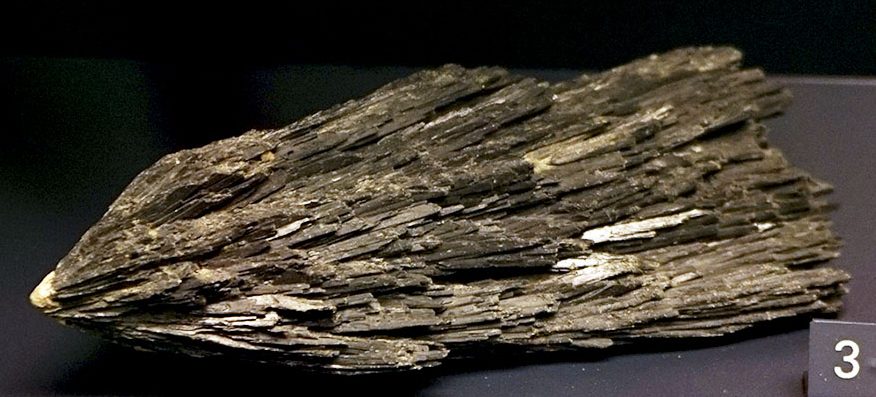
Black Kyanite
Black kyanite's dramatic fan-shaped blade clusters are said to sweep energy fields clean - a stone practitioners reach for when deep.
- Kyanite is one of the only minerals with 2 different Mohs hardness values in the same crystal - 4.5 along the blade and 7 across it.
- The name kyanite comes from the Greek word for blue - 'kyanos' - despite the fact that black, green, and orange varieties also exist.
- Kyanite is used industrially in spark plugs and high-temperature kiln furniture because it remains stable at extreme temperatures.
- Black kyanite blades can grow large enough to use as natural fans - some Brazilian specimens span 20cm across.
- Unlike most minerals, kyanite does not need to be cleansed after energy work according to many practitioners - it is said to self-clear.
- Energy workers and crystal healers looking for a powerful clearing tool
- Practitioners who want grounding and protection combined in one stone
- Collectors who love dramatic, sculptural crystal forms
- Anyone going through major life transitions and seeking energetic reset
- Beginners entering crystal healing who want an affordable, visually distinctive first piece
- Jewelry wearers - black kyanite's blade habit does not suit most jewelry; try black tourmaline instead
- Those wanting a polished smooth stone - fan blades are fragile and shed fine fibers
- People sensitive to sharp materials around children or pets - the blade edges can scratch
What Is Black Kyanite?
Black kyanite is an aluminum silicate mineral (Al₂SiO₅) belonging to the kyanite mineral group alongside blue, green, and orange kyanite. It forms in metamorphic rocks under high pressure and temperature conditions, producing the characteristic elongated blade-shaped crystals that fan outward in dramatic radiating clusters. It rates 4.5 - 7 (direction-dependent) on the Mohs hardness scale.
The black to dark gray color comes from iron and other inclusions within the aluminum silicate structure.
Kyanite is famous among mineralogists for its direction-dependent hardness - a property called anisotropy. Along the length of the blade, Mohs hardness is approximately 4.5; perpendicular to the blade it rises to 7. This directional hardness makes black kyanite unsuitable for most jewelry but gives it a distinctive structural character.
The mineral is found in gneiss, schist, and pegmatite formations.
Brazil is the primary commercial source of black kyanite, where blade fans up to 15cm across have been recovered from metamorphic belts in Minas Gerais. The United States also produces black kyanite, notably from North Carolina, where it occurs alongside blue kyanite in schist formations.
South African material tends toward slightly greenish-black tones due to different trace element profiles.
How Black Kyanite Compares
| Property | Black Kyanite | Blue Kyanite | Black Tourmaline |
|---|---|---|---|
| Form | Fan blades | Blade/tabular | Prismatic columns |
| Hardness | 4.5 - 7 | 4.5 - 7 | 7 - 7.5 |
| Use | Energy clearing, grounding | Communication, calm | Protection, grounding |
| Price | $ Budget | $ Budget | $ Budget |
Meaning and Symbolism
Black kyanite does not carry ancient cultural mythology - kyanite as a gem-quality mineral entered trade relatively recently, and black kyanite specifically has been popularized by the modern crystal healing community over the past few decades.
What it carries is an intensely contemporary meaning: the metaphor of the blade as an energetic sweeper, clearing the subtle body the way a fan pushes stagnant air.
The fan shape of black kyanite clusters is central to how practitioners work with it. Many describe it as a 'broom for the aura' - something swept through the energy field from head to foot to dislodge accumulated emotional residue, energetic cords, or psychic debris.
This visual metaphor is powerful and has made black kyanite one of the most recommended stones in energy clearing work.
Unlike most black stones, which practitioners associate purely with protection and grounding, black kyanite is considered both a clearing tool and a grounding anchor. It is said to move energy downward through the chakra system, releasing what no longer serves while simultaneously connecting the practitioner firmly to earth energy.
This dual function makes it uniquely valued in energy work circles.
Historical Timeline
Healing Tradition
Emotional
Practitioners believe black kyanite is one of the most effective tools for clearing accumulated emotional energy from the subtle body. Many find it helpful after difficult conversations, emotional confrontations, or periods of prolonged stress - using the fan-shaped blades to 'sweep' the aura from head to foot.
Crystal healing tradition associates it with releasing energetic cords - the invisible connections that drain energy toward people or situations that no longer serve growth. Some practitioners describe feeling lighter and more present after black kyanite clearing sessions.
Spiritual
In crystal healing tradition, black kyanite is said to move energy downward through the entire chakra system, grounding elevated spiritual states into the physical body and releasing what has accumulated. Practitioners value it both for deep clearing sessions and for regular maintenance sweeps before or after other energy work.
Some describe it as a 'reset button' for the subtle body - particularly useful before meditation, after healing sessions, or when transitioning between very different emotional environments.
Physical
Crystal healing tradition associates black kyanite with the nervous system and adrenal glands - particularly the stress response. Practitioners believe it may support the body's ability to release tension patterns held in muscles and connective tissue. These are metaphysical associations, not medical claims.
Some find holding or resting a black kyanite fan blade during breathwork deepens the physical sense of release and grounding.
Zodiac, Birthstone and Gifts
Aries - a sign associated with bold beginnings and the courage to cut through obstacles - resonates with black kyanite's blade form and clearing energy. The stone's sweeping action mirrors Aries' directness. Libra, seeking energetic balance and harmony, finds in black kyanite a tool for releasing imbalances that have accumulated.
The stone clears the slate so Libra's natural drive toward equilibrium can work on a clean field.
Care and Cleansing
Many crystal healing practitioners consider black kyanite one of the few stones that does not require regular cleansing - it is said to transmute and discharge energy naturally. Despite this tradition, periodic cleansing is still recommended for pieces used heavily in clearing work.
Smoke with sage, cedar, or palo santo is the safest and most common method.
Avoid submerging black kyanite in water or salt - the blade structure can delaminate and the surface can be affected by prolonged moisture or salt exposure. Sound cleansing with a singing bowl works well and respects the stone's physical fragility. Moonlight charging overnight on a windowsill is gentle and effective.
- DO NOT soak in water - blade edges can delaminate and the surface can deteriorate with prolonged moisture.
- DO NOT use salt baths - salt can work into blade cracks and widen them over time.
- DO handle with care - blade tips are fragile and break easily; store in padded boxes rather than loose.
- DO NOT allow children or pets unsupervised access - blade edges can scratch.
- NOTE: Black kyanite sheds fine fibers from blade surfaces - wash hands after handling raw specimens.
- NOTE: The fan form is decorative; use cleaning cloths gently to avoid snapping blade tips.
Real vs Fake
Black kyanite is rarely faked because it is inexpensive and the fan-blade form is difficult to imitate convincingly. The main identification concern is distinguishing black kyanite from other black blade minerals like schorl (black tourmaline in prismatic columns) or hornblende.
Kyanite blades are flatter and more blade-like; schorl has distinct longitudinal striations and is prismatic rather than flat.
A refractometer confirms kyanite's characteristic RI of 1.712-1.734. Hardness testing along the blade (soft, 4.5) versus across the blade (hard, 7) is a signature property no other common mineral shares. If a scratching test produces the same result in both directions, the stone is not kyanite.
For large decorative fans, the primary question is whether material has been glued to a base or artificially assembled. Genuine fan clusters grow naturally from a common base point. Assembled fakes show glue lines or unnatural symmetry under close inspection.
Black Kyanite Jewelry & Gifts
Black kyanite is very affordable. Small fan blades for personal use typically sell for $5-15; larger display pieces with 10+ blade fans cost $20-50. Exceptional large specimens with clean black color and dramatic spread can reach $80-150 from specialty dealers.
Buy from mineral dealers who source directly from Brazilian mines for the most reliable quality. Crystal shops and online marketplaces carry abundant black kyanite but quality varies - look for blades with consistent black color (not greenish-gray or muddy brown) and intact tips.
For healing work, smaller individual blades 5-8cm long are practical tools. For display, look for complete fan clusters where the blades radiate evenly. All material is natural and untreated - no treatments are applied to black kyanite.
Where to Buy Black Kyanite
Affiliate disclosure: Some links below earn us a small commission at no extra cost to you. See our affiliate disclosure page.
Handmade, raw, and tumbled pieces from independent sellers worldwide.
Shop Black Kyanite on Etsy →Accessories, tools, and specimen sets with fast Prime delivery.
Shop Black Kyanite on Amazon →Certified loose gemstones graded and photographed for online buyers.
Shop Black Kyanite on GemSelect →Pairs Well With


Where Black Kyanite Is Found


