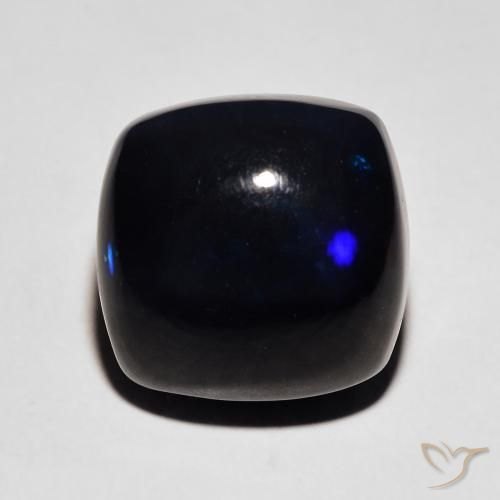
Black Opal
Australia's rarest opal showing play-of-color flashes of green, red, and blue against a dark body.
- Lightning Ridge black opal makes up roughly 95 percent of the world's commercial black opal supply.
- Opal is classified as an amorphous mineraloid because it lacks a true crystal structure.
- Top black opal can contain up to 10 percent water by weight in its silica structure.
- Queen Victoria revived the European opal market by gifting opals to her daughters despite Victorian superstitions.
- The play-of-color in opal comes from microscopic silica spheres that diffract light into rainbow flashes.
- October birthday gift seekers wanting the rarest opal variety
- Collectors of Australian Lightning Ridge provenance stones
- Buyers drawn to dramatic color-play against dark backgrounds
- Practitioners working with crown and root integration
- Gift givers seeking a truly unique heirloom stone
- Daily-wear ring buyers (opal is soft and sensitive; consider black spinel)
- Budget shoppers (top black opal exceeds $10,000 per carat; consider white opal)
- Those avoiding superstitions (some traditions consider opal unlucky outside October birthdays)
What Is Black Opal?
Black opal is the rarest and most valuable variety of opal, distinguished by a dark body color (ranging from dark gray to deep black) that makes its play-of-color flashes appear especially vivid. It rates 5.5 - 6.5 on the Mohs hardness scale.
The play-of-color effect is caused by microscopic silica spheres that diffract light into spectral flashes of red, green, blue, orange, and violet.
The darker the background, the more dramatic the color flashes appear. A single top black opal can show the entire visible spectrum dancing across its surface, which is why the variety commands the highest prices in the opal market.
At Mohs 5.5 to 6.5, black opal is soft, relatively fragile, and sensitive to temperature changes, impacts, and prolonged water exposure.
Nearly all natural black opal comes from a single place: Lightning Ridge in New South Wales, Australia. This small outback town has been the world's primary black opal source since the early 1900s and still produces the vast majority of commercial supply.
Ethiopian Welo deposits occasionally produce dark-body opal, but true black opal of gem quality remains almost exclusively Australian.
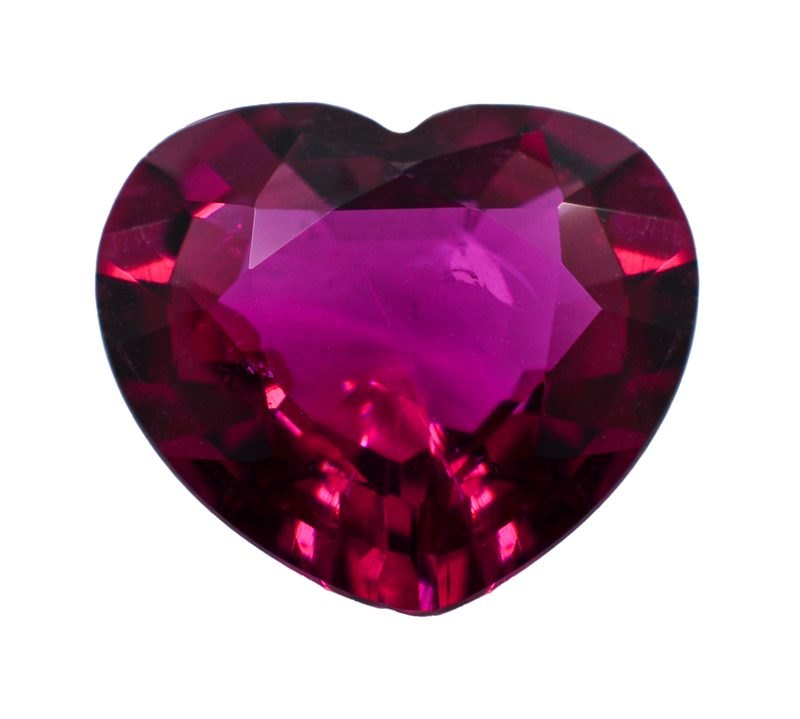
Black opal is one of the modern US birthstones for October, alongside pink tourmaline, and it is considered the premium October choice for buyers seeking the most prestigious October gem.
How Black Opal Compares
| Property | Black Opal | White Opal | Boulder Opal |
|---|---|---|---|
| Hardness | 5.5 - 6.5 | 5.5 - 6.5 | 5.5 - 6.5 |
| Price / carat | $$$ Premium | $$ Mid-range | $$ Mid-range |
| Body color | Dark gray to black | White to pale | Ironstone matrix + opal |
| Best For | Heirloom, collector, investment | Mid-market jewelry | Unique designer pieces |
Meaning and Symbolism
Black opal has a shorter commercial history than many classical gems because the Lightning Ridge deposits were only discovered in the late 1800s and the gem reached its current prestige only after the 1903 rush.
Before Australian black opal entered the market, opal of any variety had been considered a lesser gem in much of Europe.
Queen Victoria famously broke the European superstition against opal (which Sir Walter Scott's 1829 novel Anne of Geierstein had helped spread) by gifting opals to her daughters.
The arrival of Australian black opal in the early twentieth century completed this rehabilitation, and black opal is now considered one of the most romantic and prestigious fine gems.
In modern crystal healing tradition, black opal is associated with the crown and root chakras and with what practitioners call integration of light and shadow.
The stone's combination of dark body with rainbow flashes makes it a natural focus for meditation on holding contradiction, integrating difficult experiences into wisdom, and trusting the way growth emerges through both light and dark periods.
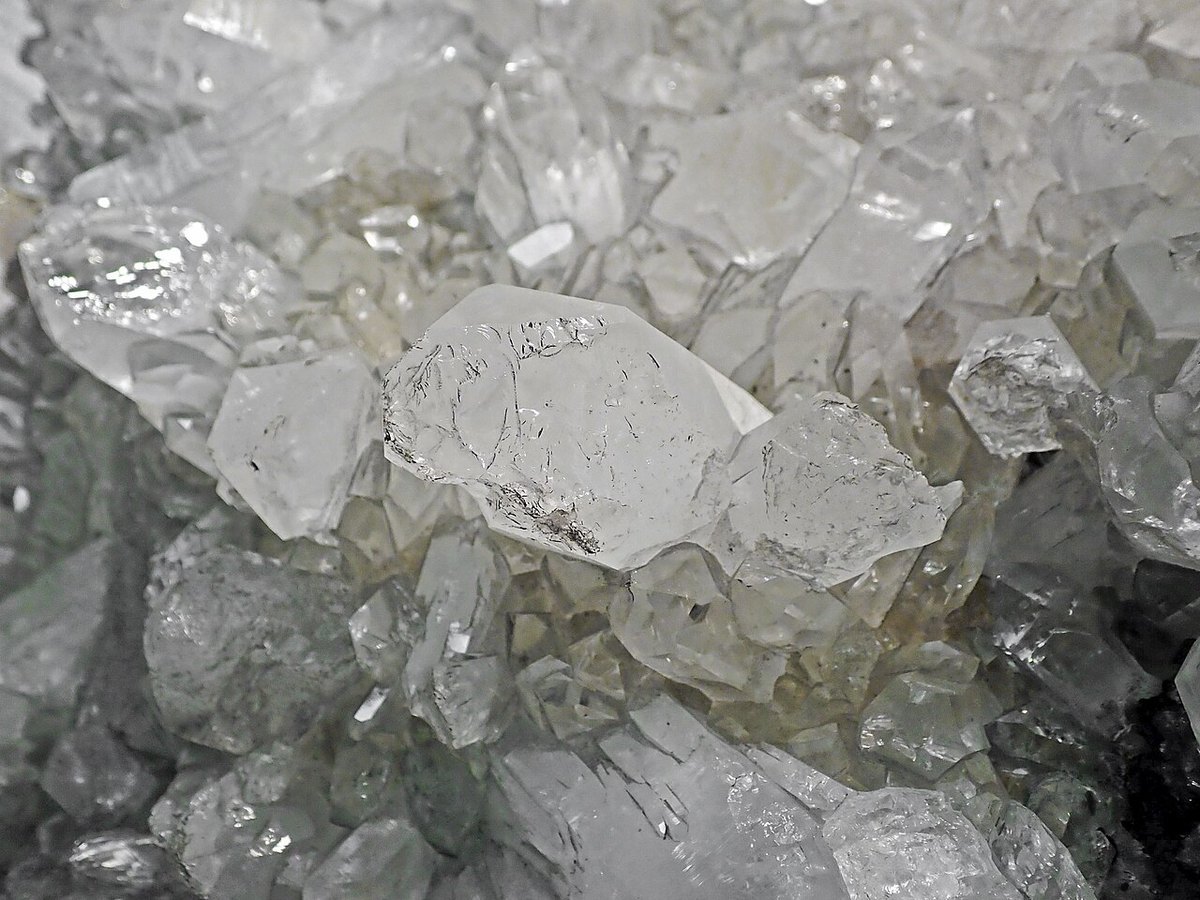
Practitioners often pair black opal with clear quartz for amplified intention work and with moonstone for combined feminine-intuitive practice.
Historical Timeline
Healing Tradition
Emotional
Practitioners believe black opal supports emotional integration of difficult experiences, transformation through contrast, and creative expression of hard-won wisdom. In crystal healing tradition, it is often recommended for people processing major life changes, recovering from grief, or working through periods of deep personal transformation.
Many readers wear black opal jewelry during significant life transitions and describe the stone as a visual reminder of light emerging from darkness.
Practitioners pair black opal with rose quartz when the transformation involves heart work, or with smoky quartz when grounding is needed alongside vision. Because black opal's dramatic visual presence carries strong emotional resonance, practitioners often describe it as a stone for defined transformation periods rather than continuous casual wear.
Readers sometimes describe black opal as particularly meaningful during midlife transitions, artistic emergence, or recovery from significant loss.
Spiritual
Black opal is traditionally associated with the crown and root chakras, integrating highest spiritual perception with deepest grounded presence. Practitioners describe it as a stone of wholeness that holds light and shadow together.
In modern crystal healing tradition, black opal is sometimes called the stone of the shaman or the visionary because of its dark base flashing with all visible colors.
Many readers keep a black opal cabochon on a meditation altar during periods of deep spiritual work, and some practitioners use the stone as a focus for integration practice.
It pairs readily with clear quartz and moonstone for combined amplification and receptive vision practice. Because black opal is expensive and delicate, many practitioners reserve it for significant ritual or ceremonial work rather than daily meditation.
Physical
Practitioners believe black opal supports what they describe as overall vital integration, emotional-physical balance, and general energetic wholeness. Folk tradition around opal historically linked the stone with eye health, creativity, and emotional expression.
In modern crystal healing practice, black opal is most often worn as a pendant or earring set in a protective mounting, or held during brief meditation sessions.
Many readers wear black opal during creative emergence periods, artistic presentations, or significant public milestones. It is not a substitute for medical care, and practitioners frame its role as supportive alongside proper treatment.
Because black opal is soft, fragile, and sensitive to temperature change and dehydration, it requires more careful handling than most gems. Protective bezel settings, soft pouches for storage, and occasional moistening of stored stones are traditional care practices.
Zodiac, Birthstone and Gifts
Black opal is the primary US birthstone for October alongside pink tourmaline and is strongly associated with Libra and Scorpio in Western astrology. Practitioners describe black opal as an ally for Libra's pursuit of integrated balance and for Scorpio's transformational depth work.
Despite historical European superstitions about opal bringing bad luck outside October birthdays, modern opal tradition is overwhelmingly positive. Queen Victoria's gifting of opals to her daughters helped revive European acceptance, and modern Australian tradition considers black opal one of the most meaningful heirloom gems regardless of superstition.
Care and Cleansing
Black opal requires very gentle cleansing methods because of its softness, porosity, and sensitivity to temperature change.
Smoke cleansing with sage, palo santo, or cedar is the traditional favorite and carries no risk of damage. Sound cleansing with a singing bowl is also safe. A short session of moonlight on a windowsill is effective and gentle.
Brief rinses under lukewarm water are acceptable, but prolonged soaking should be avoided because water can dull the play-of-color over time.
Salt, saltwater soaks, ultrasonic cleaners, steam cleaners, and acidic solutions should all be avoided. Prolonged direct sunlight can dehydrate opal and cause crazing (fine surface cracks) that permanently diminishes the play-of-color.
Many readers place black opal on a selenite plate overnight for routine refresh. Because black opal is typically worn only on significant occasions rather than daily, practitioners usually cleanse it at major life transitions rather than on a regular schedule.
- DO NOT expose black opal to ultrasonic or steam cleaners.
- DO NOT soak black opal in water, saltwater, or cleaning chemicals.
- DO store black opal in a soft pouch separate from harder stones.
- DO remove black opal jewelry before showering, exercise, and sleep.
- DO store loose black opal in moderate humidity; some collectors include damp cotton in storage.
- DO use protective bezel or halo settings for black opal rings.
- Note: black opal can craze (develop surface cracks) if subjected to sudden temperature change or prolonged dry storage.
Real vs Fake
Genuine black opal shows irregular natural play-of-color patterns with distinct color patches that shift and change as the stone is rotated under light. The color flashes are caused by microscopic silica sphere structure and produce specific patterns: harlequin (large geometric patches), pinfire (tiny points of color), or flagstone (large irregular patches).
Common imitations include doublets and triplets (thin opal slices glued to dark backings with optional quartz or glass caps), synthetic opal (created by Pierre Gilson starting in 1974), and glass or plastic imitations.
The most important distinction for buyers is solid black opal versus doublet/triplet construction. Doublets and triplets are legitimate composite gems but should be priced significantly lower than solid stones.
Identifying composite opal requires examining the stone's edge under magnification. Solid black opal shows continuous play-of-color into the base, while a doublet shows a sharp boundary between the opal layer and a dark backing. Triplets have three layers (dark base, opal middle, clear cap).
For any significant black opal purchase (above $1,000 per carat), insist on laboratory documentation confirming solid opal construction and Australian (particularly Lightning Ridge) origin. Reputable Australian sellers provide detailed provenance documentation, and top pieces often come with photographs of the original rough before cutting.
Black Opal Jewelry & Gifts
Black opal is one of the most expensive opal varieties, with prices ranging from $500 per carat for small stones with modest play-of-color to over $15,000 per carat for top Lightning Ridge material with vivid rainbow fire across a dark black body.
Standard 1-2 carat Lightning Ridge black opals with good fire typically run $1,500 to $4,000 per carat. Larger 3-5 carat stones with strong red fire (the most valuable color flash) reach $5,000 to $10,000 per carat. Museum-grade specimens with full harlequin patterns can exceed $20,000 per carat.
The main buying variables are body tone (darker is generally more valuable), fire intensity (strong red > orange > green > blue by traditional grading), fire pattern (harlequin > flagstone > pinfire), and size (larger is rarer).
Solid-versus-doublet construction is critical: doublets and triplets should be priced at a fraction of solid stone values.
When buying, look at the stone under multiple light sources to assess color play, examine the edges for doublet construction, and insist on laboratory documentation for significant purchases. Lightning Ridge provenance commands a premium and should be documented in writing.
Reputable Australian dealers often provide origin certificates, and buying from established Lightning Ridge sources reduces authentication risk.
Where to Buy Black Opal
Affiliate disclosure: Some links below earn us a small commission at no extra cost to you. See our affiliate disclosure page.
Handmade, raw, and tumbled pieces from independent sellers worldwide.
Shop Black Opal on Etsy →Accessories, tools, and specimen sets with fast Prime delivery.
Shop Black Opal on Amazon →Certified loose gemstones graded and photographed for online buyers.
Shop Black Opal on GemSelect →Pairs Well With



Where Black Opal Is Found
