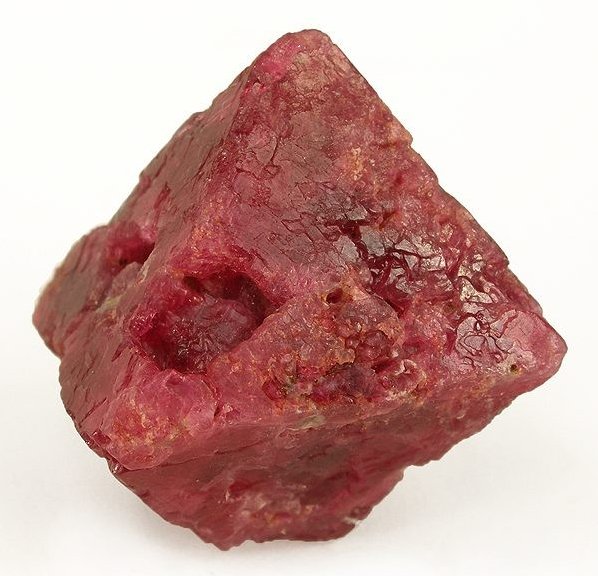
Blue Spinel
The rarest and most coveted spinel color - cobalt-rich blue with exceptional brilliance rarely matched in blue gemstones, and almost never.
- The 'Black Prince's Ruby' set in the Imperial State Crown of England (and believed since medieval times to be a ruby) is actually a large red spinel - one of history's most famous gem misidentifications.
- Cobalt is the coloring agent in the finest blue spinels - the same element that colors cobalt glass and Dutch Delft pottery their characteristic blue.
- Blue spinel has single refraction (isometric crystal system), giving it more brilliance per gram than sapphire (which is doubly refractive) - connoisseurs prize this optical difference.
- Sri Lankan cobalt blue spinel is so rare that most gem dealers never see a fine specimen during their entire careers.
- Natural blue spinel is almost never heat treated - an increasing rarity in the gem world where most sapphires, rubies, and emeralds are routinely enhanced.
- Jewelry lovers who want a premium blue gem without the common-treatment concern of sapphire
- Gem collectors building a rare spinel color variety collection
- Those seeking a distinctive alternative to blue sapphire with more collector cachet
- Practitioners drawn to Third Eye and Throat activation with exceptional gems
- Investment gem buyers seeking cobalt spinel before prices increase further
- Budget buyers - fine blue spinel rivals blue sapphire in price
- Those wanting the classic royal blue of a Kashmir sapphire - blue spinel offers a different blue character
- Anyone expecting readily available material - quality blue spinel is genuinely scarce
What Is Blue Spinel?
Blue Spinel is the rarest and most prized color variety of the spinel mineral group - magnesium aluminum oxide (MgAl2O4) colored blue by cobalt, iron, or vanadium in the crystal structure. It rates 8 on the Mohs hardness scale.
It forms in metamorphic and sedimentary gem gravels alongside corundum (ruby and sapphire), and has historically been confused with sapphire - the famous 'Black Prince's Ruby' in the British Crown Jewels is actually a red spinel, and many historical 'sapphires' turned out to be blue spinel under modern gemological analysis.
The color of blue spinel ranges from pale cornflower to vivid cobalt, with cobalt-blue stones from Sri Lanka and Tanzania being among the most intensely colored gems in any mineral species.
Unlike sapphire, spinel rarely requires heat treatment - most blue spinel on the market is entirely untreated, which is an increasing rarity in the colored stone world. Spinel has an isometric crystal structure that produces exceptional single-refraction brilliance, compared to sapphire's double refraction.
Blue spinel has experienced dramatic price appreciation in recent decades as collectors and gem professionals have recognized its rarity and quality. Fine cobalt blue spinel from Sri Lanka now commands prices comparable to fine blue sapphire from the same region, with some exceptional pieces exceeding sapphire prices.
The combination of no-heat status, exceptional brilliance, and genuine rarity makes it a stone that serious gem collectors prioritize.
How Blue Spinel Compares
| Property | Blue Spinel | Blue Sapphire | Tanzanite |
|---|---|---|---|
| Hardness | 8 | 9 | 6.5 |
| Price/ct | $$$ Premium | $$$ Premium | $$ Mid-range |
| Treatment | Rarely treated | Usually heated | Rarely treated |
| Best For | Rings, investment | Classic jewelry | Statement pieces |
Meaning and Symbolism
Practitioners who work with Blue Spinel describe it as carrying the quality of penetrating, calm clarity - the blue of a clear sky at high altitude where atmospheric density has thinned and every detail is sharp.
It is associated with elevated perception: seeing what is present without the distortions of wishful thinking or defensive interpretation. This quality of clear seeing is said to support both intellectual analysis and spiritual discernment.
In crystal-working traditions, Blue Spinel is linked to the Third Eye and Throat chakras in their most active, engaged modes - not the receptive receiving of insight, but the confident articulation of what has been perceived.
It is said to support those who see clearly but hesitate to speak, helping them close the gap between private knowing and public expression.
The stone is also associated with wisdom traditions and the development of genuine understanding over time. Its cobalt blue connects it metaphysically to the sky and deep water - the elements of expansive thinking and emotional depth.
Practitioners believe it supports the integration of intellectual clarity and emotional intelligence into a coherent wisdom that serves both the holder and those they engage with.
Historical Timeline
Healing Tradition
Emotional
Practitioners describe Blue Spinel as carrying an emotionally stabilizing yet expansive energy - the emotional register of trust. It is said to address the anxiety of not knowing by replacing it with a fundamental confidence in one's capacity to navigate whatever arises.
Crystal workers believe it specifically supports those who have become emotionally contracted through repeated disappointment, helping them restore the open trust that genuine relationship and creative engagement require.
It is associated with the healing of bitterness - the emotional calcification that comes from having been disappointed enough times that hope itself begins to feel like a liability.
Spiritual
In spiritual practice, Blue Spinel is associated with the development of wisdom - the particular quality of understanding that comes from integrating many experiences and seeing the patterns within them. Practitioners believe it supports contemplative traditions that emphasize discernment and patient observation, and is less suited for rapid-activation practices.
It is said to deepen the quality of meditation over time rather than providing immediate dramatic results, with long-term practitioners reporting a gradual clarification of perception that they associate with sustained contact with this material.
Physical
Crystal-working traditions associate Blue Spinel with cognitive function, the visual system, and the glandular regulation related to mood and perception (thyroid, pineal, pituitary). No scientific evidence supports these claims.
Practitioners sometimes place it at the Third Eye or Throat during relaxation or healing sessions focused on mental clarity, communication issues, or the physical manifestation of anxiety-related tension in the throat and neck.
Zodiac, Birthstone and Gifts
Sagittarius, the sign of philosophical truth-seeking and the quest for higher understanding, resonates with Blue Spinel's association with wisdom development and elevated, penetrating perception. Practitioners believe it supports Sagittarius's natural expansiveness while grounding philosophical insight in practical clarity.
Taurus, whose characteristic strength is patient, cumulative development of genuine understanding, finds in Blue Spinel a companion for the long-arc knowing their sign cultivates - the understanding that deepens with sustained attention rather than quick insight.
Care and Cleansing
Blue Spinel is exceptionally durable (Mohs 8) and can be cleansed with virtually any method safely. Running water, salt, sunlight, moonlight, smoke, sound, and selenite plate are all suitable options.
For investment-grade pieces, treat as fine jewelry: clean with warm soapy water and a soft brush, rinse thoroughly, dry with a soft cloth. Ultrasonic cleaning is acceptable for inclusion-free material; avoid for heavily included stones.
Regular energy cleansing is appropriate for stones in active spiritual use: monthly moonlight charging and regular running-water cleansing maintain energetic clarity alongside physical cleanliness.
- DO treat fine blue spinel as investment-grade jewelry - appropriate storage and insurance.
- DO NOT store loose with corundum (sapphire, ruby, hardness 9) which can scratch spinel.
- DO NOT use steam cleaners on included stones.
- NOTE: Document purchase with gemological certificates and photography for insurance purposes.
- DO NOT clean with harsh jewelry chemicals not specifically rated for colored stones.
Real vs Fake
For any significant purchase, require a certificate from gemological laboratories, AGL, or Gübelin confirming spinel species, blue color, and no-heat status if that premium is being paid. The no-heat premium is substantial and requires laboratory confirmation.
Blue spinel has single refraction (isometric) - a gemologist's loupe or polariscope can confirm this. Sapphire (corundum) is doubly refractive and shows a doubling of back facet edges under magnification. This is a reliable primary test.
Refractive index measurement at a gem lab confirms spinel (1.715-1.720) versus sapphire (1.762-1.770) definitively. These values are significantly different and reliably distinguishable.
Cobalt blue spinel has a distinctive absorption spectrum visible under a hand spectroscope. The cobalt absorption bands in the orange-red region are characteristic and help confirm both the species and the coloring agent.
Price is a useful guide: genuine fine cobalt blue spinel rarely trades below $500/ct even for commercial quality. Very cheap 'blue spinel' may be synthetic spinel (common in glass settings), synthetic corundum, or glass.
Blue Spinel Jewelry & Gifts
Blue spinel pricing ranges from $100/ct for pale, common material to $500-$10,000/ct for fine cobalt blue from premier localities. Exceptional Vietnamese cobalt spinels and Sri Lankan no-heat stones have sold at auction for significantly more.
The most important quality factors are color (intensity and purity of blue), clarity (eye-clean preferred), and no-heat status (which commands substantial premium). Cobalt as the coloring agent (vs. iron or vanadium) is the highest value tier.
Vietnam's Luc Yen district has produced some of the finest cobalt blue spinel in recent years, with exceptional saturation and brilliance. Sri Lankan material remains highly prized. Tanzanian blue spinel is increasingly available at more accessible price points.
No-heat certification from AGL, gemological laboratories, or Gübelin adds significant value and buyer confidence. The no-heat market for blue spinel has expanded as collectors increasingly value natural color.
Reliable sourcing: AGL-listed dealers, AGTA member dealers, specialist spinel dealers at major gem shows (Tucson, Las Vegas JCK), and gemological auction houses. Ask specifically about cobalt vs. iron coloring for the premium blue material.
Where to Buy Blue Spinel
Affiliate disclosure: Some links below earn us a small commission at no extra cost to you. See our affiliate disclosure page.
Handmade, raw, and tumbled pieces from independent sellers worldwide.
Shop Blue Spinel on Etsy →Accessories, tools, and specimen sets with fast Prime delivery.
Shop Blue Spinel on Amazon →Certified loose gemstones graded and photographed for online buyers.
Shop Blue Spinel on GemSelect →Pairs Well With



Where Blue Spinel Is Found


