Cat’s Eye Apatite
Apatite's vivid color palette meets the magic of the cat's eye - a combination few collectors ever expect.
- Your tooth enamel is made of hydroxyapatite - the same calcium phosphate mineral as gem apatite, which is why your teeth are exactly Mohs 5 on the hardness scale.
- Apatite occurs in the widest color range of any phosphate mineral, from colorless through every color of the spectrum to near-black.
- Cat's eye apatite was used as a gemstone in ancient times - its chatoyant specimens were prized in South Asian jewelry traditions alongside cat's eye chrysoberyl, though the two were not always clearly distinguished by ancient gemologists.
What Is Cat’s Eye Apatite?
Cat's Eye Apatite is a variety of apatite mineral that displays *chatoyancy* - the cat's eye effect - due to the presence of parallel tube-like inclusions or channels within the crystal. It rates 5 on the Mohs hardness scale.
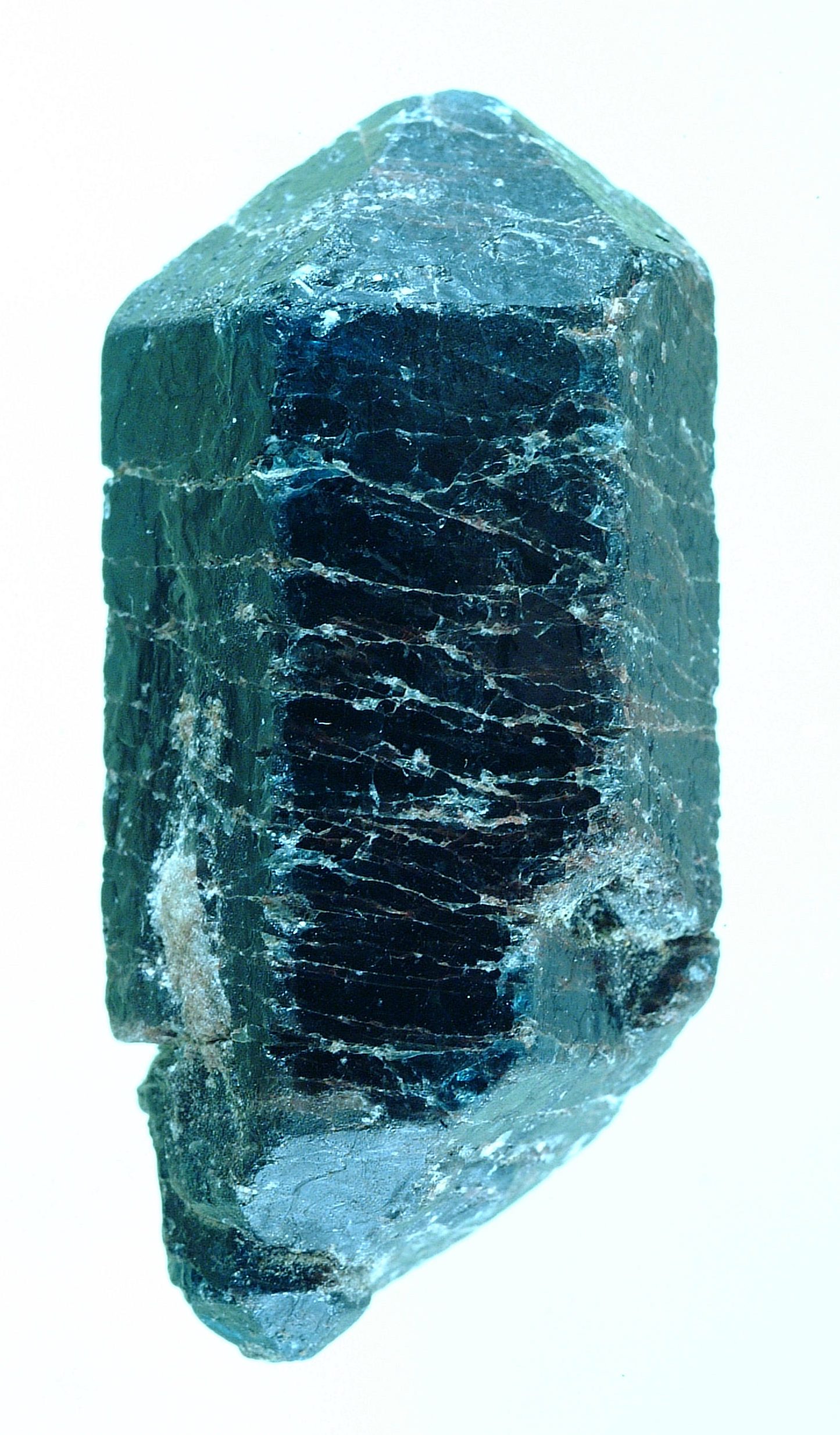
Apatite occurs in an extraordinary range of colors including neon blue, vivid green, yellow, and pink, and the cat's eye variety showcases these colors alongside the dynamic optical phenomenon.
Apatite is notably soft at Mohs 5 - exactly the hardness of a human tooth enamel, which is made of the same calcium phosphate mineral. This softness makes cat's eye apatite primarily a **collector's gem rather than everyday jewelry**, but in protected settings such as pendants and earrings it is perfectly wearable.
The cat's eye effect in apatite ranges from sharp and well-centered in top specimens to diffuse and weak in lower-quality pieces. Finding a cat's eye apatite with both vivid color and a sharp, mobile eye is genuinely unusual and constitutes a collector's prize.
Meaning and Symbolism
Apatite in all its forms is associated with clarity of thought, motivation, and the overcoming of apathy - its name comes from the Greek word meaning 'to deceive,' but practitioners have reclaimed it as a stone that cuts through self-deception. The cat's eye variety adds a focused, seeing quality to these attributes.
Cat's Eye Apatite is said to sharpen the inner eye - the capacity for honest self-assessment and clear perception of one's path. **Where regular apatite motivates, cat's eye apatite focuses**, adding the precision of the cat's unwavering gaze to the stone's clarifying energy.
Many practitioners use green cat's eye apatite for throat and heart chakra work simultaneously, believing the green-to-teal color bridges the two centers while the eye effect amplifies honest, clear communication from an emotionally centered place.
Historical Timeline
Healing Tradition
Emotional
Practitioners believe cat's eye apatite supports honest self-reflection, helping the wearer see their own patterns, strengths, and blind spots with compassionate clarity rather than judgment.
Spiritual
The cat's eye effect is said to function as a psychic lens in apatite - focused, precise, and unwilling to look away from what needs to be seen. It is recommended for those doing deep self-inquiry work.
Physical
Apatite is associated in folk tradition with bone health (given its mineralogical relationship to bone mineral), appetite regulation, and metabolic clarity. These associations are traditional, not medically verified.
Zodiac, Birthstone and Gifts
Gemini's love of perception and communication resonates with cat's eye apatite's sharp-focus energy. **Practitioners consider it a useful stone for Gemini** when the sign's characteristic scattered attention needs to be gathered into focused insight.
Sagittarius' philosophical nature and truth-seeking impulse is amplified by apatite's clarity energy. The cat's eye variety adds precision to Sagittarius's sometimes-broad perception, helping the Archer find the specific truth within the vast field of possibility.
Care and Cleansing
Smoke cleansing is recommended for cat's eye apatite - sage, palo santo, or cedar. Wipe gently with a dry cloth after.
**Avoid water, salt, and prolonged sun exposure.** Apatite is sensitive to acid and can dull or etch with repeated water contact. The neon colors can fade in strong sunlight over time.
Selenite charging plate overnight is a gentle, safe energetic cleansing and recharging method that requires no physical contact with potentially harmful substances.
- At Mohs 5, cat's eye apatite is softer than glass and will scratch in ordinary daily environments. **Reserve for pendants and earrings only**; ring use requires exceptionally protective settings and careful habits.
- Store separately from all other gems and jewelry. Even soft stones like fluorite (Mohs 4) and calcite (Mohs 3) should be kept apart to avoid surface damage to the apatite's optical faces.
Real vs Fake
Cat's eye glass (fiber optic glass) is the most common substitute for all cat's eye gems including apatite. The test is the same: genuine chatoyancy produces a sharp eye that moves smoothly and shows the milk-and-honey phenomenon in top specimens. Glass cat's eyes look flat and mechanical.
Specific gravity testing reliably distinguishes apatite (3.16–3.22) from glass (around 2.5) - apatite will feel noticeably heavier for its size.
**Natural inclusions visible under magnification** - the tubular needles creating the cat's eye - look organic and irregular in genuine apatite. Manufactured glass cat's eyes show perfectly parallel, uniformly spaced internal fibers.
Hardness testing is practical: apatite at Mohs 5 can barely scratch glass, while glass cannot scratch apatite. A penknife (Mohs 5.5) will scratch genuine apatite; quartz will also scratch it. These are destructive tests - use only in inconspicuous locations.
Origin documentation and dealer reputation are the most practical safeguards for cat's eye apatite purchases.
Cat’s Eye Apatite Jewelry & Gifts
Eye sharpness and body color are the two primary quality factors. **A sharp, well-centered, clearly mobile eye** combined with vivid neon green, teal, or golden body color constitutes the finest cat's eye apatite.
Green and teal cat's eye apatite is the most sought and most expensive color range. Yellow and golden specimens are also collected; colorless or pale specimens have minimal collector interest.
Size is relatively accessible - cat's eye apatite cabochons of 3–10 carats are available at specialist dealers. Very large, clean specimens above 15 carats with sharp eyes are genuinely rare.
Buy from dealers with gemological knowledge who can confirm the identification and eye quality. Specialist gem shows, reputable online lapidary suppliers, and established gem dealers are the right venues.
Avoid mass-market retailers selling cat's eye cabochons without clear mineral identification - glass fiber optic cat's eyes dominate the low end of the market and are commonly sold as 'cat's eye gems' without specification.
Where to Buy Cat’s Eye Apatite
Affiliate disclosure: Some links below earn us a small commission at no extra cost to you. See our affiliate disclosure page.
Handmade, raw, and tumbled pieces from independent sellers worldwide.
Shop Cat’s Eye Apatite on Etsy →Accessories, tools, and specimen sets with fast Prime delivery.
Shop Cat’s Eye Apatite on Amazon →Certified loose gemstones graded and photographed for online buyers.
Shop Cat’s Eye Apatite on GemSelect →Pairs Well With