Chrysanthemum Stone
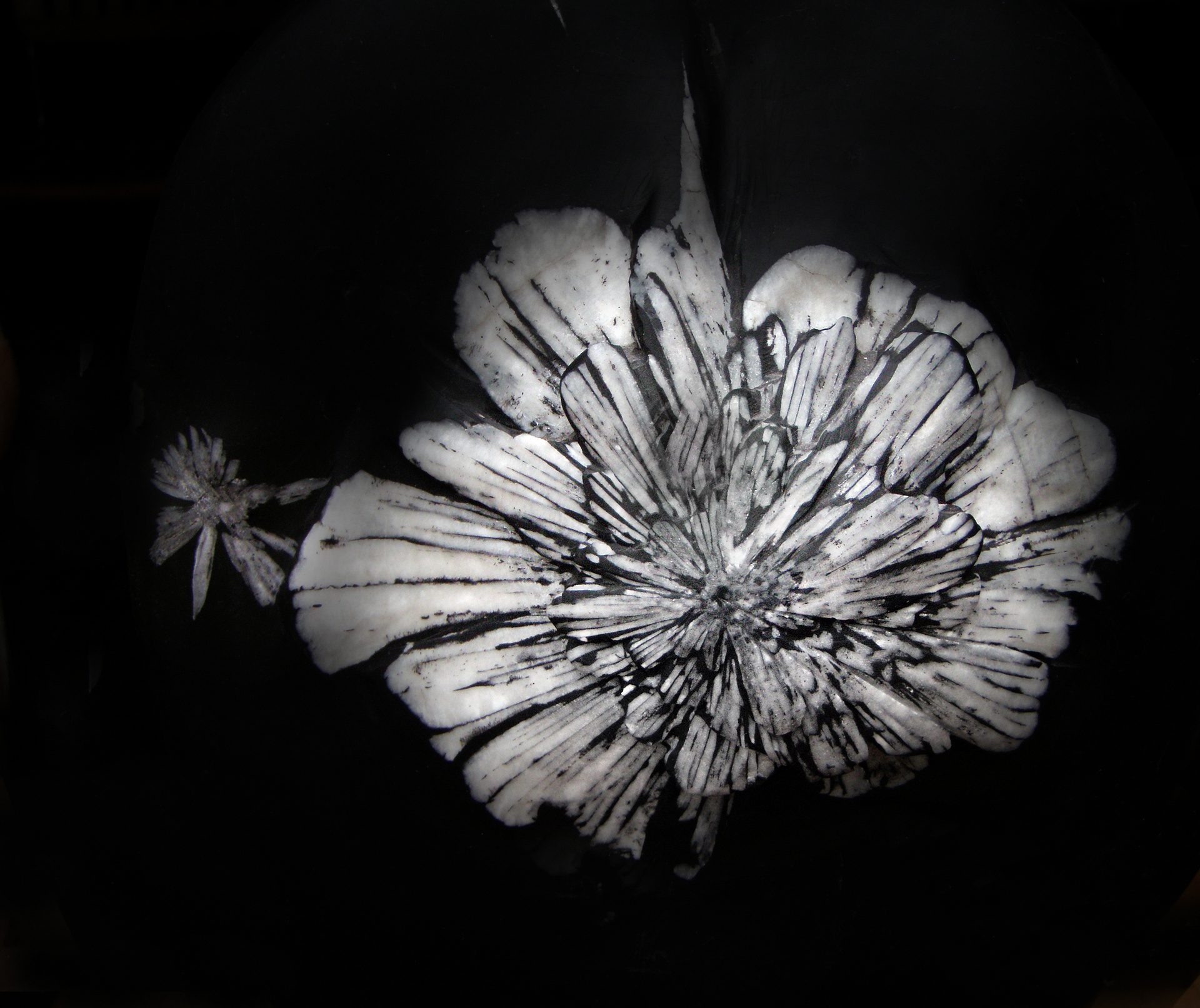
Ancient Chinese limestone with white mineral flowers blooming from black matrix - 200-million-year-old natural art practitioners associate.
- Chrysanthemum stones have been collected and cherished in China for over 1,000 years as auspicious natural objects - among the longest continuously appreciated stones in human cultural history.
- The 'flowers' in chrysanthemum stone are actual mineral crystals - celestite (strontium sulfate) or calcite that grew in radiating patterns 200-280 million years ago during the Permian geological period.
- The chrysanthemum is China's national flower and Japan's imperial symbol - the stone's natural flower-mimicry gives it profound cultural resonance in both countries.
- Some chrysanthemum stone specimens show multiple 'blooms' arranged across the surface like a painted garden - these multi-flower specimens are among the most prized by collectors and command significant premiums.
- The largest chrysanthemum stone specimens can be several feet across - massive slabs of black limestone covered with white mineral flowers that have served as garden ornaments in Chinese tradition for centuries.
- Practitioners drawn to natural symbolic formations and the meaning of unexpected beauty
- Collectors of Chinese and Japanese mineral specimens with cultural significance
- Those working with good fortune, abundance, and the blooming of dormant potential
- Crystal enthusiasts who appreciate the intersection of natural science and spiritual symbolism
- Feng shui practitioners using auspicious natural formations for abundance spaces
- Buyers wanting a water-compatible stone for regular cleansing
- Those seeking a durable jewelry stone - limestone matrix at Mohs 3-4 is too soft
- Practitioners who prefer well-established Western crystal healing traditions over Asian symbolic stone traditions
What Is Chrysanthemum Stone?
Chrysanthemum stone is a naturally occurring geological formation in which white mineral crystals - most commonly celestite (strontium sulfate) or calcite/feldspar - grow in radiating flower-like patterns within a dark gray to black limestone or mudstone matrix. It rates 3-4 (limestone matrix) on the Mohs hardness scale.
The 'flower' pattern was formed approximately 200-280 million years ago during the Permian period when crystal-forming minerals precipitated into cracks and voids in marine sedimentary rock, creating natural mandalas that resemble chrysanthemum blossoms.
The most famous and finest specimens come from Hunan Province in China, where the stone has been collected and revered for over 1,000 years.
Japanese specimens are also collected, and the stone holds cultural significance in both countries as a symbol of good fortune, purity, and the unexpected blooming of beauty from ordinary circumstances.
The chrysanthemum - China and Japan's symbolic flower of autumn, longevity, and nobility - gives the stone its name for obvious visual reasons.
Chrysanthemum stone specimens are sold in their natural state (showing the characteristic black-with-white-flower pattern) or polished as slabs and faces. The flower patterns range from simple single-bloom configurations to complex multi-flower arrangements that cover the entire face of a specimen. Each stone is unique - a 200-million-year-old natural artwork.
How Chrysanthemum Stone Compares
| Property | Chrysanthemum Stone | Dendritic Agate | Flint with Fossils |
|---|---|---|---|
| Hardness | 3-4 | 6.5-7 | 7 |
| Price | $ Budget | $ Budget | $ Budget |
| Pattern | White crystal flowers in black matrix | Black dendrites in chalcedony | Fossil inclusions in flint |
| Cultural Context | Chinese/Japanese auspicious symbol | Nature/landscape imagery | Geological curiosity |
Meaning and Symbolism
Chrysanthemum stone is primarily associated in Chinese and Japanese traditions with good fortune, the unexpected emergence of beauty from ordinary circumstances, and the blooming of dormant potential. The visual metaphor is powerful: white flowers blooming from black stone - light emerging from darkness, potential manifesting from what appears to be inert matter.
Practitioners describe it as a stone that honors the surprise of grace and the way beautiful outcomes can emerge from situations that seemed to hold no promise.
The stone is also connected to the chrysanthemum's traditional symbolic meanings in East Asian culture: longevity, nobility, fidelity, and the ability to persist and bloom even in cold and difficult conditions.
The chrysanthemum is Japan's imperial flower and China's flower of autumn - connecting the stone to themes of endurance, quiet dignity, and the beauty that ripens slowly over time.
Practitioners associate chrysanthemum stone with what they describe as 'sudden blooming' energy - the quality of things that have been growing underground suddenly breaking through into visible manifestation.
The stone is often recommended for those who feel their growth is invisible or unrewarded, as a reminder that deep roots often precede sudden flowers.
Historical Timeline
Healing Tradition
Emotional
Practitioners associate chrysanthemum stone with patience, the recognition of invisible growth, and the emotional quality of trusting that preparation and development are meaningful even when no external result is yet visible.
The stone is said to be supportive during periods of waiting, gestation, or slow development - times when the practitioner has done the inner work but the outer manifestation has not yet appeared.
Working with chrysanthemum stone is traditionally described as cultivating the equanimity of someone who plants seeds in autumn and trusts the spring, maintaining emotional steadiness and even joy during the invisible growing season.
Spiritual
Chrysanthemum stone's spiritual associations combine the Chinese and Japanese traditions of scholar's rock appreciation with contemporary crystal healing frameworks. Practitioners describe it as supporting meditative awareness of the natural world's intelligence and the capacity for unexpected beauty to emerge from any circumstances.
The stone is also linked in some traditions to ancestral wisdom - the idea that the patience and endurance encoded in a 200-million-year-old formation carries the mineral equivalent of ancestral memory. Some crystal healing guides describe it as supporting the recognition of cosmic order within apparent randomness.
Physical
Crystal healing traditions associate chrysanthemum stone with slow, steady physical growth and the body's capacity to heal through gradual processes that are not always visible day-to-day.
The stone is sometimes used in sessions supporting recovery from long-term illness or the kind of physical rebuilding that requires months of consistent effort before results appear. All physical associations are traditional without clinical evidence.
Zodiac, Birthstone and Gifts
Chrysanthemum stone is traditionally associated with Taurus, Cancer, and Aquarius. Taurus resonates with the stone's patient earth energy and appreciation of natural beauty that requires long gestation.
Cancer's connection centers on the stone's protective matrix (black limestone) from which beautiful flowers emerge - a metaphor for the way Cancer's protective nature shelters the growth of deep feeling.
Aquarius practitioners are said to resonate with the stone's quality of unexpected beauty emerging from apparently ordinary circumstances - a theme central to Aquarius's revolutionary, pattern-breaking nature.
Care and Cleansing
Chrysanthemum stone's limestone matrix is water-sensitive - avoid soaking or direct water contact, as limestone dissolves with prolonged water exposure. Use exclusively dry cleansing methods.
Sound cleansing near a singing bowl or chime is the recommended method. Smoke cleansing (incense, sage, or chrysanthemum flowers for thematic resonance) is also appropriate. Moonlight overnight on a dry stable surface.
Selenite charging plates work well for regular maintenance. Avoid soil burial due to moisture risk. Avoid salt water or salt bowls - both chemically attack limestone.
- DO display chrysanthemum stone away from moisture sources - avoid bathrooms, outdoor areas, and high-humidity spaces.
- DO NOT use water, cleaning solutions, or any liquid contact - limestone matrix dissolves.
- DO NOT use salt or salt water - chemically reactive with limestone.
- NOTE: The natural flower pattern is the stone's highest value - do not attempt to clean or improve it with abrasives.
- DO NOT drop - the limestone matrix is relatively soft and fragile at Mohs 3-4 and will chip with impact.
Real vs Fake
Genuine chrysanthemum stone has white crystal formations that are physically part of the rock matrix - not surface decorations. Run your finger across the flower: the crystals should have a slight 3-dimensional texture above the black limestone surface, not be flat like a painting.
Painted or artificially decorated stones are occasionally sold as chrysanthemum stone. The flower in genuine specimens shows natural crystal geometry - straight edges, radiating patterns from a center - not the slightly irregular, brushed appearance of paint.
The black matrix in genuine specimens is limestone - relatively soft and slightly granular under magnification. Artificially created pieces may use harder, smoother black stone or resin that feels and looks different from natural limestone.
Hunan Province origin is the quality benchmark. Chinese dealer provenance and the visual character of genuine celestite or calcite flowers are the best authenticity indicators.
At chrysanthemum stone's price points, the primary concern is quality rather than sophisticated fraud - distinguishing between well-formed, clearly defined flower specimens and lower-quality pieces with partial or poorly defined patterns.
Chrysanthemum Stone Jewelry & Gifts
Chrysanthemum stone pricing depends primarily on flower definition and specimen size. Small pieces with clear single-bloom patterns typically sell for $20-$50. Medium specimens with multiple blooms range from $50-$120. Exceptional large specimens with complex multi-flower arrangements can reach $150-$400+.
Flower definition is the primary quality factor. The best specimens show complete, clearly defined flowers with crisp white crystals radiating symmetrically from a center against a uniformly black matrix. Partial or poorly defined flowers significantly reduce quality.
Hunan Province, China is the quality benchmark source. Japanese specimens also exist and are valued, though less commonly available in Western markets.
For feng shui use, choose a specimen with a pattern that speaks to you as beautiful - the intentional selection of a personally resonant piece is itself part of the stone's auspicious quality in Chinese tradition.
Purchase from reputable dealers who specialize in Chinese minerals or Asian crystal traditions. Online photos can be misleading for chrysanthemum stone quality - seeing the specimen's three-dimensional crystal texture in person is ideal.
Where to Buy Chrysanthemum Stone
Affiliate disclosure: Some links below earn us a small commission at no extra cost to you. See our affiliate disclosure page.
Handmade, raw, and tumbled pieces from independent sellers worldwide.
Shop Chrysanthemum Stone on Etsy →Accessories, tools, and specimen sets with fast Prime delivery.
Shop Chrysanthemum Stone on Amazon →Certified loose gemstones graded and photographed for online buyers.
Shop Chrysanthemum Stone on GemSelect →Pairs Well With



Where Chrysanthemum Stone Is Found

