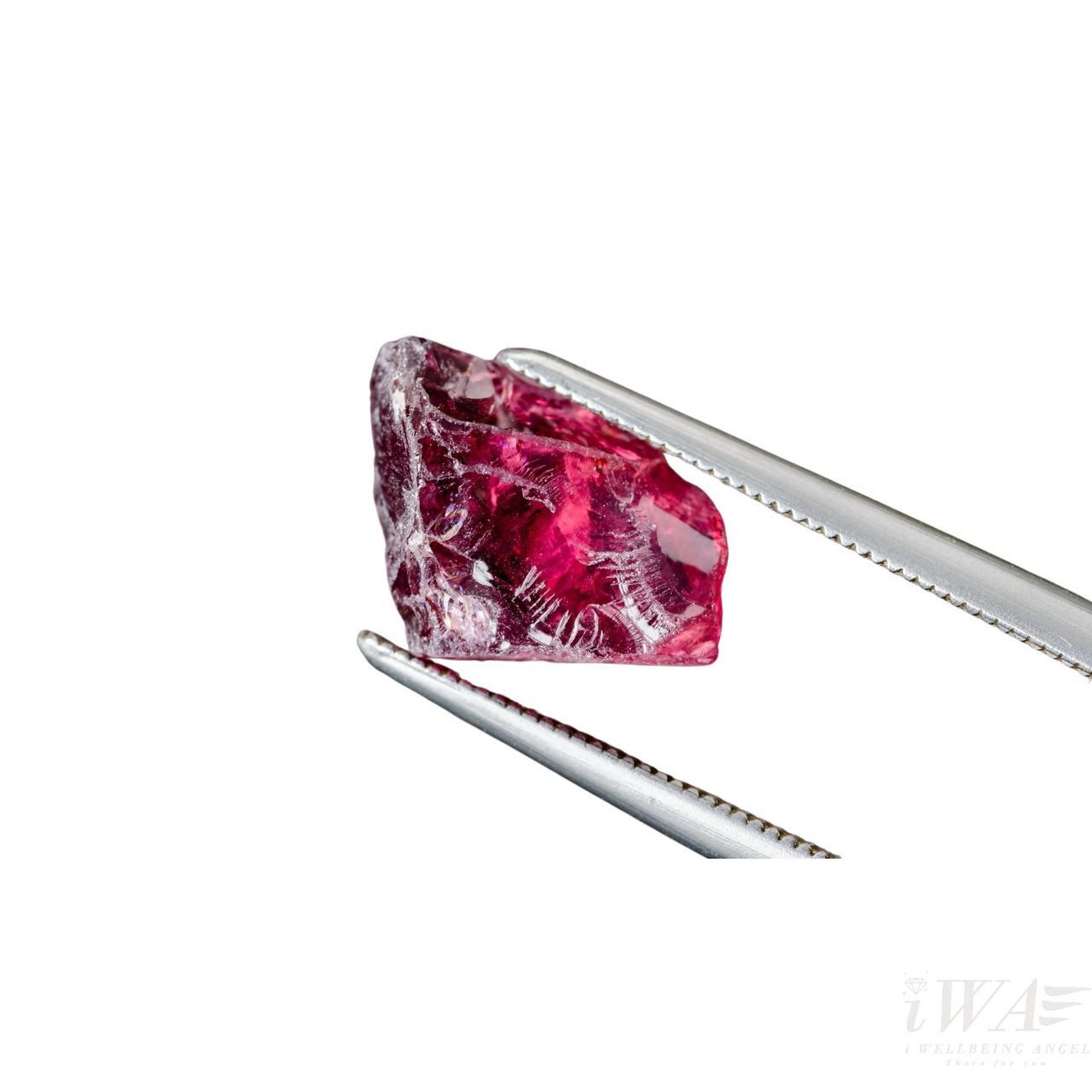
Color Change Garnet
Color change garnet shifts from teal-blue in daylight to vivid raspberry-red under incandescent light - the only garnet to rival.
- The best color change garnets from Tanzania's Umba Valley can shift from an almost perfect teal-blue to vivid cherry red - a shift so dramatic that the same stone looks like two entirely different gems.
- Color change garnet is rarer than alexandrite by number of high-quality commercial specimens - but costs a fraction of the price, making it one of the gem world's great value opportunities.
- The color change mechanism in garnet involves chromium and vanadium absorbing in the yellow-green band of the spectrum - the same narrow band that creates alexandrite's effect in chrysoberyl.
- Color change garnets were originally mislabeled as alexandrite by early Umba Valley prospectors because of the similarity of the phenomenon - a confusion that persists in some market segments.
- The garnet family is actually a diverse group of related minerals; color change garnet is typically a blend of pyrope (magnesium aluminum silicate) and spessartine (manganese aluminum silicate) in a specific ratio.
- Collectors seeking alexandrite's color-change phenomenon at a more accessible price point
- Jewelry buyers wanting a uniquely spectacular gem that performs differently in every light
- Gemini individuals resonating with the stone's dual-nature symbolism
- Heart and third eye chakra practitioners seeking a rare, high-vibration garnet variety
- Those fascinated by the optical physics of chromophore-driven color change
- Budget shoppers - fine color-change garnets start at $200 per carat; consider standard garnet instead
- Daily-wear ring buyers who need Mohs 8+ - color change garnet is better for pendants and earrings
- Anyone specifically wanting alexandrite - while similar, these are different minerals with different energetics
What Is Color Change Garnet?
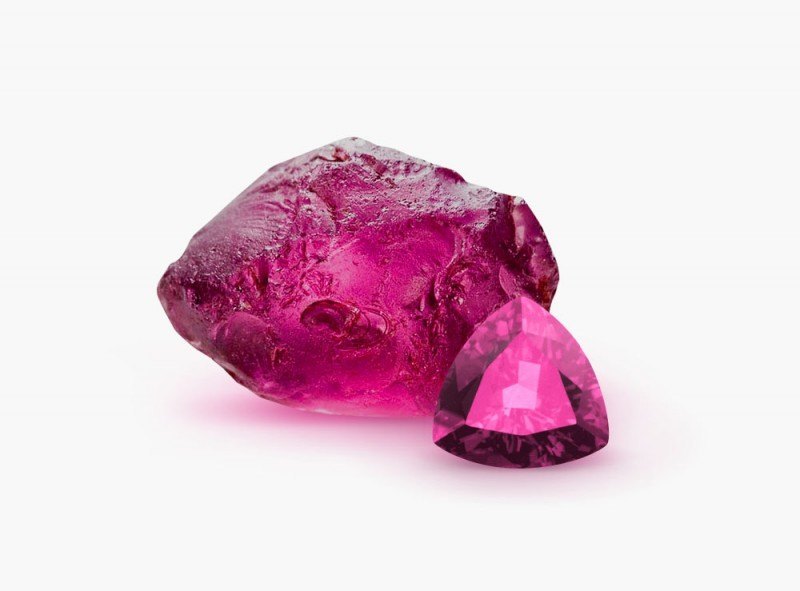
Color change garnet is a rare variety that shifts color between different light sources - appearing blue-green to teal in daylight and shifting to raspberry red, reddish-purple, or violet under incandescent light. It rates 7 - 7.5 on the Mohs hardness scale.
The phenomenon is caused by trace chromium and/or vanadium in the garnet's crystal structure, creating the same kind of selective wavelength absorption that produces the famous alexandrite effect in chrysoberyl.
Most color change garnets are compositional blends of pyrope and spessartine garnet - members of the garnet family that individually show no color change but combine in specific ratios with chromium or vanadium chromophores to produce the shifting effect.
Tanzania's Umba Valley is the most celebrated source, producing stones with dramatic blue-to-red shifts that are considered superior to most alexandrite in shift quality for the price.
The shift range in color change garnets is remarkable: some specimens appear almost pure teal-blue in cool daylight and a vivid raspberry or cherry red under incandescent, with no visual connection between the two appearances beyond the shape of the stone.
The finest examples are considered among the most spectacular optical phenomena available in the gem world at a price point most serious collectors can access.
How Color Change Garnet Compares
| Property | Color Change Garnet | Alexandrite | Color Change Sapphire |
|---|---|---|---|
| Hardness | 7 - 7.5 | 8.5 | 9 |
| Price / carat | $$ Mid-range | $$$ Premium | $$ Mid-range |
| Shift quality | Blue-green to red (often best) | Green to red | Blue to purple-red |
| Best For | Collection, jewelry | Investment gem | Unique fine jewelry |
Meaning and Symbolism
Garnet's long heritage as a stone of vitality, protection, and passionate commitment combines with the color change phenomenon's symbolism of adaptability and multidimensional perception. In many traditions, garnets of all types were associated with travelers, warriors, and those who needed to navigate rapidly changing circumstances without losing their essential nature.
Color change garnet's specific dual-light behavior mirrors the esoteric concept of 'seeing with both eyes' - the analytical daylight mind and the intuitive incandescent heart, each perceiving a different dimension of the same reality.
Practitioners believe this stone embodies the wisdom to honor both modes of perception without privileging either over the other.
Contemporary crystal healers associate color change garnet with Gemini's mercurial gift for synthesis - the ability to hold multiple perspectives simultaneously and find the unifying truth beneath apparently contradictory appearances. Many find it useful during meditations exploring paradox, integration of opposite qualities, or situations requiring both emotional intelligence and analytical clarity.
Historical Timeline
Healing Tradition
Emotional
Practitioners believe color change garnet supports emotional intelligence - the ability to respond to situations from different emotional registers as genuinely needed rather than from rigid habitual patterns.
Crystal healing tradition associates it with the garnet family's overarching theme of vital engagement and passionate commitment, amplified through the color change's suggestion of graceful adaptability.
Many find that working with this stone deepens their capacity to see other people's perspectives with genuine empathy rather than intellectual effort, as if the heart shifts into their light just as the stone shifts under theirs.
It is said to be particularly useful for those who feel emotionally rigid, or who find it difficult to access warmth (heart chakra) when in analytical mode and clarity when in emotional mode.
Spiritual
In crystal healing tradition, color change garnet embodies the spiritual principle of multidimensional awareness - the capacity to perceive the same situation through multiple lenses of consciousness without being trapped in any one.
Practitioners believe it supports the development of what many traditions call “witness consciousness” - the ability to observe one's own mental and emotional states from a slightly elevated perspective without detachment. It is associated with the meeting point of heart and third eye chakra energies: compassionate awareness paired with clear seeing.
Many find it particularly useful in spiritual practices that involve working with paradox, maintaining beginner's mind, or releasing attachment to any single framework of understanding.
Physical
Crystal healing tradition associates color change garnet with the circulatory and endocrine systems, reflecting garnet's traditional associations with blood vitality combined with the color change's connection to dynamic adaptation. Some practitioners use it during energy work focused on hormonal balance and the body's regulatory responses to changing conditions.
As with all garnet varieties, it is traditionally said to support the body's vital force and regenerative capacity in an energetic context. Always consult qualified medical professionals for health concerns.
Zodiac, Birthstone and Gifts
Gemini, the sign that holds dual natures in dynamic balance, finds in color change garnet a literal gemstone expression of its own essential nature.
Practitioners believe the stone amplifies Gemini's gift for seeing multiple perspectives simultaneously, while garnet's grounding vital energy helps the Twins channel their quicksilver intelligence into sustained, coherent action rather than perpetual exploration.
Capricorn benefits from color change garnet's combination of passionate commitment (garnet's traditional gift to Capricorn) with the adaptive intelligence of the color change. Crystal healers suggest Capricorn use it during complex negotiations or long-term projects where strategic adaptability must be maintained without losing the deep commitment that drives Capricorn's extraordinary persistence.
Care and Cleansing
Color change garnet is safe for water cleansing, brief salt exposure, sunlight, and moonlight - all of which suit garnet's robust physical stability. Avoid ultrasonic cleaning for stones with inclusions or fractures, which can be exacerbated by vibration. Warm soapy water and a soft brush is the recommended standard jewelry cleaning method.
Energetically, moonlight charging is particularly resonant for a color change stone - the moon herself changes from crescent to full, making her an ideal energetic partner. A full moon charge once a month is sufficient maintenance. Smudging with sage is another gentle option that requires no contact with the stone.
- DO NOT use ultrasonic cleaners on included or fractured specimens - vibration can worsen existing inclusions.
- DO store away from diamonds, sapphires, and other harder stones that can scratch garnet.
- NOTE: Color change garnet is best in pendants and earrings; Mohs 7-7.5 means rings require care.
- DO clean regularly with warm soapy water and soft brush.
- NOTE: Always evaluate color change garnet under both daylight and incandescent light before purchase.
- DO request origin documentation - Umba Valley material typically carries a premium over undocumented sources.
Real vs Fake
Color change garnet is sometimes confused with alexandrite or color change sapphire. A standard refractometer distinguishes all three: garnet reads 1.73 to 1.81 (singly refractive), sapphire 1.762 to 1.770 (doubly refractive), and alexandrite (chrysoberyl) 1.744 to 1.755 (doubly refractive). Garnet's single refraction is a distinctive and easily verified property.
Synthetic color change corundum (sapphire) and synthetic alexandrite are both commercially produced and might be misrepresented as natural color change garnet. Natural garnet specimens show natural inclusions under magnification; synthetic stones show curved striae or gas bubbles. A gemological laboratory report confirms identity and natural origin.
The quality of the color change is the primary value determinant and must be assessed personally: view under strong natural daylight and under incandescent light, and note both the quality of each face-up color and the completeness of the shift between them.
Strong, pure color changes with clean starting and ending colors command substantial premiums over weak or muddy shifts.
Color Change Garnet Jewelry & Gifts
Color change garnet prices are determined almost entirely by shift quality and color purity. Weak-shift material with muddy colors sells for $100 to $300 per carat. Strong, dramatic blue-green-to-red shifts with clean colors command $500 to $1,500 per carat.
Exceptional Umba Valley specimens with documented origin and near-alexandrite quality of shift occasionally reach $2,000 per carat.
Tanzania's Umba Valley is considered the premier source, and Umba-origin specimens with documentation carry a premium. The finest Umba material shows a vivid teal-blue daylight face and a saturated raspberry or cherry-red incandescent face with minimal residual hue from the other mode.
For jewelry use, select an eye-clean or near-eye-clean specimen with good symmetry, as inclusions are more visible in these lightly colored stones than in darker garnets. A laboratory report from a recognized institution confirms natural origin and species identity (distinguishing from synthetic alternatives).
Where to Buy Color Change Garnet
Affiliate disclosure: Some links below earn us a small commission at no extra cost to you. See our affiliate disclosure page.
Handmade, raw, and tumbled pieces from independent sellers worldwide.
Shop Color Change Garnet on Etsy →Accessories, tools, and specimen sets with fast Prime delivery.
Shop Color Change Garnet on Amazon →Certified loose gemstones graded and photographed for online buyers.
Shop Color Change Garnet on GemSelect →Pairs Well With



Where Color Change Garnet Is Found


