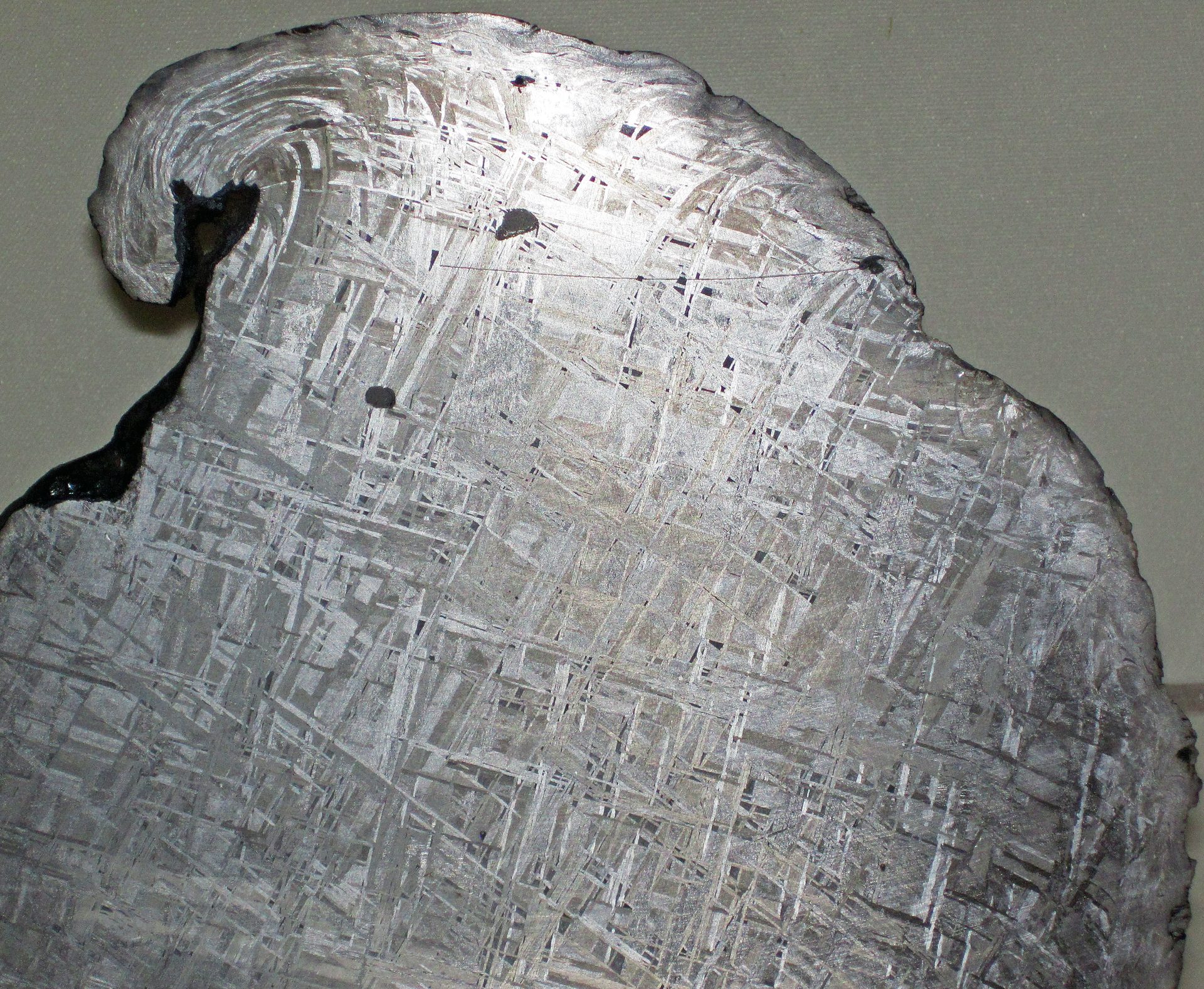
Gibeon Meteorite
A 4-billion-year-old iron-nickel fragment from the asteroid belt, etched with crystalline geometry no earthly forge can replicate.
- The Widmanstätten pattern in Gibeon took roughly 500 million years to form as the parent asteroid cooled in space.
- Gibeon is classified IVA - meaning it crystallized from a completely molten metallic core of a differentiated asteroid.
- Some Gibeon slices contain tiny diamonds (lonsdaleite) formed by the shock of impact, though not gem quality.
- Namibia’s law protects all meteorite fragments still on its soil - all legal gem-trade material predates that protection.
- Gibeon meteorite has been used in luxury watch dials by brands including Urwerk and Audemars Piguet.
- Collectors who want a certified piece of outer space
- Jewelry lovers drawn to bold, industrial metallic aesthetics
- Anyone fascinated by deep-time geology and cosmic origins
- Gift-givers seeking a one-of-a-kind wedding band or anniversary piece
- Spiritual seekers who work with grounding or cosmic-connection practices
- Daily-wear rings without a protective setting - the iron can oxidize
- Anyone wanting bright color; Gibeon is entirely silver-gray
- Buyers on a tight budget seeking large statement pieces
What Is Gibeon Meteorite?
Gibeon Meteorite is an iron-nickel meteorite that fell over what is now Namibia during prehistoric times, scattering fragments across roughly 171 square miles of the Gibeon strewn field. It belongs to the IVA classification group, meaning its parent asteroid cooled slowly over millions of years inside the solar system’s early asteroid belt.
That impossibly slow cooling - about 1 degree Celsius per million years - is exactly what creates its signature geometric interior.
Cut and etched with acid, every slice of Gibeon reveals the Widmanstätten pattern: interlocking bands of kamacite and taenite crystals that grew along octahedral planes over cosmic timescales. No laboratory process can manufacture this pattern; it forms only when iron-nickel cools across geological deep time.
Each slab is genuinely unique, making Gibeon one of the most visually distinctive gem materials in the world.
The Nama people of Namibia have known these iron masses for centuries, using the metal for tools and arrowheads long before European discovery in 1836. Today Gibeon is protected by Namibian law, and all legally traded material was excavated before export restrictions took effect.
Gem-quality slices and rounds are used in rings, pendants, and watch dials - prized equally by scientists, jewelers, and collectors.
How Gibeon Meteorite Compares
| Property | Gibeon Meteorite | Muonionalusta Meteorite | Moldavite |
|---|---|---|---|
| Hardness | 4-5 | 4-5 | 5-5.5 |
| Price/ct | $ Budget | $ Budget | $ Budget |
| Rarity | Rare (protected) | Very rare | Very rare |
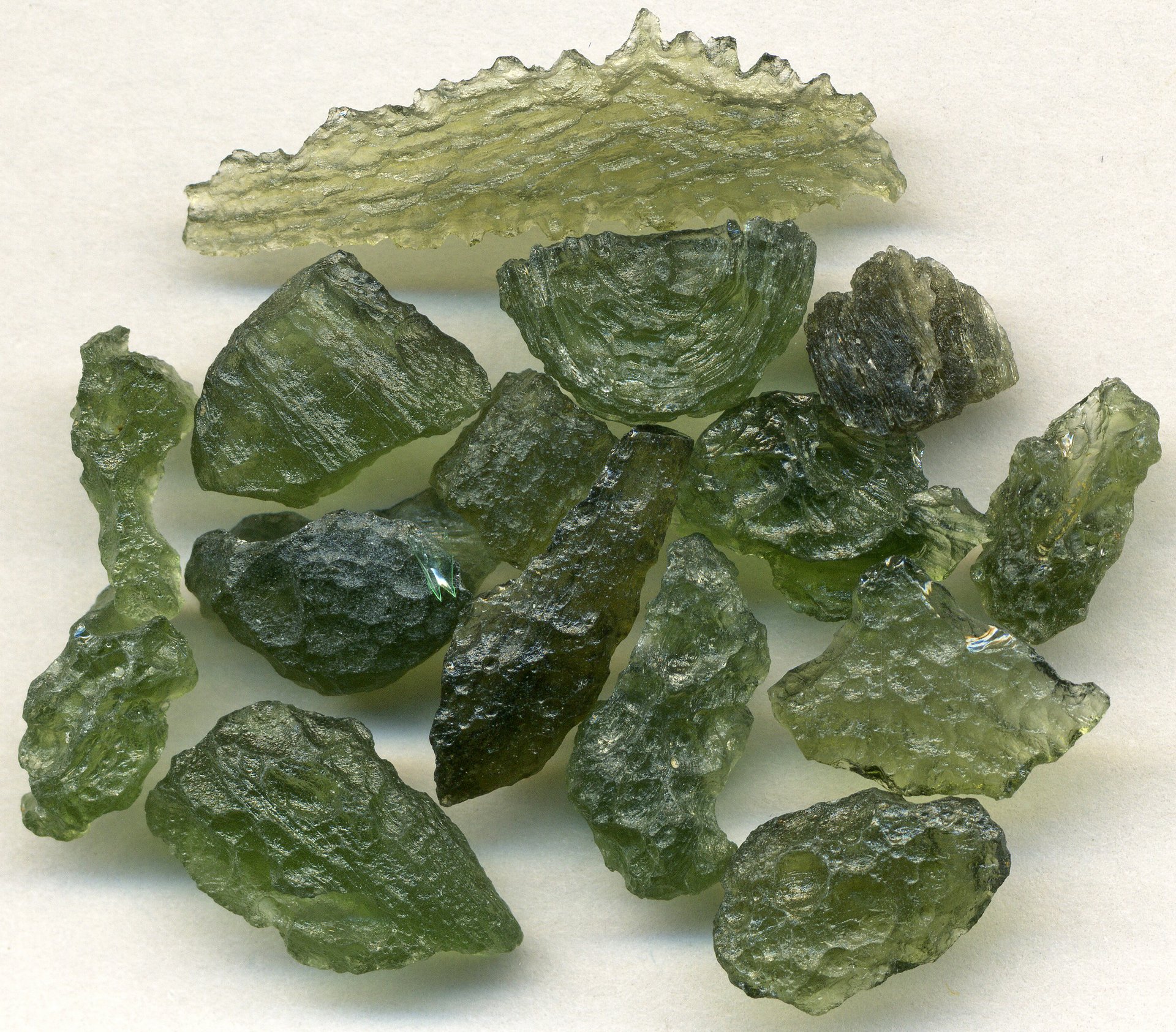
| Best For | Rings, watch dials | Collector slices | Pendants, spiritual work |
Meaning and Symbolism
Practitioners associate Gibeon Meteorite with cosmic perspective - the sense that human timelines are just a heartbeat inside the universe’s vast story. It is said to carry the frequency of deep space, offering grounding energy that paradoxically feels both ancient and boundless.
Many collectors describe an immediate, weighty presence when holding a genuine slice.
In crystal-working traditions, Gibeon is traditionally associated with the Root and Crown chakras simultaneously - anchoring the physical body while opening awareness to higher dimensions. It is said to sharpen mental clarity, dissolve indecision, and support those who feel disconnected from their life’s direction.
Practitioners believe it acts as a cosmic compass, pointing the holder toward their core purpose.
Metaphysically, Gibeon is considered a stone of strength and adaptability, reflecting the resilience of metal forged in the heart of an asteroid, hurled through space, and surviving atmospheric entry.
It is said to help those navigating major transformation - new careers, relocations, endings and beginnings - by instilling the quiet certainty that they have what it takes.
Historical Timeline
Healing Tradition
Emotional
Practitioners believe Gibeon Meteorite carries a grounding yet expansive emotional energy suited for those who feel scattered or overwhelmed by life’s pace. It is said to bring a calming perspective - reminding the holder that whatever challenge they face is small compared to four billion years of cosmic history.
Many who work with this material report a settling of anxious thought loops and a sense of being held by something far larger than personal circumstance. Crystal-working traditions describe Gibeon as supportive during grief or major transition, offering steady emotional ballast when familiar structures fall away.
It is traditionally associated with the cultivation of inner resilience and the capacity to adapt without losing one’s core identity.
Spiritual
In metaphysical practice, Gibeon is said to be one of the most powerful materials for bridging earthly and cosmic awareness. Practitioners believe it amplifies meditation depth and makes higher-dimensional insights more accessible.
It is traditionally used in grid work placed at the Root and Crown chakras together - the pairing said to create a complete circuit from earth to cosmos. Some practitioners believe Gibeon accelerates spiritual evolution by confronting the holder with the true scale of existence, loosening attachment to ego-driven fears.
It is said to support past-life recall and akashic-record work, with its deep-time origins lending credibility to its reputation as a stone of ancient memory.
Physical
Crystal-working traditions describe Gibeon as supportive of the skeletal system and blood health, though no scientific evidence supports these claims. Practitioners believe its iron content resonates with hemoglobin and may be placed near areas of physical fatigue or weakness in energy-body work.
It is said to support stamina and physical endurance when used in meditation before athletic or demanding activity. Some practitioners place Gibeon near the base of the spine during bodywork sessions, traditionally associating it with adrenal support and grounding physical energy.
These uses are complementary wellness practices and are not a substitute for professional medical care.
Zodiac, Birthstone and Gifts
Scorpio’s transformational depth resonates with Gibeon’s story of death and rebirth - a body shattered in the asteroid belt, reborn as a jewel in the earth. Practitioners believe Scorpios benefit from Gibeon’s grounding influence during their periodic cycles of intense inner change.
Aquarius, meanwhile, is traditionally the sign of cosmic thinking and innovation; Gibeon’s extraterrestrial origin and scientific wonder align naturally with Aquarian intellectual curiosity. Both signs are said to find in Gibeon a companion that honors the depth of feeling and the breadth of vision they carry.
Care and Cleansing
Never cleanse Gibeon Meteorite with water, saltwater, or salt burial - the iron content will rust and tarnish rapidly. Even brief exposure to moisture can begin oxidation on cut surfaces, permanently damaging the Widmanstätten pattern and its market value.
Dry cleansing methods work well: set Gibeon on a piece of selenite overnight, waft cleansing smoke (sage or palo santo) around the piece, or place it in moonlight on a dry surface outdoors. Sound cleansing with a singing bowl is also effective and completely safe for the material.
For physical surface care, a soft dry cloth is all that is needed to maintain shine. Many jewelers apply a light coat of Renaissance Wax periodically to protect the etched surface from humidity and oxidation; this is worth doing if you live in a humid climate.
- DO store in an airtight bag or dry display case - humidity causes rust on unprotected surfaces.
- DO NOT expose to water, saltwater, cleaning solutions, or sweat for extended periods.
- DO NOT use ultrasonic or steam cleaners - the vibration and moisture will damage the metal.
- NOTE: Apply Renaissance Wax or a jeweler-approved metal protectant once or twice a year to preserve the etched surface.
- DO NOT store loose next to hard gemstones - despite its cosmic origin, Gibeon scratches at Mohs 4-5 and can be marred by quartz or harder stones.
Real vs Fake
Authentic Gibeon Meteorite always shows the Widmanstätten pattern when cut and acid-etched - no other natural material or human manufacture produces this exact crystalline geometry at scale. If a piece labeled “Gibeon” looks uniformly smooth or patterned in a repetitive way under magnification, be skeptical.
Ask any seller for a certificate of authenticity from a recognized meteorite dealer or from the Meteoritical Society’s database. Gibeon is a well-documented fall with a known classification (IVA); a reputable seller will know its provenance, composition, and find location.
Weight is a helpful field test. Iron meteorites are significantly denser than common rocks - a Gibeon slice feels noticeably heavy for its size, roughly 7.8 g/cm³. If a “meteorite” piece feels light like pumice or common stone, it is almost certainly not genuine.
A magnet test helps but does not confirm authenticity alone. Gibeon has high iron content and will attract a strong neodymium magnet clearly. However, many terrestrial rocks also attract magnets, so magnetic attraction alone is not proof of origin.
Buy from established meteorite dealers, auction houses with provenance documentation, or gemological laboratories rather than generic online marketplaces. Prices for verified Gibeon run roughly $3-$20 per gram depending on slice quality; suspiciously cheap material warrants extra scrutiny.
Gibeon Meteorite Jewelry & Gifts
Gibeon Meteorite is sold by weight (per gram) rather than per carat, which is unusual among gem materials. Prices typically range from $3-$8 per gram for rough or small slices up to $15-$20 per gram for large, beautifully patterned display slices. Jewelry-grade pieces set in rings or pendants carry additional fabrication costs.
The most important factor in value is the clarity and size of the Widmanstätten pattern. Slices with bold, well-contrasted bands are more desirable than those with faint or narrow patterning. Large slices showing the full geometric lattice are rarer and command premium prices.
All Gibeon on the current market is legally excavated pre-ban material. Responsible dealers will provide documentation of this. Avoid sellers who cannot explain the provenance chain - Namibian law is serious about protected national monuments.
For jewelry use, look for pieces that have been properly etched and sealed. An unsealed Gibeon ring worn daily in a humid environment will rust within months. Quality jewelers inlay Gibeon in protective metal channels and apply surface coatings that extend its life significantly.
The meteorite jewelry market has grown substantially since the 2000s. The Tucson Gem and Mineral Show, Denver Gem Show, and specialty meteorite dealers such as Aerolite Meteorites or Arizona Skies Meteorites are trustworthy sourcing options.
Where to Buy Gibeon Meteorite
Affiliate disclosure: Some links below earn us a small commission at no extra cost to you. See our affiliate disclosure page.
Handmade, raw, and tumbled pieces from independent sellers worldwide.
Shop Gibeon Meteorite on Etsy →Accessories, tools, and specimen sets with fast Prime delivery.
Shop Gibeon Meteorite on Amazon →Certified loose gemstones graded and photographed for online buyers.
Shop Gibeon Meteorite on GemSelect →Pairs Well With


Where Gibeon Meteorite Is Found
