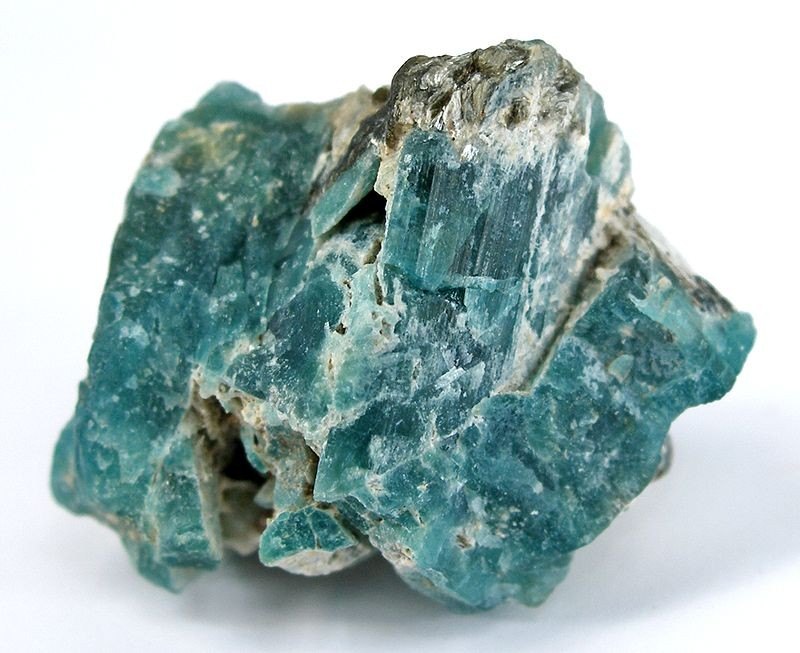
Grandidierite
An ultra-rare borosilicate from southern Madagascar showing milky blue-green color with strong pleochroism in white, blue, and green.
- Grandidierite was named for French naturalist Alfred Grandidier, who explored Madagascar in the 1800s and described much of its biology and geology.
- The stone is one of the few gem species discovered in the twentieth century to reach significant commercial recognition.
- Most grandidierite ever found has been opaque or translucent; transparent gem-grade material represents a tiny fraction of total production.
- The species shows strong pleochroism, displaying white, blue, and green from different angles within the same stone.
- Madagascar's southern Anosy region has produced essentially all gem-quality grandidierite reaching the modern market.
- Serious collectors building a portfolio of ultra-rare colored stones
- Investors interested in low-supply gems with documented Madagascan provenance
- Practitioners working with throat chakra communication and heart chakra calm
- Jewelry shoppers wanting an exceptionally rare alternative to aquamarine or paraíba
- Pisces and Libra readers seeking a unique water-element personal talisman
- Anyone seeking a recognizable mainstream gemstone (try aquamarine or topaz)
- Buyers under $1,000 per carat (consider apatite or fine aquamarine)
- Daily-wear ring buyers (the cleavage makes setting difficult; pendants are safer)
What Is Grandidierite?
Grandidierite is a rare magnesium-iron-aluminum borosilicate first discovered in southern Madagascar in 1902 and named after the French naturalist Alfred Grandidier. The species was known almost exclusively from opaque to translucent specimens for nearly a century, with transparent gem-quality material reaching the international market only after major finds in 2014 and 2015.
Total worldwide production of faceted gem-grade stones remains tiny.
The mineral has a distinctive blue-green to teal color caused by trace iron in the crystal structure, and shows strong pleochroism, displaying three different colors (white, blue, and green) when viewed along different crystal axes.
The IMA symbol is Gddr, and grandidierite forms in aluminum-rich pegmatites and metamorphic environments where boron-bearing fluids interacted with magnesium-aluminum host rocks. Such conditions are vanishingly rare in nature.
Madagascar's Tranomaro and Andrahomana regions in the south of the island are the world's primary source of gem-quality material, with smaller occurrences reported from Sri Lanka, Norway, and a handful of other localities.
Most material from any source is opaque or translucent rather than transparent, which is why faceted clean stones command exceptional premiums.
Grandidierite has a Mohs hardness of 7.5, making it durable enough for jewelry, but its perfect cleavage in one direction means it requires careful cutting and protective settings. Cabochons and pendants dominate finished jewelry use.
How Grandidierite Compares
| Property | Grandidierite | Aquamarine | Paraíba Tourmaline |
|---|---|---|---|
| Hardness | 7.5 | 7.5 - 8 | 7 - 7.5 |
| Price / carat | $$$ Premium | $$ Mid-range | $$$$ Luxury |
| Rarity | Extremely rare | Common | Very rare |
| Best For | Investment, collection | Jewelry, daily wear | Investment, fine jewelry |
Meaning and Symbolism
Grandidierite carries no ancient mythology because it was unknown to humans until 1902, but the modern collector tradition has built up associations around its rarity, its Madagascan origin, and the calm coastal blue-green of its color.
The stone is sometimes called the gem of Madagascar in collector circles and is associated with the island's biological and geological uniqueness. Its discovery story is bound up with French naturalist Alfred Grandidier's nineteenth-century explorations of the island.
Practitioners adopted grandidierite quickly after gem-grade material reached the market in the 2010s. The stone is now traditionally associated with the principles of calm communication, gentle authenticity, and the kind of quiet self-expression that does not require shouting to be heard.
The blue-green color is interpreted as a bridge between throat chakra communication and heart chakra warmth.
In modern crystal practice, grandidierite is sometimes called the stone of true voice or the listening stone. Practitioners believe it supports readers who feel unheard, those whose work involves diplomacy or negotiation, and anyone navigating a period that calls for honest but kind communication.
Many find grandidierite useful as a personal talisman during life transitions where words matter, with the stone treated as a reminder to speak from a settled center rather than reactive heat.
Historical Timeline
Healing Tradition
Emotional
Practitioners believe grandidierite is a stone of calm, honest communication and gentle self-expression. In crystal healing tradition, it is said to support readers who struggle to be heard, especially in family, workplace, or relationship contexts where their voice has been overshadowed.
Many find grandidierite useful during periods of difficult conversations, mediation work, or any situation where speaking truthfully without escalation matters more than winning.
The stone has long been associated in the modern tradition with the principle of speaking from a settled heart rather than reactive emotion. Practitioners often pair grandidierite with rose quartz when the work involves family or partnership communication, or with clear quartz when amplified focus on a specific message is needed.
Because grandidierite is rare and expensive, the stone is naturally reserved for milestone moments and special practice, which contributes to its reputation as a contemplative gem rather than a casual daily carry.
Spiritual
Grandidierite is traditionally associated with the throat and heart chakras together in modern crystal practice. Practitioners believe the blue-green color bridges these two energy centers, supporting communication that comes from a place of love rather than fear or defensiveness.
It has long been recommended for spiritual teachers and writers in the contemporary tradition.
Many find grandidierite useful in meditation focused on integrity, especially work that involves aligning words with deeper values. The stone pairs well with aquamarine for amplified throat chakra work and with clear quartz for grids built around honest expression.
Because faceted grandidierite is so rare, practitioners typically reserve it for ritual contexts rather than continuous wear, treating the stone as a focal point for occasional deep practice rather than a daily companion.
Physical
Practitioners believe grandidierite supports what they describe as the body's throat and respiratory system, which the throat chakra is associated with in crystal healing tradition. Folklore is sparse because the stone was unknown until 1902, so most physical-association traditions have been built up over the past few decades.
It is sometimes recommended for readers who experience tension in the jaw, throat, or shoulders related to suppressed expression.
The stone is occasionally suggested as a calming companion during periods of vocal strain, public speaking practice, or singing work in folk practice. Grandidierite is not a substitute for medical care, and practitioners are careful to frame its role as supportive rather than curative.
Because genuine grandidierite is so expensive, most readers who want similar physical-association energy at a more accessible price consider aquamarine or blue chalcedony as practical alternatives.
Zodiac, Birthstone and Gifts
Grandidierite is most often associated with Libra in modern crystal astrology because of its connection to balanced, diplomatic communication. Practitioners believe the stone supports Libra's natural mediator instincts and helps the sign find words for difficult truths without sacrificing harmony.
It has long been suggested as a personal talisman for Libras working in law, counseling, or partnership-heavy fields.
Pisces is the secondary association because of grandidierite's water-element character and oceanic blue-green color. Astrologers sometimes recommend the stone for Pisces readers seeking to express subtle intuitive perceptions in language others can understand, especially in creative or healing work.
Care and Cleansing
Grandidierite tolerates most gentle cleansing methods, but its high value means owners typically minimize handling. A soft dry cloth wipe is usually sufficient between uses, with a brief lukewarm soapy water rinse reserved for occasional deeper cleaning.
Avoid ultrasonic and steam cleaners, which can stress the stone's perfect cleavage and damage prong settings on faceted pieces.
Energetic cleansing with smoke from sage, palo santo, or cedar is widely used and considered safe. Sound cleansing with a singing bowl or tuning fork works well, and brief moonlight exposure is the most aligned method for the stone's water-element character.
Sunlight is acceptable for short periods. Avoid salt of any kind, since saltwater can dull polish and corrode metal settings, and most grandidierite owners are protective against any harsh treatment that could compromise the stone or its mounting.
- DO store grandidierite in a velvet-lined box separate from other gems to prevent scratches and impacts.
- DO NOT use ultrasonic or steam cleaners on grandidierite, given the perfect cleavage direction.
- DO NOT subject the stone to sudden temperature changes, which can stress cleavage planes.
- DO request a reputable independent gemological lab certificate for any stone above one carat.
- DO insure grandidierite jewelry separately given the per-carat value.
- DO ask the seller for documented Madagascan provenance and chain of custody.
- Note: stones marketed as grandidierite without lab certification can be misidentified apatite or beryl varieties.
Real vs Fake
Genuine grandidierite shows distinctive blue-green to teal color with strong pleochroism, displaying white, blue, and green when rotated under a polariscope or with the unaided eye in good light.
The refractive index range of 1.583 to 1.639 and specific gravity of 2.85 to 2.99 distinguish the species from most look-alikes when measured by a trained gemologist. Most stones show some translucency rather than full transparency.
Common substitute stones marketed as grandidierite include light blue apatite (much softer at Mohs 5), aquamarine (different refractive index and lacks the characteristic pleochroism), and synthetic blue-green spinel (different specific gravity). A reputable independent gemological lab can distinguish these species with standard refractometer and spectroscopy testing.
Some translucent grandidierite cabochons have also been mislabeled as serendibite, a related rare borosilicate.
At home identification is difficult for non-specialists, since grandidierite shares too many surface characteristics with related blue-green stones. The single most important step for any buyer is to insist on lab documentation that explicitly identifies the species using current IMA nomenclature.
Watch for online listings under $500 per carat claiming gem-quality transparent grandidierite; almost all such stones are apatite, light beryl, or other substitutes priced as the rarer species. Reputable dealers always include current lab paperwork from a major gemological laboratory.
Grandidierite Jewelry & Gifts
Grandidierite pricing depends heavily on transparency and color saturation. Translucent cabochons in standard pendant sizes run $100 to $500 per carat. Transparent faceted stones with strong color and good clarity start around $1,500 per carat in small sizes and reach $5,000 to $15,000 per carat in larger pieces.
Exceptional clean transparent stones above three carats with vivid teal color can exceed $25,000 per carat at auction.
Lab certification is mandatory for any significant purchase. Without a reputable independent gemological lab report, the stone could easily be misidentified apatite or other blue-green species. Reputable dealers always include current lab paperwork, disclose origin (almost always Madagascar), and confirm that the stone is untreated.
For collectors, transparent gem-grade material from the 2014-2015 Tranomaro find represents the best documented modern source. supply remains tight and prices have continued to rise as collector demand outstrips Madagascan production.
Where to Buy Grandidierite
Affiliate disclosure: Some links below earn us a small commission at no extra cost to you. See our affiliate disclosure page.
Handmade, raw, and tumbled pieces from independent sellers worldwide.
Shop Grandidierite on Etsy →Accessories, tools, and specimen sets with fast Prime delivery.
Shop Grandidierite on Amazon →Certified loose gemstones graded and photographed for online buyers.
Shop Grandidierite on GemSelect →Pairs Well With



Where Grandidierite Is Found


