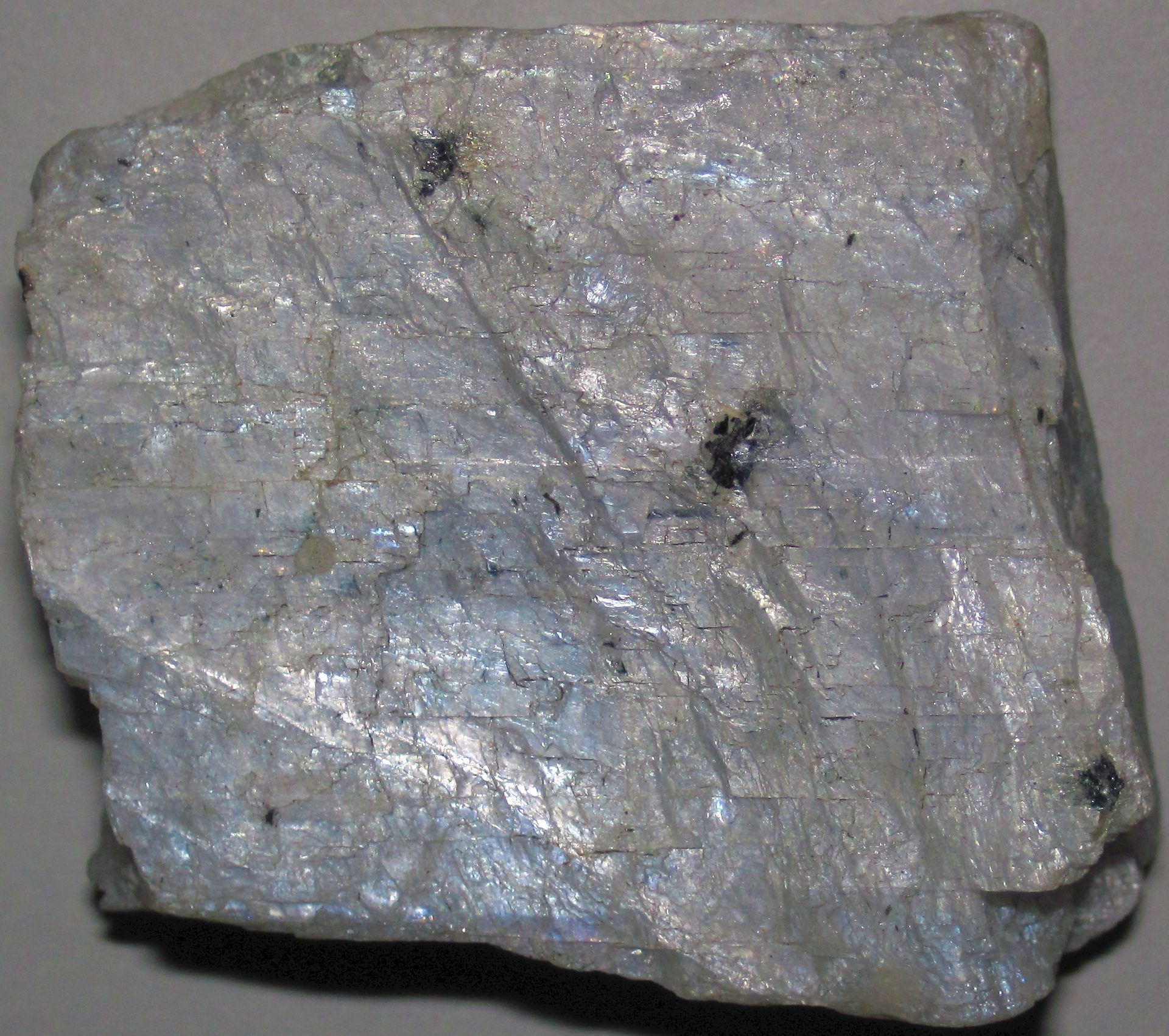
Gray Moonstone
Silver-gray adularescence drifting like moonlight through morning fog over still water
- Gray moonstone's cool silver sheen comes from the same optical mechanism as white moonstone - only the body color of the feldspar differs.
- Some gray moonstone specimens show a phenomenon called 'cat's eye' in addition to adularescence, with two optical effects in a single stone.
- Moonstone's adularescence was named after the Adula mountain range in Switzerland, where early European specimens were found.
- Gray moonstone is sometimes called 'New Moon Stone' in crystal healing communities, symbolizing the potential within darkness and new beginnings.
- All moonstones are feldspars, making them mineralogically related to both sunstone and labradorite - three strikingly different gems from the same mineral family.
- Deepening intuition and psychic awareness practice
- Working with shadow self or emotional depth
- Meditation focused on inner truth and clarity
- Mysterious, sophisticated jewelry with ethereal appeal
- Gifts for Scorpio or Capricorn with mystical sensibilities
- Everyday rough-wear rings (consider labradorite or quartz for durability)
- Those seeking bright colorful gemstones (try rainbow moonstone instead)
- Saltwater or beach environments (choose aquamarine for ocean jewelry)
What Is Gray Moonstone?
Gray Moonstone is a variety of orthoclase feldspar displaying adularescence in cool silver and gray tones, giving it a mysterious, atmospheric quality distinct from the classic white or warm peach varieties. The gray body color comes from subtle iron inclusions and structural variations within the feldspar layers.
Like all moonstones, the floating inner glow occurs when light scatters between alternating nanoscale layers of orthoclase and albite feldspar. In gray specimens, this creates a particularly dramatic silver-blue sheen that seems to emerge from a smoky interior.
Gray moonstone is often associated with New Age crystal practices focused on psychic development, shadow work, and deep intuitive states. It is cut almost exclusively as cabochons to maximize the adularescent optical effect.
How Gray Moonstone Compares
| Property | Gray Moonstone | White Moonstone | Labradorite |
|---|---|---|---|
| Hardness | 6 - 6.5 | 6 - 6.5 | 6 - 6.5 |
| Price/ct | $ Budget | $ Budget | $ Budget |
| Optical Effect | Silver adularescence | Blue adularescence | Labradorescence |
| Best For | Intuitive, shadow work | Classic moonstone look | Spectral color display |
Meaning and Symbolism
Gray Moonstone is traditionally associated with the deeper, more introspective aspects of lunar energy - the dark of the moon rather than the full moon's brightness. Practitioners believe it supports shadow work, helping individuals explore and integrate the hidden or unacknowledged parts of themselves with honesty and compassion.
Many crystal workers link gray moonstone to enhanced psychic perception and clairvoyance, describing it as a stone that sharpens inner vision and attunes the bearer to subtle energetic information. It is said to be particularly supportive during spiritual transitions, when old patterns must dissolve before new ones emerge.
In various metaphysical traditions, gray moonstone is associated with mystery, the unconscious mind, and the wisdom found in stillness. It is thought to help people who overthink access the quiet knowing beneath mental chatter.
Historical Timeline
Healing Tradition
Emotional
Gray moonstone is traditionally associated with emotional depth work and is said to create a safe internal space for exploring difficult feelings without being overwhelmed. Practitioners believe it supports those navigating grief, loss, or major transitions, offering an energetic quality they describe as calm, clear-eyed acceptance.
Unlike more energetically stimulating stones, gray moonstone is thought to encourage stillness and emotional honesty rather than immediate action. Crystal healers sometimes recommend it for people who dissociate from difficult emotions, suggesting it gently draws awareness inward.
Spiritual
Spiritually, gray moonstone is traditionally linked to the third eye and crown chakras, and is believed by practitioners to strengthen psychic perception and intuitive knowing. It is said to be a powerful companion for meditation, dream work, and journaling practices aimed at accessing the unconscious mind.
Some traditions associate it with the crone or elder archetype of the divine feminine - the wise, deep-knowing aspect rather than the nurturing or passionate aspects. Gray moonstone is also said to support lucid dreaming and the recall of significant dream symbolism.
Physical
Gray moonstone shares moonstone's traditional associations with hormonal and cyclical body rhythms in holistic frameworks. Practitioners suggest it may offer gentle energetic support during times of physical exhaustion or chronic fatigue, describing it as a restorative stone that encourages the body to rest deeply.
Some crystal healing traditions link it to the lymphatic system and the body's natural detoxification processes - always as energetic support, never as a medical intervention. These are traditional and metaphysical beliefs only.
Zodiac, Birthstone and Gifts
Cancer's lunar rulership gives it a natural affinity for all moonstone varieties; gray moonstone specifically supports Cancer's deeper emotional processing and need for privacy. Scorpio, a sign associated with transformation and depth, is thought to resonate strongly with gray moonstone's shadow-work properties.
Capricorn, often focused on outer achievement, is said to benefit from gray moonstone's encouragement to explore the inner landscape and trust intuitive guidance alongside practical reasoning.
Care and Cleansing
New moon cleansing is the most symbolically resonant method for gray moonstone: place it outdoors or on a windowsill during the new moon and allow the night air to refresh and reset its energy.
Sound cleansing with a singing bowl, tingsha bells, or tuning fork is an ideal choice - it requires no contact with water and poses no risk to the stone's surface.
A brief rinse under cool running water is acceptable; dry immediately and avoid extended soaking or contact with salt, which can etch feldspar over time.
- DO store gray moonstone in a soft pouch or padded box away from harder stones that can scratch its 6 to 6.5 Mohs surface.
- DO NOT use ultrasonic or steam cleaners as vibration and heat can widen existing cleavage fractures in feldspar.
- DO NOT expose to salt water, acidic household cleaners, or abrasive polishing compounds.
- NOTE that gray moonstone has perfect cleavage in 2 directions - avoid settings that leave edges exposed if worn as a ring.
- DO NOT store in direct strong sunlight for extended periods as UV exposure may subtly affect adularescence over time.
Real vs Fake
Authentic gray moonstone shows adularescence that visibly drifts as you rotate the stone - the sheen moves across the surface like a floating light, not a fixed spot or painted shimmer.
Opalite glass is the most common substitute and is frequently mislabeled as moonstone; it shows a milky blue-white glow but lacks the depth of movement and the internal lamellar structure of genuine stone.
Under 10x magnification, real gray moonstone often shows centipede-like tension cracks along internal cleavage planes - these are actually a sign of authenticity, not damage.
Gray-dyed quartz or glass may mimic the body color but will not show genuine adularescence - tilt the stone under a single-point light source to check for the characteristic billowing glow.
Request country-of-origin information and ask whether any treatments beyond cutting and polishing have been applied; reputable dealers provide this readily for genuine material.
Gray Moonstone Jewelry & Gifts
Gray moonstone is widely available and affordable, with quality cabochons typically ranging from $5 to $30 per carat depending on the strength of adularescence and depth of color.
The most important quality factor is the adularescent glow: look for a strong, well-centered silver or blue-silver sheen that moves clearly as you tilt the stone under a light source. Body color ranges from pale silver-gray to deep charcoal; deeper gray specimens with strong adularescence are rarer and command slightly higher prices.
Translucency enhances adularescence - semi-transparent gray moonstone generally shows a more dramatic optical effect than fully opaque material.
India dominates the commercial market; Sri Lankan gray moonstone, while rarer, typically shows superior adularescence and is worth seeking out for important jewelry pieces.
Where to Buy Gray Moonstone
Affiliate disclosure: Some links below earn us a small commission at no extra cost to you. See our affiliate disclosure page.
Handmade, raw, and tumbled pieces from independent sellers worldwide.
Shop Gray Moonstone on Etsy →Accessories, tools, and specimen sets with fast Prime delivery.
Shop Gray Moonstone on Amazon →Certified loose gemstones graded and photographed for online buyers.
Shop Gray Moonstone on GemSelect →Pairs Well With


Where Gray Moonstone Is Found


