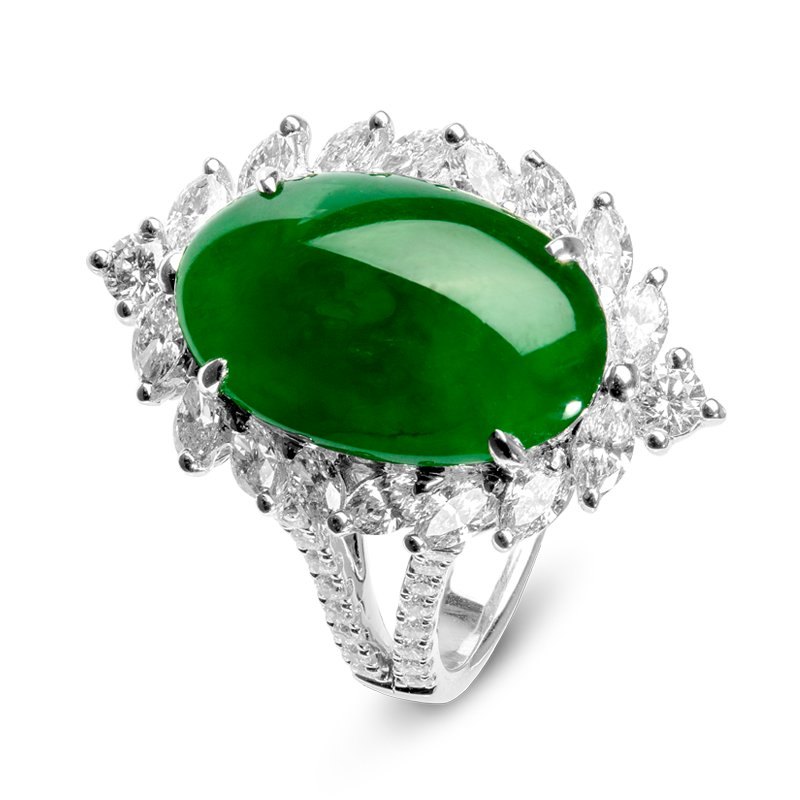
Imperial Jade
The emerald-green crown of jadeite, Imperial Jade is the ancient Chinese emperor's stone of wise harmony and enduring grace.
- Imperial Jade and emerald are both colored by trace chromium in their crystal lattices.
- Jadeite and nephrite are chemically different minerals but both historically called jade.
- The Qing Dynasty imperial court established the Imperial Jade quality standard.
- Hpakant in Myanmar is the only significant source of top-grade Imperial Jade.
- Type A jadeite is natural untreated; Type B is bleached and impregnated; Type C is dyed.
- Heirloom collectors seeking top-grade Burmese jadeite
- Chinese heritage gift buyers drawn to classical imperial associations
- Investment-grade gem buyers interested in East Asian market pricing
- Heart chakra practitioners seeking the most prestigious jade variety
- Fine jewelry shoppers wanting emerald-like color at jadeite durability
- Budget shoppers under $500 (try nephrite jade or lower-grade jadeite)
- Buyers unfamiliar with Type A vs. Type B distinction (learn grading first)
- Those preferring transparent gems (jade is translucent to opaque)
What Is Imperial Jade?
Imperial Jade is the highest-grade jadeite variety of jade, distinguished by vivid emerald-green color, fine translucency, and even color distribution. The name comes from the Chinese imperial court, which historically prized this exact quality above all other jade. All genuine Imperial Jade comes from the Hpakant region of Myanmar (Burma).
Jadeite is chemically distinct from nephrite (the other jade variety). Jadeite is sodium aluminum silicate with a denser and tougher structure, and top-grade material shows color-to-depth translucency that lets light penetrate the stone's interior. Color comes from trace chromium in the jadeite lattice.
The quality classification system uses letters: Type A is natural untreated jadeite; Type B is acid-bleached and polymer-impregnated; Type C is dyed. Only Type A qualifies as genuine Imperial Jade. Laboratory certification from GIA, Mindat, and USGS, or other recognized laboratories is essential for any purchase above a few thousand dollars.
Myanmar's Hpakant mines in Kachin State produce virtually all Imperial Jade. The Chinese market drives pricing, with top specimens selling for tens of thousands of dollars per carat. Jadeite scores Mohs 6.5 to 7 and has exceptional toughness (fracture resistance), making it excellent for both jewelry and carving.
Hong Kong, Shanghai, and Taipei are the primary trading centers.
How Imperial Jade Compares
| Property | Imperial Jade | Commercial Jadeite | Nephrite Jade |
|---|---|---|---|
| Hardness | 6.5 - 7 | 6.5 - 7 | 6 - 6.5 |
| Color source | Natural Cr (Type A) | Natural or treated | Natural Fe |
| Price / carat | $$$$ Luxury | $$ Mid-range | $ Budget |
| Best For | Heirloom investment | Jadeite jewelry | Traditional carving |
Meaning and Symbolism
Jade has been treasured in China for over 7,000 years, with nephrite (the more common jade variety) used in ancient Chinese ritual, burial, and imperial objects.
Jadeite was introduced to China from Burma much later, around the 17th and 18th centuries, and quickly rose to the top of the jade hierarchy because of its vivid colors unavailable in nephrite. The Qing Dynasty court particularly embraced Imperial Jade.
The term Imperial Jade (imperial green jadeite) specifically references the emerald-green color favored by the Qing imperial court. The Dowager Empress Cixi (1835-1908) accumulated a famously vast collection of Imperial Jade pieces, and top-grade material remains a symbol of East Asian refinement and cultural achievement.
In crystal healing tradition, Imperial Jade is associated with the heart chakra and with wise harmony. Practitioners describe it as the classical Chinese stone of balanced prosperity, said to support graceful action rooted in emotional wisdom.
Many readers choose Imperial Jade for milestone heirloom gifts, wedding jewelry, and as investment pieces passed across generations. Crystal workers often pair it with nephrite jade for layered East Asian heritage work or with rose quartz for tender heart balance.
The stone's Chinese cultural weight is substantial, giving it meaning beyond simple aesthetic or mineralogical value.
Historical Timeline
Healing Tradition
Emotional
Practitioners believe Imperial Jade supports wise emotional harmony and graceful handling of difficult relationships. Crystal healing tradition associates the classical Chinese lineage with mature partnership and thoughtful diplomacy, and the stone is often given as a wedding or anniversary gift representing enduring love rooted in understanding.
Many readers wear Imperial Jade pendants at heart level during periods of relationship depth, with the stone framed as a symbol of the slow work of emotional maturity. Crystal workers sometimes recommend it for readers entering long-term commitments or family leadership phases.
Crystal workers often pair Imperial Jade with rose quartz for tender balance or with emerald for classical heart-chakra lineage. The stone is considered an heirloom companion rather than an active meditation tool, with its presence in a life often spanning decades.
Spiritual
In crystal healing tradition, Imperial Jade is linked with the heart chakra and with Chinese classical practice. Practitioners describe the stone as a symbol of integrated wisdom, said to support the patient cultivation of personal virtue and considered action.
Many readers use Imperial Jade during meditation focused on Confucian or Daoist practice elements, particularly the cultivation of ren (benevolence) and harmonious relationship with family and community. The stone has a rich classical folkloric tradition rooted in Chinese imperial culture.
Crystal workers often place Imperial Jade on family altars, ancestor shrines, and wedding ceremony preparations. The Hpakant origin connects the stone to specific Burmese geography and the long trade history between Myanmar and China, adding place-based and cultural layers to the stone's meaning.
Physical
Practitioners believe Imperial Jade supports what they describe as balanced vital energy and graceful longevity. Chinese traditional medicine historically associated jade with kidney and liver health symbolism, though the stone is not a substitute for medical care.
Many readers wear Imperial Jade daily as bracelets and pendants because the tough mineral structure withstands regular wear. Crystal workers sometimes recommend it during life-transition phases requiring grace and patience, treating it as a companion for the long work of maturation.
The stone is considered appropriate for heart-chakra practices focused on emotional balance, family harmony, and mature partnership. Traditional Chinese associations with longevity and virtue give Imperial Jade particular resonance for multi-generational gifting and ancestor-honoring rituals.
Zodiac, Birthstone and Gifts
Imperial Jade is not a traditional Western birthstone, but astrologers often recommend it for Taurus (for Venus-ruled prosperity), Virgo (for refined methodical grace), and Libra (for relational harmony).
In Chinese astrology, jade is associated with longevity, virtue, and wise leadership across many zodiac animals. Imperial Jade specifically carries strong imperial phoenix symbolism appropriate for Lunar New Year celebrations and major family milestones.
Care and Cleansing
Imperial Jade tolerates most standard cleaning methods. Warm soapy water with a soft cloth is safe for physical cleaning. Ultrasonic and steam cleaners are generally safe for Type A (untreated) stones, but should be avoided on Type B (polymer-impregnated) material because cleaning can damage the filler.
Moonlight charging is widely recommended. Morning sunlight is safe. Smoke cleansing with palo santo or sage is an excellent method. Dry salt cleansing is fine briefly; saltwater soaks should be avoided because of setting corrosion risk.
Chinese tradition often uses silk cloth dry-polishing as a daily care ritual, treating the act of polishing as part of the relationship with the stone. Many practitioners cleanse Imperial Jade simply by holding it in gentle flowing water for a few seconds with clear intention. Type A jadeite improves with wear.
- DO verify Type A (untreated) jadeite certification before purchase.
- DO clean Imperial Jade with warm soapy water and a soft cloth for routine maintenance.
- DO NOT use ultrasonic cleaners on Type B (polymer-impregnated) jadeite.
- DO use protected settings for rings to preserve the polish over years of wear.
- DO remove Imperial Jade jewelry before heavy manual work despite good durability.
- DO request laboratory certification (GIA, Mindat, and USGS, HKGLS) for premium purchases.
- Note: Imperial Jade prices justify professional appraisal and insurance documentation.
Real vs Fake
Genuine Imperial Jade (Type A jadeite) shows specific refractive index of 1.65 to 1.67, specific gravity of 3.30 to 3.38, and characteristic translucency with even color distribution. Under 10x magnification, the interlocking granular structure of jadeite is visible. Natural Imperial Jade never shows etched surface patterns characteristic of Type B acid-bleaching.
Chinese market demand makes Imperial Jade one of the most counterfeited gemstones.
Common imitations and treatments include Type B jadeite (acid-bleached and polymer-impregnated; shows bright color but damaged structure), Type C (dyed jadeite; shows color concentration in fractures), glass imitations, serpentine, and dyed nephrite. All of these sell for fractions of genuine Imperial Jade prices but are often misrepresented as genuine.
Under UV light, Type B jadeite fluoresces from polymer filler.
Practical at-home checks are limited; laboratory analysis is essential for valuable pieces. Simple density tests using water-displacement can confirm jadeite's high specific gravity compared to lighter imitations. Professional Raman or FTIR spectroscopy is the gold standard for distinguishing Type A from Type B material.
For any purchase above $1,000, request certification from an independent gemological lab, Hong Kong Gemological Laboratory Service (HKGLS), or NGTC (China). Multiple lab certifications are often provided for top-grade pieces.
Imperial Jade Jewelry & Gifts
Imperial Jade pricing spans an extraordinary range depending on color, translucency, and Type A verification.
Commercial Type A jadeite runs $500 to $3,000 per carat for small cabochons, mid-grade Imperial Jade with vivid color and moderate translucency prices at $3,000 to $15,000 per carat, and top-quality stones reach $20,000 to $80,000+ per carat.
Exceptional pieces at auction (especially bangles and large cabochons) can exceed $1 million per piece.
When buying, insist on laboratory certification from GIA, Mindat, and USGS, HKGLS, or NGTC confirming Type A jadeite. Color evenness, translucency (called water), and size all affect pricing dramatically. Hong Kong, Guangzhou, and Taipei are the primary international trading centers.
Most Imperial Jade reaches the international market through Chinese and Hong Kong dealers with established Myanmar supply chains. The stone is rarely seen at Western mainstream jewelry counters outside specialty Asian-heritage jewelers.
Where to Buy Imperial Jade
Affiliate disclosure: Some links below earn us a small commission at no extra cost to you. See our affiliate disclosure page.
Handmade, raw, and tumbled pieces from independent sellers worldwide.
Shop Imperial Jade on Etsy →Accessories, tools, and specimen sets with fast Prime delivery.
Shop Imperial Jade on Amazon →Certified loose gemstones graded and photographed for online buyers.
Shop Imperial Jade on GemSelect →Pairs Well With



Where Imperial Jade Is Found
