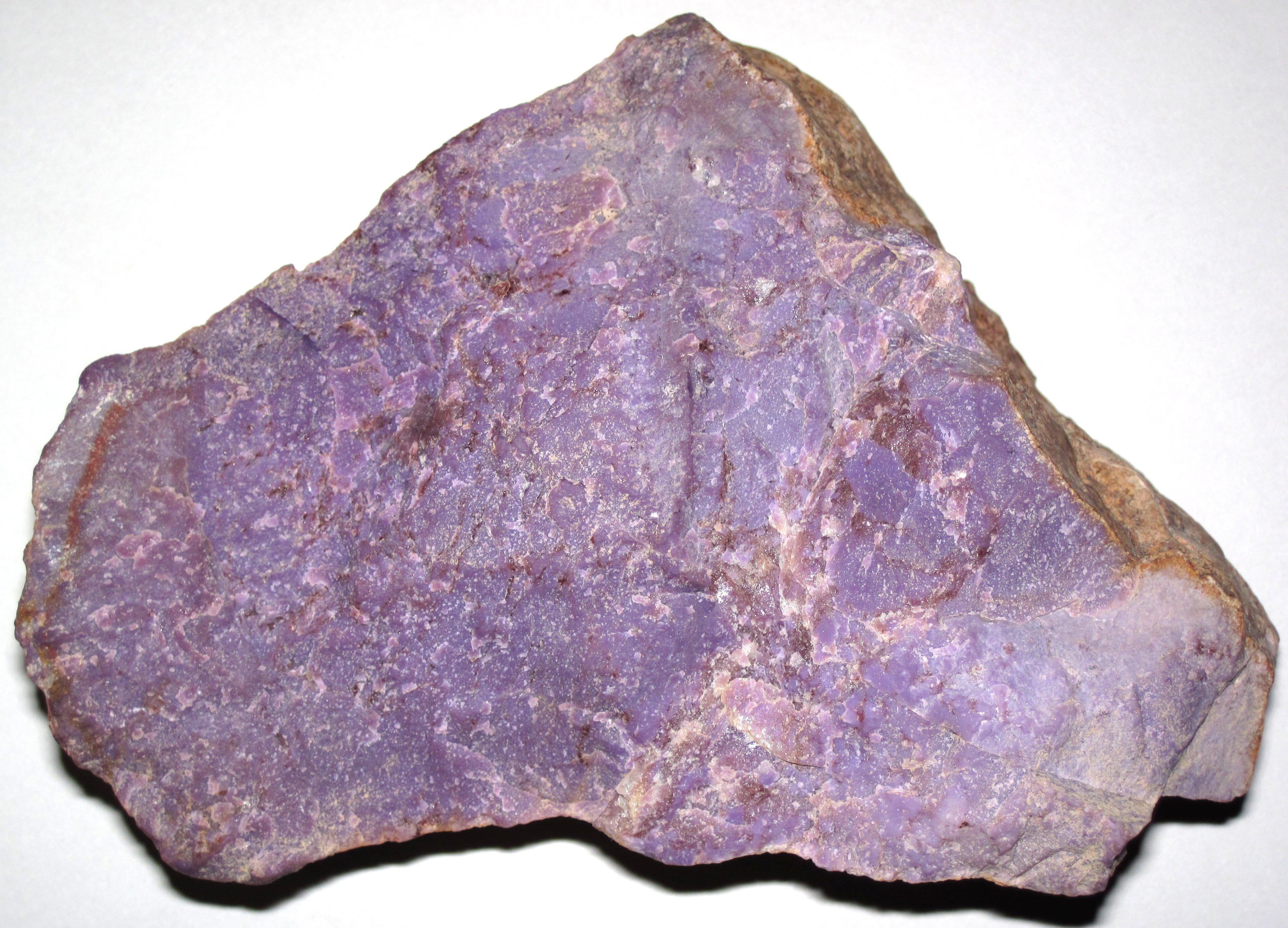
Lavender Jade
The softest purple of the jadeite family, lavender jade is the heirloom bangle stone of Chinese courts.
- Lavender jade is a purple variety of jadeite, colored by trace iron and manganese.
- Essentially all fine lavender jadeite comes from the Kachin State of northern Myanmar.
- Pre-Columbian Olmec and Maya cultures carved lavender jadeite from Guatemala's Motagua Valley.
- In the Chinese jadeite market, grade A (untreated), grade B (polymer-filled), and grade C (dyed) are distinct value tiers.
- Lavender jade pixiu pendants are traditional Chinese protective talismans, often worn on the wrist or as pendants.
- Jewelry buyers drawn to soft purple heirloom bangles and cabochons
- Collectors of Myanmar jadeite pursuing color variety
- Readers working with heart-crown chakra softness
- Shoppers looking for a Chinese-tradition gemstone at accessible prices
- Bridesmaid and anniversary gift buyers wanting a distinctive purple stone
- Bright saturated purple seekers (try amethyst or tanzanite)
- Buyers under $30 per carat (consider dyed quartz or lilac chalcedony)
- Readers who want faceted transparent gems (lavender jade is typically translucent cabochon material)
What Is Lavender Jade?
Lavender jade is the purple variety of jadeite, one of the two minerals known as jade (the other being nephrite). Jadeite is a sodium-aluminum silicate pyroxene (NaAlSi₂O₆) that crystallizes in tight interlocking microcrystalline aggregates. The lavender color comes from trace iron and manganese in the crystal structure.
Like all jadeite, lavender jade is softer than quartz but extraordinarily tough (fracture-resistant) because of its interlocking fiber structure, making it well suited to carving, bangles, and heirloom jewelry.
The IMA symbol for jadeite is Jd. Mohs hardness is 6.5 to 7, comparable to quartz and slightly higher than nephrite (6 to 6.5). Specific gravity is approximately 3.30 to 3.38, notably higher than nephrite (2.95 to 3.08), and refractive index is 1.652 to 1.688.
The stone takes a high polish and is typically cut as cabochons, bangles, beads, and carvings rather than faceted. Translucency varies from nearly opaque to almost transparent, with the most translucent lavender jade commanding significantly higher prices.
Most commercial lavender jade comes from the Kachin State of northern Myanmar (Burma), which produces essentially all fine jadeite in the world today. Secondary sources include the Motagua Valley of Guatemala, which produces lavender jadeite mined by pre-Columbian Olmec and Maya cultures, along with small quantities from Russia, Japan, and Kazakhstan.
Treatments are a major concern in the jadeite market: grade B jade (polymer-impregnated bleached material) and grade C jade (dyed) dominate lower price tiers, while grade A jade (untreated natural) commands premium prices.
How Lavender Jade Compares
| Property | Lavender Jade | Imperial Jade (green) | Amethyst |
|---|---|---|---|
| Hardness | 6.5 - 7 | 6.5 - 7 | 7 |
| Price / carat | $ Budget | $$ Mid-range | $ Budget |
| Rarity | Moderate | Rare (fine) | Common |
| Best For | Heart-crown work, bangles | Imperial jewelry | Meditation, daily wear |
Meaning and Symbolism
Jadeite has been central to Chinese cultural and spiritual life for over three thousand years, though fine Burmese jadeite only entered Chinese imperial use in the eighteenth century under the Qianlong Emperor. Before that, the imperial stone was nephrite, the other jade species.
Lavender jadeite specifically gained prominence in Qing dynasty court jewelry, where the soft purple was associated with refinement, nobility, and the higher spiritual aspirations of the educated class. The color's link to Buddhist crown-chakra symbolism also contributed to its place in temple ornaments and devotional beads.
In contemporary crystal tradition, lavender jade is traditionally associated with the heart and crown chakras together. Practitioners believe the stone supports gentle heart-centered spirituality, contemplative practice, and the soft integration of emotional warmth with higher awareness.
Many find lavender jade a useful companion during meditation, temple or church visits, and personal contemplation where gentle sincerity matters more than dramatic experience. The stone is often framed as a balancing bridge between the heart's warmth and the crown's openness.
Chinese jadeite tradition continues to shape lavender jade's meaning even in Western crystal practice. The pixiu (mythological Chinese lion-dragon) is traditionally carved in lavender and green jadeite as a protective talisman, and lavender jade bangles are worn in Chinese and Chinese-diaspora communities as lifelong protective pieces.
Many readers in contemporary crystal culture treat lavender jade with particular respect, both for its cultural depth and for its modern reputation as a gentle, elevating stone.
Historical Timeline
Healing Tradition
Emotional
Practitioners believe lavender jade is a stone of gentle emotional elevation and soft contemplative grace. In crystal healing tradition, it is said to support a wearer during spiritual deepening, gentle romantic growth, or any season where subtle elevation matters more than dramatic emotional shift.
Many find lavender jade a useful companion during wedding preparations, religious commitments, grief processes with spiritual dimensions, and quiet daily contemplation. Lavender jade is often paired with rose quartz for heart softening, with amethyst for deeper meditation, and with clear quartz when amplifying intentions tied to heart-centered spirituality.
Practitioners tend to describe lavender jade as quiet and refined, which matches its historical place in Qing dynasty court ornaments.
Spiritual
In crystal healing tradition, lavender jade is said to bridge the heart and crown chakras with a gentle elevating quality. Practitioners believe the stone supports readers whose spiritual path combines devotional practice with emotional warmth, and whose meditation favors gentle dissolving rather than dramatic breakthrough.
Chinese Buddhist tradition has long used lavender jadeite in temple ornaments, rosary beads, and bangles worn for spiritual protection; modern crystal practice extends this context.
Because lavender jade carries living cultural tradition, practitioners are often encouraged to respect Chinese symbolic protocols when working with carved pieces such as pixiu, Buddha, and lotus figures. Carrying lavender jade during temple or spiritual-center visits, meditation retreats, and significant ceremonies is a common practice.
Physical
Practitioners believe lavender jade supports what they describe as steady cardiovascular rhythm, gentle nervous-system calm, and hormonal balance, folklore that draws on general jade tradition and the softer lavender coloration. Crystal healing tradition associates lavender jade with the heart, chest, and upper head in gentle metaphorical ways rather than targeted clinical senses.
Many find wearing a lavender jade bangle or pendant comforting during long demanding work weeks, caregiving periods, or spiritual retreats. Lavender jade is not a substitute for medical care, and practitioners frame its role as supportive rather than curative.
Readers with specific health concerns are encouraged to rely on qualified medical guidance and treat crystal practice as one element of a broader routine.
Zodiac, Birthstone and Gifts
Lavender jade has no strict birthstone role but is often adopted alongside jadeite as an alternative March stone. In Western astrology, Pisceans drawn to dreamy, spiritual, soft-purple stones are a natural match, as are Librans with an affinity for refined, balanced, elegant gems.
Virgos who appreciate subtle elevation over dramatic color also often choose lavender jade. Modern Western astrology associates lavender jade with Venus for its heart themes and Neptune for its dreamy purple.
Chinese astrology does not tie jade to specific zodiac animals; the stone is worn across birth years as a general cultural gem. Vedic astrology (Jyotish) does not include lavender jade among classical gem prescriptions, but the stone is adopted by contemporary practitioners for crown-chakra and heart-chakra work.
Care and Cleansing
Lavender jade cleanses gently. Lukewarm soapy water and a soft brush handle daily maintenance well, and short rinses under running water are safe for loose pieces. Avoid ultrasonic cleaners for carved or detailed pieces, as the vibration can stress fine carved details.
Avoid steam cleaners for polymer-impregnated (grade B) jadeite, which can lose stability under heat. Saltwater should be avoided for adhesive-mounted pieces.
Moonlight cleansing is traditional in Chinese jade practice, often performed on the full moon. Short sunlight exposure is safe because the color is stable under normal conditions. Smoke cleansing with palo santo, sage, or sandalwood incense is common, as is sound cleansing with a singing bowl. Dry salt placement is acceptable.
Many practitioners also cleanse jade by placing it in fresh water that has been charged with intention for several hours, a method that draws on the watery-purity symbolism associated with jade in Chinese tradition.
- DO wash lavender jade in lukewarm soapy water and dry with a soft cloth.
- DO NOT expose lavender jade to strong household cleaners, bleach, or abrasives.
- DO store jade separately to avoid scratching from harder stones.
- DO NOT use steam or high-heat cleaners on polymer-impregnated (grade B) jade.
- DO remove jade jewelry only when necessary; bangles are traditionally worn continuously.
- DO ask whether jade is grade A (untreated), grade B (polymer-filled), or grade C (dyed).
- Note: grade A natural jade commands significant premiums; grade B and C are legitimate lower tiers that must be disclosed.
Real vs Fake
Genuine lavender jade is jadeite with natural purple coloration from trace iron and manganese. The jadeite market has sophisticated treatment categories: grade A is untreated natural jadeite, grade B is bleached and polymer-impregnated to improve translucency, and grade C is dyed.
All three are legitimate categories but must be clearly disclosed; undisclosed grade B or grade C jade sold as grade A is a significant ethical violation in the trade. Common substitutes include dyed quartzite, dyed chalcedony, dyed serpentine, and glass imitations.
Under 10x magnification, grade A lavender jade shows the characteristic microcrystalline interlocking fiber texture of natural jadeite with uniform natural color distribution. Grade B jade often shows a network of very fine fractures filled with polymer (visible as a slight waxy sheen under magnification).
Grade C dyed jade typically shows color concentration along fracture lines or between grain boundaries. Refractive index (1.652 to 1.688) and specific gravity (3.30 to 3.38) distinguish jadeite from most imitations.
A reputable gem lab report from GIA, Mindat, and USGS, HKJGL (Hong Kong Jade and Gemstone Laboratory), or similar distinguishes grade A, B, and C jadeite conclusively. For any lavender jade priced above $100 per carat or in heirloom pieces, a lab report is essential.
Practical at-home clues include the cool feel of genuine jade (it warms slowly in hand because of thermal conductivity), the weight (jadeite is denser than most imitations).
The response to hot water (grade B polymer-impregnated jade may show slight surface whitening under a dipped hot water drop, though this test is not conclusive).
Lavender Jade Jewelry & Gifts
Lavender jade pricing varies significantly with grade and quality. Grade C dyed lavender jadeite sells for $5 to $30 per carat in most sizes; grade B polymer-impregnated material runs $20 to $100 per carat.
Grade A natural lavender jadeite runs $50 to $500 per carat for mid-range material, and exceptional translucent grade A lavender jade above three carats with saturated color can exceed $1,000 per carat or more in specialty collector markets. Bangles, carved pendants, and mala beads carry additional premiums for craftsmanship.
Myanmar (Burma) supplies essentially all fine grade A lavender jadeite to the world. Guatemala produces lavender jadeite with a different color character, often more blue-leaning, mined from the Motagua Valley. Russia (Sayan Mountains) and Japan produce small quantities.
Treatment disclosure is critical: reputable dealers explicitly state grade A, grade B, or grade C on invoices, and for any purchase above $100 per carat a recent laboratory report from GIA, Mindat, and USGS or Hong Kong Jade Laboratory is considered essential.
Burmese political and sanctions complexities affect the global jadeite trade, and ethical sourcing is an increasing focus for modern buyers.
Where to Buy Lavender Jade
Affiliate disclosure: Some links below earn us a small commission at no extra cost to you. See our affiliate disclosure page.
Handmade, raw, and tumbled pieces from independent sellers worldwide.
Shop Lavender Jade on Etsy →Accessories, tools, and specimen sets with fast Prime delivery.
Shop Lavender Jade on Amazon →Certified loose gemstones graded and photographed for online buyers.
Shop Lavender Jade on GemSelect →Pairs Well With



Where Lavender Jade Is Found


