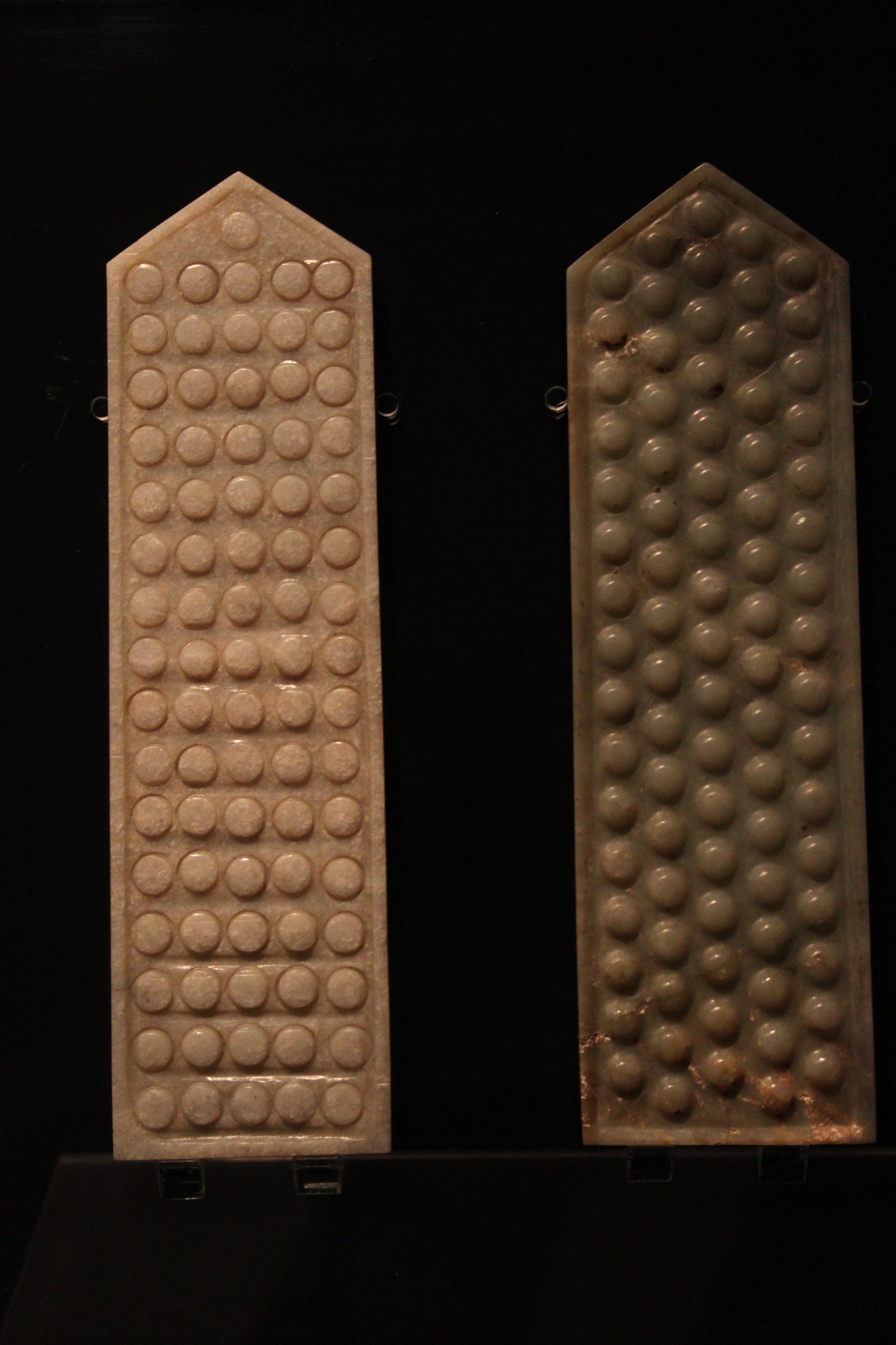
White Jade
Pure like moonlight through clouds - white jade for purity, clarity, and the peaceful wisdom of stillness
- The finest white Hetian jade - 'mutton fat' quality - can command prices of $10,000-$50,000 per kilogram or more in Chinese markets, comparable to premium quality colored gemstones.
- The term 'jade' comes from the Spanish 'piedra de ijada' (stone of the flank) - brought to Europe as a kidney-healing stone from the Americas (jadeite), then confused with Chinese nephrite, eventually creating the dual-mineral nomenclature we have today.
- Ancient Chinese jade burials included white jade bi (flat rings) placed on the chest and cong (rectangular tubes) at the feet - representing the round heaven and square earth respectively in early cosmological symbolism.
- New Zealand's Maori people consider pounamu (nephrite jade), including white and pale green varieties, to be living ancestral treasures - taonga - that gain spiritual significance through being passed down through generations.
- The hardness test is counterintuitive for jade: nephrite's relative softness (6-6.5) is offset by extraordinary toughness from its fibrous structure. Nephrite is actually harder to break or chip than many minerals with higher Mohs hardness.
- those drawn to purity, clarity, and simplicity
- practitioners working with crown and third eye chakra
- those with connections to Chinese or East Asian jade traditions
- collectors seeking the most culturally significant jade variety
- anyone working with mental clarity and wise decision-making
- first-time crystal buyers without jade knowledge
- those seeking affordable entry-level crystals
- buyers who need a stone with saturated color
What Is White Jade?
White Jade refers primarily to white nephrite - calcium magnesium silicate with minimal iron, giving it a creamy white to pure white color. The most prized form is "mutton fat jade" (yangzhi yu) from Hetian (Hotan) in China's Xinjiang Autonomous Region, named for its resemblance to solidified mutton fat - a creamy, oily white with a distinctive translucent glow that Chinese connoisseurs have valued above all other jade for thousands of years.
In China's jade hierarchy, white Hetian nephrite has historically been considered the highest expression of jade virtue - embodying purity, wisdom, clarity, and benevolence.
The Five Virtues of Jade from Confucius describe the qualities of jade as analogous to the virtues of a gentleman, with the translucent white of fine nephrite representing intellectual transparency and moral clarity.
There is also white jadeite - rare, generally less culturally significant than white nephrite but mineralogically a different stone. White jadeite from Myanmar can approach the visual quality of nephrite but has a different internal structure and cultural background. Most white jade in the market is nephrite.
White Jade vs. Similar White Stones
| Property | White Jade | White Quartz | Howlite |
|---|---|---|---|
| Hardness | 6-6.5 | 7 | 3.5 |
| Price/ct | $ Budget | $ Budget | $ Budget |
| Rarity | Common-rare | Very common | Common |
| Best For | Purity, wisdom, tradition | Clarity, amplification | Calm, stress relief |
Meaning and Symbolism
White jade is among the most symbolically rich stones in human history - in Chinese culture, it represents the ideal of pure virtue: purity of intention, clarity of thought, and the moral coherence of a person who acts from genuine principle rather than external pressure.
The white color has been associated with these qualities for over 7,000 years of continuous jade tradition.
In crystal healing practice, white jade is associated with crown and third eye chakra energy - the clarity of perception and the purity of intention that allow one to perceive and act from genuine wisdom.
Practitioners describe it as cutting through confusion and illusion to reveal what is actually true, what actually matters.
The stone is also strongly associated with peace - the inner quietude of someone fully aligned with their own values. Many practitioners use it for decision-making, particularly for situations requiring discernment of what is genuinely right rather than what is immediately comfortable or externally expected.
Historical Timeline
Healing Tradition
Emotional
Practitioners describe White Jade as bringing a quality of settled emotional peace - not forced calm but the natural quiet of a mind that has learned to distinguish what matters from what doesn't.
The stone is said to support freedom from obsessive thinking, the compulsive rehearsal of past events, and the exhausting habit of worrying about outcomes beyond one's control.
Many crystal healers use it for clients experiencing decision fatigue, chronic mental overwork, or difficulty accessing their genuine inner knowing beneath the noise of conflicting external demands.
Spiritual
In spiritual practice, white jade is associated with crown and third eye clarity - the removal of mental veils that obscure clear perception of reality and genuine values. Practitioners believe it supports alignment with one's authentic spiritual path by dissolving the cultural conditioning and ego-preferences that can masquerade as genuine knowing.
The stone is associated in Chinese tradition with the virtuous qualities of the sage - not supernatural powers but the extraordinary clarity, patience, and integrity of a deeply cultivated human character.
Physical
Some crystal wellness practitioners associate White Jade with kidney function, urinary health, and the immune system - following both Chinese jade tradition (jade was historically believed to support kidneys) and modern crystal healing practice. It is associated with longevity and systemic health in some frameworks. No scientific evidence supports these associations.
Always consult a qualified healthcare provider for health concerns.
Zodiac, Birthstone and Gifts
Virgo's analytical precision, appreciation for genuine quality, and dedication to virtuous living resonates deeply with white jade's purity and discernment energies. Libra's need for clarity, balance, and true justice aligns with white jade's qualities of honest perception and the settled peace that comes from genuine alignment with one's values.
Care and Cleansing
White jade is one of the easiest crystals to care for - brief rinsing under cool running water is effective for both physical and energetic cleansing. Dry thoroughly. Its stability means this can be done frequently without concern.
Sunlight is safe for white jade unlike color-sensitive stones - brief morning sun exposure is said to recharge its clarity and purifying energy. White jade has historically been associated with daylight and mental illumination, making sun cleansing particularly resonant.
Salt dry cleansing (placing on a bed of dry salt without submerging) is safe for genuine jade and effective for energetic clearing after intensive use. Remove after 24 hours and brush clean.
- DO wear confidently as daily jewelry - jade's toughness makes it suitable for sustained wear.
- DO NOT use ultrasonic cleaners on dyed or polymer-treated jade as treatments may be affected.
- NOTE that a large percentage of 'white jade' in the market is dyed howlite, calcite, or white quartzite - verify with reputable dealers.
- DO NOT use chemical cleaners that could affect polish or treatment.
- DO store away from sharp-edged minerals that could abrade the surface despite jade's toughness.
Real vs Fake
Genuine white nephrite jade has a characteristic waxy luster that is quite different from glassy quartz or chalky howlite. The stone feels significantly heavier than its size suggests and stays cool to the touch longer than most substitutes.
Howlite is the most common white jade substitute - it has a chalky, flat-white color (often with natural gray veining), is much softer (3.5 vs. 6-6.5 for nephrite), and much lighter. Howlite can be scratched easily with a key; jade cannot.
White quartzite is another common substitute - harder than jade (7), but coarser in texture under magnification, lacking jade's fibrous interlocking structure. Quartzite has a more granular texture visible under a 10x loupe.
Fine Hetian white jade has a specific translucency quality - not transparent, but with an internal glow when held to light that differs from the flat opacity of calcite or howlite fakes. Learning to recognize this 'mutton fat' quality takes exposure to genuine specimens.
For any white jade purchase above $200, insist on a gemological test for nephrite vs. jadeite confirmation and treatment disclosure. Reputable dealers accept this standard; those who resist or claim it is unnecessary raise concerns.
White Jade Jewelry & Gifts
White jade pricing spans enormous ranges: verified natural Hetian nephrite starts around $50 for small pieces and rises to thousands for fine large pieces. Much cheaper 'white jade' is dyed howlite or quartzite.
For metaphysical use, verified natural white nephrite from Canada (BC jade) or accessible Chinese sources represents excellent value in the $20-$100 range. The cultural lineage and energy of genuine nephrite is fully available at these price points.
Fine Hetian white nephrite for collectors or serious jade appreciation represents a significant investment. The premium reflects genuine geological rarity, cultural significance, and the accumulated market value of thousands of years of jade tradition.
For carved pieces and jewelry, established Chinese jade dealers or reputable antique dealers with jade expertise are the most reliable sources. New jade carvings should come with treatment disclosure (natural color vs. treated).
The single most important buying advice for jade of any color: buy from dealers who provide treatment disclosure and are willing to provide a gemological report. The jade market has high rates of misrepresentation; reputable dealers distinguish themselves by transparency.
Where to Buy White Jade
Affiliate disclosure: Some links below earn us a small commission at no extra cost to you. See our affiliate disclosure page.
Handmade, raw, and tumbled pieces from independent sellers worldwide.
Shop White Jade on Etsy →Accessories, tools, and specimen sets with fast Prime delivery.
Shop White Jade on Amazon →Certified loose gemstones graded and photographed for online buyers.
Shop White Jade on GemSelect →Pairs Well With


Where White Jade Is Found


