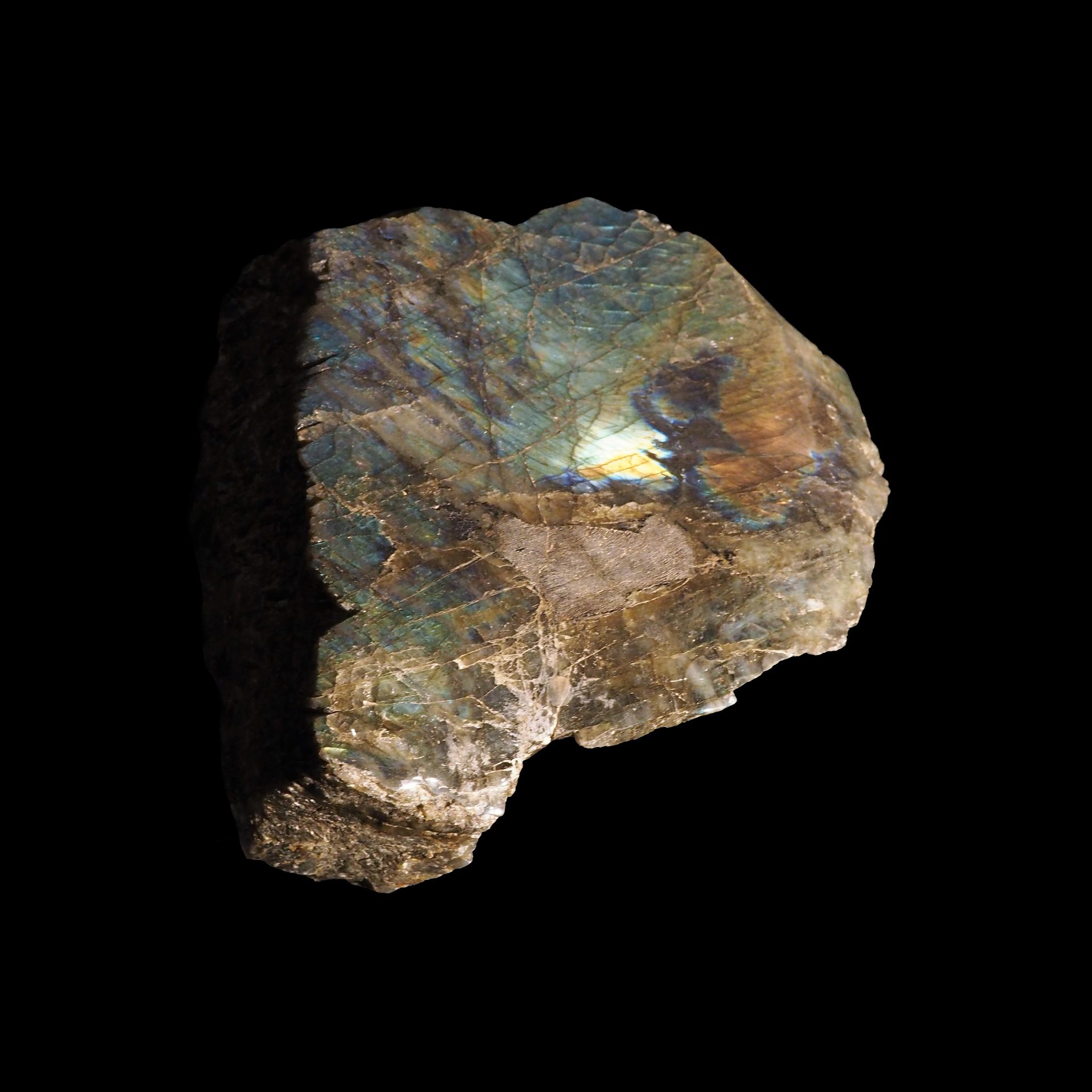
Madagascar Labradorite
Beneath a gray exterior, Madagascar labradorite conceals a full-spectrum aurora - electric blues, golden yellows.
- The optical effect in labradorite is called labrescence or adularescence and occurs because light reflects off alternating thin layers of different feldspar compositions inside the stone - creating interference patterns just like a soap bubble.
- Finnish spectrolite shows the most complete color spectrum of any labradorite - full coverage from red through violet is possible in exceptional specimens and commands prices rivaling semi-precious gemstones.
- Madagascar also produces golden labradorite (andesine-labradorite or bytownite) - transparent yellow-orange to red feldspar that can be faceted - a completely different look from the classic gray stone.
- The Inuit creation story holds that the Northern Lights were imprisoned in the rocks of Labrador by a powerful ancestor; a warrior broke the stone with his spear, releasing most of the lights into the sky, but some remain trapped inside labradorite forever.
- Labradorite is used in the countertop and building industry - slabs of labradorite (marketed as blue pearl or labrador blue) appear in luxury kitchens and architectural features, making it both a gem and a construction material.
- Crystal enthusiasts drawn to optical wonder stones
- Spiritual practitioners seeking intuition and protection energy
- Jewelry designers who love dramatic, shifting color effects
- Collectors of African gemstone material
- Anyone who wants a unique, conversation-starting stone
- Daily-wear ring buyers (6-6.5 Mohs - prone to scratching with continuous use)
- Those expecting faceted brilliance (labradorite is almost always cabochon-cut)
- Buyers wanting saturated body color (labradorite body tone is gray to dark gray)
What Is Madagascar Labradorite?
Madagascar labradorite is calcium-sodium feldspar (the calcic plagioclase series) exhibiting labrescence - a spectacular iridescence caused by light interference between thin layers of alternating feldspar composition within the stone. The optical phenomenon is named from the Labrador peninsula of Canada where the mineral was first described.
Madagascar produces some of the most vivid labradorite available, with specimens showing electric blue, green, gold, orange, and rare red-violet labrescence across large areas. The island's geology creates both classic gray-bodied labradorite and high-quality spectrolite (a trade name for Finnish material but applied loosely to full-spectrum flashy labradorite globally).
The stone's exterior appears dull gray to dark gray until a light source catches the internal layers - then the full aurora is revealed. This hidden, revealed beauty has made labradorite one of the most metaphysically beloved stones of the modern crystal healing movement.
How Madagascar Labradorite Compares
| Property | Madagascar Labradorite | Finnish Spectrolite | Rainbow Moonstone |
|---|---|---|---|
| Flash coverage | Full to partial flash | Full-spectrum flash | Blue-white sheen |
| Price/ct | $ Budget | $ Budget | $ Budget |
| Durability | 6-6.5 Mohs | 6-6.5 Mohs | 6-6.5 Mohs |
| Best For | Affordable brilliance | Collector investment | Feminine, lunar look |
Meaning and Symbolism
Labradorite is called the stone of magic and transformation in most crystal healing traditions. Practitioners believe its ability to reveal hidden fire mirrors its energetic capacity to surface hidden talents, gifts, and potentials that the wearer may not yet recognize in themselves.
The Inuit peoples of Labrador, Canada believed labradorite's aurora-like flash was the Northern Lights captured inside the stone - a cosmic gift that connected the visible world to invisible realms.
Practitioners in modern crystal healing traditions honor this origin story and associate labradorite with the veil between worlds and the access to higher guidance.
Labradorite is said to be the premier protective stone for energy workers, sensitives, and empaths - creating a barrier against absorbing other people's emotions and energy. Its third-eye activation is described as one of the clearest, most precise in the gemstone world.
Historical Timeline
Healing Tradition
Emotional
Labradorite is said to be a deeply transformative stone, with practitioners believing it dissolves illusions, reveals truth, and supports the courage required to face what has been hidden from conscious awareness.
It is traditionally associated with the exploration of one's own depths - not in a dark or frightening way, but with the wonder of discovering hidden colors beneath a gray surface.
Crystal healers often work with labradorite during periods of major personal change, believing it illuminates the path forward when external circumstances are unclear. Empaths and sensitive people particularly value labradorite for its traditional reputation as an emotional and energetic shield.
Spiritual
Practitioners believe Madagascar labradorite is among the strongest stones for third-eye activation, said to enhance psychic perception, strengthen intuitive faculties, and open access to higher guidance and visionary states. It is traditionally described as the stone of the shaman and the seer - those who work between visible and invisible realms.
Its ability to reveal hidden fire resonates deeply with spiritual traditions that honor the hidden dimensions of reality. Many crystal workers consider labradorite essential for anyone developing intuitive or healing abilities, providing both activation and protection simultaneously.
Physical
Crystal healing traditions associate labradorite with brain health, eye health, and regulation of the nervous system - none of which have scientific support and the stone should never replace professional medical care.
Practitioners sometimes work with labradorite for what they describe as relief from anxiety and overactive mental states, placing it on the forehead during relaxation. It is also traditionally associated with respiratory health in some crystal healing lineages.
As with all crystal practices, individual experiences vary and these are wellness rituals rather than medical treatments.
Zodiac, Birthstone and Gifts
Scorpio, whose transformative depth and ability to perceive what lies beneath the surface is labradorite's energetic mirror, is said by practitioners to find its most potent stone ally here. Both Scorpio and labradorite reveal extraordinary depth beneath unremarkable exteriors.
Sagittarius, the seeker of higher truth, resonates with labradorite's traditional role as a bridge between ordinary and extraordinary perception - the stone that opens what Sagittarius is always searching for.
Leo, whose dramatic nature appreciates a stone that commands attention through revelation rather than constant display, is said by practitioners to find labradorite particularly satisfying - a stone that reflects Leo's own complex, layered brilliance.
Care and Cleansing
Labradorite is easily cleansed with brief running water - hold it under cool, gently flowing water for 30-60 seconds while setting clear intention. Dry immediately and thoroughly. Skip salt water to protect the surface.
Moonlight is the most recommended recharging method for labradorite given its auroral origin story. Full moon overnight on a windowsill is described by practitioners as a complete energetic reset for the stone.
Sound cleansing works beautifully for labradorite - a singing bowl, tuning fork, or high-quality bell held near the stone is safe, effective, and particularly satisfying given labradorite's connection to invisible realms.
- DO NOT use abrasive cleaning methods - labradorite at 6-6.5 Mohs is relatively soft and scratches more easily than quartz, topaz, or corundum.
- DO NOT expose to salt water or harsh chemicals - feldspar minerals are somewhat chemically sensitive.
- DO store separately from harder gems - diamonds, sapphires, and rubies will scratch labradorite in contact.
- NOTE labradorite has perfect cleavage in two directions, making it vulnerable to splitting if struck sharply on the right axis.
- DO handle labradorite pendants and rings with care - the stone is beautiful but requires more caution than tougher gems.
Real vs Fake
Genuine labradorite's labrescence comes from within the stone and shifts angle with the light source and viewing direction. This is virtually impossible to fake convincingly - surface coatings and foil inclusions look very different under examination.
Rainbow moonstone is the most common confusion point - it is actually white labradorite (peristerite) showing blue adularescence rather than multi-color labrescence. Both are genuine feldspar but priced and marketed differently.
Synthetic color-coated glass exists with surface iridescence that superficially resembles labrescence. The difference: genuine labradorite's color comes from depth inside the stone; coated glass color comes from the surface and appears flat and two-dimensional.
Refractive index testing (1.559-1.570) and specific gravity (2.68-2.72) confirm labradorite identity. A refractometer reading significantly outside this range suggests a simulant.
For very bright, full-spectrum labradorite at low prices, ask about origin. True spectrolite (Finland) is significantly more expensive than Madagascar material. Misrepresented origins are a more common issue than outright fraud in the labradorite market.
Madagascar Labradorite Jewelry & Gifts
Madagascar labradorite is accessible and affordable: faceted or cabochon pieces for jewelry retail from $5-80 per carat depending on labrescence coverage and color. Large-flash pieces with full blue-to-violet spectrum command premiums.
Evaluate labrescence coverage first: the best specimens show bright, vivid flash across the entire visible face of the stone. Partial or dim flash significantly reduces value. The strongest flash colors (electric blue, gold) are most prized.
Color of flash matters: blue is the most common and still desirable. Gold is rarer and beautiful. Full-spectrum (multiple colors including orange or violet) is rarest and most valuable. Red-violet flash in labradorite is exceptional and collector-grade.
Body tone affects the flash display: darker gray-to-black body tones (spectrolite-style) show the most vivid contrast. Transparent or pale gray body tones reduce contrast, though transparent golden labradorite (faceted) has its own appeal.
For décor and meditation purposes, large polished slabs or freeforms showing excellent labrescence coverage are available from $30-500 depending on size and quality - outstanding value for their visual impact.
Where to Buy Madagascar Labradorite
Affiliate disclosure: Some links below earn us a small commission at no extra cost to you. See our affiliate disclosure page.
Handmade, raw, and tumbled pieces from independent sellers worldwide.
Shop Madagascar Labradorite on Etsy →Accessories, tools, and specimen sets with fast Prime delivery.
Shop Madagascar Labradorite on Amazon →Certified loose gemstones graded and photographed for online buyers.
Shop Madagascar Labradorite on GemSelect →Pairs Well With


Where Madagascar Labradorite Is Found

