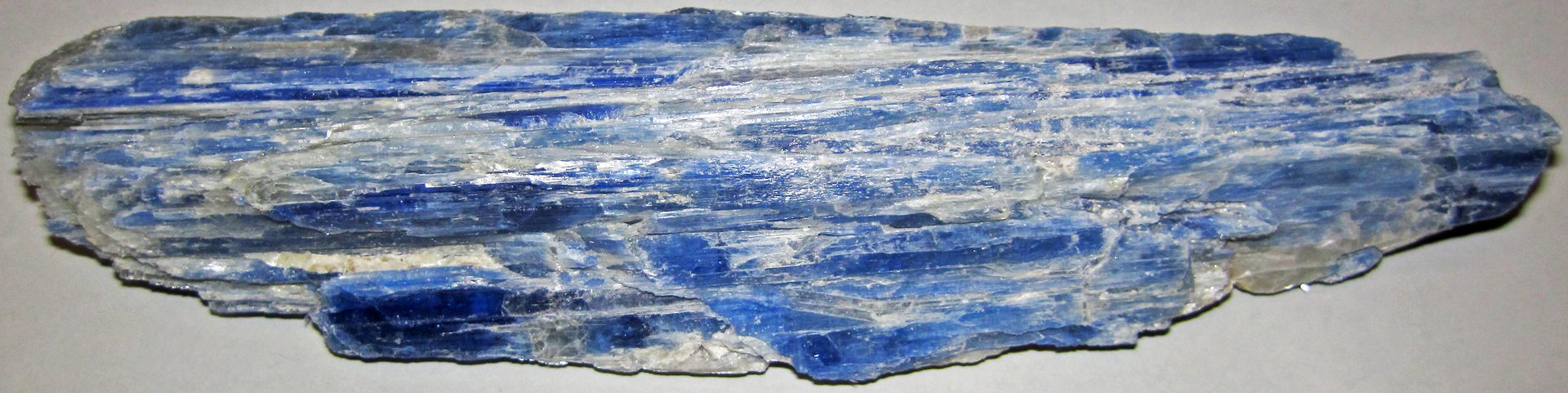
Orange Kyanite
Orange kyanite from Tanzania's metamorphic deposits is one of the rarest kyanite varieties - a vivid apricot-orange blade mineral that.
- Orange kyanite is so rare that Tanzania is now the only commercially significant source in the world.
- The manganese that colors orange kyanite also colors rhodochrosite pink and some garnets orange - manganese is a prolific coloring agent in minerals.
- Orange kyanite shares kyanite's unique direction-dependent hardness: soft along the blade axis, hard across it.
- Some orange kyanite specimens show color zoning from vivid orange into pale yellow in the same blade, mapping the gradient of manganese concentration.
- The kyanite mineral family now has documented examples in blue, green, orange, black, gray, and white - more color diversity than most mineral species.
- Collectors seeking the rarest kyanite color variety with documented Tanzanian origin
- Sacral and solar plexus chakra practitioners wanting an unusual orange crystal tool
- Artists and creative practitioners working with passion, inspiration, and creative flow
- Those drawn to orange healing stones but wanting something rarer than carnelian or sunstone
- Crystal completionists building a full kyanite color suite
- Budget shoppers - quality orange kyanite is significantly pricier than blue or black kyanite
- Those wanting a polished tumbled stone - orange kyanite is rarely tumbled and usually sold as raw blades
- Jewelry wearers - the blade habit and directional hardness make it impractical for most settings
What Is Orange Kyanite?
Orange kyanite is an extremely rare color variety of kyanite (Al₂SiO₅) discovered in metamorphic deposits in Tanzania. The orange to apricot color is believed to result from manganese or iron impurities within the aluminum silicate crystal structure. It rates 4.5 - 7 (direction-dependent) on the Mohs hardness scale.
It shares all the mineralogical properties of its blue and green relatives: triclinic crystal system, direction-dependent hardness (4.5 along the blade axis, 7 perpendicular), and the characteristic elongated tabular blade habit.
Orange kyanite is so rare that Tanzania is now the only documented significant source. The material appears in relatively small blade crystals, typically 2-6cm in length, often with slightly translucent zones where the mineral is thin enough for light to pass through.
Some specimens show color zoning from orange into pale yellow or near-colorless along the blade.
Unlike the abundant blue kyanite of North Carolina or the commercial black kyanite from Brazil, orange kyanite has very limited production and is considered a specialty collector mineral.
It entered the crystal healing market in the early 2000s after Tanzanian material became available through specialist mineral dealers, and quickly attracted attention for its distinctive color among the kyanite family.
How Orange Kyanite Compares
| Property | Orange Kyanite | Carnelian | Orange Calcite |
|---|---|---|---|
| Rarity | Very rare | Common | Common |
| Hardness | 4.5 - 7 | 6.5 - 7 | 3 |
| Price | $ Budget | $ Budget | $ Budget |
| Best For | Collectors, sacral chakra | Grounding, vitality | Solar plexus, creativity |
Meaning and Symbolism
Orange kyanite brings together the kyanite mineral family's signature qualities - self-clearing, alignment-promoting, and direction-bridging - with the creative, passionate energy that orange has represented across cultures for millennia.
In Vedic and tantric traditions, orange is the color of the sacral chakra (Svadhisthana), governing creative expression, sensual pleasure, and the life force that drives artistic and reproductive impulses.
The rarity of orange kyanite amplifies its meaning for many practitioners: it is a stone you find when you are genuinely seeking something distinctive, not a default choice.
This quality of deliberate seeking is said to align with the stone's energetic purpose - activating intentional creativity rather than scattered inspiration, and sustained passion rather than impulsive starts.
Crystal healing tradition places orange kyanite at the intersection of creative fire and disciplined alignment - a combination that practitioners describe as particularly useful for artists, musicians, writers, and anyone whose work requires both inspiration and sustained focus.
The blade form is visually evocative: directed, purposeful energy with a clear point and direction.
Historical Timeline
Healing Tradition
Emotional
Practitioners associate orange kyanite with the emotional courage required for creative vulnerability - the willingness to make something new and expose it to the world. Many find it helpful when creative blocks arise from fear of judgment or comparison.
Crystal healing tradition links sacral chakra stones to emotional fluidity, sensual awareness, and the ability to feel pleasure in one's own creative work. Orange kyanite is said to reconnect practitioners with intrinsic creative motivation rather than external validation-seeking.
Spiritual
In crystal healing tradition, orange kyanite is considered a rare bridge between the upper chakra clarity that kyanite typically offers and the lower chakra vitality of orange sacral energy. Practitioners describe it as particularly useful for integrating spiritual insights into creative expression - the ability to make something tangible from inner knowing.
Some use it in creative ritual settings, placed at the sacral area during yoga or bodywork to encourage flow in movement and expression.
Physical
Crystal healing tradition links the sacral chakra and orange stones to the reproductive organs, lower back, and hips. Practitioners believe orange kyanite may support practitioners working with physical creativity, embodiment practices, and somatic awareness. These are metaphysical associations, not medical claims. Always consult qualified healthcare providers for physical health concerns.
Zodiac, Birthstone and Gifts
Sagittarius - the adventurous explorer driven by passion and philosophical seeking - resonates with orange kyanite's rare and fiery energy. The stone's Tanzanian origin aligns with Sagittarius's love of distant places and cultural discovery.
Leo's creative confidence and solar radiance maps directly to the orange color and sacral fire of the stone - orange kyanite is said to amplify Leo's natural expressiveness and courage to perform.
Care and Cleansing
Orange kyanite follows the same cleansing guidelines as other kyanite varieties. It is considered by many practitioners to be largely self-clearing, but heavy use in healing work warrants periodic energetic refresh.
Smoke cleansing with cedar, cinnamon, or orange peel smoke (all warm, fire-associated materials) is particularly appropriate given the stone's sacral and solar associations.
Avoid salt water and prolonged water immersion - the blade structure can delaminate. Sunlight charging for brief periods (30-60 minutes) supports the stone's fire-element associations, but be cautious with extended exposure as manganese-colored minerals can fade over time with prolonged UV exposure. Moonlight or candlelight charging are gentle alternatives.
- DO NOT soak in water or salt water - blade structure is vulnerable to prolonged moisture.
- DO limit direct sunlight charging to 30-60 minutes - extended UV exposure may fade the orange color over time.
- DO handle with care - blade tips are physically fragile and break easily.
- DO store in padded pouches or boxes - loose storage causes blade breakage.
- NOTE: Orange kyanite sheds fine mineral fibers from blade surfaces - wash hands after extended handling.
Real vs Fake
Orange kyanite's rarity makes it a target for substitution with dyed or heat-treated stones. The primary fakes are heat-treated blue kyanite (sometimes produces a pale orange-yellow) and dyed howlite or calcite in blade-like pieces. Genuine orange kyanite shows organic color zoning within blades and the characteristic flat, tabular blade habit of kyanite.
Test direction-dependent hardness: a steel file scratches along the blade axis more easily than across it. This property is unique to kyanite and cannot be faked. Dyed substitutes show color concentrated in surface cracks and fissures under magnification, while natural orange kyanite has color distributed throughout the crystal structure.
Always ask for locality documentation for expensive pieces. Verified Tanzanian origin is the only known commercial source. A piece sold as orange kyanite without origin information at a very low price deserves careful examination.
Orange Kyanite Jewelry & Gifts
Orange kyanite is priced significantly higher than blue or black kyanite due to its rarity. Small blade pieces 2-4cm sell for $20-40; larger vivid specimens 5-8cm can reach $60-100 or more. Museum-quality large blades with exceptional color are rare and priced as collector specimens.
Buy from specialty mineral dealers who can document Tanzanian origin. Orange kyanite from vetted mineral show dealers and specialist online retailers is more reliable than pieces from general crystal shops where provenance is rarely documented.
All orange kyanite should be sold untreated. If a seller cannot confirm the stone is natural and untreated, or if the price seems unusually low for the color intensity, request documentation or seek another source.
Where to Buy Orange Kyanite
Affiliate disclosure: Some links below earn us a small commission at no extra cost to you. See our affiliate disclosure page.
Handmade, raw, and tumbled pieces from independent sellers worldwide.
Shop Orange Kyanite on Etsy →Accessories, tools, and specimen sets with fast Prime delivery.
Shop Orange Kyanite on Amazon →Certified loose gemstones graded and photographed for online buyers.
Shop Orange Kyanite on GemSelect →Pairs Well With


Where Orange Kyanite Is Found


