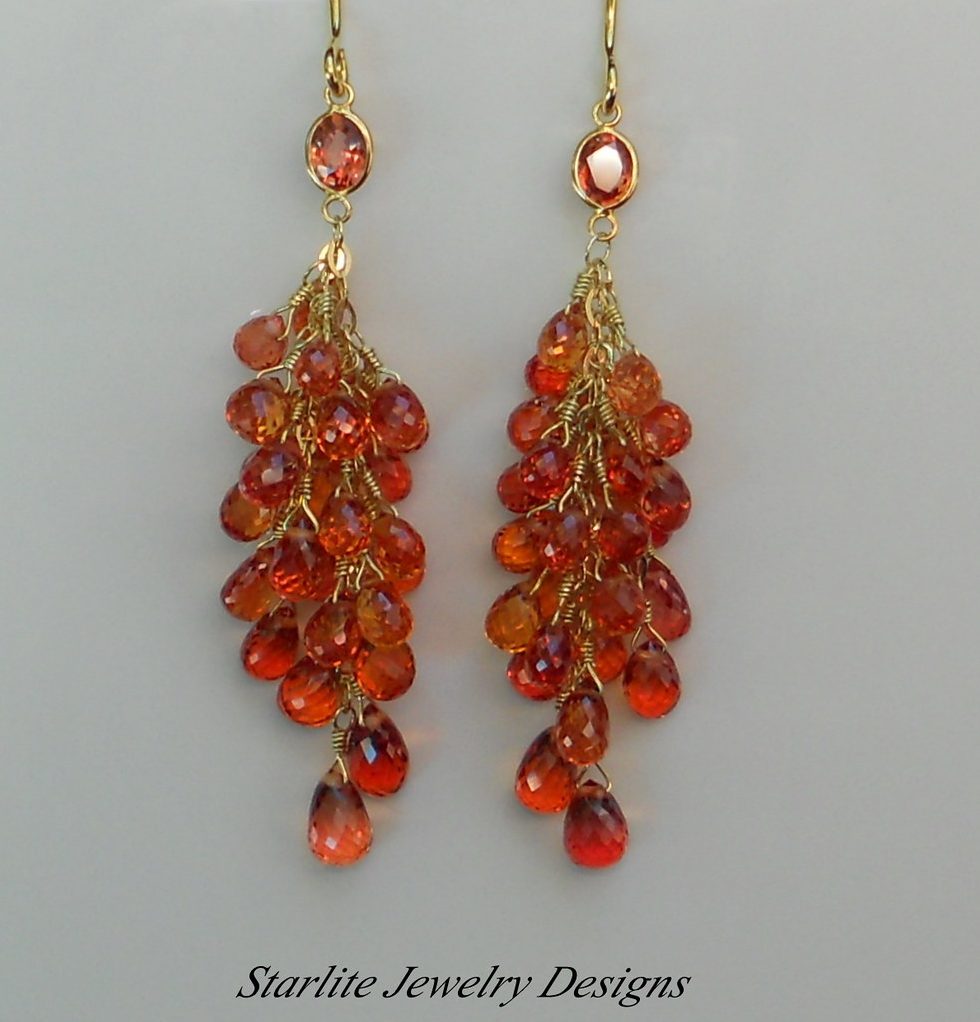
Orange Sapphire
Sapphire's warm-hued cousin glows from amber to mandarin, said to kindle creativity and emotional courage in equal measure.
- The word 'sapphire' comes from the Greek 'sappheiros' - but ancient Greeks likely used this term for lapis lazuli, not corundum; the gemological definition narrowed over centuries.
- Orange sapphire and padparadscha are both corundum - the difference is proportion of pink versus orange, with padparadscha requiring a specific pinkish-orange balance.
- The Umba Valley in Tanzania produces bi-color sapphires with orange and green zones in the same crystal, making them dramatic collectors' pieces.
- All sapphires except red (which is ruby) are the same mineral - corundum - with different trace element combinations producing every color from pink to green to orange to yellow.
- Some orange sapphires from Sri Lanka are described as 'saffron sapphires' - the golden-orange hue evoking the spice that has been precious in Asia for millennia.
- Creative professionals seeking a stone said to kindle artistic inspiration and confidence
- Sacral and solar plexus chakra workers wanting a durable, high-vibration orange gemstone
- Leo and Sagittarius individuals drawn to fiery, expansive energy
- Fine jewelry buyers wanting a vivid, durable orange gem for rings or pendants
- Collectors exploring the full spectrum of fancy sapphire colors
- Buyers seeking padparadscha-grade pink-orange - pure orange sapphire is different and generally more affordable
- Budget shoppers - vivid orange sapphires start at $150 per carat; try carnelian for a budget option
- Those seeking gentle, calming energy - orange sapphire is activating and energizing, not soothing
What Is Orange Sapphire?
Orange sapphire is corundum (aluminum oxide) in its orange hue, produced by a combination of iron and chromium trace elements that shift the color away from blue and toward the warm spectrum. It rates 9 on the Mohs hardness scale.
At Mohs 9, it shares the exceptional durability of all sapphire varieties, ranking among the hardest and most resilient natural gemstones available for fine jewelry.
Orange sapphires range from pale peach-orange through vivid mandarin to deep reddish-orange. The most prized pure orange material comes from Sri Lanka and Tanzania. Where pink-orange hues predominate, the stone approaches the famous padparadscha category - widely considered the rarest and most valuable of all sapphire varieties.
Pure vivid orange without significant pink or brown is itself rare and commands strong collector interest.
Sri Lanka has historically produced fine orange sapphires, and Tanzania's Umba Valley is a significant contemporary source. Madagascar and Australia also yield orange material, though Australian stones tend toward darker, more brownish tones.
Heat treatment is standard in the trade to enhance or clarify orange tones; unheated examples with lab certificates carry a substantial premium.
How Orange Sapphire Compares
| Property | Orange Sapphire | Padparadscha | Fire Opal |
|---|---|---|---|
| Hardness | 9 | 9 | 5.5 - 6.5 |
| Price / carat | $$ Mid-range | $$$ Premium | $ Budget |
| Color | Orange, amber | Pinkish-orange lotus | Orange, fiery |
| Best For | Daily wear jewelry | Investment, prestige | Occasional wear |
Meaning and Symbolism
Orange sapphires carry the warmth and vitality of the fire element into the sapphire family's tradition of wisdom and fidelity. In Vedic astrology, yellow-orange sapphires are associated with Jupiter - the planet of expansion, wisdom, and abundance - and are traditionally worn to attract fortune, clarify purpose, and open pathways for growth.
In Southeast Asian gem traditions, orange and golden sapphires have been prized alongside blue as symbols of divine blessing and royal favor. Buddhist monks in Sri Lanka and Thailand have long incorporated orange sapphires into sacred objects and meditation accessories, associating the color with the robes of ordained monastics and the warmth of spiritual dedication.
Modern crystal healing tradition associates orange sapphire with the sacral and solar plexus chakras - the centers of creativity, pleasure, confidence, and personal power. Practitioners believe it kindles creative courage and helps the bearer break through inhibition to express authentic gifts.
Many find it useful during creative projects, public speaking preparation, or any endeavor requiring confident self-expression.
Historical Timeline
Healing Tradition
Emotional
Practitioners believe orange sapphire works with the sacral chakra to dissolve creative blocks and restore joy in self-expression. Crystal healing tradition associates it with the courage to feel deeply and express authentically - a combination that many find particularly useful when emotional numbness, creative drought, or inhibition has set in.
Many find that holding orange sapphire during journaling or creative work brings a warm, encouraging energy that lowers the inner critic's volume and raises creative confidence.
It is said to encourage playfulness and a willingness to take creative risks, making it valued by artists, performers, and anyone who relies on fresh ideas in their work. Its activating energy is generally experienced as uplifting rather than overwhelming.
Spiritual
Crystal healing tradition associates orange sapphire with the fire of spiritual devotion and the courage to follow one's authentic path. Practitioners believe it awakens the soul's desire for meaningful experience, encouraging the bearer to pursue spiritual growth with the same warmth and enthusiasm that fire brings to everything it touches.
In Vedic tradition, Jupiter-ruled stones like orange sapphire are said to expand one's capacity for wisdom, generosity, and right action - aligning the bearer with the principle of dharma or right living. Many find orange sapphire useful in practices centered on gratitude, abundance, and aligning with one's highest purpose.
Its energy is described as expansive, warm, and spiritually encouraging.
Physical
In crystal healing tradition, orange sapphire is associated with the lower chakras and their corresponding physical zones: the reproductive system, lower digestive organs, and the adrenal glands that regulate energy and stress response.
Some practitioners use it during energy work targeting vitality, hormonal balance in an energetic sense, or recovery of zest after depletion. It is said to support the body's natural creative and generative energy flow, though no clinical evidence supports any specific health claim.
Orange sapphire should always be used alongside qualified medical care, not as a replacement for professional diagnosis or treatment.
Zodiac, Birthstone and Gifts
Leo, ruled by the Sun and associated with radiant self-expression, creative courage, and generous warmth, finds a natural ally in orange sapphire's fiery vitality. Practitioners believe the stone amplifies Leo's natural charisma and supports confident creative leadership, while its sapphire wisdom tempers pure fire with discernment and long-range vision.
Sagittarius, the archer of the zodiac, benefits from orange sapphire's Jupiterian correspondence and its expansive, adventurous energy. Crystal healers traditionally recommend orange sapphire for Sagittarians seeking to align their philosophical explorations with creative action in the world, turning bold visions into lived reality rather than endless aspiration.
Care and Cleansing
Orange sapphire's exceptional durability makes cleansing straightforward: warm soapy water with a soft brush, rinse thoroughly and pat dry. Ultrasonic cleaners are safe for unf racture-filled stones and are the professional jeweler's preferred method. Avoid ultrasonic cleaning on any sapphire that has been fracture-filled.
Energetically, orange sapphire responds well to brief sunlight charging - appropriate given its solar and fire associations - and to clear quartz clusters placed nearby overnight. Running water from a tap for 30 to 60 seconds is a simple energetic cleansing that also physically cleans the stone.
Smudging with sage or incense is a fire-element alternative that resonates symbolically with the stone's nature.
- DO clean regularly with warm soapy water and a soft brush - sapphire is highly resistant.
- DO NOT use ultrasonic cleaners on fracture-filled orange sapphires - the filling can be displaced.
- NOTE: Request treatment disclosure (heat, beryllium diffusion) before purchasing above budget tier.
- DO store away from pearls, opals, and soft stones that sapphire's Mohs 9 can scratch.
- DO check prong settings annually - despite sapphire's hardness, settings can loosen over time.
- NOTE: Very dark orangey-brown material from Australia or Thailand may appear dull in low light - view stones in natural daylight before purchase.
Real vs Fake
Orange sapphire is sometimes substituted by orange spinel, orange topaz, hessonite garnet, or orange glass. Each can be distinguished by refractive index: sapphire measures 1.762 to 1.770 with a refractometer, while spinel measures 1.72, topaz 1.61 to 1.64, and glass varies widely. A simple refractometer test quickly resolves ambiguity.
Lab-created orange sapphire is commercially available and visually identical to natural material. Natural sapphires show characteristic inclusions - mineral crystals, silk (rutile needles), and color zoning - under 10x magnification. Synthetic stones show curved growth striae and gas bubbles. For valuable purchases, GIA, Mindat, and USGSoratory report is the most reliable confirmation.
Beryllium-diffusion-treated orange sapphires are a specific concern: beryllium diffusion concentrates orange or yellow color at the surface, and the treatment is not always disclosed. Reputable laboratories (gemological laboratories, AGL, Gübelin, SSEF) test specifically for this treatment.
Always request treatment disclosure and an independent lab report for any orange sapphire above $200 per carat.
Orange Sapphire Jewelry & Gifts
Vivid pure orange sapphires are rarer and more expensive than their blue counterparts in the commercial market. Heat-treated commercial-grade orange sapphires typically sell for $150 to $400 per carat in the 1 to 2 carat range.
Fine, vivid unheated orange material with a Sri Lanka certificate can reach $500 to $1,000 per carat.
Where orange hues begin to include significant pink, the stone approaches padparadscha territory and prices escalate sharply. A true certified padparadscha can reach $5,000 to $15,000 per carat at gem shows. Pure orange sapphire without pink offers excellent value for buyers who appreciate the color on its own terms.
For the best value, focus on medium to medium-dark tone with strong saturation and minimal brown overtone. Stones from Madagascar offer excellent color at accessible prices. Request gemological laboratories, AGL, or Gübelin certification for investment-grade purchases, and always confirm heat treatment status.
Where to Buy Orange Sapphire
Affiliate disclosure: Some links below earn us a small commission at no extra cost to you. See our affiliate disclosure page.
Handmade, raw, and tumbled pieces from independent sellers worldwide.
Shop Orange Sapphire on Etsy →Accessories, tools, and specimen sets with fast Prime delivery.
Shop Orange Sapphire on Amazon →Certified loose gemstones graded and photographed for online buyers.
Shop Orange Sapphire on GemSelect →Pairs Well With




Where Orange Sapphire Is Found


