Oregon Sunstone
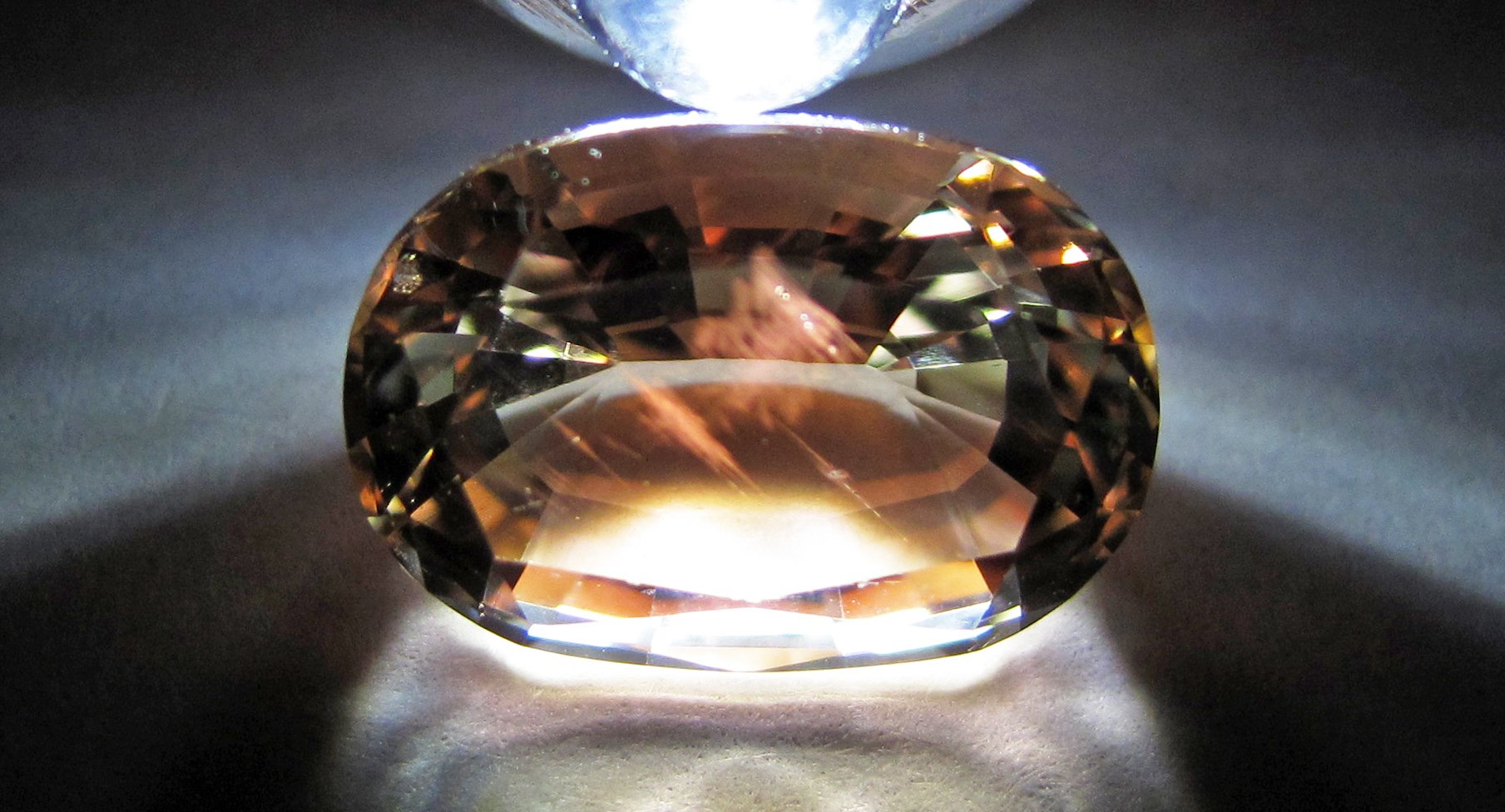
The only gem-quality sunstone in the world colored by metallic copper platelets, Oregon sunstone ranges from clear champagne to vivid red.
- Oregon sunstone is the only gem-quality sunstone in the world colored by metallic copper rather than iron oxide platelets - making it genuinely unique among the world's sunstone deposits.
- Collectors can legally mine their own Oregon sunstone at public collecting sites near Plush, Oregon - one of the few gem localities in the US open for recreational public mining.
- The color in Oregon sunstone is strongly zoned: a single crystal can be clear at one end and deeply saturated red or orange at the other, allowing cutters to produce dramatically bi-color gems from a single piece of rough.
- Oregon sunstone's copper content means it contains the same element as pennies, electrical wiring, and Statue of Liberty's exterior - the stone is literally a copper mineral in feldspar.
- The Paiute people's name for sunstone translates roughly to 'the blood of the warrior,' connecting the red specimens to stories of a great warrior whose blood fell to earth and hardened into red stones.
- Collectors who want an American-origin gem with a genuine unique optical property (copper schiller)
- Leo, Libra, or Sagittarius placements seeking a sun-associated stone of exceptional domestic provenance
- Buyers who want to support artisan American gem mining through their crystal purchases
- Those building a complete sunstone collection who want the rarest and most distinctive variety
- Jewelry buyers seeking a one-of-a-kind orange-red stone without the price of padparadscha or red beryl
- Those needing a very hard stone for active daily ring wear - at Mohs 6, Oregon sunstone needs protected settings
- Budget buyers - quality Oregon sunstone with strong schiller costs $50+ per carat
- Those who prefer consistent, uniform color in their gems - Oregon sunstone shows natural color zoning
What Is Oregon Sunstone?
Oregon sunstone is a gem-quality labradorite feldspar (calcium-sodium aluminum silicate) from Harney County in southeastern Oregon - the only significant deposit of this type in the world. It rates 6 - 6.5 on the Mohs hardness scale.
What makes it unique is its coloring agent: instead of the iron oxides that color most sunstones, Oregon sunstone contains metallic copper platelets suspended within the feldspar crystal lattice.
These copper platelets produce the stone's defining optical phenomenon: aventurescence or schiller, a spangled, metallic shimmer visible beneath the surface when light strikes the stone at the right angle.
In Oregon sunstone, this shimmer has a distinctly warm, slightly reddish metallic quality characteristic of copper - different from the orange-golden schiller of most global sunstone varieties, which are colored by hematite or goethite platelets.
At Mohs 6 to 6.5, Oregon sunstone is moderately hard and suitable for jewelry in protected settings. The color ranges widely within a single deposit: some stones are completely colorless (no copper, no color).
Others show pale champagne, yellow, orange, pink, red, and bi-color combinations where clear stone transitions to saturated color in zones. Red Oregon sunstone with strong schiller represents the premium tier.
Oregon sunstone is the official state gemstone of Oregon, designated in 1987. Several public collecting sites in Harney County allow recreational mining, making it one of the few gems that members of the public can mine for themselves in the United States.
How Oregon Sunstone Compares
| Property | Oregon Sunstone | Labradorite | Global Sunstone (Norway) |
|---|---|---|---|
| Coloring agent | Copper platelets | Lamellar structure | Hematite/Goethite |
| Hardness | 6 - 6.5 | 6 - 6.5 | 6 - 6.5 |
| Price / carat | $ Budget | $ Budget | $ Budget |
| Origin | Oregon, USA only | Global | Norway, India, others |
Meaning and Symbolism
Oregon sunstone carries the dual symbolism of its state origin and its solar associations. As Oregon's official gem, it represents the volcanic heritage of the Pacific Northwest - the Columbia River Basalt flows that deposited the stone's host rock millions of years ago during one of Earth's largest known volcanic eruptions.
This geological origin gives Oregon sunstone a genuinely local, land-connected character.
In crystal healing tradition, sunstone is associated with solar energy, personal freedom, independence, and the kind of optimism that is grounded rather than naive.
Oregon sunstone's copper content adds a dimension of Venus energy through copper's traditional association with warmth, creativity, and love, creating a stone that blends solar independence with Venusian warmth.
The schiller effect - the internal metallic sparkle that appears when Oregon sunstone is tilted in light - is experienced by practitioners as a reminder that hidden radiance exists within all things, becoming visible only at the right angle of attention.
This optical metaphor resonates with practitioners working on self-worth and recognizing inner value that is not always immediately apparent.
Native American tribes of the Oregon and Nevada desert regions have long collected sunstone from surface deposits exposed by erosion. The Paiute people have traditional stories connecting the red stones to the blood of a great warrior; these narratives honor the stone's powerful fire-red specimens as carrying warrior medicine and protective qualities.
Historical Timeline
Healing Tradition
Emotional
Practitioners believe Oregon sunstone carries a uniquely grounded optimism - the warmth of the sun filtered through the earth's volcanic processes rather than purely celestial fire.
In crystal healing tradition, it is associated with the emotional quality of genuine joy rather than performed happiness - the kind of wellbeing that persists through difficulty because it is anchored in authentic self-knowledge.
Many readers recommend Oregon sunstone for practitioners working through depression, creative blocks, or the specific emotional weight of not feeling free to be themselves. The stone's solar independence associations speak directly to the healing of environments where authentic self-expression was suppressed.
The copper component adds a warm, relational dimension to Oregon sunstone's emotional profile. Unlike purely solar stones that emphasize self-direction, Oregon sunstone's copper-Venus quality supports expressing warmth and creativity outward toward others as well as inward toward the self.
Spiritual
Oregon sunstone's dual solar and copper energies create a spiritual quality practitioners describe as illuminated warmth - the light of genuine self-awareness combined with the warmth of open-hearted engagement.
The stone is associated with leadership from the heart rather than leadership from ego: the capacity to shine authentically without needing others to be diminished by comparison.
The schiller effect - that inner metallic sparkle revealed by attention - is used by practitioners as a contemplation object for meditation on hidden potential.
The practice of tilting the stone in light and finding the angle at which the schiller appears is itself a meditation on the attentiveness required to see what is beautiful and valuable beneath a surface that appears ordinary.
For practitioners working with the sacral and solar plexus together - creative expression from a place of genuine personal power - Oregon sunstone is considered an ideal companion stone. Its copper and feldspar combination bridges creative spark (sacral) and centered will (solar plexus).
Physical
Crystal healing tradition associates sunstone generally with vitality, energy generation, and the body's immune function - all of which connect to the solar plexus's governing principle in energetic medicine.
Oregon sunstone's copper component adds a traditional connection to joint ease and circulatory warmth, as copper has been used in folk healing for arthritis and circulation for centuries.
Practitioners who work with chronic fatigue, seasonal affective tendencies, or the physical manifestations of prolonged self-suppression sometimes recommend Oregon sunstone as a daily wear stone specifically because its solar energy is grounded and sustaining rather than activating and exhausting.
The stone's fire-earth volcanic origin gives it a particular relevance for practitioners in climates with limited winter sunlight. Wearing Oregon sunstone during dark months is a practice many readers in northern regions find supportive of their baseline physical vitality.
Zodiac, Birthstone and Gifts
Oregon sunstone's copper-Sun combination resonates most naturally with Leo's need to shine genuinely without performance. Practitioners recommend it to Leo placements as a companion that supports the sign's authentic radiance - reminding Leo that the warmth people love in them is real, not constructed, and does not require maintenance through constant performance.
For Libra, Oregon sunstone's copper-Venus quality creates a beautiful resonance with the sign's governing planet. The stone supports Libra's capacity to express genuine beauty and warmth while also claiming the solar independence that the sign sometimes sacrifices for relationship harmony.
Sagittarius connects to Oregon sunstone through the fire element and the stone's freedom-loving, expansive solar energy. The Oregon origin also suits Sagittarius's appreciation for place and adventure - this gem has a specific home in the American West.
Care and Cleansing
Oregon sunstone tolerates most cleansing methods. Brief rinsing under lukewarm water is safe for the stone and appropriate for clearing accumulated energy. Sunlight cleansing is particularly resonant for this solar stone. Brief morning sunlight for 20-30 minutes both cleanses and charges the stone's solar associations.
Smoke cleansing with sage, cedar, or palo santo is appropriate and safe. Sound cleansing with a singing bowl also works well. Moonlight cleansing overnight on a windowsill is safe and appropriate, though the solar resonance of sunlight is more aligned with this stone's nature.
Avoid prolonged saltwater soaking for finished jewelry settings; brief dry salt cleansing on a salt bed for an hour is a gentler option.
- DO choose protective jewelry settings for Oregon sunstone - at Mohs 6, a bezel or halo setting protects the stone from impact and everyday wear scratching.
- DO remove Oregon sunstone rings before dishwashing, heavy work, or activities involving impact.
- DO store separately from harder stones (quartz, topaz, sapphire) that can scratch the surface.
- DO clean with a soft brush and mild soapy water rather than harsh cleaners or ultrasonic machines.
- Note: color zoning is natural and not a defect - bi-color Oregon sunstone with clear-to-saturated gradients is a sought feature, not a flaw.
Real vs Fake
Oregon sunstone is occasionally misrepresented by substituting non-Oregon sunstone (from Norway, India, or Tanzania) without disclosure of origin. The key to authentic Oregon sunstone is its copper coloring agent. Non-Oregon sunstones are colored by iron-rich hematite or goethite platelets, which produce slightly different schiller qualities and optical characteristics.
The most reliable authentication for Oregon origin is provenance documentation from the seller - the Harney County mining district, a named mine (Spectrum, Dust Devil, BLM collecting area), and a consistent supply chain. For high-value stones, request a gemological report that confirms the feldspar species and ideally characterizes the coloring inclusions.
Glass imitations of sunstone exist but are identified by the absence of natural inclusions, the perfectly uniform distribution of the aventurescent sparkle (natural stone shows irregular platelet distribution), and the lighter weight of glass relative to feldspar.
Reconstructed sunstone (glass with metallic foil) is another imitation that shows artificially regular schiller. In natural Oregon sunstone, the copper platelets are randomly distributed and the schiller appears in different intensities across the stone when tilted.
Oregon Sunstone Jewelry & Gifts
Oregon sunstone prices vary significantly by color and schiller intensity. Colorless or pale champagne material with weak schiller runs $20-$50 per carat. Good orange or red material with strong schiller costs $100-$300 per carat. Exceptional red with intense schiller and bi-color character reaches $300-$500+ per carat.
When evaluating Oregon sunstone, tilt the stone under direct light and observe the schiller: genuine Oregon sunstone's copper schiller has a distinctly warm, slightly reddish metallic quality that differentiates it from the orange-gold schiller of hematite-colored sunstones from other localities.
Buy from sellers who specifically identify Oregon and Harney County as the origin, name the mine if possible, and can speak knowledgeably about the deposit. The artisan Oregon gem mining community is tight-knit and most reputable sellers are genuinely connected to the source.
Bi-color Oregon sunstone (clear to red gradient in a single stone) commands premiums as a uniquely American natural wonder. These pieces require skilled cutting to maximize both portions of the color range.
Where to Buy Oregon Sunstone
Affiliate disclosure: Some links below earn us a small commission at no extra cost to you. See our affiliate disclosure page.
Handmade, raw, and tumbled pieces from independent sellers worldwide.
Shop Oregon Sunstone on Etsy →Accessories, tools, and specimen sets with fast Prime delivery.
Shop Oregon Sunstone on Amazon →Certified loose gemstones graded and photographed for online buyers.
Shop Oregon Sunstone on GemSelect →Pairs Well With


Where Oregon Sunstone Is Found
