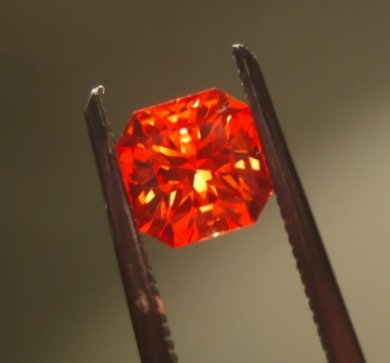
Padparadscha Sapphire
Named for the lotus blossom's sunset-orange glow, padparadscha is the rarest and most debated sapphire color - a precise marriage of pink.
- The padparadscha color range is so precisely defined that a sapphire can shift from qualifying to not qualifying based on the angle at which it is viewed - the stone must show the signature salmon from all directions.
- Princess Eugenie's engagement ring (2018) featured a padparadscha sapphire, dramatically increasing public awareness and commercial demand for the stone.
- Beryllium diffusion treatment can artificially create padparadscha-like orange-pink color in pale sapphires; advanced testing by laboratories is required to detect this treatment.
- True padparadscha from Sri Lanka's Ratnapura area is becoming increasingly rare as high-quality rough becomes scarcer; fine Sri Lankan specimens now sell for multiples of equivalent Madagascar material.
- The padparadscha color is often compared to a peach, a salmon, or specifically a lotus blossom - the precise range that fits this description is smaller than most people expect.
- Fine jewelry buyers seeking the most romantic, distinctive, and rare sapphire color available
- Engagement ring shoppers who want something dramatically different from blue sapphire or diamond
- Collectors of fine corundum who want to add the most storied color variety to a serious collection
- Buyers celebrating a Taurus or Libra partner who want a Venus-associated stone in the most exquisite form
- Those with significant budgets who want a gem that will appreciate in rarity as quality Sri Lanka sources tighten
- Budget-conscious buyers - authenticated padparadscha starts at $1,000 per carat and quickly reaches $10,000+
- Those who want a common or easily replaceable stone - padparadscha requires lab certification for any significant purchase
- Buyers primarily interested in healing crystal practice rather than fine gem collecting (choose morganite or rhodochrosite for similar hues)
What Is Padparadscha Sapphire?
Padparadscha is the rarest and most coveted variety of corundum (aluminum oxide, Al2O3), defined by its distinctive salmon color - a precise blend of pink and orange that gemologists describe as the hue of a lotus blossom or a tropical sunset. It rates 9 on the Mohs hardness scale.
The name comes from the Sinhalese word for lotus blossom (padma raga), reflecting the gem's origin in Sri Lanka's gem-producing culture.
Scientifically, the padparadscha color results from a combination of trace chromium (which causes pink in corundum) and iron plus vanadium or trace elements that push the color toward orange.
The precise balance of these elements in the geological environment produces the characteristic salmon that distinguishes padparadscha from pink sapphire (too pink) and orange sapphire (too orange).
At Mohs 9, padparadscha shares corundum's exceptional hardness - second only to diamond. This makes it supremely suited to fine jewelry including rings and bracelets that receive daily wear. The combination of extraordinary color, exceptional hardness, and extreme rarity makes padparadscha one of the most sought-after gems in fine jewelry.
The definition of padparadscha is actively debated in the gemological community. Gemological laboratories, SSEF, and other major laboratories each maintain slightly different color-range criteria. This ambiguity means certification from a reputable laboratory is essential for any significant padparadscha purchase.
How Padparadscha Compares
| Property | Padparadscha Sapphire | Pink Sapphire | Morganite |
|---|---|---|---|
| Color | Salmon pink-orange | Pink | Peachy pink |
| Hardness | 9 | 9 | 7.5 - 8 |
| Price / carat | $$$ Premium | $$ Mid-range | $ Budget |
| Rarity | Extremely rare | Rare | Moderately available |
Meaning and Symbolism
In Sinhalese Buddhist tradition, the lotus blossom (padma) represents purity emerging from murky water - spiritual perfection arising through earthly experience. The padparadscha sapphire, named for the lotus, carries this symbolism of beauty achieved through transformation.
Sri Lankan gem cutters who have worked with the stone for generations describe it as a gem that holds both sunrise and sunset simultaneously - the full arc of solar light in a single object.
In Vedic astrology, sapphires are associated with Saturn, but the pink-orange padparadscha connects more to Venus and the Sun through its warm, life-giving color spectrum. Practitioners working in Vedic gem therapy (Jyotish) associate padparadscha with the combined planetary energies of beauty, creativity, and vital force.
In Western crystal healing tradition, the stone's salmon color is said to bridge the sacral chakra's creative fire and the heart chakra's compassionate warmth - creating a path between passion and love that is described as the most complete expression of romantic and creative energy available in the corundum family.
Historically, padparadscha sapphires were collected by Sinhalese kings and Buddhist monasteries as sacred objects. The color's resemblance to the lotus is not merely aesthetic - the lotus is the symbol of enlightened mind in Theravada Buddhism, and a gem that perfectly matches its color was considered auspicious in the extreme.
Historical Timeline
Healing Tradition
Emotional
Practitioners believe padparadscha sapphire carries the emotional qualities its color suggests: the warmth and creativity of the sacral combined with the love and compassion of the heart chakra.
In crystal healing tradition, this salmon-zone between orange and pink is associated with the emotion of joyful love - not the aching intensity of deep red stones but the luminous, sunrise quality of love at its most generous and creative.
Many readers recommend padparadscha for practitioners working on bringing more warmth and openness into their creative and relational lives. The stone is said to support the quality of loving engagement with the world - an emotional orientation that is both warm and clear, passionate and balanced.
For practitioners who have become overly analytical or emotionally guarded, padparadscha's warm color and Venus connection are said to gently reintroduce the receptive, feeling dimension without overwhelming the practitioner's existing structure.
Spiritual
In Vedic gem therapy, padparadscha is sometimes prescribed for practitioners whose horoscope indicates a need for combined Venus and Sun strengthening - beauty, creativity, vitality, and self-expression working together. The stone is said to be worn in gold, close to the skin, after evaluation by a qualified Jyotish practitioner.
In Western crystal healing tradition, the stone's lotus association connects it to Buddhist concepts of awakened mind and the purity of consciousness that emerges from working through difficult experience.
Practitioners describe padparadscha as a stone that supports the practitioner in holding both the darkness they have processed and the beauty they have grown into simultaneously.
The stone's sacral-to-heart color bridge gives it a specific spiritual application in practices that seek to integrate creative passion and compassionate love - balancing inspired action with open-hearted receiving.
Physical
Crystal healing tradition associates the warm orange-pink spectrum with the sexual and reproductive systems through the sacral chakra, and with the circulatory and immune systems through the heart chakra. Padparadscha's bridge color is said to support practitioners working with both of these dimensions simultaneously.
Practitioners who work with stones in relationship and fertility contexts sometimes recommend padparadscha as the most harmonizing stone available for bringing together the warm creative energy of the sacral with the loving receptivity of the heart.
The stone is not a medical treatment and practitioners are careful to frame its role as supportive and complementary.
Given the stone's extreme rarity and cost, physical contact practice (holding, placing on body) is most appropriately done with faceted specimens mounted in jewelry rather than loose stones, integrating the stone's presence into the practitioner's daily life rather than requiring special handling.
Zodiac, Birthstone and Gifts
Padparadscha's Venus association connects it naturally to Taurus and Libra, both Venus-ruled signs. For Taurus, the stone's extraordinary sensory beauty - that perfect warm salmon that catches light like a sunset - appeals directly to the sign's refined aesthetic sense. Practitioners describe padparadscha as the gem that Taurus was waiting to discover.
For Libra, the stone's balance between pink and orange mirrors the sign's constant navigation of opposites - warmth and clarity, passion and harmony, self and other. Padparadscha's color is itself a perfect balance, making it a resonant symbol for Libra's core aspiration.
September birthstone sapphire traditions include padparadscha for Sagittarius practitioners who want the fire of their own sign reflected in the warmest of the sapphire spectrum. The lotus symbolism also resonates with Sagittarius's philosophical connection to wisdom emerging from experience.
Care and Cleansing
Padparadscha sapphire at Mohs 9 is exceptionally durable and tolerates nearly all cleansing methods safely. Running water, brief soaking in mild soapy water with a soft brush, and ultrasonic cleaning (for unfractured stones) are all safe options.
Moonlight and sunlight cleansing are both safe for corundum - unlike amethyst, sapphire color is not UV-sensitive and will not fade. Smoke and sound cleansing are appropriate for ritual purposes. The stone's durability means physical cleansing concerns are minimal.
For stones set in jewelry with softer companion stones or organic materials (pearls, coral, turquoise), defer to the softer stone's care requirements when cleaning the piece as a whole.
Avoid harsh chemicals, acids, and extended exposure to household cleaning products if the stone is set in fine metal jewelry, as the concern is metal damage rather than corundum damage.
- DO obtain laboratory certification (gemological laboratories, SSEF, or Gubelin) for any padparadscha over 0.5 carats before purchase.
- DO ask about beryllium diffusion and heat treatment disclosure - both are common and must be reported by reputable sellers.
- DO insure fine padparadscha jewelry separately - replacement value for quality stones can exceed standard jewelry policy limits.
- DO store padparadscha separately from other gems to prevent scratching softer stones (corundum at Mohs 9 will scratch almost everything).
- DO NOT clean padparadscha in ultrasonic cleaners if the stone has significant fractures or inclusions - vibration can propagate fractures.
- Note: lighting significantly affects padparadscha color appearance - evaluate in daylight, incandescent, and fluorescent light before purchase.
Real vs Fake
Padparadscha faces two distinct authenticity concerns: color range misrepresentation (stones marketed as padparadscha that fall outside the genuine salmon range) and treatment disclosure failure (stones treated by beryllium diffusion sold as natural color without disclosure). Both issues require laboratory certification to resolve definitively.
The color boundary is the most contentious issue. A stone that is too pink is pink sapphire; a stone that is too orange is orange sapphire. The transition zone where padparadscha exists is narrow, and different laboratories draw the boundary slightly differently.
gemological laboratories, SSEF, and Gubelin certifications name padparadscha explicitly when the stone qualifies; stones that are borderline are typically described as 'pink-orange sapphire' without the padparadscha designation.
Beryllium diffusion treatment can transform pale sapphires into intense orange-pink stones that appear padparadscha-like. This treatment is invisible under standard gemological examination and requires advanced spectroscopy to detect. Any significant padparadscha purchase should specify that the laboratory report addresses beryllium diffusion testing explicitly.
Synthetic padparadscha corundum is produced by several methods and can approach the color of natural stones. Advanced testing including inclusions examination, spectroscopy, and growth pattern analysis can separate synthetic from natural. For any stone above $500, a major laboratory report that explicitly addresses natural vs. synthetic origin is essential.
Padparadscha Sapphire Jewelry & Gifts
Padparadscha is one of the most expensive sapphire varieties by weight. Fine Sri Lankan padparadscha of 1-3 carats in the true salmon range costs $3,000 to $15,000 per carat. Madagascar material in equivalent quality runs $1,000 to $8,000 per carat. Heat-treated material is available at modest discounts from unheated equivalents.
Certification is non-negotiable for any significant purchase. Request a report from gemological laboratories, SSEF, or Gubelin that explicitly uses the padparadscha designation and addresses heat treatment and beryllium diffusion testing. A padparadscha-labeled stone without one of these reports cannot be confidently purchased.
Color evaluation requires multiple light sources. Padparadscha should show the salmon balance in daylight, incandescent light, and fluorescent light. Some stones show strong orange in one light and wash to nearly colorless pink in another - true padparadscha maintains balanced color across light sources.
Sri Lankan (Ceylon) padparadscha commands premiums over Madagascar material at equivalent quality grades because of provenance prestige. The distinction matters more to collectors than to most jewelry buyers; the color quality of the specific stone is the more important factor for either audience.
Where to Buy Padparadscha Sapphire
Affiliate disclosure: Some links below earn us a small commission at no extra cost to you. See our affiliate disclosure page.
Handmade, raw, and tumbled pieces from independent sellers worldwide.
Shop Padparadscha Sapphire on Etsy →Accessories, tools, and specimen sets with fast Prime delivery.
Shop Padparadscha Sapphire on Amazon →Certified loose gemstones graded and photographed for online buyers.
Shop Padparadscha Sapphire on GemSelect →Pairs Well With


Where Padparadscha Sapphire Is Found


