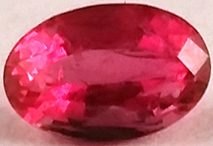
Red Beryl
Mined only in Utah's Wah Wah Mountains, red beryl (bixbite) is one of the rarest gems on earth, a raspberry-red beryl cousin of emerald.
- Red beryl is roughly 1,000 times rarer than emerald by gem-quality production volume.
- Nearly all gem-quality red beryl comes from the Wah Wah Mountains in Utah.
- The name bixbite honors Maynard Bixby, not to be confused with the different mineral bixbyite also named for him.
- Red beryl is sometimes called the red emerald because of its beryl-family relationship to the green variety.
- Gem-quality red beryl crystals rarely exceed 1 carat in finished size.
- Collectors of ultra-rare US-origin gems (one of the rarest commercial gemstones)
- Buyers seeking beryl family completion alongside emerald, aquamarine, morganite
- Investment-grade gemstone buyers interested in rarity appreciation
- Practitioners working with heart and root integration
- Gift givers shopping for truly unique engagement or heirloom pieces
- Budget shoppers (red beryl exceeds $5,000 per carat; consider morganite or rhodolite garnet)
- Those wanting large carat weights (red beryl rarely exceeds 1 carat)
- Buyers seeking broad commercial availability (supply is extremely limited)
What Is Red Beryl?
Red beryl, also called bixbite, is the red variety of beryl, the same mineral family as emerald, aquamarine, and morganite. The red color comes from trace manganese, producing a distinctive raspberry-to-cherry red that no other gem duplicates. It rates 7.5 - 8 on the Mohs hardness scale.
At Mohs 7.5 to 8, red beryl is hard enough for most jewelry settings though its brittleness requires protective mountings. The defining feature of red beryl is its extreme rarity.
Unlike almost every other named gem, red beryl occurs in gem quality at only two localities on earth: the Wah Wah Mountains in western Utah (the primary source) and the Thomas Range also in Utah, with very minor production from similar rhyolite deposits in New Mexico.
The formation process requires an unusual combination of beryllium-rich pegmatites intruding through manganese-bearing rhyolite, a geological accident so specific that it has produced gem-quality red beryl nowhere else.
The Wah Wah Mountains deposit, discovered in the 1950s but commercially developed only since the 1970s, has produced an estimated total supply of well under a million carats of gem-quality material in its entire history.
For comparison, annual global emerald production is measured in millions of carats. This extreme scarcity makes red beryl one of the few gemstones that functions primarily as a collector and investment item rather than a commercial jewelry staple.
The name bixbite honors Maynard Bixby, the early-twentieth-century Utah mineralogist who first described the red Utah beryl. Some modern sellers prefer red beryl to avoid confusion with the different mineral bixbyite, also named for Bixby.
How Red Beryl Compares
| Property | Red Beryl | Emerald | Ruby |
|---|---|---|---|
| Hardness | 7.5 - 8 | 7.5 - 8 | 9 |
| Price / carat | $$$$ Luxury | $$$ Premium | $$$ Premium |
| Rarity | Ultra rare (US only) | Rare (fine) | Rare (fine) |
| Best For | Collector investment, heirloom | Engagement rings | Anniversary gifts, heirloom |
Meaning and Symbolism
Red beryl is a relatively recent gem discovery in commercial terms. Maynard Bixby first described red beryl from the Thomas Range, Utah in 1904, but the mineral remained a mineralogical curiosity for decades.
Gem-quality material was discovered in the Wah Wah Mountains in 1958 by Lamar Hodges, and commercial cutting began in the 1970s when the geology was better understood.
Despite its short history, red beryl has gained extraordinary cachet among collectors because of its US origin and rarity. It is one of the few premium gems that can be marketed as genuinely American, and the Wah Wah Mountains deposit operates under strict mining claims that limit supply.
The material is often described as the red emerald in marketing, though this name is informal rather than a recognized gemological designation.
In crystal healing tradition, red beryl has limited folk-tradition depth because of its short commercial history, but modern practitioners have developed associations with the heart and root chakras based on the stone's red color and beryl family placement.
Practitioners describe red beryl as a stone of vital passion, life-force energy, and the integration of heart courage with grounded presence.
It pairs naturally with emerald (beryl sibling), with aquamarine (beryl sibling), and with ruby (for combined red-stone vitality work). Because of its extreme expense, red beryl is more often admired in museum displays than worn as daily jewelry.
Historical Timeline
Healing Tradition
Emotional
Practitioners believe red beryl supports emotional vitality, grounded passion, and integration of heart courage with physical presence. In crystal healing tradition, it is often described as a stone for active life phases and for people working through creative or emotional projects that require both warmth and stamina.
Because red beryl is extremely expensive and typically worn only on special occasions, many practitioners describe it as a ceremonial rather than daily stone.
Practitioners sometimes pair red beryl with rose quartz when the emotional work involves tender courage, or with emerald as a beryl-family companion for heart-chakra pairing.
Due to its rarity, folk tradition around red beryl is limited; most associations are modern Western crystal healing interpretations based on color and mineral family placement rather than long-established lore.
Spiritual
Red beryl is traditionally associated with the heart and root chakras in modern Western crystal healing tradition. Practitioners describe it as a stone of vital life force that integrates heart passion with grounded presence.
In metaphysical framing, red beryl is sometimes placed alongside ruby as a stone of passionate creative energy. Many collectors treat red beryl primarily as an investment or display gem rather than a metaphysical tool, given its price point.
For practitioners who do work with red beryl energetically, it pairs readily with clear quartz for amplified intention and with its beryl cousins (emerald, aquamarine, morganite) for full-family chakra grids. The stone's intense raspberry-red color makes it a striking focus for meditation on embodied passion and life force.
Physical
Practitioners believe red beryl supports what they describe as vital life force, heart-area circulation, and general cardiovascular health in modern crystal healing tradition. Because of its limited history, folk tradition around red beryl is not deep; most physical associations are extensions of general red-stone and heart-chakra lore.
In practice, red beryl is rarely worn as continuous daily jewelry because of its expense and the market preference for protected heirloom settings.
Many readers who own red beryl wear it on significant occasions (anniversaries, creative milestones, ceremonial events) rather than daily. It is not a substitute for medical care, and practitioners frame its role as supportive alongside proper treatment.
Because red beryl is hard (Mohs 7.5 to 8) and chemically stable, it is durable enough for daily wear in protective settings, though the expense usually limits it to special-occasion jewelry.
Zodiac, Birthstone and Gifts
Red beryl is modern-associated with Aries in Western astrology because of the sign's Mars rulership and affinity with red gems. Practitioners describe red beryl as a natural ally for Aries's pioneering passionate temperament. For Scorpio, red beryl is recommended as a supporting stone for deep transformational passion.
Because red beryl is extremely rare and expensive, it is not on the formal US birthstone list. The stone is sometimes given as an exceptional gift for major life milestones (significant anniversaries, retirement, creative achievements) where rarity and US origin add meaning regardless of zodiac alignment.
Care and Cleansing
Red beryl is one of the more durable gems for maintenance because of its Mohs 7.5 to 8 hardness and chemical stability. Warm soapy water and a soft brush are safe for most stones.
Ultrasonic and steam cleaners are generally safe for untreated red beryl but should be used carefully because beryl family stones have slight cleavage and can chip under vibration if stones are included or fractured.
Moonlight cleansing is traditional and safe. Sunlight cleansing is appropriate because red beryl color is stable under UV exposure. Smoke cleansing with sage or palo santo and sound cleansing with a singing bowl are both effective and carry no risk.
Saltwater soaks are chemically safe for the stone but may corrode metal settings on jewelry and should be limited.
Because red beryl is typically worn only on special occasions, most owners cleanse it before significant events rather than on a regular maintenance schedule.
- DO rinse red beryl jewelry in warm soapy water and dry with a soft cloth.
- DO use ultrasonic cleaners carefully on included or fractured stones.
- DO store red beryl in soft-lined boxes separate from harder stones.
- DO preserve laboratory reports and purchase documentation with the piece.
- DO insure red beryl jewelry because of its investment value.
- DO ask about origin documentation; Wah Wah Mountains provenance commands premium.
- Note: red beryl has slight cleavage like other beryls; avoid sharp impacts on prongs.
Real vs Fake
Genuine red beryl shows characteristic raspberry-to-cherry red color from trace manganese, specific gravity around 2.7, and refractive index of 1.564 to 1.574. Under 10x magnification, natural red beryl often shows two-phase inclusions, color zoning, and occasional healed fractures characteristic of pegmatite-grown beryl.
Common imitations include hydrothermal synthetic red beryl (chemically identical but with distinct growth patterns), red glass (lightweight, often gas bubbles), red garnet varieties, ruby (higher RI and hardness), and rhodolite garnet. A basic refractometer test quickly distinguishes red beryl from garnet and ruby.
The most important distinction for high-end buyers is natural Utah red beryl versus synthetic red beryl. Russian hydrothermal synthetic red beryl has been produced since the 1990s and is gemologically identical to natural material except for microscopic growth patterns and specific trace-element signatures.
Laboratory analysis using UV-Vis spectroscopy and trace element analysis separates natural from synthetic origin.
For any red beryl purchase above $1,000 per carat, insist on a laboratory report from an independent gemological lab, or another recognized gemological institute confirming natural origin and Wah Wah Mountains or Utah provenance. Reputable dealers also provide rough-stone provenance documentation and photographs when available.
Because red beryl supply is so limited, careful authentication protects buyers from high-value synthetic substitution.
Red Beryl Jewelry & Gifts
Red beryl is among the most expensive commercial gemstones by per-carat price. Small (0.1 to 0.3 carat) commercial stones start around $2,000 to $4,000 per carat. Standard collector-grade 0.5 to 1.0 carat stones with clean color and eye-clean clarity run $5,000 to $12,000 per carat.
Exceptional 1+ carat stones with deep saturated raspberry-red color and fine cutting can reach $15,000 to $20,000 per carat, and the very rare 2+ carat specimens (almost never produced) command whatever the market will bear. The main buying variables are color saturation, size, and authentication.
Treatment concerns include clarity enhancement via oil or resin (sometimes applied to included stones; should be disclosed) and synthetic origin (hydrothermal red beryl has existed since the 1990s and must be disclosed).
For any purchase above a few hundred dollars, insist on laboratory documentation confirming natural origin and ideally Wah Wah Mountains provenance.
When buying, examine color under multiple light sources to assess natural raspberry-red saturation, check for eye-clean clarity (some inclusions are typical in natural red beryl), and preserve all documentation. Investment-grade pieces should come with an independent gemological lab or a reputable lab reports and provenance records from the mining claim.
Where to Buy Red Beryl
Affiliate disclosure: Some links below earn us a small commission at no extra cost to you. See our affiliate disclosure page.
Handmade, raw, and tumbled pieces from independent sellers worldwide.
Shop Red Beryl on Etsy →Accessories, tools, and specimen sets with fast Prime delivery.
Shop Red Beryl on Amazon →Certified loose gemstones graded and photographed for online buyers.
Shop Red Beryl on GemSelect →Pairs Well With



Where Red Beryl Is Found
