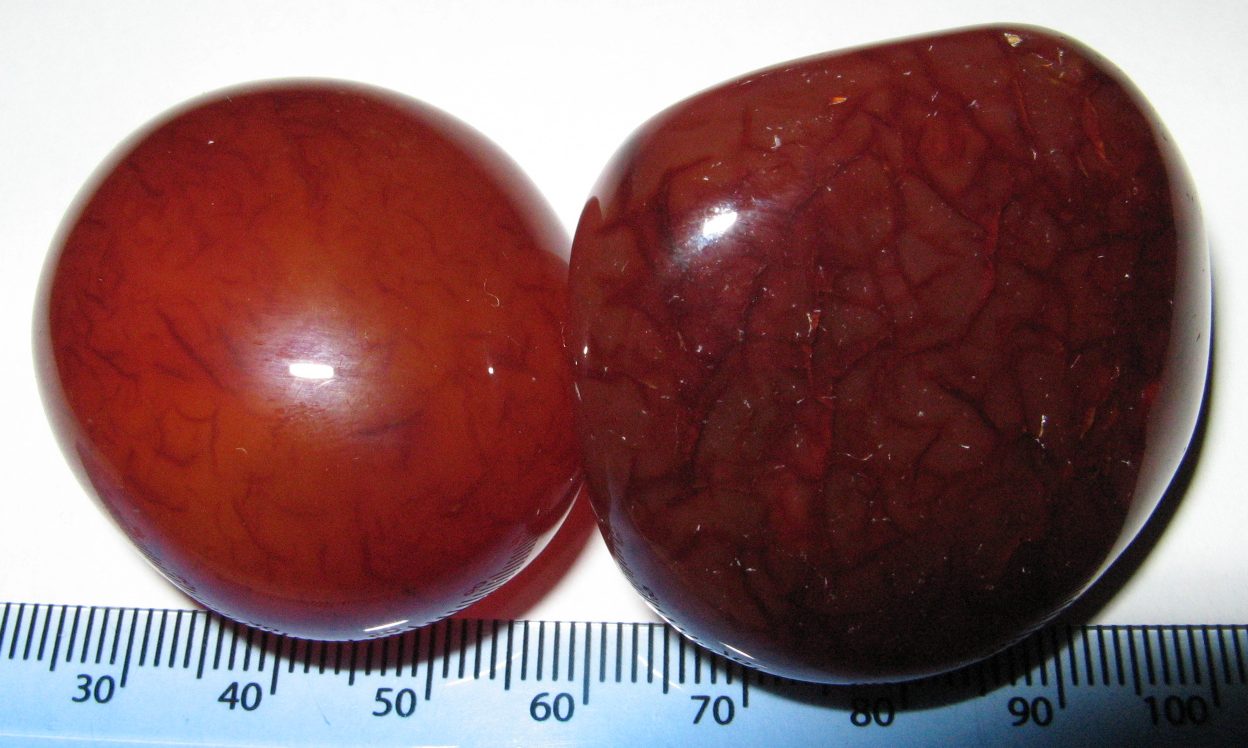
Red Jade
Fire within stone - red jade for passionate strength, courageous action, and the fierce vitality of life's force
- Red jadeite from Myanmar is so rare that verified specimens of jewelry quality are almost never seen outside of Asian specialty dealers - most 'red jadeite' offered commercially is nephrite, quartzite, or other non-jadeite material.
- Wyoming's nephrite deposits include red and orange varieties colored by hematite inclusions - these American red jade pieces are sometimes marketed as 'Wyoming red jade' by regional lapidary artists.
- The redness in red jade is usually hematite (iron oxide) - the same mineral that makes Mars red, gives bloodstone its spots, and colors ancient cave art in prehistoric sites around the world.
- Some red jade shows gradual color transitions from green to red within the same piece - these multi-color specimens demonstrate the dynamic chemistry of jade formation and are prized by collectors.
- In Feng Shui practice, red jade is associated with the south bagua direction and the fire element, making it a specific tool for activating recognition, reputation, and the fiery energy of public presence.
- those seeking courage, strength, and passionate motivation
- practitioners working with root and sacral chakras
- those who want action energy with jade's grounding quality
- collectors interested in the full jade color spectrum
- Aries and Scorpio crystal enthusiasts
- those seeking calming, gentle stone energy
- collectors focused only on investment-grade specimens
- buyers who need jade verification education first
What Is Red Jade?
Red Jade refers to reddish-toned nephrite or jadeite with coloration ranging from pale rose-red to deep brick red, caused by iron oxide inclusions or hematite content within the jade matrix. It rates 6-7 on the Mohs hardness scale.
It is among the rarer jade color varieties, occurring when specific iron chemistry conditions during formation produce oxidized iron (hematite or limonite) distributed throughout the jade's fibrous or granular structure.
Red jadeite is exceptionally rare and commands significant collector premiums when verified. Red nephrite is less rare but still uncommon compared to green varieties - the orange-red nephrite from Wyoming and the brick-red nephrite from Central American sources are the most commercially available forms.
In Chinese jade culture, red jade has historically been associated with life-force energy, blood, and the warrior's virtue of courageous action. Red jade objects were used in ritual contexts related to vitality, protection.
The strength required for difficult undertakings - a tradition that aligns directly with modern crystal healing associations for this stone.
Red Jade vs. Similar Red Stones
| Property | Red Jade | Red Jasper | Carnelian |
|---|---|---|---|
| Hardness | 6-7 | 7 | 6.5-7 |
| Price/lb | $ Budget | $ Budget | $ Budget |
| Rarity | Uncommon | Common | Common |
| Best For | Warrior strength | Stamina, grounding | Creative passion |
Meaning and Symbolism
Red jade carries the combined symbolism of jade's earthly wisdom and red's fiery life-force energy - a combination practitioners describe as uniquely powerful for situations requiring courageous, wise action rather than just raw passion.
It is said to distinguish red jade from pure fire stones: the wisdom to know when and how to act, combined with the energy to actually do it.
In crystal traditions, red jade is associated with what some call the "warrior's heart" - the quality of acting from genuine principle rather than fear, anger, or proving.
This resonates with the Confucian jade tradition where even red jade's passionate quality was understood as virtue in action - courage in service of what is genuinely right.
The stone is also strongly associated with life-force, physical vitality, and the passion that drives genuine engagement with life. Practitioners use it for those experiencing low motivation, lack of physical energy, or difficulty taking decisive action on decisions they know are right.
It is said to mobilize what one already knows into what one actually does.
Historical Timeline
Healing Tradition
Emotional
Practitioners describe Red Jade as especially supportive for those struggling with passivity, inability to advocate for themselves, or the pattern of knowing what needs to be done while remaining unable to act on that knowing.
The stone is said to mobilize what crystal healers call "warrior energy" - not aggression but the dignified, decisive capacity to take aligned action despite discomfort, opposition, or fear. Many use it for clients in transition periods requiring significant courage: leaving harmful situations, starting ambitious projects, or making long-deferred necessary changes.
Spiritual
In spiritual practice, red jade is associated with the root chakra's survival and grounding energy working in concert with the warrior archetype - the quality of spiritual practice that requires genuine effort, willingness to face difficulty, and the courage to act on spiritual truth in material reality.
Practitioners believe it bridges the gap between spiritual insight and material action - the persistent failure point of many sincere practitioners who understand deeply but change slowly. The stone is said to strengthen the bridge between knowing and doing.
Physical
Some crystal wellness practitioners associate Red Jade with blood health, immune system support, adrenal vitality, and physical stamina. It is traditionally placed at the root chakra and over the lower abdomen during energy healing sessions. No scientific evidence supports these associations. Always consult a qualified healthcare provider for health concerns.
Zodiac, Birthstone and Gifts
Aries's fiery, initiative-taking, courageous nature resonates perfectly with red jade's warrior energy - the stone supports Aries's natural boldness while adding jade's grounding wisdom to prevent impulsive action without direction. Scorpio's passionate intensity and transformative power aligns with red jade's life-force activation and the deep courage required for genuine transformation.
Care and Cleansing
Red jade is stable and easy to cleanse. Brief rinsing under cool running water with a clearing intention is effective and safe. Dry thoroughly after. Jade's durability makes this a practical daily or weekly option.
Sunlight cleansing is appropriate for red jade - the iron-based red color is stable under moderate UV exposure. Brief morning sun is said to recharge the stone's fire energy and solar vitality associations.
Earth burial overnight connects red jade's fire vitality back to its earth mineral origins and is particularly effective for intensive use periods where the stone has been used for significant inner work or ceremony.
- DO wear confidently in daily jewelry - jade's toughness makes it one of the best stones for regular wear.
- DO NOT use ultrasonic cleaners on dyed or treated specimens.
- NOTE that 'red jade' is often dyed quartzite, red aventurine, or red calcite - verify authenticity.
- DO NOT store loose with very hard minerals like topaz or corundum that could scratch the polished surface.
- DO NOT use acidic cleaners on polished pieces.
Real vs Fake
Genuine red jade (nephrite or jadeite) has the characteristic waxy jade luster, cool heavy feel, and either fibrous (nephrite) or granular-interlocking (jadeite) texture under magnification. Red quartzite fakes feel lighter and have a more granular, less waxy surface.
Red aventurine (quartz with fuchsite inclusions) is sometimes sold as red jade. It shows visible sparkle under direct light and has a glassier luster than jade's waxy surface. The sparkle distinguishes it instantly under bright light.
Dyed pale nephrite or jadeite sold as red jade shows color concentrated in fractures and surface features under magnification. Natural red color in jade is evenly distributed through the hematite inclusions in the matrix.
Red calcite is sometimes sold as red jade at very low prices. Calcite is significantly softer (hardness 3) - a key will easily scratch calcite; jade at 6-7 resists scratching by most common objects.
For significant red jade purchases, request gemological verification of jade type (nephrite vs. jadeite) and treatment status. The red jade category has notable misrepresentation and reliable dealers will provide documentation.
Red Jade Jewelry & Gifts
Red nephrite jade tumbles and carved pieces run $15-$80; red jadeite pieces with certification can command $200-$2000+. Most commercial red jade is nephrite and this is entirely appropriate for metaphysical use.
For metaphysical purposes, verified natural red nephrite provides full access to red jade's energy at accessible prices. Look for the characteristic waxy luster, heavier-than-expected weight, and fibrous texture under a loupe.
Wyoming red-orange nephrite is available from American lapidary suppliers and mineral dealers and provides North American-provenance jade with authentic nephrite composition at reasonable prices. For carved pieces, ensure the carving shows depth, craftsmanship, and consistent color without visible coating or surface staining concentrated at edges and crevices.
Avoid mass-market 'red jade' at $3-$8 without type disclosure - this is almost certainly not genuine jade. The authentic material at fair prices from specialist dealers represents genuine value even if it costs more upfront.
Where to Buy Red Jade
Affiliate disclosure: Some links below earn us a small commission at no extra cost to you. See our affiliate disclosure page.
Handmade, raw, and tumbled pieces from independent sellers worldwide.
Shop Red Jade on Etsy →Accessories, tools, and specimen sets with fast Prime delivery.
Shop Red Jade on Amazon →Certified loose gemstones graded and photographed for online buyers.
Shop Red Jade on GemSelect →Pairs Well With




Where Red Jade Is Found


