Star Emerald
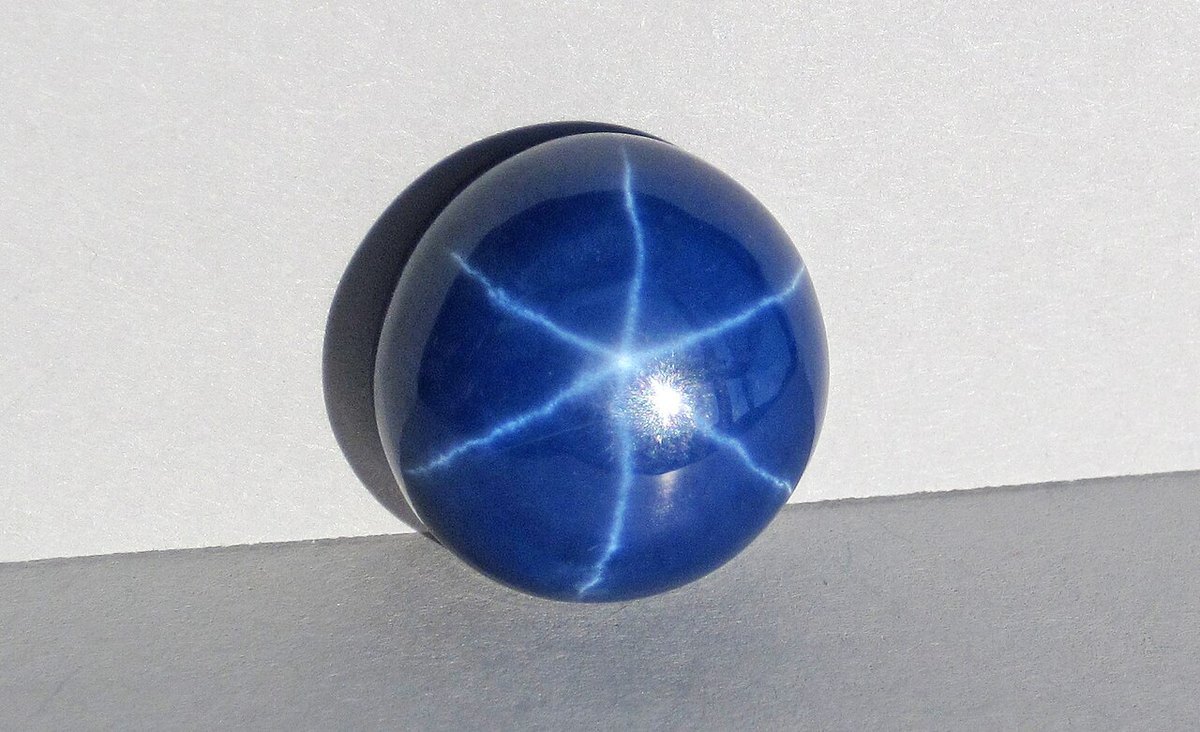
A 6-rayed star floating across vivid green - Star Emerald is among the rarest asterism gems in existence.
- Star Emerald is one of the rarest asterism gems - rarer than star ruby and star sapphire because emerald's conditions for star formation are more restrictive.
- The 6-ray star in emerald is a direct expression of beryl's hexagonal crystal symmetry - 3 sets of parallel inclusions at 60-degree angles create the 6 intersection lines.
- A single Star Emerald of fine quality and large size would be considered a world-class museum specimen.
- Star sapphire requires trigonal corundum structure for its 6-rayed star; star emerald requires hexagonal beryl - different crystal systems producing the same visual result.
- The asterism effect in any stone requires a single directional light source - it disappears completely under diffuse overhead lighting.
- Apex collectors seeking one of the rarest phenomena gems available in any color
- Gem investors wanting a documented natural-phenomenon stone with extreme scarcity
- Heart chakra devotees who want the most exceptional green healing stone possible
- Connoisseurs who already own star ruby and star sapphire and seek the green companion
- Those drawn to the mysticism of asterism - the ancient belief that a star inside a stone is divine protection
- Standard jewelry buyers - Star Emerald is a collector's stone, not a fashion accessory
- Budget buyers - fine Star Emerald is priced at rare-earth levels per carat
- Those wanting a faceted, transparent gem - asterism stones are always opaque to translucent cabochons
What Is Star Emerald?
Star Emerald is an emerald - chromium-bearing beryl with the formula Be3Al2Si6O18 - that displays asterism, the optical phenomenon of a multi-rayed star appearing to float across the domed surface of a cabochon when illuminated by a single directional light source. It rates 7.5 - 8 on the Mohs hardness scale.
Because emerald is hexagonal in crystal symmetry, Star Emerald displays a 6-rayed star rather than the 4- or 6-rayed stars typical of star ruby or sapphire. Each ray corresponds to one of the 3 sets of parallel inclusion planes within the hexagonal crystal structure.
The inclusions that produce the star in emerald are typically parallel needles of minerals such as actinolite, tremolite, or hollow tubes aligned along the crystal axes. Three such orientations at 60-degree angles to each other create the 6 intersecting reflection bands that form the star.
For the star to be visible and distinct, the inclusion density must be high enough to reflect significant light, the crystal must be properly oriented when cut, and the dome height must be calibrated to focus the reflections at the surface.
Star Emerald is considerably rarer than Cat's Eye Emerald because forming a well-defined 6-ray star requires 3 different oriented inclusion sets simultaneously - a much more restrictive formation condition than the single parallel set needed for chatoyancy. Most documented fine Star Emeralds appear in major gem auction catalogs rather than retail stores.
Brazil and Colombia have produced documented Star Emeralds; Zambia and Zimbabwe are secondary documented sources.
How Star Emerald Compares
| Property | Star Emerald | Star Ruby | Star Sapphire |
|---|---|---|---|
| Star Type | 6-rayed (hexagonal system) | 6-rayed | 6 or 12-rayed |
| Hardness | 7.5 - 8 | 9 | 9 |
| Price / carat | $$$ Premium | $$ Mid-range | $$ Mid-range |
| Best For | Ultimate rarity collector | Fine collector jewelry | Collector, mystical use |
Meaning and Symbolism
Stars in gemstones have been considered divine omens and protective emblems across virtually every gem-using culture. In ancient India, the Jyotish tradition identified asterism as a sign that a stone carried celestial energy - specifically the condensed light of a star or planet trapped in mineral form.
Star rubies and star sapphires feature prominently in Vedic astrology; a star emerald was considered exceedingly auspicious and extremely rare even in ancient records.
The specific 6-rayed form of the Star Emerald star was recognized in various medieval European lapidary texts as connected to the six-pointed Star of Solomon, which was considered a powerful protective symbol.
Emerald itself was one of the 12 stones listed in the Hebrew High Priest's breastplate (the Hoshen), and its star form elevated its perceived sacred significance beyond ordinary emerald.
In contemporary crystal healing tradition, Star Emerald is described as carrying both emerald's heart-wisdom properties and the directional, navigational energy of the star. Practitioners believe the 6 rays create a field of balanced protection in all directions while simultaneously centering the heart in compassionate, clear-sighted love.
It is considered a stone for those who are called to serve as guides or leaders - people whose heart must remain open, clear, and protected simultaneously.
Historical Timeline
Healing Tradition
Emotional
In crystal healing tradition, Star Emerald is described as carrying a rare combination of emotional qualities: the heart-opening warmth of emerald with the navigational clarity of the star.
Practitioners believe the 6-rayed star reflects the heart's capacity to maintain love and clarity in all directions simultaneously - to remain open without becoming vulnerable, to see clearly without becoming cynical.
Many find it supportive for those in caretaking or leadership roles, where the challenge is to sustain genuine compassion without losing personal boundaries or clear-sightedness.
Spiritual
Star Emerald is described by practitioners as a stone of guided Heart-centered spiritual evolution.
The star is interpreted as divine direction from the heart's own wisdom - an inner compass that points toward what is truly aligned with the soul's purpose.
Many healers use it for those at significant crossroads, believing the stone amplifies the heart's ability to hear its own guidance despite competing mental noise. It is traditionally associated with spiritual teachers, healers, and those who serve as beacons for others.
Physical
From a crystal healing perspective, Star Emerald is said to combine emerald's traditional associations with the eyes, heart, and immune system with the organizing, crystalline clarity of the star. Practitioners believe it supports the body's innate intelligence in creating coherence across all systems simultaneously - reflecting the star's 6-direction balance.
These are energetic traditions, not medical claims. No crystal is a treatment for any physical condition.
Zodiac, Birthstone and Gifts
Star Emerald resonates most deeply with Cancer and Taurus in crystal healing tradition. Taurus as the May sign benefits from emerald's traditional birthstone association and from the stone's earth-element abundance and Heart chakra alignment.
Cancer's deep emotional intelligence and need for secure, open-hearted connection finds an ally in the Star Emerald's combination of heart-warmth and protected, all-direction awareness. Both signs also share an appreciation for the beautiful and the rare - qualities that Star Emerald embodies completely.
In Vedic astrology, emerald serves Cancer's ruling Moon as well as Mercury, making Star Emerald doubly significant for Cancer practitioners.
Care and Cleansing
Star Emerald requires the same careful cleansing as all emeralds with fracture filling. Warm water with a very soft brush is the maximum physical cleaning method. Avoid ultrasonic cleaners, steam, and extended submersion. Salt water should be strictly avoided as it can enter fractures and degrade oil or resin fillings over time.
Moonlight is the ideal energetic cleansing method - overnight under the full moon on a windowsill. Sound cleansing with a singing bowl or bells is equally safe and non-contact. Smudging with sage or palo santo smoke is appropriate for any setting type.
Given the extreme value of fine Star Emerald, err consistently toward the most conservative, non-contact cleansing methods.
- DO NOT use ultrasonic or steam cleaners - will remove oil or resin fracture fillings from emerald.
- DO NOT expose to salt water or harsh chemicals.
- DO clean only with warm water and a very soft brush - no detergents.
- DO store in a padded individual box, never loose with other gems.
- DO have insured and appraised by a certified gemologist - Star Emerald values fluctuate and are difficult for non-specialists to assess.
- NOTE: Most emeralds including Star Emeralds are fracture-filled; this is standard and disclosed, not a defect.
Real vs Fake
Genuine Star Emerald verification requires laboratory certification in all practical cases. The star must be caused by internal parallel inclusions visible under magnification - not by surface polishing or laser engraving, which are sometimes attempted to simulate asterism in plain cabochons.
A genuine star moves with the light source across the dome of the stone; artificial marks on the surface behave differently.
The refractive index of beryl (1.565-1.602) should be confirmed by a gemologist. Green glass and green corundum (which can show stars) will read very differently on a standard refractometer. Spectroscopic analysis confirms chromium-bearing emerald coloring versus vanadium-green beryl (less valuable) or dyed material.
For any Star Emerald purchase above token amounts, a gemological laboratories or AGL laboratory report specifying asterism, species confirmation, chromium coloring, and treatment details is not optional - it is the only reliable basis for a transaction.
The extreme rarity of genuine fine Star Emerald means that claims without documentation should be treated with significant skepticism.
Star Emerald Jewelry & Gifts
Star Emerald pricing is difficult to benchmark because so few fine specimens appear publicly. Minor asterism in modest-quality emerald cabochons may be found from $500-$2,000/ct from specialist dealers. Truly fine Star Emerald with vivid color, sharp 6-rayed star, and acceptable clarity may reach $5,000-$20,000+/ct in documented auction results.
Star sharpness and color quality are both critical - neither alone justifies premium pricing without the other. A sharp star in pale or brownish emerald is a mineralogical curiosity, not a fine gem. Vivid Colombian-green color with a weak or diffuse star is an excellent emerald but not a collector Star Emerald.
The intersection of both qualities is what commands exceptional premiums. Buy only with laboratory documentation.
Where to Buy Star Emerald
Affiliate disclosure: Some links below earn us a small commission at no extra cost to you. See our affiliate disclosure page.
Handmade, raw, and tumbled pieces from independent sellers worldwide.
Shop Star Emerald on Etsy →Accessories, tools, and specimen sets with fast Prime delivery.
Shop Star Emerald on Amazon →Certified loose gemstones graded and photographed for online buyers.
Shop Star Emerald on GemSelect →Pairs Well With


Where Star Emerald Is Found


