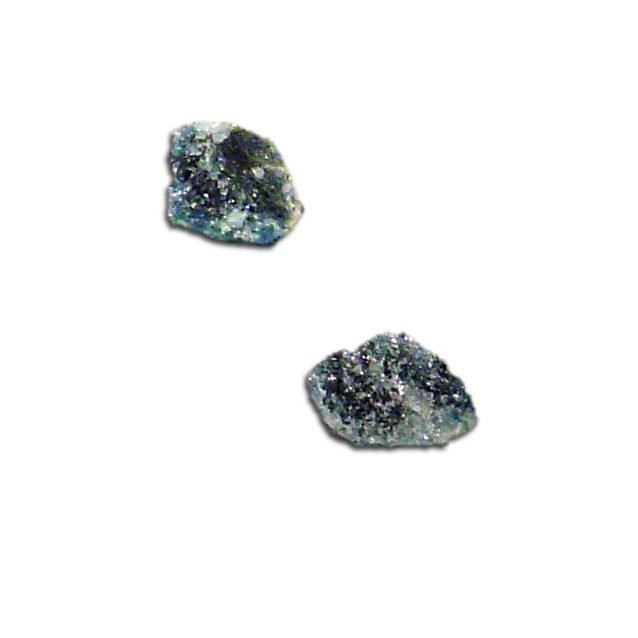
Trolleite
A rare aluminum phosphate with oceanic blue-green hues, traditionally associated with higher-dimensional awareness and the calm clarity of.
- The mineral was named after Hans Gabriel Trolle-Wachtmeister, a Swedish nobleman, court chancellor, and amateur scientist - one of the few minerals named after a government official.
- What most of the crystal market calls 'trolleite' is often a complex mixture of trolleite, lazulite, scorzalite, and quartz; pure monomineralic trolleite is even rarer.
- Sweden's Westanå locality, where trolleite was first described, is also known for producing other rare aluminum phosphate minerals in the same pegmatite and metamorphic rock sequence.
- The blue-green color in trolleite is attributed to iron and titanium impurities interacting with the aluminum phosphate lattice.
- Trolleite belongs to the relatively rare aluminum phosphate mineral class, which includes other collector favorites like Brazilianite, Augelite, and Wavellite.
- Practitioners who work with Third Eye, Crown, and Throat chakra activation
- Anyone drawn to blue-green oceanic mineral aesthetics
- Crystal workers seeking rare materials for higher-dimensional meditation
- Collectors who appreciate unusual phosphate minerals
- Those working with intuition, clarity, and spiritual elevation practices
- Everyday jewelry - moderate hardness and rarity make it impractical for daily wear
- Budget buyers - authentic trolleite is moderately expensive for the quality available
- Those seeking bold saturated color - trolleite tends toward muted blue-green
What Is Trolleite?
Trolleite is a rare aluminum phosphate hydroxide mineral with the formula Al4(PO4)3(OH)3, first described in 1868 from Westanå in southern Sweden and named after the Swedish chemist Hans Gabriel Trolle-Wachtmeister. It forms in aluminum-rich metamorphic and metasomatic rocks, often associated with other phosphate and aluminum-bearing minerals.
For most of its history, trolleite was known only to mineralogists; gem-quality material in the characteristic blue-green color was exceedingly rare.
The mineral gained significant attention in the crystal market when Brazilian localities began producing material with a striking blue-green to teal color, often mixed with Quartz, Lazulite, and Scorzalite inclusions. This Brazilian 'trolleite quartz' - or 'super seven'-style mixed specimens - is what most crystal buyers know today.
Pure trolleite is relatively rare even in the Brazilian material; many pieces sold under this name are Lazulite or Lazulite-Quartz with variable trolleite content.
Genuine trolleite has a Mohs hardness of 5.5-6, a monoclinic crystal structure, and a color range from pale blue-green to more saturated teal, often with white or gray zones. It is translucent to opaque.
The Brazilian material is commonly found in palm-stone, tower, and sphere forms; the Swedish original material appears primarily as collector mineral specimens rather than lapidary pieces.
How Trolleite Compares
| Property | Trolleite | Lazulite | Blue Kyanite |
|---|---|---|---|
| Hardness | 5.5-6 | 5.5-6 | 4.5-7 (anisotropic) |
| Price/piece | $ Budget | $ Budget | $ Budget |
| Rarity | Rare | Uncommon | Common |
| Best For | Meditation, collection | Meditation | Meditation, display |
Meaning and Symbolism
Practitioners who work with Trolleite describe it as one of the most elevated blue-green crystals available for Third Eye and Crown activation - carrying a frequency said to resonate with expanded consciousness, higher-dimensional awareness, and the calm clarity of having risen above ordinary mental noise.
It is associated with the ascension archetype: not the dramatic breakthrough of moldavite, but the gradual, serene rising of sustained practice.
In crystal-working traditions, Trolleite is said to work simultaneously across the Throat, Third Eye, and Crown chakras - a triple-activation that practitioners believe supports clear spiritual communication, penetrating intuitive insight, and connection to higher guidance.
It is associated with those who are ready to receive information from sources beyond the ordinary rational mind and to trust what arrives.
The stone is traditionally linked to deep meditative states and the particular quality of awareness that comes with sustained contemplative practice - not excitement or activation, but the quiet luminosity of a mind that has settled.
Practitioners believe it supports those transitioning from beginner to advanced practice by easing the shift from effort-based to effortless meditation.
Historical Timeline
Healing Tradition
Emotional
Practitioners associate Trolleite with a quality of emotional elevation - the settling that comes when the mind stops fighting what is and begins to observe from a larger perspective. It is said to be particularly supportive for emotional overthinking, worry loops, and the anxiety of feeling spiritually unmoored.
Crystal workers describe it as a gentle but persistent upper-chakra activator that gradually raises the emotional baseline from reactivity to equanimity. It is traditionally associated with the kind of inner calm that doesn't avoid difficulty but meets it from a place of expanded perspective - described as seeing from the mountaintop rather than from inside the storm.
Spiritual
In spiritual practice, Trolleite is considered one of the most useful minerals for sustained meditation work - not a quick-hit activation stone but a companion for those who sit regularly and want to deepen the quality of their practice.
Practitioners believe it activates the Third Eye, Throat, and Crown chakras in a graduated sequence, creating conditions for genuine intuitive clarity rather than stimulated imagination. It is said to support access to higher-guidance channels, dreamwork, and the integration of insights that arrive during deep contemplative states.
Some practitioners use it for channeling or automatic writing sessions, believing it reduces mental static and allows more direct transmission of intuitive information.
Physical
Crystal-working traditions associate Trolleite with the nervous system's relaxation response, the glandular system's upper nodes (thyroid, pineal, pituitary), and the quality of sleep in which deep cognitive integration occurs. No scientific evidence supports these associations.
Practitioners sometimes place it on the forehead during relaxation sessions focused on mental quiet, or near the head during sleep to support vivid, integrative dreaming.
Zodiac, Birthstone and Gifts
Aquarius, the sign of elevated perspective, progressive vision, and access to cosmic frequency, resonates deeply with Trolleite's ascension associations - practitioners believe it amplifies Aquarius's natural capacity to receive and transmit unusual ideas and insights from beyond the consensus.
Gemini's mercurial clarity and communicative intelligence finds support in Trolleite's Throat and Third Eye activation - helping channel the torrent of Gemini thought into clear, focused transmission.
Both air signs are said to benefit from the calming, organizing influence of this stone on minds that move quickly and benefit from elevated grounding of their mental energy.
Care and Cleansing
Brief water rinse is acceptable for trolleite, but prolonged soaking is not recommended - the phosphate mineral family can be sensitive to extended moisture. A quick rinse and immediate dry with a soft cloth is fine for occasional cleansing.
Preferred methods: moonlight on a dry surface, selenite plate, sound cleansing, or smoke. Given the stone's association with elevated consciousness, practitioners particularly favor moonlight and sound methods for their alignment with the stone's energy.
Avoid salt cleansing - salt can be mildly abrasive to the 5.5-6 hardness surface, and phosphate minerals sometimes react to salt over time. Sound or selenite are gentler alternatives that are equally effective in practice.
- DO handle with clean, dry hands to maintain surface polish.
- DO NOT soak in water or salt water - phosphate minerals can be sensitive to prolonged moisture.
- DO NOT leave in direct strong sunlight for extended periods - blue-green colors can fade with sustained UV exposure.
- NOTE: Store separately from harder stones (Quartz, Sapphire) to prevent scratching the 5.5-6 surface.
- DO NOT use ultrasonic cleaners - vibration can stress the monoclinic cleavage planes.
Real vs Fake
The primary authenticity challenge with trolleite is that much of the market material is Lazulite-Quartz with variable or minimal trolleite content, sold under the trolleite name. Both minerals look similar, have comparable hardness, and occur together in Brazilian material.
For spiritual practice purposes many practitioners consider this acceptable, but for mineralogical accuracy it matters.
Genuinely documented trolleite from the type locality (Sweden) or from well-characterized Brazilian specimens should come with mineralogical identification. XRF analysis is the definitive test for distinguishing trolleite from lazulite in mixed material.
The color range of genuine trolleite is blue-green to teal, often with white, gray, or translucent quartz matrix. Be skeptical of material with very saturated or uniform blue color, which may be dyed or a different mineral.
Weight and hardness can help: trolleite scratches with a steel file (Mohs 5.5-6.5) and should have moderate density. Light, porous material or material that scratches easily is likely something else.
Purchase from mineral dealers who know their sources and can identify the specific locality and associated minerals. General metaphysical shops often lack the mineralogical documentation to confirm true trolleite identity.
Trolleite Jewelry & Gifts
Trolleite (including mixed trolleite-lazulite-quartz material from Brazil) is available in the crystal market at moderate price points. Tumbled pieces run $15-$40; palm stones $25-$60; spheres and towers $40-$100 depending on size and quality of coloring.
The most visually desirable pieces have a balanced blue-green color with interesting white or translucent quartz zones that create visual depth. Very uniform blue pieces may be lazulite-dominant rather than trolleite-dominant.
Brazilian material from Minas Gerais is the most common commercial source. Swedish material from the type locality is rare and would appear primarily in specialized mineral collections rather than crystal-healing markets.
For collectors wanting mineralogically documented trolleite, dealer communication about specific localities and mineral identification is essential. For spiritual practice purposes, Brazilian mixed material is generally what practitioners use and describe in the ascension-stone context.
Reliable sources: Brazilian mineral exporters, established crystal dealers with direct source relationships, gem and mineral shows with represented Brazilian vendors. Verify the specific locality within Brazil when possible.
Where to Buy Trolleite
Affiliate disclosure: Some links below earn us a small commission at no extra cost to you. See our affiliate disclosure page.
Handmade, raw, and tumbled pieces from independent sellers worldwide.
Shop Trolleite on Etsy →Accessories, tools, and specimen sets with fast Prime delivery.
Shop Trolleite on Amazon →Certified loose gemstones graded and photographed for online buyers.
Shop Trolleite on GemSelect →Pairs Well With


Where Trolleite Is Found

