Variscite
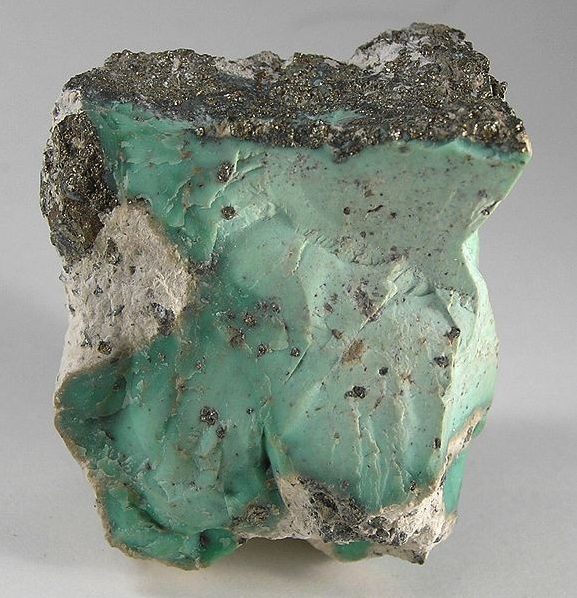
Variscite is the serene apple-green phosphate that skilled cutters have prized since the pre-Columbian Americas - a hydrated aluminum.
- Some of the finest variscite came from the Amatrice Mine in Utah, which is now largely exhausted - making vintage Utah variscite increasingly collectible.
- Variscite is chemically related to turquoise (copper aluminum phosphate) but lacks the copper that gives turquoise its blue color; chromium creates variscite's green instead.
- Pre-Columbian green stone artifacts from Mexico and the Southwest once thought to be jade have sometimes been re-identified as variscite by modern mineralogical analysis.
- Variscite turns white or cream when heated - the water molecules in its crystal structure are released at relatively low temperatures.
- The term 'Utahlite' was historically used in the gem trade for fine Utah variscite; the name acknowledged the geographic premium of that source.
- Collectors of rare phosphate minerals and unusual green gemstones
- Heart chakra practitioners who want a calming, earthy green alternative to malachite or turquoise
- Those drawn to pre-Columbian and Native American lapidary traditions
- Buyers wanting a genuinely unusual gemstone with distinct provenance and limited supply
- Earth-element green practitioners who find malachite too intense and want a gentler green frequency
- Everyday ring or bracelet wearers - at Mohs 3.5-4.5, variscite scratches very easily
- Those wanting a durable, maintenance-free gem - variscite requires care and avoiding all water exposure
- Buyers expecting consistent color from piece to piece - variscite color and pattern vary greatly by deposit
What Is Variscite?
Variscite is a hydrated aluminum phosphate mineral with the formula AlPO4·2H2O, forming in the orthorhombic crystal system. Its characteristic apple-green to medium green color - sometimes edging toward blue-green - comes from trace chromium and/or iron in the mineral structure. It rates 3.5 - 4.5 on the Mohs hardness scale.
Variscite occurs in masses and nodules rather than distinct crystals, and gem-quality material is typically opaque to slightly translucent with natural matrix veining that many collectors consider as visually important as the green itself.
The name comes from Variscia, the historical Latin name for the Vogtland region of Germany where the mineral was first described in 1837. However, the most commercially significant modern sources are in the western United States, particularly Utah and Nevada, and in Queensland, Australia.
Clintonite, crandallite, and turquoise are common mineral associates in variscite deposits, and some variscite occurs in close proximity or intermixed with turquoise, creating combined specimens prized by collectors.
At Mohs 3.5 to 4.5, variscite is a soft stone requiring careful handling and appropriate jewelry settings. It is typically cut as cabochons for pendants or earrings rather than as rings.
The phosphate chemistry means it should be kept dry - water can dissolve the outer surface over time and accelerate chemical alteration. Despite these limitations, variscite's distinctive calm green and its limited availability make it a sought-after collector gem.
How Variscite Compares
| Property | Variscite | Turquoise | Chrysocolla |
|---|---|---|---|
| Color | Apple-green to blue-green | Blue to blue-green | Blue-green, cyan |
| Hardness | 3.5 - 4.5 | 5 - 6 | 2 - 4 |
| Price / carat | $ Budget | $ Budget | $ Budget |
| Best For | Display, collector, pendants | Jewelry, talismans | Display, pendants |
Meaning and Symbolism
Variscite was used by pre-Columbian cultures in what is now the American Southwest and Mexico as a turquoise substitute and as a valued gem in its own right. Hohokam and Anasazi artifacts include variscite beads and ornamental pieces.
Some researchers believe early Mesoamerican green stones described as jade may in some cases have been variscite, since green stones broadly carried jade's spiritual significance across cultures that lacked access to true jadeite.
In European lapidary tradition, variscite was known from the Vogtland German deposits and used in period jewelry, though it remained relatively obscure compared to emerald and turquoise.
The discovery of Utah and Nevada deposits in the 19th and 20th centuries brought variscite to wider collector attention in North America, where its distinctive apple-green set it apart from the blue-dominant turquoise market.
In crystal healing tradition, variscite is described as a deeply calming stone - associated with heart-centered peace, the resolution of worry, and the kind of still, serene awareness that comes from being in a quiet natural environment.
Practitioners believe its gentle green frequency is more accessible than stronger stones like malachite, making it an entry point for those new to heart-chakra work or for those in emotional recovery who need softness rather than intensity.
Historical Timeline
Healing Tradition
Emotional
In crystal healing tradition, variscite is said to be one of the most calming green stones available - gentler and more accessible than malachite's intensity or emerald's commanding presence. Practitioners believe it is particularly supportive for worry, anxiety, and the kind of persistent mental looping that prevents emotional rest.
Many find it useful for those who overthink or struggle to let go of control, as its peaceful energy is said to invite trust in natural processes. It is traditionally associated with the restoration of patience and the acceptance of what is.
Spiritual
Variscite is described in crystal healing practice as a stone of heartfelt simplicity - it invites the practitioner into direct, uncomplicated connection with the natural world and with the heart's own quiet wisdom.
Unlike high-frequency stones that accelerate spiritual processes, variscite is said to decelerate the practitioner into a state of sustainable, embodied spiritual presence. Many nature-connected spiritual traditions use it as an earth-attunement stone, believing it creates a direct felt-sense connection to the consciousness of the plant and mineral world.
Physical
From a crystal healing perspective, variscite is traditionally associated with the nervous system, the skin, and the body's recovery from stress and overwork. Practitioners believe its deeply calming frequency directly benefits stress-related physical symptoms by reducing the energetic state of alarm that sustains them.
These are energetic traditions and should not replace qualified medical care for any physical condition.
Zodiac, Birthstone and Gifts
Variscite is associated with Taurus, Gemini, and Scorpio in crystal healing tradition. Taurus benefits from variscite's earth-element steadiness and its connection to beauty, natural materials, and sensory wellbeing. Gemini - a sign prone to mental restlessness and worry - may find variscite's profoundly calming energy a useful counterbalance.
Scorpio resonates with the stone's depth, its connection to hidden underground formation, and its capacity to support emotional recovery and deep rest. The stone's green color places it naturally in Venus's domain, connecting all three signs to qualities of beauty, peace, and natural harmony.
Care and Cleansing
Variscite is one of the most cleansing-sensitive minerals in the gem world and requires exclusively non-contact methods. Sound cleansing with a singing bowl or tuning fork is the best option - effective, safe, and appropriate for a stone with such gentle, harmonious energy. Moonlight overnight is equally effective and non-damaging.
Never rinse variscite with water - the hydrated phosphate chemistry makes it susceptible to surface dissolution and alteration from water contact, especially salt water, acids, or alkaline solutions. Never clean with any chemical product. Dust with a very soft dry brush only if needed for physical cleaning.
Smudging with sage smoke at a distance (not holding the stone directly in thick smoke) is acceptable.
- DO NOT expose to water of any kind - variscite is a hydrated phosphate that can dissolve on the surface with repeated water contact.
- DO NOT use salt water, vinegar, or any chemical cleaner.
- DO NOT use ultrasonic or steam cleaners.
- DO NOT store in bathrooms or damp environments - humidity can affect the surface over time.
- DO NOT use as a ring stone without a very protective setting - Mohs 3.5-4.5 scratches from fingernails and keys.
- NOTE: Prolonged direct sunlight may cause gradual color fading in some variscite specimens; display in indirect light.
Real vs Fake
Variscite is most commonly confused with turquoise (blue-green vs. green, but overlap exists) and with dyed magnesite or howlite marketed as variscite. Dyed stones show even, flat color throughout without the natural color variation and matrix veining typical of genuine variscite.
Under magnification, genuine variscite shows natural mineral texture; dyed material often shows dye concentration in pores and cracks.
Green-tinted glass or plastic variscite imitations lack the low specific gravity (2.20-2.57) and the mineral texture of genuine material. A simple test is heft - genuine variscite feels lighter than most stones of similar appearance because of its low SG.
Surface temperature is also diagnostic - genuine minerals stay cool longer than plastic.
Distinguish from turquoise by color: variscite is primarily green, turquoise primarily blue to blue-green. When color is ambiguous, RI measurement (variscite 1.550-1.594) or spectroscopic analysis provides definitive identification.
Buy from mineral dealers who specify the deposit locality - Utah, Nevada, or Australian provenance with location specifics is a meaningful quality marker for variscite.
Variscite Jewelry & Gifts
Commercial variscite from Australian sources begins around $10-$30 per carat. Good-quality mid-grade material with clean apple-green color and attractive matrix patterns runs $30-$80/ct. Fine Utah variscite from named historic deposits such as Amatrice Mine or Fairfield Mine can reach $100-$200+/ct, reflecting both quality and the closed-mine scarcity premium.
Color purity and matrix pattern are the primary value factors. The most prized variscite is a clean, vivid apple-green without excessive blue or gray undertones. Natural matrix veining in black or dark green adds aesthetic value and confirms natural origin.
Always ask for deposit locality information; Utah provenance commands a significant premium over generic commercial material.
Where to Buy Variscite
Affiliate disclosure: Some links below earn us a small commission at no extra cost to you. See our affiliate disclosure page.
Handmade, raw, and tumbled pieces from independent sellers worldwide.
Shop Variscite on Etsy →Accessories, tools, and specimen sets with fast Prime delivery.
Shop Variscite on Amazon →Certified loose gemstones graded and photographed for online buyers.
Shop Variscite on GemSelect →Pairs Well With



Where Variscite Is Found


