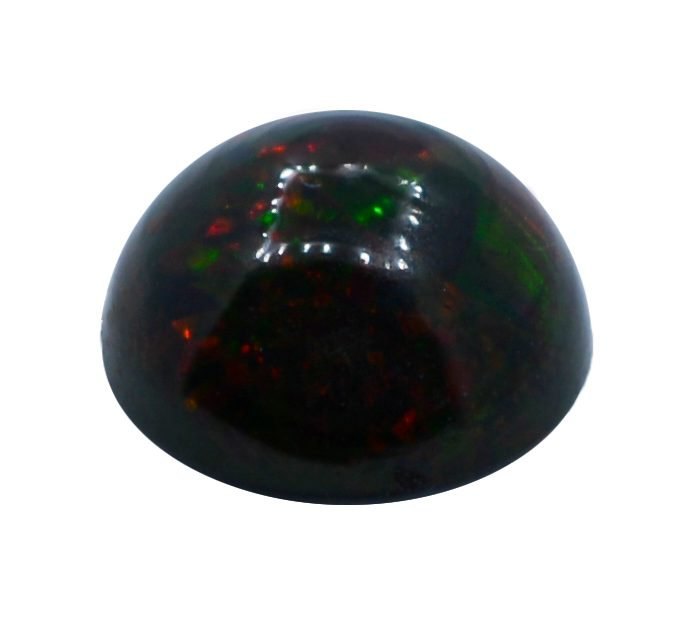
White Opal
Born in Australian outback sandstone, white opal is the milky-white classic October birthstone shimmering with rainbow play-of-color.
- White opal contains 3% to 21% water by weight, making it a hydrated silica gem.
- Coober Pedy in South Australia supplies about 70% of the world's commercial white opal.
- Opal's play-of-color comes from microscopic silica spheres that diffract light.
- Ethiopian Welo opal is often hydrophane, meaning it absorbs water when immersed.
- Sir Walter Scott's 1829 novel helped create a superstition that opals bring bad luck.
- October birthstone seekers wanting classic light opal with play-of-color
- Readers drawn to milky-white stones with rainbow fire at specific angles
- Jewelry buyers for soft-toned pendants and earrings in protective settings
- Practitioners working with crown chakra and intuitive perception
- Gift buyers for 14th anniversary or Libra birthday celebrations
- Buyers seeking ring hardness for daily wear (Mohs 5.5 to 6.5; use bezel settings)
- Readers wanting stones safe for prolonged sun or salt (opal is water-bearing)
- Shoppers expecting saturated color (black opal delivers stronger play-of-color)
What Is White Opal?
White opal, also called light opal, is a hydrated amorphous form of silica with a milky-white to cream base color. The stone displays play-of-color, a diffraction phenomenon where microscopic silica spheres scatter light into rainbow flashes. It rates 5.5 - 6.5 on the Mohs hardness scale.
Unlike crystalline quartz, opal contains 3% to 21% water by weight, making it a relatively soft and environmentally sensitive gem material.
At Mohs 5.5 to 6.5, white opal is softer than most fine gems and requires protective settings for ring use. The water content also makes opal susceptible to crazing, small fracture patterns that can develop from dehydration or temperature shock. Proper storage and care extend the stone's life considerably.
Commercial white opal comes primarily from South Australian outback mines, particularly Coober Pedy, Mintabie, and Andamooka. Ethiopian white opal from the Welo region has become significant since the early 2000s.
Australian white opal tends to show more stable structure, while Ethiopian material can be hydrophane (absorbs water). Both origins supply commercial volume to global markets, and October birthstone demand sustains consistent pricing across quality tiers.
How White Opal Compares
| Property | White Opal | Black Opal | Fire Opal |
|---|---|---|---|
| Hardness | 5.5 - 6.5 | 5.5 - 6.5 | 5.5 - 6.5 |
| Price / carat | $ Budget | $$ Mid-range | $$ Mid-range |
| Rarity | Moderate | Very Rare | Moderate |
| Best For | Birthstone, light jewelry | Investment, premium jewelry | Warm-tone jewelry |
Meaning and Symbolism
Opal has been prized for over 4,000 years, with archaeological evidence of opal use dating to ancient Ethiopia and the Middle East. Roman writer Pliny the Elder described opal's play-of-color in the first century CE, comparing it to the combined colors of ruby, emerald, and amethyst in a single stone.
The name comes from Sanskrit upala, meaning precious stone.
In modern crystal healing tradition, white opal is associated with amplified emotions, imagination, and intuitive receptivity. Practitioners often describe it as a stone that mirrors and intensifies the wearer's current emotional state, which is why crystal workers sometimes advise against wearing opal during unresolved grief or anger.
The stone's rainbow play-of-color is read as a symbol of emotional complexity and creative expression.
Opal has historically been associated with both good fortune and bad luck, with Victorian-era superstitions linking it to misfortune following Sir Walter Scott's 1829 novel Anne of Geierstein. This superstition was largely commercial mythology, and modern Australian opal trade has successfully rehabilitated the stone's reputation.
Today, white opal is one of the most popular birthstones among October readers and is firmly re-established in luxury jewelry markets.
Historical Timeline
Healing Tradition
Emotional
Practitioners believe white opal is a stone of amplified emotion, traditionally associated with creative imagination, intuitive receptivity, and emotional reflection. In crystal healing tradition, it is said to mirror and intensify the wearer's current feelings, which makes crystal workers recommend it during positive creative work rather than unresolved difficult emotions.
Many readers wear white opal during artistic projects or new-moon intention setting. Practitioners often pair white opal with moonstone for lunar intuition work and with clear quartz for gentle amplification.
Crystal workers traditionally describe white opal as a tender, reflective stone suitable for poets, writers, and readers exploring inner landscapes. Its association with the October birthstone tradition also makes white opal a meaningful gift for Libra-born readers, whose sign aligns with the stone's themes of beauty, harmony, and creative expression.
Spiritual
In crystal healing tradition, white opal is linked with the crown and third eye chakras, zones practitioners associate with intuitive perception and spiritual connection. The stone's play-of-color is read as a bridge between visible and invisible realms.
Many readers use white opal as a focal anchor during dream recall, lucid dreaming, or vision work.
Practitioners often describe white opal as a reflector stone, showing the practitioner their own current state rather than imposing new energy. Crystal workers sometimes incorporate white opal into intention grids for creative projects, alongside moonstone and selenite.
Opal pairs naturally with other water-associated stones because of its hydrated silica chemistry, and practitioners use it in water-element ceremonies and lunar rituals. Because of its environmental sensitivity, white opal is typically reserved for indoor ritual rather than outdoor meditation.
Physical
Practitioners believe white opal is traditionally associated with eye health, thyroid balance, and what they describe as overall fluid harmony in the body. Folklore links the stone with recovery from dehydration, steady hormonal cycles, and general feminine physical rhythms, framed as supportive accompaniment rather than medical intervention.
Many readers wear white opal pendants during periods of emotional recovery or creative work. The stone is not a substitute for healthcare and practitioners are consistent in describing its role as accompanying rather than treating.
Some crystal workers suggest white opal for people navigating hormonal transitions, often paired with moonstone for feminine rhythm work. Because opal is water-bearing and sensitive to dehydration, direct gem elixirs are generally avoided and indirect preparation is preferred.
Zodiac, Birthstone and Gifts
White opal is the traditional October birthstone and is closely associated with Libra for its beauty-harmony themes and with early Scorpio for late October birthdays.
For Libra readers, white opal is often recommended as a pendant for creative balance and aesthetic expression. Scorpio readers born in late October tend to appreciate the stone's reflective and depth-mirroring qualities. Practitioners sometimes pair white opal with pink tourmaline as a combined October birthstone kit.
Care and Cleansing
White opal requires gentle cleansing because of its water content and relative softness. Wipe with a dry or barely damp soft cloth for regular dust removal. Brief lukewarm rinses are acceptable for cleaning, but prolonged soaking should be avoided because water exposure can affect the stone's internal hydration balance over time.
Skip saltwater, ultrasonic cleaners, and steam cleaners entirely.
Moonlight is the preferred energetic cleansing method for white opal, fitting the stone's lunar associations. Sound cleansing with a singing bowl is safe. Brief smoke cleansing with palo santo or sage is acceptable.
Many practitioners rest white opal on selenite plates overnight as a preferred method that avoids water and direct light entirely.
Sunlight should be limited because prolonged UV exposure can slowly dry opal and contribute to crazing (fracture pattern from dehydration). Brief indirect daylight is acceptable. Dry climates can also stress opal over long years, and many opal enthusiasts store pieces in humidified cases or in small plastic bags with a damp cloth.
- DO store white opal in a soft pouch away from direct sunlight and heat.
- DO NOT use ultrasonic, steam cleaners, or saltwater on white opal.
- DO wipe white opal with a dry or barely damp cloth and dry promptly.
- DO NOT leave white opal in dry climates without occasional humidification.
- DO set white opal rings in protective bezel mountings rather than prong settings.
- DO remove white opal jewelry before hand washing, swimming, or showering.
- Note: Ethiopian hydrophane opal absorbs water; keep especially dry.
Real vs Fake
Genuine white opal shows characteristic play-of-color, the rainbow flashes that shift with viewing angle. Natural opal has a body color that ranges from milky-white through pale cream, with color-play best visible against the neutral base. Refractive index of 1.37 to 1.47 and specific gravity of 1.98 to 2.25 confirm identification.
Common imitations include doublet and triplet opal (thin slices of natural opal backed or sandwiched with other materials), synthetic opal (lab-grown, often with too-regular color pattern), and glass imitations. Doublets and triplets are legitimate constructions if disclosed. Synthetic opal shows a uniform honeycomb pattern under magnification. Plastic imitations feel warm and lightweight.
Ethiopian hydrophane opal can temporarily change appearance when immersed in water, a diagnostic but reversible property. For significant purchases, a lab certificate confirms natural origin, opal type (precious, common, boulder, doublet, triplet), and body color. Reputable sellers disclose Ethiopian hydrophane status because it affects care requirements.
White Opal Jewelry & Gifts
White opal spans a wide price range based on play-of-color intensity, body tone, and stone size. Commercial white opal with subtle color flash typically costs $10 to $80 per carat.
Mid-grade Australian white opal with good play-of-color runs $80 to $300 per carat, and top-quality Coober Pedy white opal with vivid color reaches $300 to $1,000 per carat. Exceptional museum-grade stones above ten carats command significant premiums.
Treatment and enhancement are generally limited for white opal. Some commercial material is coated or stabilized with resin, which should be disclosed. Doublets and triplets are widely available at lower price points and must be identified clearly.
For jewelry, focus on play-of-color range and brightness first, then on body color and pattern (harlequin, pinfire, broad flash), and use protective bezel settings. Ask reputable sellers about origin (Australian vs Ethiopian) and handling requirements.
Where to Buy White Opal
Affiliate disclosure: Some links below earn us a small commission at no extra cost to you. See our affiliate disclosure page.
Handmade, raw, and tumbled pieces from independent sellers worldwide.
Shop White Opal on Etsy →Accessories, tools, and specimen sets with fast Prime delivery.
Shop White Opal on Amazon →Certified loose gemstones graded and photographed for online buyers.
Shop White Opal on GemSelect →Pairs Well With



Where White Opal Is Found


