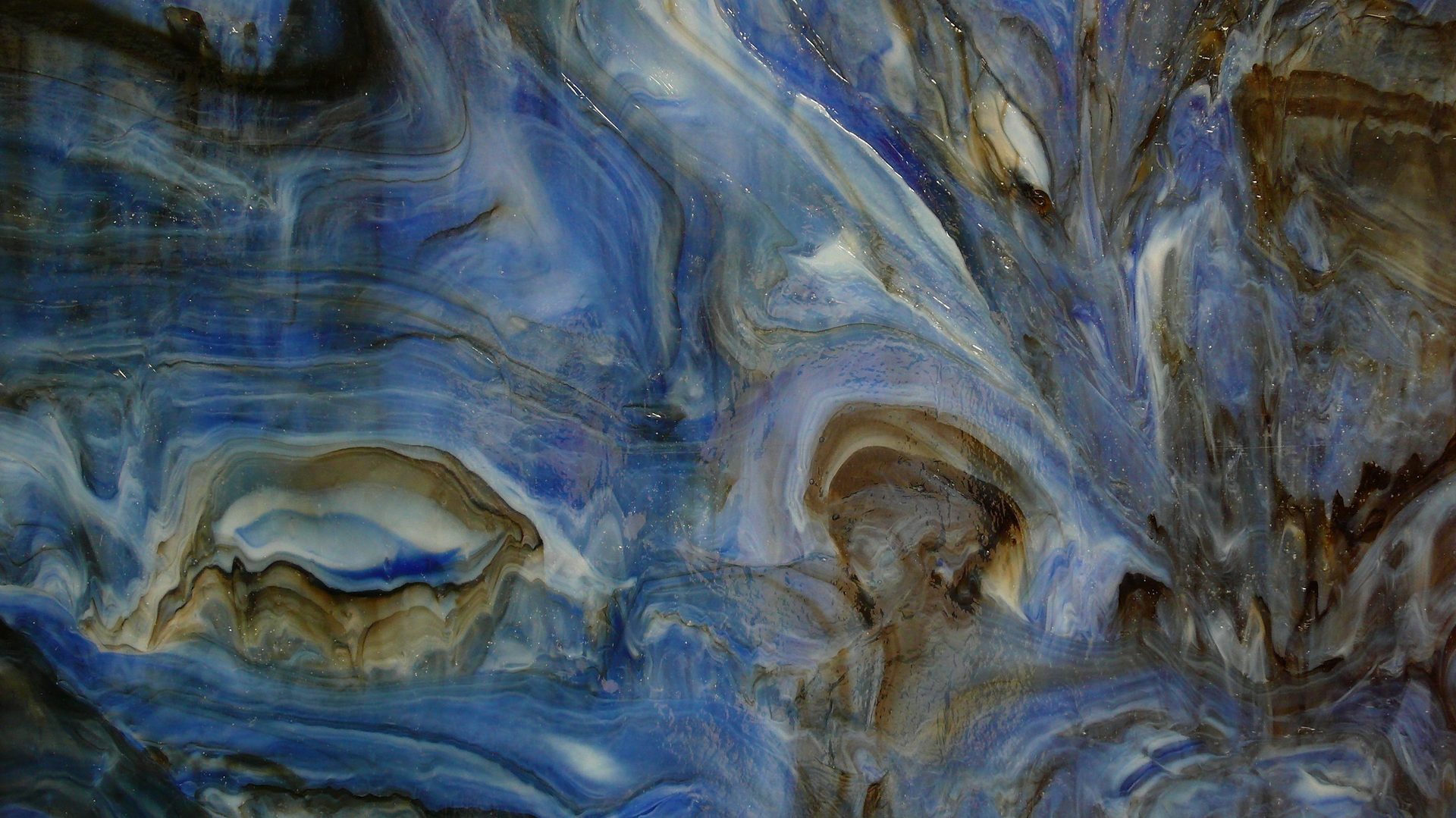
Blue Opal
Sky captured in stone - serene blue opal for communication, emotional calm, and spiritual clarity - a stone that wears the color of the clearest October morning.
- Blue opal's sky-blue color is created by the same optical phenomenon as the sky itself - the Tyndall effect, where light scatters through extremely small particles, making shorter blue wavelengths visible.
- Owyhee blue opal from Oregon is so translucent that fine specimens are faceted into gems that rival blue topaz and aquamarine in clarity, while having completely different optical characteristics.
- Blue opal from Peru is found in sedimentary deposits formed when silica-rich volcanic waters cooled and hardened at high altitude - some deposits at over 14,000 feet above sea level.
- The word "opal" may come from Sanskrit "upala" (precious stone) or possibly from the Greek "opallios" (to see a color change) - though the etymology is debated among linguistic historians.
- Some Australian blue opal shows faint play-of-color overlaid on its blue background - these are transitional pieces between common and precious opal and are prized for combining both opal aesthetics.
- those working on communication and self-expression
- writers, artists, and creative practitioners
- those drawn to sky and water color energies
- practitioners focused on throat and third eye work
- collectors interested in rare opal varieties
- buyers seeking a durable daily-wear stone
- those wanting play-of-color precious opal fire
- collectors focused solely on investment-grade gemstones
What Is Blue Opal?
Blue Opal is a common opal (without rainbow play-of-color) with serene sky-blue to teal coloration, caused by the Tyndall effect - the same optical phenomenon that makes the sky appear blue - as light scatters through submicroscopic voids and particulates within the amorphous hydrated silica structure.
The result is a color that appears to glow softly from within rather than reflecting light at the surface.
The most significant varieties are Andean blue opal from Peru (known for its distinctive watery sky-blue color found in the high-altitude Andes), Owyhee blue opal from Oregon's high desert (exceptionally translucent with a sky-to-teal blue), and Australian blue opal found in opalized sedimentary deposits alongside the famous Lightning Ridge material.
Oregon's Owyhee blue opal, discovered near the Idaho-Oregon border's Owyhee Mountains, is considered among the finest blue opal in the world - a translucent to semi-transparent pale sky-blue material that can be faceted into breathtaking gems.
This is distinct from the more opaque Peruvian material and commands significantly higher prices from collectors and jewelers.
Blue Opal vs. Similar Blue Stones
| Property | Blue Opal | Aquamarine | Larimar |
|---|---|---|---|
| Hardness | 5.5-6.5 | 7.5-8 | 4.5-5 |
| Price/ct | $ Budget | $ Budget | $ Budget |
| Rarity | Uncommon | Common | Uncommon |
| Best For | Creativity, calm | Courage, clarity | Atlantean wisdom |
Meaning and Symbolism
Blue opal has traditionally carried meanings of clarity, communication, and the expansive calm of sky and water. Its color immediately evokes the two most open, boundary-dissolving elements of the natural world - perfect visual metaphors for the communication and perspective qualities practitioners associate with this stone.
In crystal traditions, blue opal is strongly linked to the throat chakra - specifically to the kind of creative self-expression that requires both courage and emotional calm.
Writers, musicians, and visual artists frequently choose this stone, believing it supports creative flow by quieting the inner critic and opening the channel between feeling and expression.
The stone is also associated with psychic communication, dreaming, and the reception of subtle intuitive information - connecting it to the third eye alongside the throat. Some traditions call it the "artist's intuition stone," believing it helps creative people access and express the deep perceptions that inform genuinely original work.
Historical Timeline
Healing Tradition
Emotional
Practitioners describe Blue Opal as calming and liberating for the emotional blocks around authentic self-expression. The stone is said to dissolve the fear of speaking one's truth - the anxiety about how one's authentic self will be received - and replace it with a relaxed, sky-like openness.
Many crystal healers use it for clients dealing with social anxiety, creative blocks, or the suppression of genuine feeling and opinion. It is traditionally associated with the emotional courage to create, speak, and be genuinely oneself without defensive performance.
Spiritual
In spiritual practice, blue opal is associated with the throat chakra's spiritual expression - channeling higher wisdom through creative and communicative acts. Practitioners believe it opens a clear channel between spiritual perception (third eye) and outer expression (throat), making it particularly valuable for spiritual teachers, channels.
Those whose creative work carries a message they feel called to share. Some traditions link blue opal to Akashic access - the retrieval of ancient wisdom through meditation and artistic expression.
Physical
Some crystal wellness practitioners associate Blue Opal with the throat, vocal cords, thyroid, and respiratory system. It is traditionally used in placement over the throat during energy healing sessions for communication and expression work. No scientific evidence supports these associations. Always consult a qualified healthcare provider for health concerns.
Zodiac, Birthstone and Gifts
Gemini's mercurial creative communication and love of idea exchange resonates deeply with blue opal's throat and expression energies. Libra's artistic sensibility and need for harmonious, graceful communication aligns with blue opal's calm, creative expression - both signs are said to find this stone a natural resonant ally.
Care and Cleansing
Moonlight is the strongly preferred cleansing method for all opal varieties including blue opal - place on a windowsill under a full moon without exposure to dew or outdoor humidity. The lunar energy aligns with opal's water-based nature and the stone's intuitive associations.
Sound cleansing is ideal for regular maintenance - a crystal bowl, tuning fork, or even humming over the stone for 2-3 minutes is safe, effective, and avoids any moisture or thermal change that could stress the stone.
Avoid salt, prolonged sunlight, steam, and abrupt temperature changes. These can all cause opal to lose water content and develop crazing (surface cracking). Blue opal's sky-like color is its most valued quality - protecting it from any treatment that could alter the optical scattering is essential.
- DO store in a cool, slightly humid environment - opal's water content must be maintained to prevent crazing.
- DO NOT use salt, extended sunlight, or heat sources near blue opal as dehydration causes surface cracking.
- DO NOT use ultrasonic cleaners, steam cleaners, or harsh chemicals on any opal variety.
- NOTE that blue opal at 5.5-6.5 hardness is softer than most quartz varieties - store separately.
- DO NOT store loose with harder stones that could scratch the surface.
Real vs Fake
Genuine blue opal has the characteristic Tyndall-effect color that appears to glow from within - the blue is not surface-reflected but internally generated by light scattering. This gives even opaque blue opal a luminous quality.
Dyed howlite, dyed chalcedony, and blue glass are common blue opal substitutes. Howlite shows characteristic gray veining through the blue. Chalcedony has a different hardness (6.5-7) and slightly different luster. Glass warms quickly in hand and has no internal texture.
Blue synthetic opal (Gilson opal) exists in blue varieties with artificial play-of-color. Natural blue common opal has no play-of-color (or very faint in transitional specimens). Perfect, uniform play-of-color in a piece sold as common blue opal warrants scrutiny.
Owyhee blue opal is sometimes counterfeited as the name has become associated with premium pricing. Genuine Owyhee material has extraordinary translucency and a unique pale to medium sky-blue tone - quite different from the more opaque Peruvian material.
Purchase from dealers with locality documentation: Ica/Arequipa for Peruvian, Owyhee Mountains (Malheur County, Oregon) for the American variety. Any dealer unable to specify source for blue opal marketed at premium prices raises concerns.
Blue Opal Jewelry & Gifts
Peruvian blue opal tumbles and carved pieces run $8-$35; Owyhee blue opal cabochons and faceted gems $30-$300+ depending on size, color, and translucency. Australian blue opal cabochons range widely based on whether any play-of-color is present.
Owyhee blue opal represents the premium tier in blue opal - look for exceptional translucency, consistent sky-blue to medium blue color, and absence of matrix inclusions in faceted pieces. These gems are genuinely beautiful and hold collector value.
Peruvian blue opal offers excellent value for metaphysical and decorative use. Look for consistent, medium blue color without brown or gray undertones. Carved hearts, spheres, and towers in the $15-$50 range offer the best value-to-quality ratio.
For jewelry use, blue opal should be set in protective bezels rather than prong settings, which leave the edges of a relatively soft stone vulnerable to chipping. Silver bezel settings are traditional and protective.
Avoid very cheap blue opal at $1-$3 that shows suspicious uniformity or color inconsistency - this is almost certainly dyed howlite or glass. Genuine Peruvian blue opal in the $8-$20 range per piece is the realistic entry price for quality material.
Where to Buy Blue Opal
Affiliate disclosure: Some links below earn us a small commission at no extra cost to you. See our affiliate disclosure page.
Handmade, raw, and tumbled pieces from independent sellers worldwide.
Shop Blue Opal on Etsy →Accessories, tools, and specimen sets with fast Prime delivery.
Shop Blue Opal on Amazon →Certified loose gemstones graded and photographed for online buyers.
Shop Blue Opal on GemSelect →Pairs Well With



Where Blue Opal Is Found


