Golden Sunstone
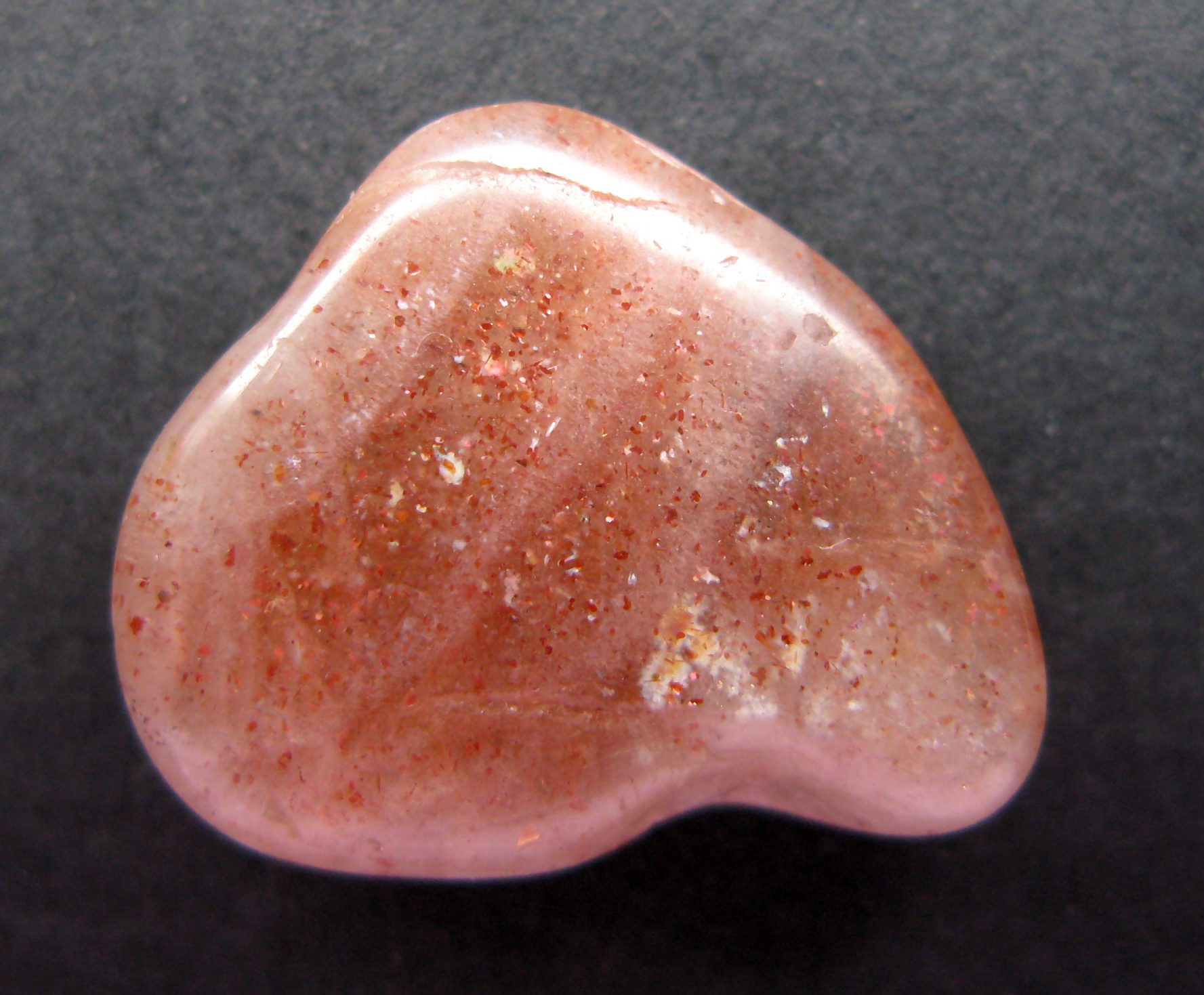
A warm golden feldspar spangled with metallic light from within, golden sunstone channels the sun's most generous.
- Viking navigators may have used feldspar minerals including sunstone to find the sun's position through overcast skies by observing how polarized light scattered through the stone - researchers discovered this property experimentally.
- Golden sunstone's aventurescence comes from flat platelets of hematite (iron oxide) or goethite suspended within the feldspar; the same iron mineral that makes Mars red gives sunstone its inner sparkle.
- Sunstone cabochons can show stars (asterism) if the platelet inclusions are oriented in multiple directions - star sunstone is rarer and more valuable than standard aventurescent material.
- Norwegian sunstone from Tvedestrand has been recognized as a gem material since the 1800s and has made appearances in Scandinavian royal jewelry.
- India is now the among the largest known commercial producer of sunstone, with Rajasthan state producing large quantities of warm orange to golden material for the global crystal and jewelry market.
- Practitioners seeking a joyful, uplifting stone for solar plexus and sacral chakra work
- People working through depression, seasonal affective states, or chronic low energy
- Jewelry wearers who want warm golden color with an inner sparkle at accessible prices
- Leo, Libra, and Aries placements drawn to solar energy in a gentle, generous form
- Crystal beginners looking for a cheerful, accessible stone with distinctive optical beauty
- Buyers who need a very hard stone for active ring wear - at Mohs 6, sunstone needs protective settings
- Those seeking rare or investment-grade stones - golden sunstone is beautiful but commercially available
- Collectors wanting the copper-schiller uniqueness of Oregon sunstone specifically (choose that entry)
What Is Golden Sunstone?
Golden sunstone is a feldspar mineral in the oligoclase or labradorite series, characterized by its warm yellow to golden-orange color and the distinctive optical phenomenon called aventurescence - a metallic, spangled internal sparkle produced by flat, reflective platelet inclusions of hematite or goethite minerals suspended within the feldspar crystal.
The name sunstone refers to this internal light phenomenon rather than to a specific mineral species: several different feldspar varieties from different localities all qualify as sunstone when they show aventurescence.
Golden sunstone specifically refers to material showing warm yellow to golden-orange body color with visible schiller - distinguishing it from orange-red Oregon sunstone and from darker varieties.
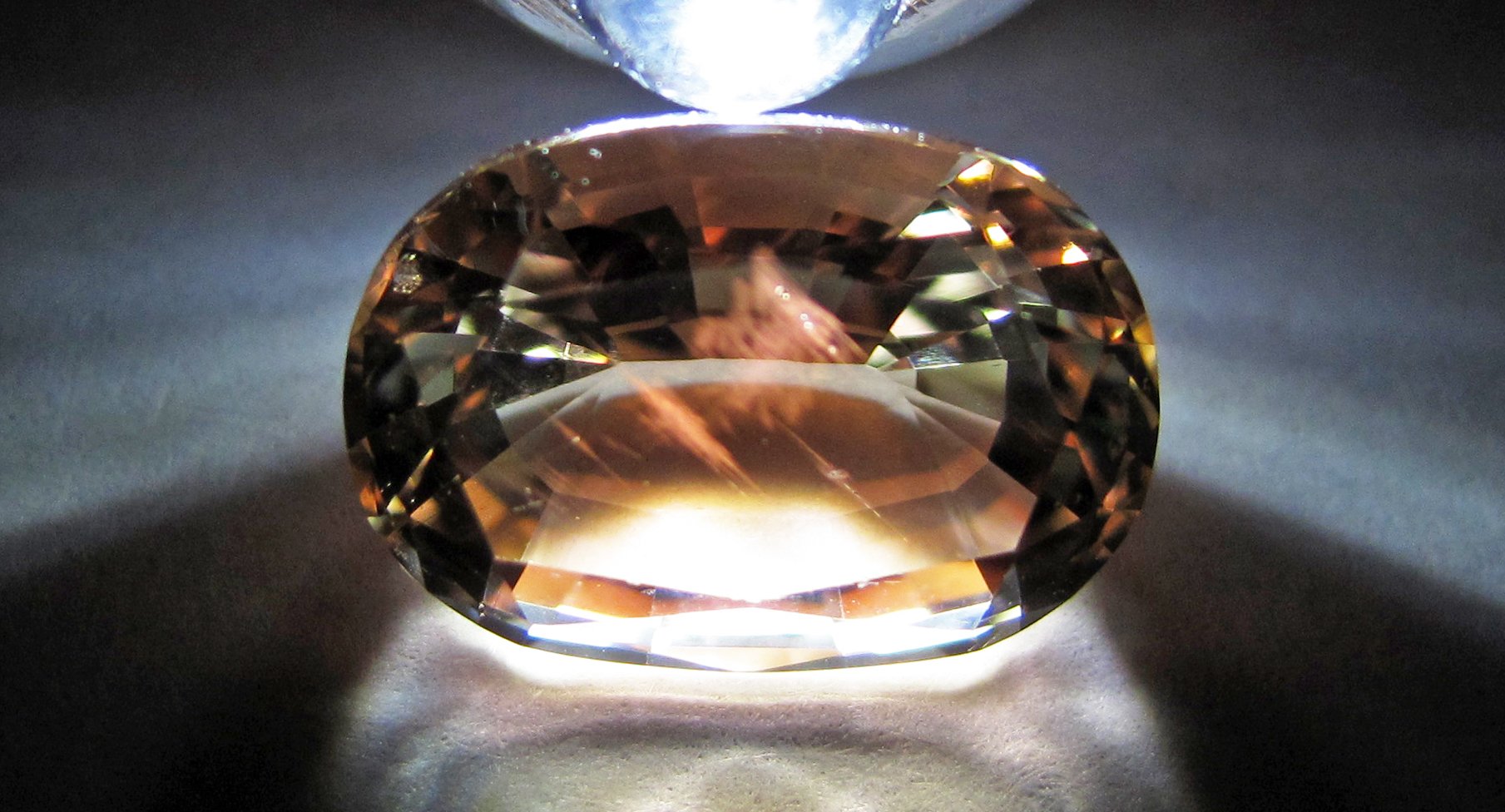
At Mohs 6 to 6.5, golden sunstone is moderately hard and suitable for pendants, earrings, and protected ring settings. The cabochon cut is particularly popular for sunstone because it maximizes the visibility of the aventurescent schiller; faceted cuts show more body color but less pronounced schiller.
Major sources include Norway's Tvedestrand region (the original and most famous sunstone locality), India's Rajasthan state (the largest commercial producer), Canada, and the United States. Each locality produces material with slightly different color tone and schiller character.
How Golden Sunstone Compares
| Property | Golden Sunstone | Oregon Sunstone | Citrine |
|---|---|---|---|
| Optical effect | Aventurescence (hematite) | Schiller (copper) | None |
| Hardness | 6 - 6.5 | 6 - 6.5 | 7 |
| Price / carat | $ Budget | $ Budget | $ Budget |
| Best For | Jewelry, healing | Collector, unique jewelry | Affordable yellow |
Meaning and Symbolism
Sunstone has carried solar associations across cultures wherever it has been found. Norse mythology describes a magical sun-finding stone called a solfesten used by Viking navigators to locate the sun on overcast days - a property that researchers have connected to the optical properties of calcite or feldspar crystals that polarize light.
Whether or not golden sunstone specifically was the navigational mineral, the cultural association of sunstone with finding direction and maintaining orientation in darkness is deeply embedded.
In crystal healing tradition, golden sunstone is associated with joy, independence, self-nourishment, and the ability to maintain one's inner light through external difficulty. The stone's schiller - the metallic sparkle within the warm gold - is a visual metaphor for the inner light that persists beneath whatever surface conditions the practitioner is experiencing.
The stone's solar plexus association connects it to confidence and the willingness to be seen - to let one's warmth and vitality be visible rather than hiding it from a world that might not appreciate it.
Many practitioners describe golden sunstone as a stone for people who have learned to dim themselves for others' comfort.
Golden sunstone is also associated with prosperity and abundance in several traditions, connecting solar energy to the generative principle of the sun as the source of all growth and material productivity.
Historical Timeline
Healing Tradition
Emotional
Practitioners believe golden sunstone carries a fundamentally restorative emotional quality - it is the stone of returning to one's own light after a period of dimming, self-erasure, or external suppression.
In crystal healing tradition, it is particularly recommended for people recovering from controlling relationships, environments where self-expression was not safe, or the cumulative dimming effect of years of not being genuinely seen.
The stone is associated with joy as a practice rather than a state - the active cultivation of inner brightness rather than waiting for external circumstances to improve. Many readers describe golden sunstone as the stone that helps them remember who they were before life taught them to be smaller.
Golden sunstone is also used in practices around self-nourishment - learning to give to oneself the warmth and attention that has historically flowed only outward. This connects to its solar associations with the generative abundance of a sun that shines equally on all without depleting itself.
Spiritual
Golden sunstone's solar plexus primary association places it at the center of spiritual practice focused on authentic embodiment - being genuinely present in one's body, life, and choices rather than living from a false self constructed for others' approval. Practitioners describe working with sunstone as a practice of spiritual sovereignty.
The aventurescent sparkle is used in meditation as a contemplation object for inner radiance: holding the stone in changing light and finding the angles at which the inner schiller emerges creates a direct sensory experience of hidden light becoming visible - a physical anchor for the spiritual teaching that inner light is always present, sometimes simply waiting for the right angle of attention.
In shamanic and sun-medicine traditions, sunstone serves as a physical ally for solar ceremony, noon rituals, and practices honoring the generative creative principle of the sun. The stone is placed in sunlight to charge during spring and summer solar festivals.
Physical
Crystal healing tradition connects golden sunstone to the immune system, vitality, and the body's seasonal response to light levels. Many practitioners in northern latitudes use sunstone specifically as a seasonal support stone during winter months when reduced sunlight affects energy levels and mood.
The stone's warm color and solar associations also connect it to metabolism, digestion, and the body's ability to convert nutrition into usable energy - all governed by the solar plexus in energetic medicine traditions.
Practitioners sometimes place golden sunstone on the solar plexus during bodywork sessions focused on releasing held stress, believing the stone's warmth and light-generating quality supports the nervous system's return to a relaxed, resourced state after periods of sustained stress.
Zodiac, Birthstone and Gifts
Golden sunstone's Sun rulership connects it most naturally to Leo, the solar sign of authentic creative expression and generous warmth. Practitioners recommend golden sunstone to Leo placements as a stone that validates and supports the sign's best quality - the genuine, unmistakable warmth that Leo brings to everyone fortunate enough to be in their orbit.
For Libra, golden sunstone offers a solar counterbalance to the sign's tendency to give more warmth than it retains for itself. The stone supports Libra in recognizing that its own light is a resource to be maintained, not simply distributed.
Aries connects to sunstone through fire energy and the stone's association with initiation, courage, and the first bright dawn of new endeavors. Practitioners describe golden sunstone as the stone of sunrise - the quality of beginning something with full confidence and joy.
Care and Cleansing
Golden sunstone is safe for most cleansing methods. Brief rinsing under lukewarm water for 30-60 seconds cleanses and refreshes the stone.
Sunlight cleansing is the most naturally resonant method for a solar stone. Morning sunlight for 20-30 minutes both cleanses and charges golden sunstone's solar energy.
Smoke cleansing with sage, cedar, or frankincense is safe. Sound cleansing with a singing bowl is effective and pleasant for this warm, resonant stone. Moonlight overnight on a windowsill is safe if preferred, though the solar connection makes morning light more aligned with the stone's nature.
Salt bed cleansing (dry salt, not saltwater) for 1-2 hours is safe for loose stones; avoid for set jewelry where the metal setting could be affected.
- DO use protective settings for sunstone jewelry - at Mohs 6, protective bezels or halos are recommended for ring wear.
- DO remove sunstone rings before activities involving impact, heavy lifting, or abrasive materials.
- DO store away from harder minerals (quartz, topaz, corundum) that can scratch the surface.
- DO clean periodically with mild soapy water and a soft brush to remove accumulated oils from skin contact.
- Note: some commercial sunstone is sold as a glass-filled composite or has enhanced color treatments - ask sellers about natural vs. treated material.
Real vs Fake
Golden sunstone faces two main authenticity concerns: glass imitation (aventurine glass, which contains man-made metallic flakes in glass) and mislabeled composite material. Aventurine glass (sometimes called goldstone) is a completely man-made product that mimics sunstone's schiller with synthetic copper or chromium flakes in glass.
It should be sold honestly as glass but is sometimes marketed as sunstone.
The distinction between genuine sunstone and goldstone (aventurine glass) is straightforward: genuine sunstone is a crystalline mineral with natural optical properties; goldstone is glass with synthetic metallic flakes. Glass is slightly lighter, feels warmer in the hand, shows perfectly uniform distribution of the sparkle, and lacks the natural inclusions of mineral sunstone.
True sunstone's schiller appears in irregular patches and varying intensities as the stone is tilted.
For golden sunstone specifically, verify that the body color is warm yellow to golden-orange rather than the harsh orange-red of most aventurine glass imitations. The natural color of golden sunstone has a warm mineral depth that glass cannot precisely replicate.
Reputable mineral dealers and gem sellers label genuine sunstone correctly and can speak to its geological origin. Aventurine glass sold as sunstone at very low prices is the most common market misrepresentation.
Golden Sunstone Jewelry & Gifts
Golden sunstone is affordably priced compared to most gem materials. Cabochons and tumbled pieces run $10-$50 depending on size and schiller intensity. Faceted golden sunstone of 1-3 carats costs $20-$100 per carat. Premium material with strong, even schiller and deep golden color reaches $100-$200 per carat.
When evaluating golden sunstone, look for strong schiller visible in multiple light conditions, warm body color without brownish or grayish modifiers, and clean surface quality. Translucent to transparent material with good clarity shows the schiller most effectively.
Norwegian sunstone from Tvedestrand is historically the most prestigious but relatively uncommon in current commercial supply. Indian Rajasthan material dominates commercial markets and offers excellent quality at competitive prices.
Distinguish from aventurine glass (goldstone) by verifying mineral origin, checking for the natural irregularity of the schiller distribution, and confirming with a seller who identifies the stone as genuine feldspar sunstone.
Where to Buy Golden Sunstone
Affiliate disclosure: Some links below earn us a small commission at no extra cost to you. See our affiliate disclosure page.
Handmade, raw, and tumbled pieces from independent sellers worldwide.
Shop Golden Sunstone on Etsy →Accessories, tools, and specimen sets with fast Prime delivery.
Shop Golden Sunstone on Amazon →Certified loose gemstones graded and photographed for online buyers.
Shop Golden Sunstone on GemSelect →Pairs Well With


Where Golden Sunstone Is Found


