Grossular Garnet
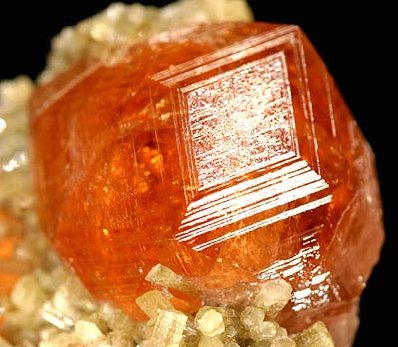
Grossular garnet spans the widest color range in the garnet family - from colorless through mint green, golden honey.
- Hessonite is one of the nine sacred Navaratna gems of Vedic tradition - alongside diamond, ruby, emerald, blue sapphire, yellow sapphire, red coral, pearl, and cat's eye - each assigned to a specific planet.
- Grossular garnet was originally found in Siberia in colorless crystals that looked like gooseberries - hence its botanical Latin name from 'grossularia' (gooseberry).
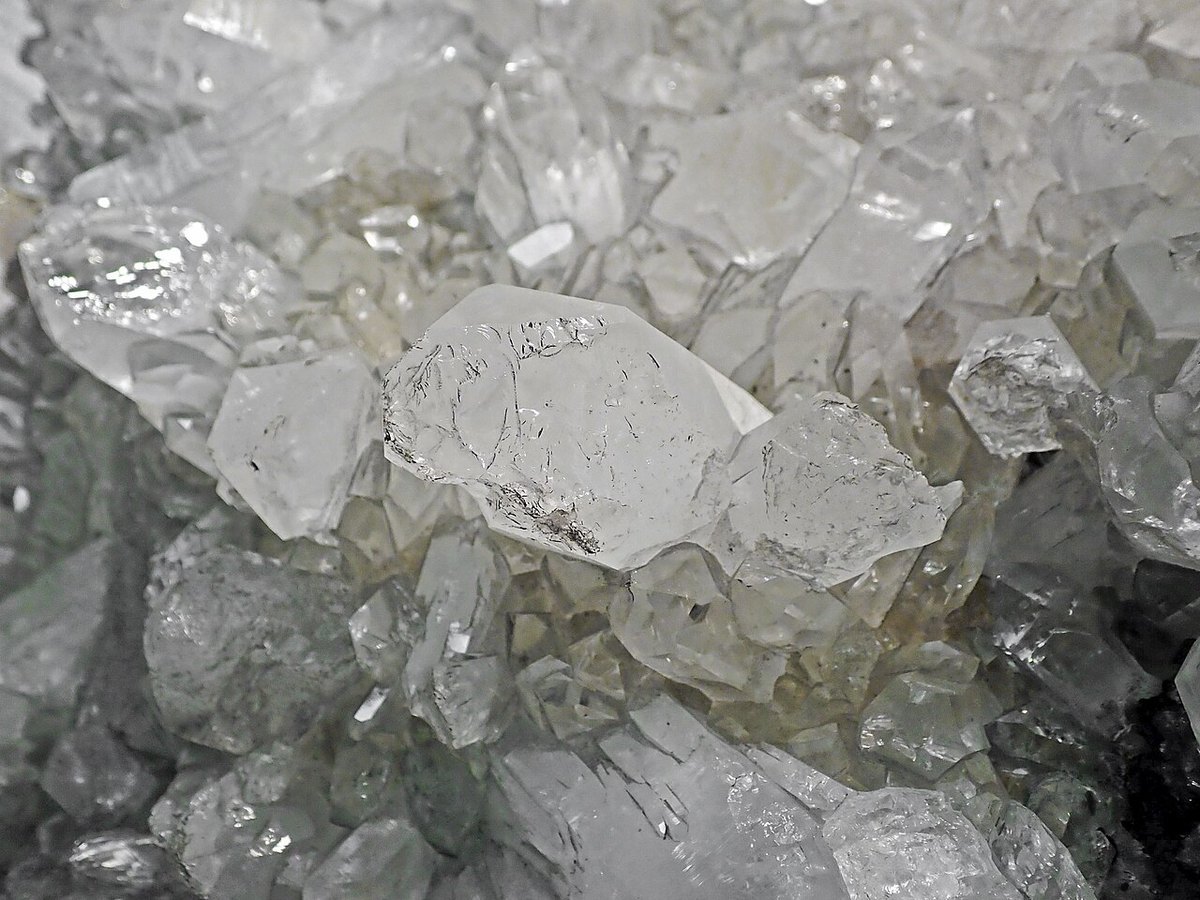
- Mint grossular from Pakistan (known as 'leuco garnet' when colorless) occasionally shows exceptional clarity that rivals the finest gemstones in the transparent category.
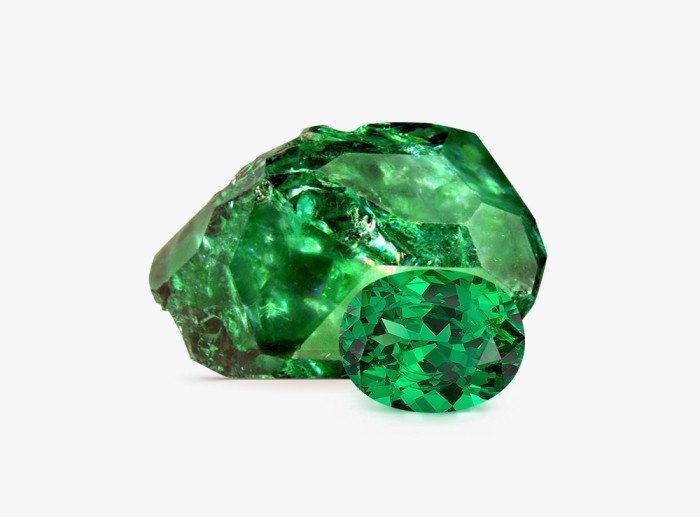
- Tsavorite was commercially named after the Tsavo National Park - a masterpiece of commercial branding that helped transform a relatively unknown East African garnet into an internationally recognized gem.
- Some hessonite from Sri Lanka shows a distinctive 'roiled' internal appearance - swirling, wavy inclusions caused by compositional fluctuations during crystal growth - that is diagnostic for the variety.
- Collectors seeking a single species that offers the widest color range in the garnet family
- Heart chakra practitioners wanting accessible green garnet in mint or tsavorite quality
- Virgo and Capricorn individuals seeking earthy green grounding energy
- Gift buyers wanting a natural, untreated orange-brown gem with metaphysical tradition (hessonite)
- Jewelry designers seeking versatile natural gems from mint to vivid green
- Those specifically seeking tsavorite - listed separately and priced significantly higher
- Budget buyers for fine tsavorite - quality tsavorite starts at $200 per carat
- Buyers needing Mohs 8+ hardness for high-impact daily-wear settings
What Is Grossular Garnet?
Grossular garnet is the calcium-aluminum silicate member of the garnet family and remarkable for its extraordinary color range - the widest of any garnet species. It rates 6.5 - 7.5 on the Mohs hardness scale.
Pure grossular is colorless, but trace elements produce varieties spanning from the vivid chrome green of tsavorite to the warm honey-orange of hessonite to pale mint green and even colorless specimens. The name comes from the Latin 'grossularia' meaning gooseberry, referring to the pale green color of many early-described specimens.
The most commercially significant grossular varieties are tsavorite (deep chrome-vanadium green from East Africa, now listed separately as its own page), hessonite (orange-brown cinnamon garnet from Sri Lanka and other sources), and mint grossular (pale minty green from Tanzania and Pakistan). Each has its own distinct market niche and buyer demographic.
Hessonite in particular has a rich tradition in Vedic gemology as an important astrological gem.
Grossular occurs in contact metamorphic and skarn environments, forming in calcium-rich rocks that have been altered by intense heat and mineral-rich fluids. East African tectonic activity has produced some of the world's finest tsavorite.
Sri Lanka's ancient metamorphic geology yields the orange hessonite that has been prized for centuries across South Asian gem traditions.
How Grossular Garnet Compares
| Property | Hessonite Grossular | Mint Grossular | Tsavorite Grossular |
|---|---|---|---|
| Color | Orange-brown honey | Pale minty green | Deep vivid green |
| Price / carat | $ Budget | $$ Mid-range | $$ Mid-range |
| Rarity | Common | Uncommon | Rare |
| Best For | Vedic gems, spiritual | Jewelry, collectors | Fine jewelry, collection |
Meaning and Symbolism
Grossular garnet in its hessonite form has one of the longest metaphysical traditions of any garnet variety, known in Sanskrit as 'gomed' or 'Rahu stone' - the gem associated with the shadow planet Rahu in Vedic astrology.
Vedic practitioners have prescribed hessonite for centuries to balance Rahu's shadowy influence, which is associated with confusion, illusion, obsession, and the hidden aspects of karma. The stone is considered one of the nine sacred Navaratna gems.
Mint grossular carries the fresh, renewing energy of new growth - the first pale green of spring leaves emerging from winter's dark soil. Practitioners believe it supports the heart chakra in its most tender and vulnerable opening, the tentative green of new life rather than the established richness of mature growth.
Green grossular in all its forms is associated in crystal healing tradition with Earth's abundant generosity - the inexhaustible creativity of the natural world.
Many practitioners use it during abundance and gratitude meditations, believing it connects the practitioner to the planet's fundamental generosity and supports a felt sense of material security and natural sufficiency.
Historical Timeline
Healing Tradition
Emotional
Practitioners believe hessonite (the Rahu stone) works with shadow integration - bringing hidden emotional material into conscious awareness so it can be processed and released. Crystal healing tradition suggests it dissolves confusion and self-deception by illuminating the unconscious patterns driving behaviors that feel compulsive or inexplicable.
Many find that working with hessonite during periods of emotional fog or obsessive thinking brings a clarifying effect that doesn't force resolution but creates enough inner space to see more clearly.
Mint grossular, by contrast, is associated with tender emotional renewal - the gentle reopening of the heart after loss, disappointment, or closure. It is said to support the early, tentative stages of trusting again.
Spiritual
In Vedic tradition, hessonite is considered a powerful astrological remedy for Rahu's influence - clearing the confusion and illusion associated with this shadow planet and supporting clarity of purpose, discrimination between real and imagined threats, and the capacity to navigate complex karmic situations with equanimity.
For those who don't practice Vedic astrology, hessonite carries the broader principle of bringing shadow material into relationship with conscious awareness - a process central to many Western and Eastern spiritual traditions.
Green grossular in all varieties is associated with Earth spiritual practices that honor the natural world as a living intelligence worthy of reverence.
Physical
Crystal healing tradition associates hessonite with the digestive system and the body's capacity to metabolize - not just food but experience and information. Some Vedic practitioners recommend it for those experiencing digestive difficulty or what they describe as metabolic stagnation in an energetic context.
Green grossular (mint or tsavorite) is associated with the heart and respiratory system through its heart chakra correspondence. Always consult qualified medical professionals for health concerns.
Zodiac, Birthstone and Gifts
Virgo, the earth sign of discernment and practical service, resonates with grossular's wide range and its association with Earth's abundant variety. Practitioners believe green grossular supports Virgo's heart-centered desire to serve through careful, skilled work, grounding the sign's analytical nature in warmth and genuine care.
Capricorn, the earth sign of disciplined achievement, finds in hessonite garnet a particularly meaningful ally: the Vedic Navaratna stone associated with shadow integration and clarity of purpose mirrors Capricorn's own deep engagement with the karmic dimensions of work, ambition, and the responsibility that comes with authority and achievement.
Care and Cleansing
Grossular garnet is safe for water cleansing, sunlight, moonlight, and brief salt exposure. Warm soapy water and a soft brush is the standard cleaning method. Hessonite's characteristic roiled inclusions are not vulnerable to water or standard cleaning, but ultrasonic cleaning should be avoided for significantly included specimens.
Energetically, burying grossular briefly in clean dry soil is a particularly resonant Earth-element cleansing method. Leaving it outdoors overnight in good weather connects it to its mineral origin in Earth's crust. Moonlight in Virgo or Capricorn seasons is also appropriate. Regular cleansing after emotional healing work is especially recommended for hessonite.
- DO NOT use ultrasonic cleaners on hessonite with significant roiled inclusions.
- DO store away from harder stones that can scratch garnet.
- NOTE: Hessonite's characteristic roiled appearance is natural and diagnostic - not a flaw.
- NOTE: Consult a Vedic astrologer before using hessonite as a Rahu astrological remedy.
- DO clean regularly with warm soapy water.
- DO handle mint grossular carefully - pale stones show chips and scratches more visibly than darker gems.
Real vs Fake
Hessonite is sometimes confused with brown topaz, citrine, or fire opal. A refractometer test confirms garnet (singly refractive, RI 1.72 to 1.80) versus topaz (doubly refractive, RI 1.619 to 1.627) or quartz (1.544 to 1.553). Hessonite's diagnostic roiled internal appearance under magnification is also highly characteristic.
Mint grossular is sometimes confused with mint tourmaline, green beryl, or pale green sapphire. Again, refractometer and inclusion analysis distinguishes these reliably. Mint grossular is singly refractive with a consistent RI in the garnet range, while tourmaline is doubly refractive.
Synthetic grossular is not commercially significant. The main trade issue is species and variety misidentification rather than synthetic substitution. A reputable dealer who can confirm grossular species and variety through basic gemological testing is the most important quality assurance.
Grossular Garnet Jewelry & Gifts
Grossular pricing depends entirely on variety. Hessonite in commercial grade sells for $20 to $80 per carat. Fine hessonite with good color and minimal brown overtone reaches $100 to $150 per carat. Mint grossular from Tanzania or Pakistan sells for $50 to $200 per carat for quality specimens.
Fine tsavorite (priced separately) starts at $200 and reaches $3,000 per carat for exceptional material.
For hessonite, focus on specimens with warm orange-honey color and minimal brown murkiness. The characteristic roiled inclusions are acceptable and normal for the variety. Ceylon (Sri Lankan) hessonite with documented provenance carries a premium in the Vedic gem market.
For mint grossular, prioritize even pale mint color with maximum clarity - roiled inclusions occur in some specimens and reduce value at this price point where clarity is expected. Pakistani material often offers excellent clarity at competitive prices.
Where to Buy Grossular Garnet
Affiliate disclosure: Some links below earn us a small commission at no extra cost to you. See our affiliate disclosure page.
Handmade, raw, and tumbled pieces from independent sellers worldwide.
Shop Grossular Garnet on Etsy →Accessories, tools, and specimen sets with fast Prime delivery.
Shop Grossular Garnet on Amazon →Certified loose gemstones graded and photographed for online buyers.
Shop Grossular Garnet on GemSelect →Pairs Well With



Where Grossular Garnet Is Found


